
Executive Overview
In an era where digital information is increasingly gated behind paywalls, subscription services, and proprietary platforms, the National Aeronautics and Space Administration (NASA) continues to stand as a beacon of open-source knowledge. For decades, the agency has operated under a mandate of public transparency, ensuring that the fruits of astronomical research, aerospace engineering triumphs, and historical milestones remain accessible to all. Among the agency’s most underappreciated public resources is its expansive, completely free e-book repository.
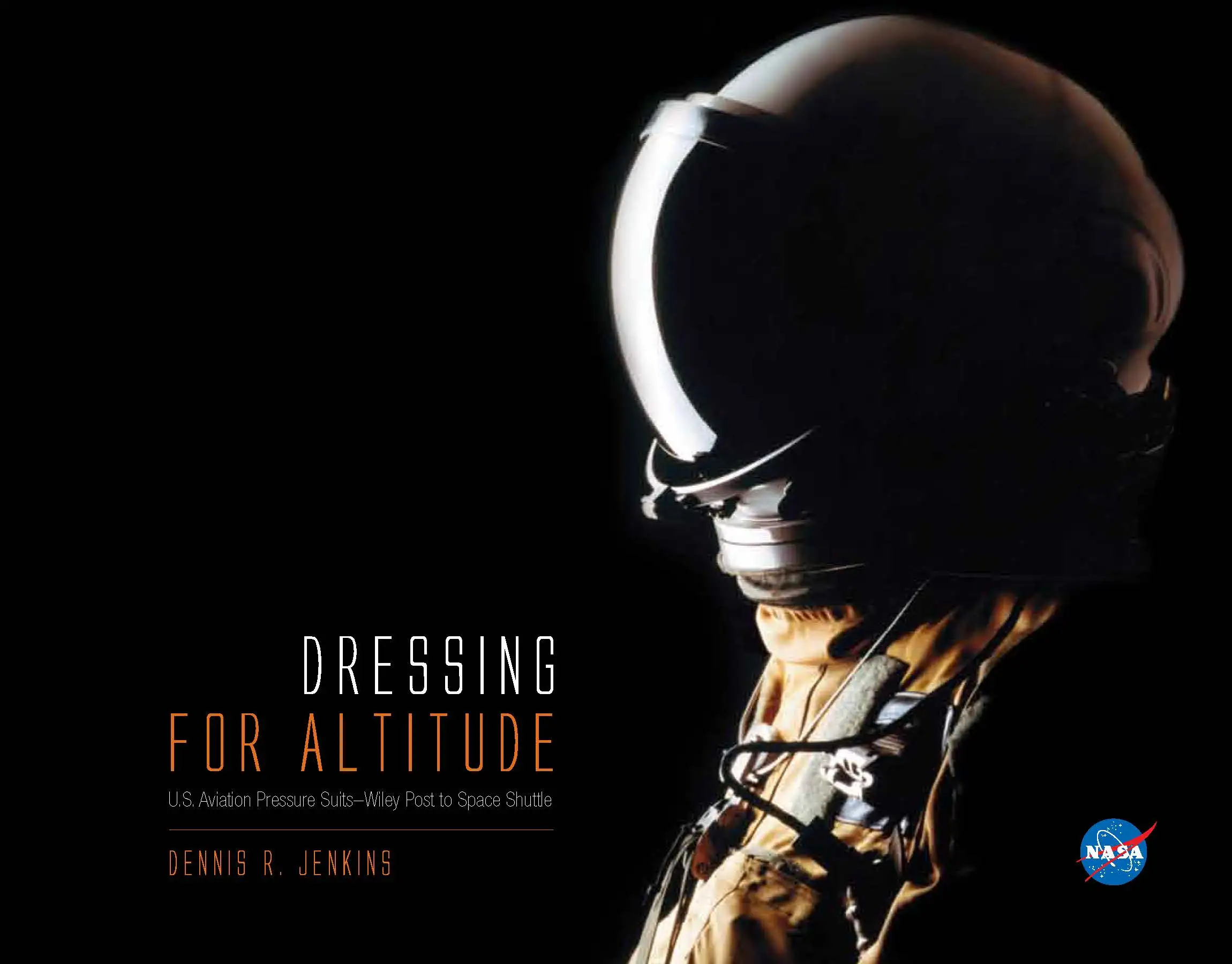
Available directly through the official NASA E-Books Directory, this digital library comprises dozens of meticulously researched volumes, technical manuals, historical accounts, and breathtaking coffee-table photography books. Available in universally compatible formats—including PDF, EPUB, and MOBI—these publications cater to a remarkably wide audience. Whether you are an aerospace engineering student grappling with systems integration, a history buff tracing the lineage of supersonic flight, or a casual stargazer looking for high-resolution imagery of distant nebulae, NASA’s digital catalog offers a treasure trove of verified, peer-reviewed, and expertly curated content.
This report provides an in-depth examination of NASA’s digital publishing initiative, categorizing the types of literature available, evaluating the technical value of these resources for educators and professionals, and exploring the broader cultural and educational impact of democratizing space exploration literature.
Read Also
Detailed Chronology: The Evolution of NASA Publishing
To understand the significance of NASA’s current digital library, one must trace the evolutionary arc of how the agency—and its predecessor—communicated its findings to the American public and the global scientific community.
The NACA Era and Early Paper Trails (1915–1958)
Long before the launch of Sputnik and the subsequent creation of NASA in 1958, the National Advisory Committee for Aeronautics (NACA) served as the primary engine of American flight research. Established during World War I, NACA researchers generated thousands of technical reports, memoranda, and notes detailing aerodynamic principles, wind tunnel tests, and material science breakthroughs. These documents were initially printed and distributed physically to university libraries, military installations, and aerospace contractors. The sheer volume of paper generated during this foundational period laid the groundwork for modern aviation, enabling the transition from biplanes to jet aircraft.
The Space Race and Public Documentation (1958–1970s)
With the establishment of NASA via the National Aeronautics and Space Act of 1958, the agency inherited a statutory obligation to "provide for the widest practicable and appropriate dissemination of information concerning its activities and the results thereof." Throughout the Mercury, Gemini, and Apollo programs, NASA’s Historical Office and technical publishing divisions worked tirelessly to document every phase of space exploration. Mission reports, engineering logs, and post-flight analyses were painstakingly compiled into bound volumes. However, public access was largely restricted to major metropolitan libraries, specialized academic institutions, or mail-order requests through the Government Publishing Office (GPO).
The Digital Turn and the Birth of E-Books (1990s–2010s)
As the internet matured in the late 20th and early 21st centuries, federal agencies began digitizing their paper archives. NASA was an early adopter of web-based document sharing, initially uploading PDFs of historical texts and technical papers to decentralized server networks. By the 2010s, recognizing the proliferation of dedicated e-readers, tablets, and smartphones, the agency consolidated its digital offerings. The creation of a centralized, user-friendly E-Books Directory marked a pivotal shift: instead of requiring users to dig through dense government databases, NASA curated its best long-form content into polished, downloadable e-book formats optimized for modern reading devices.
Supporting Context & Metrics: Inside the NASA E-Books Catalog
The scope of NASA’s digital library is vast, spanning several distinct genres that cater to both hyper-specialized professionals and the general public. An analysis of the repository reveals several core categories:
1. Advanced Engineering and Technical Manuals
For engineers, computer scientists, and students, NASA’s technical publications offer unparalleled insight into how humanity solves problems in the most hostile environment imaginable.
- The NASA Systems Engineering Handbook: Perhaps the crown jewel of the technical collection, this volume outlines the rigorous, standardized methodologies used to design, develop, and manage complex space systems. It covers life-cycle phases, risk management, technical performance measurement, and configuration control.
- Specialized Monographs: The directory includes deep dives into propulsion systems, thermal control, spacecraft guidance, navigation, and control (GN&C), providing blueprints and theoretical frameworks that influence modern aerospace engineering curricula globally.
2. Aviation History and Aeronautical Research
Long before humans walked on the Moon, NASA and NACA were pushing the boundaries of Earth’s atmosphere.
- X-Plane Histories: Readers can access comprehensive documentation of the legendary X-series aircraft—from the Bell X-1 that first broke the sound barrier to the hypersonic X-15. These texts detail the aerodynamic hurdles, structural failures, and pilot bravery that characterized mid-century flight testing.
- Supersonic and Hypersonic Research: Detailed technical accounts explain the complex shockwave dynamics, heat dissipation challenges, and propulsion breakthroughs required to achieve sustained supersonic travel.
3. Planetary Science and Deep Space Exploration
As robotic probes and space telescopes continue to expand our understanding of the universe, NASA documents these missions in rich detail.

- Mission Chronicles: Publications cover landmark planetary missions to Mars, the outer gas giants, and the Kuiper Belt. These texts combine telemetry data, scientific discoveries, and mission operations narratives.
- Atmospheric and Earth Science: Recognizing that NASA’s mandate includes observing our home planet, several books focus on climatology, satellite Earth observation, and environmental monitoring systems.
4. Coffee-Table and Visual-Heavy Editions
Space exploration is an inherently visual medium. NASA has capitalized on this by producing large-format, visually stunning books that showcase the aesthetic beauty of the cosmos.
- Astrophotography Collections: Utilizing imagery captured by the Hubble Space Telescope, the James Webb Space Telescope (JWST), and interplanetary probes, these books feature high-resolution captures of distant galaxies, glowing stellar nurseries, and intricate planetary rings.
- Mission Photography: Curated selections of archival photographs document the human side of spaceflight, capturing the emotions, camaraderie, and intense focus of astronauts and ground crews alike.
5. Institutional History
Understanding how NASA evolved as a federal agency is vital to understanding the history of modern science policy.
- Orders of Magnitude: A History of the NACA and NASA: This seminal text traces the institutional, political, and technological shifts that transformed a small aeronautical research committee into the world’s premier space agency. Other historical texts examine the organizational culture, management styles, and budgetary pressures that shaped historic triumphs and weathered national tragedies.
Official Statements and Institutional Philosophy
The continuation and expansion of NASA’s open-access initiatives are rooted in a foundational government philosophy regarding public funding, intellectual property, and educational empowerment.
Federal policy generally dictates that works produced by officers and employees of the United States Government as part of their official duties do not qualify for copyright protection within the United States. While this legal reality underpins the public domain status of much federal data, NASA’s proactive packaging of these materials into polished e-book formats goes beyond mere legal compliance.
In statements regarding public outreach and educational resources, agency representatives have consistently emphasized the importance of science, technology, engineering, and mathematics (STEM) accessibility. By removing financial barriers to high-level technical and historical literature, NASA aims to inspire the next generation of scientists, engineers, artists, and historians.
Educational advocates and librarians have widely praised the initiative. In academic circles, the availability of peer-reviewed, authoritative texts at zero cost has eased the financial burden on students facing skyrocketing textbook prices. Furthermore, by providing open-access materials in standard formats like EPUB and MOBI, NASA ensures that individuals in developing nations or underfunded school districts have equal access to world-class educational content.
Future Outlook: The Next Frontier of Digital Accessibility
As technology continues to evolve, the landscape of digital publishing is shifting toward more interactive, immersive, and dynamic formats. Looking ahead, NASA’s digital publishing strategy is poised to adapt to emerging technologies, ensuring that the agency’s archives remain relevant and engaging for future generations of readers.
Integration of Interactive and Multimedia Elements
Traditional e-books have long relied on static text and embedded two-dimensional images. However, future iterations of NASA’s digital publications are expected to incorporate advanced multimedia components. Imagine reading a chapter on planetary geology while directly interacting with a 3D-rendered, rotatable model of Mars topography embedded within the e-book reader, or listening to actual audio recordings of Apollo mission loops seamlessly integrated into the historical narrative.
Enhanced Accessibility and Multilingual Reach
To truly fulfill its mission of global public dissemination, future digital initiatives are likely to focus heavily on enhanced accessibility features—such as advanced screen-reader compatibility and automated translations into multiple world languages. While the majority of current NASA literature is published in English, expanding localized editions will broaden the global audience, inspiring students and researchers across non-English-speaking nations.
Archiving the James Webb and Artemis Eras
As humanity embarks on the Artemis program to return astronauts to the Moon and establish a sustainable lunar presence—while simultaneously processing unprecedented cosmological data from the James Webb Space Telescope—the volume of groundbreaking research being generated is staggering. The NASA E-Books Directory will inevitably serve as the primary repository for the written history of this new golden age of space exploration. Future generations will look to these forthcoming digital volumes to understand how humanity took its first steps toward becoming a multi-planetary species.
Conclusion
NASA’s free e-book library is much more than a collection of downloadable PDFs; it is a testament to the belief that scientific knowledge belongs to humanity as a whole. By bridging the gap between rigorous technical documentation and public accessibility, NASA ensures that the wonder of flight, the mystery of deep space, and the lessons of aerospace history remain perpetually within reach—waiting simply for someone to open the cover.




Comments
Facebook App ID not configured. Please add it in the Customizer.