In the sprawling, hyper-accelerated landscape of contemporary American letters, few poetic voices capture the friction of metropolitan survival quite like Mike Carlson. Selected as the Missouri Review Poem of the Week for August 10, 2026, Carlson’s striking piece, “Anonymous Report of Unsafe Conditions,” transforms the granular, often bruising realities of New York City life into a meditation on impermanence, loss, and the bizarre resilience of the human spirit.
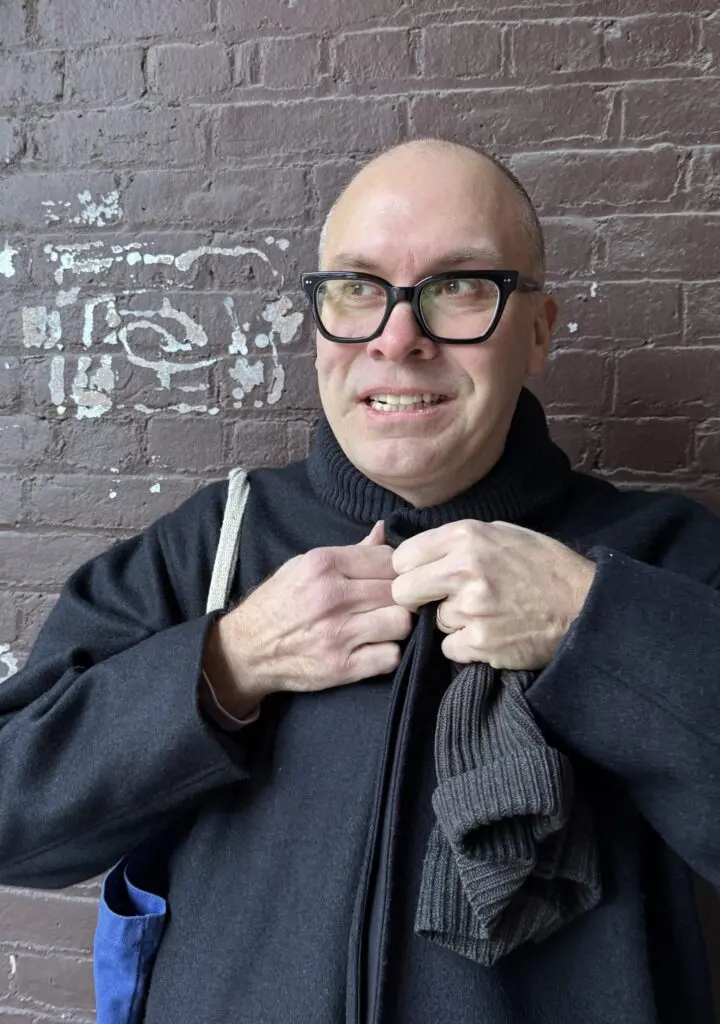
Carlson, an established voice in modern poetry—noted for his Juniper Prize-winning debut collection Cement Guitar and his 2025 Tupelo Press publication Tips to Help You Do Your Best—brings a teacher’s observant eye and a seasoned urbanite’s thick skin to his craft. Operating out of the classrooms of P.S. 107 in Brooklyn, Carlson balances the pragmatic duties of early childhood education with an uncompromising literary output. His work has graced the pages of prestigious literary journals including the Antioch Review, Gulf Coast, New Letters, Seneca Review, and The Southern Review.
“Anonymous Report of Unsafe Conditions” reads as both a love letter and a cautionary tale to the five boroughs. It catalogs the indignities of city living—stolen bicycles, inflated fruit prices, and the surreal juxtaposition of cinematic artifice against genuine urban decay—while asking deeper questions about what it means to anchor oneself in a place where people and places vanish without a trace. This report delves into the anatomy of Carlson’s poem, its origins, its thematic resonances within the broader landscape of contemporary American poetry, and the meticulous architecture that transforms everyday city life into art.
Detailed Chronology: From a Stolen Bicycle to the Page
To understand the poetic machinery of “Anonymous Report of Unsafe Conditions,” one must trace its lineage back nearly two decades. The genesis of the poem is rooted in a mundane, yet formative, moment of urban initiation.
Eighteen years prior to the poem’s wide critical recognition, Carlson emerged from a long day of work to discover that his bicycle had vanished. This was not merely any bicycle; it was a companion of endurance, an artifact of youth retained since the eighth grade and purchased with the hard-earned wages of a first job as a restaurant busboy. Faced with the sudden absence of a vital possession, Carlson executed a response defined by deadpan acceptance. When asked by his partner—now his wife—about the whereabouts of his bike, his reply was starkly matter-of-fact: “I don’t know. I guess someone stole it.”
That moment of detached resignation planted a seed that would germinate over years of writing, editing, and living in the crucible of New York City. Carlson has noted that his minimalist delivery on that fateful evening was the closest he ever came to channeling the existential detachment of an Albert Camus protagonist.
The first line of the poem—“What is true about New York is that / your bike will be stolen”—sat dormant in his notebooks for years. Slowly, Carlson layered, subtracted, and sculpted surrounding facts and images. He tested the stanzas against an exacting internal standard, aiming for a tone that legendary graphic designer Milton Glaser (creator of the iconic “I ♥ NY” logo) might appreciate if found scrawled on a napkin in the back of a yellow cab. Through a meticulous process of revision, the personal anecdote expanded into a universal dispatch from the heart of the modern metropolis, culminating in its selection for high literary praise in August 2026.
Supporting Context & Metrics: The Literary Landscape of Mike Carlson
To evaluate the weight of Carlson’s recent recognition, one must look at the trajectory of his career and the reception of his published bodies of work.
Metric / Milestone
Detail
Debut Collection
Cement Guitar (Winner of the Juniper Prize)
Recent Publication
Tips to Help You Do Your Best (Tupelo Press, 2025)
Primary Vocation
Educator at P.S. 107 in Brooklyn, New York
Literary Periodicals
Antioch Review, Gulf Coast, New Letters, Seneca Review, The Southern Review, The Missouri Review
Poem of the Week Feature
August 10, 2026 (“Anonymous Report of Unsafe Conditions”)
Carlson’s poetry does not rely on grandiose romanticism or pastoral escapism. Instead, it finds its footing in the gritty, asphalt-bound realities of working-class and middle-class existence. His background as a Brooklyn educator infuses his writing with an attentive patience—an ability to listen closely to the idiosyncratic rhythms of speech, the unintentional humor of children, and the silent griefs of neighbors who pass like ships in the night.
In Tips to Help You Do Your Best, Carlson established a reputation for balancing humor with an underlying anxiety about safety, stability, and human connection. “Anonymous Report of Unsafe Conditions” acts as a natural extension of this ethos, framing urban survival not as a heroic conquest, but as a series of calculated risks taken in a landscape that offers no guarantees.
Text and Aesthetic Analysis: Dissecting the Poem
Anonymous Report of Unsafe Conditions
What is true about New York is that
your bike will be stolen.
Decent apples cost too much.
Anyone might write a song.
Mist works differently
after it hits the traffic lights
on the most desolate part of Flatbush Avenue
with the box elders on one side
and the rest of your day on the other.
You can turn onto Prospect Park West
and see old snow against the trees
in late summer and then see film trucks and realize
it’s only piles of cotton
with dead leaves in them set down
to embody the despair of early February.
You can be entirely wrong.
Oblivion is almost a requirement. Old men leafing
through catalogs for wildflowers
will never know that their community garden
was once a gas station where a puppeteer
was killed. In the city, days themselves
can be monsters, but seasons usually stop
long enough for us to acknowledge
the beauty of a sunfish being devoured by yellowjackets
on the sidewalk in front of the German
preschool. Everything we do
is done at our own peril: taking the bus
an extra stop to see the ruined mural, walking
ten blocks to find that even our least favorite pharmacy
no longer carries our brand of toothpaste.
In the movies, you call the police
and they say you have to go twenty-four hours
without seeing a person before
they’re officially missing. In New York,
they’re gone. They’re missing right now.
They stay that way.
The Geography of the Mundane
The poem opens with declarative, almost legalistic finality: “What is true about New York is that / your bike will be stolen.” By stripping the opening statement of any defensive posture, Carlson establishes an atmosphere of shared urban trauma. This is not a lament; it is a preamble to the contract every resident signs upon arriving in the city.
Yet, the poem immediately pivots to the democratic chaos of artistic output (“Anyone might write a song”) and the sensory shifts of weather. Carlson’s command of spatial geography shines when he pins the narrative to “the most desolate part of Flatbush Avenue,” juxtaposing organic elements like box elder trees with the psychological weight of an unspooling afternoon.
Cinematic Artifice Versus Brutal Reality
One of the most arresting images in the poem occurs near Prospect Park West, where late-summer heat meets faux-winter snow:
…and see film trucks and realize it’s only piles of cotton with dead leaves in them set down to embody the despair of early February.
Here, Carlson brilliantly dissects the theatricality of modern media production against the backdrop of genuine human weariness. The city is constantly staging its own tragedies and seasons for the camera, manufacturing artificial despair while real lives unfold in the margins. This leads directly to the poem’s philosophical anchor: “You can be entirely wrong. / Oblivion is almost a requirement.”
The Palimpsest of Urban History
Cities are built on layers of forgotten trauma and transformation. Carlson illustrates this through the poignant image of elderly gardeners browsing wildflower catalogs, oblivious to the fact that their patch of green was once a gas station—the site of a violent tragedy involving a puppeteer. The poem suggests that living in New York requires a willful amnesia; remembering every dark history would render daily movement impossible.
Yet, beauty and horror persist side by side. The arresting vignette of a sunfish being consumed by yellowjackets outside a German preschool encapsulates Carlson’s vision: nature and mortality do not pause for childhood education or municipal zoning laws. Everything is fraught with hazard, whether it is taking an extra bus stop to view a decaying mural or searching in vain for a discontinued brand of toothpaste.
The Final Chord: Absolute Disappearance
The poem concludes by subverting Hollywood tropes of missing persons. While cinematic narratives grant a twenty-four-hour grace period before an investigation begins, Carlson asserts that New York operates under a far more brutal calculus:
In New York, they’re gone. They’re missing right now. They stay that way.
This closing triad strips away comforting illusions. People drift out of our lives, neighborhoods transform beyond recognition, and physical objects—like an eighth-grade bicycle purchased with busboy wages—evaporate into the ether. Carlson’s poem reminds us that to love a place like New York is to embrace its capacity for permanent erasure.
Official Statements and Authorial Intent
Reflecting on the psychological dualism that fuels his writing, Mike Carlson offers deep insight into why he continues to call New York City home despite its systemic frustrations:
“New York City is incessantly surprising and heartbreakingly dependable. I’m always trying to put my finger on what it is about the precarious balance of pros and cons that compels me to live here.”
This tension between the city’s unyielding dependability (its unwavering rhythm, its relentless traffic, its perpetual motion) and its capacity for sudden, jarring surprise forms the bedrock of Carlson’s poetic project. Rather than seeking a sanitized, idealized version of urbanism, Carlson leans directly into the friction. His work insists that poetry must accommodate the unpoetic—the stolen bicycles, the commercial pharmacies out of toothpaste, the cotton-stuffed movie snow—to arrive at a genuine emotional truth.
Editors at the Missouri Review have lauded Carlson’s ability to weave narrative accessibility with startlingly surreal imagery, noting that “Anonymous Report of Unsafe Conditions” exemplifies the journal’s ongoing commitment to showcasing poetry that speaks directly to the contemporary American experience without affectation or academic detachment.
Future Outlook: The Ongoing Legacy of Mike Carlson
As Mike Carlson’s literary star continues to rise in the wake of Tips to Help You Do Your Best and high-profile features like the Missouri Review Poem of the Week, readers and critics alike are watching closely to see where his singular voice will travel next.
Balancing the rigorous, grounding demands of teaching young minds at P.S. 107 in Brooklyn with the solitary, exacting labor of poetic composition, Carlson occupies a vital space in contemporary letters. He belongs to a lineage of working-class urban writers who refuse to romanticize the concrete jungle, choosing instead to map its hazards, celebrate its bizarre redemptions, and bear witness to the lives that quietly slip through its cracks.
“Anonymous Report of Unsafe Conditions” stands as a masterclass in modern observation—a reminder that while our possessions may be stolen, our routines disrupted, and our histories paved over, the act of paying fierce, unblinking attention to our surroundings remains our most enduring human refuge.



Comments
Facebook App ID not configured. Please add it in the Customizer.