
Executive Overview
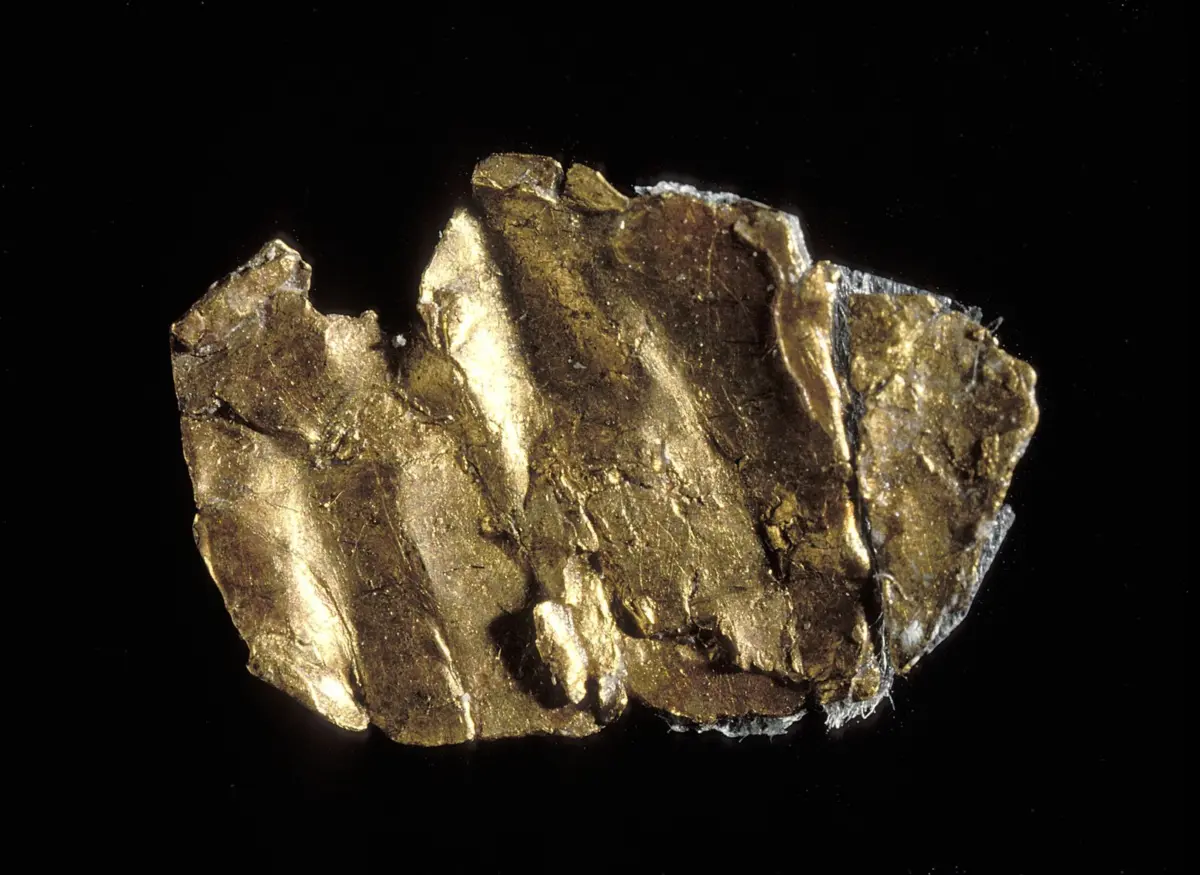
On January 24, 1848, deep in the verdant foothills of California’s Sierra Nevada mountains, a carpenter named James Marshall peered into the tailrace of a sawmill he was building for John Sutter and noticed something glittering. It was a small, unassuming flake of gold. That fleeting moment of discovery did far more than spark a regional scramble for wealth; it initiated a seismic historical chain reaction that rapidly transformed a fragmented, agrarian republic into a continental superpower.
In his deeply researched and critically acclaimed new book, The Rush: California Gold, the Civil War and the Making of the Modern World, renowned historian Nathaniel Philbrick argues that Marshall’s discovery set a young nation hurtling toward a violent existential reckoning with both slavery and its own vast, unmapped geographic expanse. Philbrick posits that the convergence of unbridled greed, explosive migration, rapid technological disruption, and fierce political contestation during the California Gold Rush served as the ultimate catalyst for modern American history—bridging the bloody ideological divides of the Civil War with the digital innovations of contemporary Silicon Valley.
This article explores the profound historical arguments set forth in The Rush, examining how a single nugget of precious metal redrew the boundaries of American destiny, empowered overlooked change-makers, and left behind a legacy of immense wealth, deep contradictions, and relentless acceleration that still dictates the rhythm of modern life.
Read Also
Detailed Chronology: From Sutter’s Mill to the Making of a Modern Empire
To understand how the events of 1848 reshaped the globe, one must trace the rapid, compounding timeline of the era. The California Gold Rush was not merely a localized mining boom; it was a global phenomenon that compressed centuries of industrial and social evolution into a few chaotic decades.
January 1848: The Fateful Discovery at Coloma
While overseeing the construction of a lumber mill for pioneer John Sutter along the South Fork of the American River in Coloma, California, James Marshall spotted metallic flakes in the water. Despite Sutter’s desperate attempts to keep the discovery quiet to protect his vast agricultural empire, news leaked. By mid-year, the secret was out, triggering a mass exodus from towns, farms, and military outposts across the Pacific basin and the Americas.
/https://tf-cmsv2-smithsonianmag-media.s3.amazonaws.com/filer_public/9d/c7/9dc74015-d150-42ac-81a6-6af173b2c2fe/sia-98-4800.jpg)
1849–1850: The Forty-Niners and the Balance of Power
By the tens of thousands, prospectors—dubbed "Forty-Niners"—floated, sailed, and marched toward the Pacific coast from the eastern United States, Europe, Latin America, and China. This sudden human tidal wave forced the federal government’s hand regarding statehood. California entered the Union as a free state in the Compromise of 1850, violently tipping the delicate legislative balance between the 15 existing free states and 15 slave-holding states in Congress, and accelerating the ideological friction that would inevitably rupture the nation a decade later.
1860–1869: Iron Tracks and Divided Blood
As the nation tore itself apart in the American Civil War (1861–1865), California remained a distant yet vital financial engine for the Union cause, funneling millions in gold to Washington to stabilize the wartime economy. Simultaneously, visionaries of the era planned and executed the construction of the Transcontinental Railroad. Completed in 1869 by barons of industry and thousands of brutally exploited Chinese laborers, the rail line physically bound the continent together, fulfilling the ideological demands of Manifest Destiny.
The Late 19th to Mid-20th Century: Entertainment and Industry
The compounding forces of the Rush did not stall with the exhaustion of placer gold deposits. The immense fortunes, infrastructure, and frontier ethos birthed in 19th-century California laid the groundwork for entirely new industrial sectors. From the rise of mass-market agribusiness to the birth of the cinematic universe in Hollywood during the early 1900s, the state repeatedly demonstrated a unique capacity to invent the future.
The Modern Era: From Palo Alto to the Digital Age
In the book’s concluding chapters, Philbrick draws a direct, unbroken line from the chaotic mining camps of the 1850s to the high-tech corridors of modern Silicon Valley. The relentless pursuit of fortune, disruption, and absolute freedom that defined the Gold Rush ultimately mutated into the venture-capitalist ecosystems of Palo Alto, proving that the spirit of 1848 remains the driving engine of contemporary American capitalism.
Supporting Context & Metrics: The Human and Economic Toll of "The Rush"
Nathaniel Philbrick’s narrative is firmly rooted in exhaustive historical scholarship, synthesizing vast economic data and social histories into an accessible portrait of an era defined by extreme contrasts. Life in territorial California was famously characterized by historian Kevin Starr and echoed by Philbrick as an environment that could be ruthlessly cruel and lawless, yet simultaneously intoxicating with promise—provided one happened to be a white American man.
/https://tf-cmsv2-smithsonianmag-media.s3.amazonaws.com/filer_public/9d/c7/9dc74015-d150-42ac-81a6-6af173b2c2fe/sia-98-4800.jpg)
Demographic Shockwaves
- Population Explosion: In 1848, the non-Indigenous population of California was roughly 15,000. By 1860, that figure had skyrocketed past 380,000, fundamentally altering the demographic makeup of the American West.
- Global Migration: The rush drew immigrants from every corner of the globe, creating diverse, volatile, and multicultural boomtowns like San Francisco overnight, while simultaneously displacing and decimating indigenous Native American populations through state-sanctioned violence and disease.
Marginalized Architects of History
While traditional historical accounts often focus exclusively on white prospectors and political elites, The Rush highlights the profound contributions and struggles of marginalized individuals who managed to direct and influence major historical currents:
- Chinese Laborers: Working under brutal, lethal conditions, tens of thousands of Chinese immigrants carved the Central Pacific Railroad through the granite heart of the Sierra Nevada, enduring extreme racism and physical peril to physically connect the American continent.
- Mary Ellen Pleasant: A brilliant Black entrepreneur who leveraged San Francisco’s economic boom to build a massive laundry and real estate empire. Pleasant utilized her considerable wealth to covertly fund abolitionist causes, famously masquerading as a jockey to travel across Virginia plantations to spread advance word of John Brown’s historic 1859 raid on Harpers Ferry.
Official Perspectives and Historian Insights
In analyzing The Rush, cultural critics, academic historians, and institutions like the Smithsonian Institution have emphasized the enduring relevance of Philbrick’s thesis. The Smithsonian—which preserves in its collections a gold nugget believed to have been discovered by James Marshall himself—has long recognized the transformative material culture generated by the era.
Philbrick himself notes that the central dilemma facing 19th-century Californians mirrors our contemporary anxieties:
"Californians in the nineteenth century wrestled with a question that Americans are still asking today: Just who are we?"
Reflecting on the relentless velocity of technological and cultural change born from the era, Philbrick offers a sobering assessment of our current digital landscape. In connecting the raw greed of the gold fields to the utopian—and often dystopian—ambitions of Silicon Valley tech moguls, he warns:
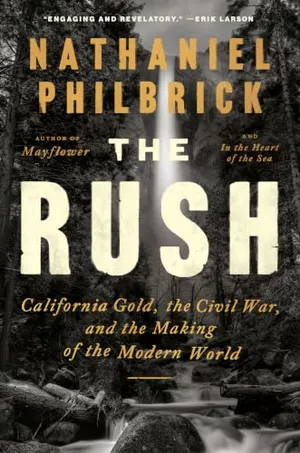
"Like it or not, we are all passengers on a hurtling train."
This perspective reframes the history of the American West not as a quaint chapter of frontier folklore, but as the foundational laboratory where the pressures of modern industrial capitalism, racial conflict, and technological disruption were first tested and unleashed upon the world.
Future Outlook: Navigating the Legacy of the Gold Rush
As modern society grapples with the cascading consequences of the digital revolution, artificial intelligence, and widening economic inequality, The Rush serves as a timely reminder that our current moment has deep historical antecedents.
The ambition that drove thousands to brave the perilous Horn of Africa or the grueling overland trails in 1849 is the exact same energy that fuels modern startup culture in the San Francisco Bay Area. Yet, the darker currents of the Gold Rush—systemic racism, the exploitation of immigrant labor, environmental devastation, and deep social polarization—remain potent cautionary tales for the 21st century.
Ultimately, Nathaniel Philbrick’s work challenges modern readers to look past the romanticized mythology of the lone prospector and confront the complex, chaotic reality of how the modern world was forged. As the United States continues to navigate its geographic, technological, and ideological boundaries, understanding the explosive genesis of "The Rush" is not merely an exercise in historical nostalgia; it is an essential guide to surviving the hurtling train of progress we all share.



Comments
Facebook App ID not configured. Please add it in the Customizer.