In the contemporary literary landscape, few works capture the delicate interplay between childhood domestic anxiety and imaginative escapism as acutely as W.M. Lobko’s poetry. Selected as the Poem of the Week for October 19, 2026, Lobko’s piece, "I Was Braver Than I Thought," serves as a poignant examination of the thresholds between the internal sanctuaries we construct and the external realities we desperately attempt to keep at bay.
The poem unfolds through a lens of tactile immediacy and surreal juxtaposition. It pairs the microscopic anxieties of youth—such as the sterility of Lysol or the accidental contamination of a toy motorcycle—with the macrocosmic emotional tremors of familial discord. Lobko, an acclaimed voice whose works have graced the pages of The Iowa Review, The Kenyon Review, Boston Review, and Guernica, brings a rigorous intellectual framework to this piece. Educated at the University of Oregon and currently teaching north of New York City, Lobko has cultivated an aesthetic defined by precision, emotional resonance, and a deep reverence for the mythologies we inherit and create.
This article provides a comprehensive examination of Lobko’s featured poem, exploring its thematic scaffolding, structural nuances, and the authorial intent behind a piece that transcends autobiography to become a universal meditation on survival, storytelling, and meaning-making.
The trajectory of W.M. Lobko’s literary career has been marked by a steady accumulation of critical accolades and widespread publication in premier literary journals. Though his footprint in American letters has expanded over the years through reviews, essays, and interviews, his poetry remains the cornerstone of his artistic identity.
The Path to Recognition
Early Foundations: Developing his craft with studies at the University of Oregon, Lobko immersed himself in the rich Pacific Northwest literary tradition, characterized by a deep engagement with landscape, interiority, and narrative restraint.
Journal Publication Milestones: His poetry and critical prose found homes in some of the most competitive literary markets in the United States, including Washington Square, Guernica, and The Kenyon Review. These placements established his reputation as a meticulous stylist capable of bridging narrative storytelling with lyrical abstraction.
Critical Accolades: Lobko’s work has garnered significant industry recognition, most notably through a Pushcart Prize nomination and a semi-finalist standing for the prestigious 92Y/Boston Review Discovery Prize.
The October 2026 Spotlight: The selection of "I Was Braver Than I Thought" as a featured Poem of the Week marks a significant moment in the ongoing appreciation of his work, bringing his distinct voice to a wider audience of contemporary poetry enthusiasts.
Supporting Context and Thematic Metrics
To fully appreciate the architecture of "I Was Braver Than I Thought," one must dissect the micro-elements that build its emotional resonance. The poem operates on multiple levels simultaneously: sensory, psychological, and spatial.
The Sensory Landscape of Childhood
Lobko opens the poem with a visceral enclosure:
Cave of the crook of my arm. Slick heat of my breath on the desk Lysol would lift away.
This introduction establishes an atmosphere of clinical containment. The "slick heat" of breath against a desk combined with the antiseptic threat of Lysol signals an environment where hygiene attempts to sanitize not just physical surfaces, but emotional chaos. The speaker’s awakening at 2 a.m. introduces the realization that domestic ghosts are not supernatural apparitions, but tangible realities: "germs in the chrome of the toy green motorcycle / I dropped in the toilet, say, / or the high twist in my mother’s voice / when she learned her mother was dead."
The Metaphor of Space and Architectural Escapism
As the poem progresses, the speaker adopts the role of an urban planner or cosmic designer:
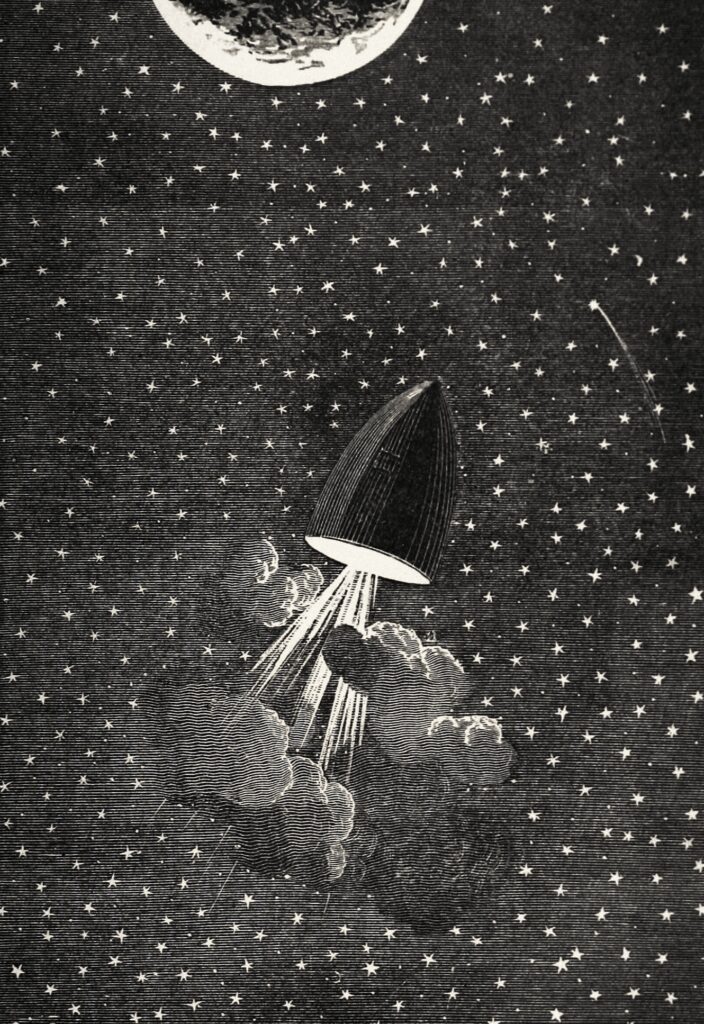
I was architect of an ice planet. I was a skull hearing itself with every graham cracker’s ashen reverberation.
Here, the mundane acts of childhood—eating a snack—are amplified into seismic events through the power of hyper-awareness. The construction of "model spaceships in grey plastic / richly smelling of ozone" under an armature light becomes a defensive ritual. The light is aimed "relentlessly, faithful / nothing would melt or erupt."
This imagery underscores a central coping mechanism of childhood trauma and tension: the creation of meticulous, controlled miniature worlds to counterbalance an uncontrollable macro-world of parental conflict. When the domestic dispute finally breaks through—"so heinous the sitcom characters stopped to watch"—the violence is rendered with mythological weight: "axe through the bucket klieg lights, / axe through the snowbound door, axe through / the umbilical."
The Resilience of "Buckets of Bolts"
Despite the severity of the domestic landscape, the speaker maintains a profound attachment to the aesthetics of space and survival:
Still, I loved space, how inaccessible it was, its famous silence, how the ships crisscrossing it started out pristine then of a sudden were blast-scored, emphysemic buckets of bolts prayer could hold together.
This concluding movement encapsulates the overarching theme of Lobko’s work: the acknowledgment of damage, wear, and systemic fragility, redeemed only by the persistent, quiet human instinct toward preservation and faith.
Official Statements and Authorial Insights
In reflecting upon the genesis and evolution of "I Was Braver Than I Thought," W.M. Lobko has offered illuminating commentary that reframes how readers interact with the text.
Initially, the author approached the poem through a traditional autobiographical lens, viewing it as a direct excavation of his family dynamics, his parents, and his younger self. However, as the creative process matured, his perspective shifted fundamentally.
"At first, I thought this poem was about my family, my parents, me—but I’ve come to see it more as a devotional of sorts to the stories & myths that help us make meaning, whatever they might happen to be."
— W.M. Lobko
This statement elevates the poem from a simple exercise in nostalgic memory retrieval to a universal examination of myth-making. The spaceships, the ice planets, and the meticulous lighting are reframed not merely as childhood hobbies, but as the foundational mythologies humans construct to navigate chaos. They are structural pillars of the psyche, serving as devotional acts directed toward survival and psychological coherence.
Future Outlook
As W.M. Lobko continues his dual trajectory as an educator north of New York City and a vital contributor to American letters, his work points toward an enduring exploration of memory, domesticity, and the imaginative defenses we erect against vulnerability.
The reception of "I Was Braver Than I Thought" highlights the ongoing appetite in contemporary poetry for work that combines lyrical precision with emotional fearlessness. By treating the artifacts of youth—toy motorcycles, plastic spaceships, the scent of ozone and antiseptic—not as sentimental relics, but as sacred instruments of survival, Lobko charts a course for future poetic investigations into how we endure the emotional weather of our formative years.
For readers and scholars alike, Lobko’s growing body of work remains an essential touchstone. It demonstrates that poetry is not merely a reflection of life, but an active, architectural endeavor—a way to build ice planets and repair emphysemic spaceships when the walls of the domestic world threaten to collapse.






Comments
Facebook App ID not configured. Please add it in the Customizer.