
Executive Overview
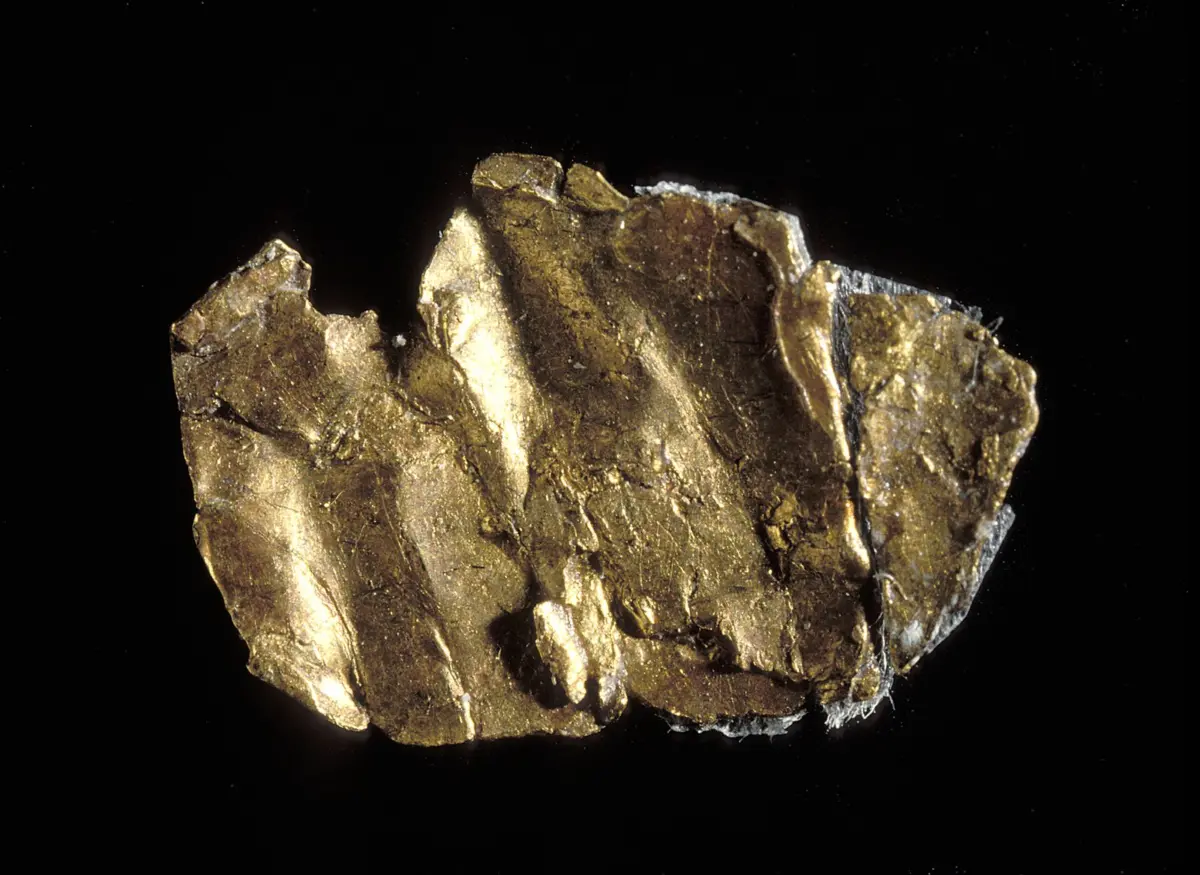
On January 24, 1848, a unassuming carpenter named James Marshall peered into the tailrace of a sawmill he was constructing for pioneer John Sutter in the lush foothills of the Sierra Nevada. There, glinting in the shallow waters of the American River, he spotted a handful of small, heavy, yellow flakes. That singular, quiet discovery set off a cataclysmic chain reaction. It sparked the California Gold Rush, triggered the largest mass migration in modern American history, and fundamentally altered the trajectory of the United States.
In his ambitious and sweeping new book, The Rush: California Gold, the Civil War and the Making of the Modern World, acclaimed historian Nathaniel Philbrick argues that this inflection point did much more than populate a distant frontier. According to Philbrick, the frenzy catalyzed by Marshall’s nugget sent a fragile, fractured nation hurtling toward a violent reckoning over slavery, accelerated the physical unification of the continent, and established the hyper-capitalist ethos that would eventually birth the entertainment industry of Hollywood and the digital titan that is modern Silicon Valley.
Synthesizing a vast body of historical scholarship into a pulsing, accessible narrative, Philbrick examines the gold rush not as a quaint, isolated chapter of Western lore, but as the foundational crucible of contemporary American life. By weaving together the grand politics of Washington with the gritty, often brutal realities of frontier existence, The Rush forces modern readers to confront an unsettling historical truth: the speed, ambition, contradictions, and profound inequalities of the 21st-century technological age were hard-coded into the American DNA nearly two centuries ago.
Read Also
Detailed Chronology: From Sutter’s Mill to the Silicon Foothills
To understand how a flake of metal in rural California could eventually shape the digital architecture of the modern world, one must trace the dizzying, high-speed timeline of events that followed James Marshall’s discovery. Philbrick conceptualizes this era not merely as a sequence of dates, but as a continuous, accelerating force he calls simply "the Rush."
1848: The Spark and the Treaty
- January 24: James Marshall discovers gold at Coloma, California, while building a lumber mill for John Sutter. Despite attempts to keep the discovery quiet, word leaks out within months.
- February 2: The Treaty of Guadalupe Hidalgo is signed, formally ending the Mexican-American War. Mexico cedes an enormous expanse of territory—including modern-day California, Nevada, Utah, Arizona, and parts of New Mexico, Colorado, and Wyoming—to the United States, transforming California overnight into ground zero for an imperial land grab.
1849–1850: The Deluge and the Union Balance
- 1849: The "Forty-Niners" arrive en masse. Tens of thousands of prospectors from the Eastern United States, Europe, South America, and Asia flood into California by sea and overland trail, instantly overwhelming indigenous populations and transforming sleepy Mexican outposts into chaotic, sprawling tent cities.
- September 9, 1850: As part of the Compromise of 1850, California is hastily admitted to the Union as the 16th free state. This abrupt admission dramatically upends the delicate legislative balance between 15 free and 15 slave states in Congress, intensifying the sectional hostilities that would soon tear the nation apart.
The 1860s: Rails, War, and Underground Networks
- 1861–1865: The American Civil War erupts. Philbrick illustrates how the immense wealth extracted from California’s goldfields—alongside the geopolitical strategic importance of the Pacific coast—helped finance the Union war effort, securing President Abraham Lincoln’s industrial advantage over the Confederacy.
- 1869: The completion of the Transcontinental Railroad at Promontory Summit, Utah. The project relies heavily on the ruthless exploitation of immigrant labor—particularly Chinese workers who endured lethal conditions—to physically bind the continent together, fulfilling the manifest destiny set in motion by the 1848 discovery.
The 20th and 21st Centuries: Entertainment to Algorithms
- Late 19th to Early 20th Century: The financial infrastructure, entrepreneurial bravado, and appetite for massive industrial risk-taking cultivated during the gold rush migrate southward to Southern California, laying the financial and cultural groundwork for the rise of Hollywood and the global entertainment complex.
- The Present Day: In the final chapter of The Rush, titled "Palo Alto," Philbrick draws a direct, unbroken line from the unbridled speculation and technological acceleration of the 19th-century goldfields to the venture capital-fueled disruption of modern Silicon Valley.
Supporting Context & Metrics: The Human and Economic Toll
While popular culture has long romanticized the California Gold Rush as an egalitarian adventure populated by plucky prospectors and singing cowboys, Philbrick strips away the Hollywood mythology to reveal a landscape defined by staggering wealth generation, systemic violence, and deep moral contradictions.
/https://tf-cmsv2-smithsonianmag-media.s3.amazonaws.com/filer_public/9d/c7/9dc74015-d150-42ac-81a6-6af173b2c2fe/sia-98-4800.jpg)
Demographic Upheaval and Indigenous Devastation
The human impact of the gold rush was immediate and catastrophic, particularly for California’s Native American populations. Prior to 1848, an estimated 150,000 Indigenous people inhabited California. Within little more than two decades, disease, forced displacement, and state-sanctioned genocide—funded and carried out by early California state governments and vigilantes—reduced that population by more than 80 percent.
For white Americans, however, the territory offered an intoxicating mixture of danger and unprecedented upward mobility. As Philbrick observes:
"Life in California could be cruel and unforgiving, but it was also filled with excitement, promise and—if you were a white American—immense freedom."
Economic Magnitude
The numbers generated by the rush stagger the imagination. Between 1848 and 1855, miners extracted some 750,000 pounds of gold from the earth—an output worth billions of dollars in contemporary currency. This sudden liquidity injected massive capital into the fledgling American economy, stabilizing the national banking system, funding transcontinental infrastructure, and cementing the United States’ status as an emerging global superpower.
The Forgotten Architects: Laborers and Abolitionists
Philbrick’s narrative deliberately widens the lens beyond the traditional pantheon of wealthy white industrialists and politicians. The Rush brings to light the vital, often overlooked contributions of marginalized figures who navigated the treacherous waters of the era:
/https://tf-cmsv2-smithsonianmag-media.s3.amazonaws.com/filer_public/9d/c7/9dc74015-d150-42ac-81a6-6af173b2c2fe/sia-98-4800.jpg)
- Chinese Railroad Workers: Recruited in vast numbers by the barons of the Central Pacific line, these laborers blasted tunnels through the granite spine of the Sierra Nevada under horrific, hazardous conditions, dying by the hundreds yet receiving virtually no historical recognition from their contemporary corporate masters.
- Mary Ellen Pleasant: A brilliant Black entrepreneur who amassed a substantial fortune operating a laundry empire in San Francisco. Pleasant used her immense wealth to quietly fund abolitionist causes, reportedly even posing as a jockey to travel surreptitiously to Southern plantations to spread advance word of John Brown’s historic, doomed 1859 raid on Harpers Ferry.
Through these stories, The Rush emphasizes that the frontier was not merely a stage for rugged individualism, but a complex multi-ethnic arena where the battles for civil rights, economic survival, and human dignity were fiercely contested.
Official Perspectives and Critical Synthesis
Historians and literary critics reviewing The Rush have praised Philbrick’s ability to synthesize decades of specialized academic research into a narrative that resonates with urgent contemporary relevance. Known for his deeply researched nautical and historical epics—including In the Heart of the Sea and Mayflower—Philbrick brings a master novelist’s pacing to institutional history.
In interviews and essays surrounding the book’s launch, Philbrick has stressed that the psychological traits defining modern Americans were forged in the crucible of the 1840s and 50s. The obsession with speed, the belief in disruptive technological innovation as an absolute good, and a persistent willingness to overlook human collateral damage in the pursuit of immense fortune are not new phenomena born of the internet age; they are, according to Philbrick, deeply rooted California phenomena.
"Californians in the 19th century wrestled with a question that Americans are still asking today: Just who are we?" Philbrick notes. The answer offered by the historical record is as exhilarating as it is troubling. The same unbridled spirit that allowed a prospector to strike it rich in a remote riverbed also fueled the reckless financial speculation, environmental devastation, and racial strife that continue to haunt American democracy.
Future Outlook: Riding the Hurtling Train of Modernity
As readers turn the final pages of The Rush, they arrive at "Palo Alto," a concluding chapter that bridges the gap between the pickaxes of 1848 and the server racks of contemporary Silicon Valley.
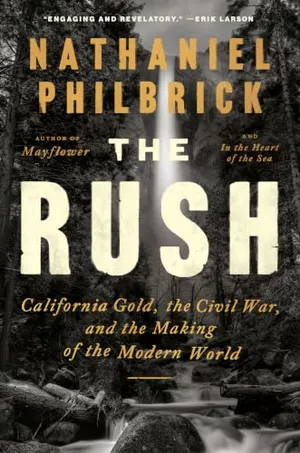
The parallels are striking. The venture capitalists of Sand Hill Road are the spiritual descendants of the merchants who sold shovels, boots, and mining supplies to the desperate hordes in San Francisco and Sacramento. The belief that a single technological breakthrough or software algorithm can completely upend human society mirrors the conviction of the Forty-Niner who believed a single swing of a pickaxe could yield a fortune.
Yet, Philbrick’s conclusion is not a celebration of unbridled techno-optimism; it is a sobering caution. By drawing a straight line from the land grabs and racial violence of the gold rush to the modern data economy, The Rush challenges contemporary society to examine the velocity of its own progress.
"Like it or not," Philbrick observes, "we are all passengers on a hurtling train." As automation, artificial intelligence, and digital conglomerates continue to reshape human existence at a breakneck pace, The Rush serves as an essential historical mirror. It reminds us that the modern world was built by dreamers, speculators, and ruthless opportunists alike—and that understanding our tumultuous past is the only way to safely navigate the high-speed future we have created.




Comments
Facebook App ID not configured. Please add it in the Customizer.