
Executive Overview
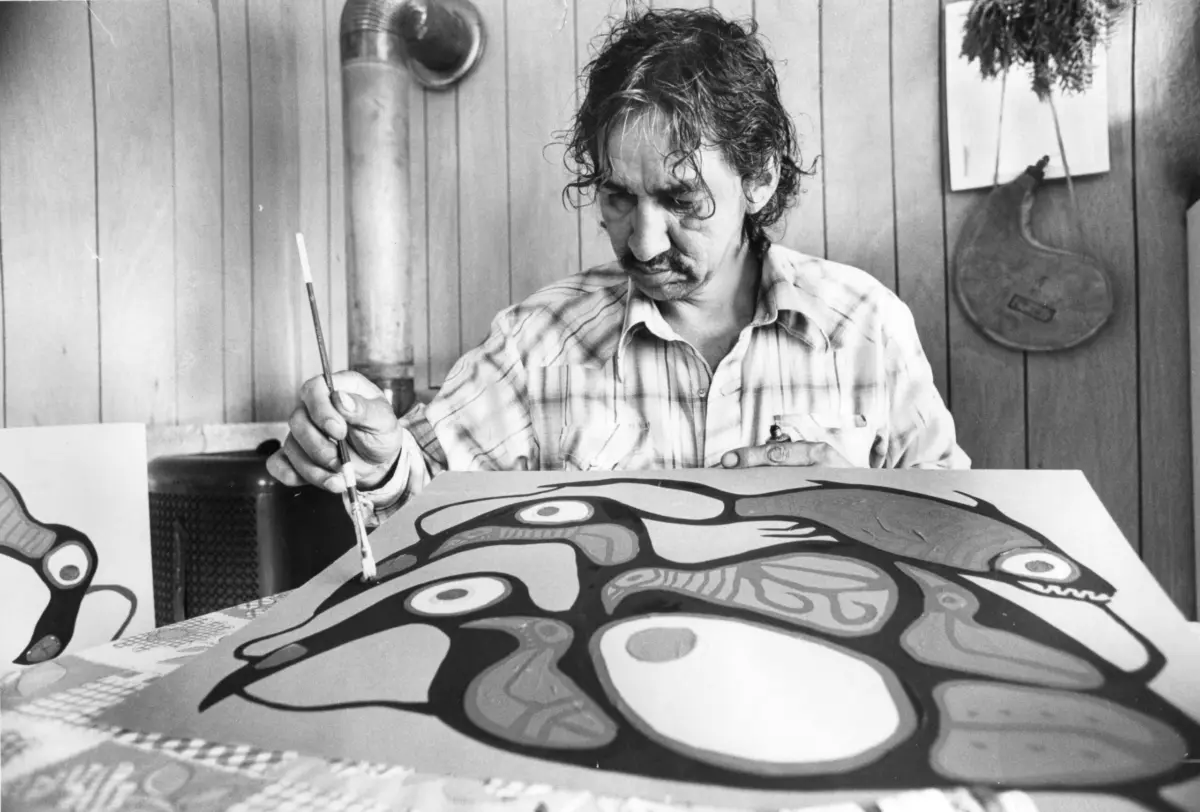
For years, the legacy of Norval Morrisseau—the visionary, self-taught Indigenous artist widely celebrated as the unofficial founder of the Woodland School of art—was quietly undermined by one of the most sophisticated, large-scale art fraud operations in North American history. Upwards of 1,000 fraudulent canvases, mimicking Morrisseau’s vibrant, shamanic visual vocabulary, were systematically pumped into the Canadian art market. This illicit enterprise not only swindled collectors and tarnished the cultural heritage of a pioneering Indigenous voice, but it also poisoned institutional provenance across the country.
While the criminal case eventually made international headlines, leading to multiple guilty pleas and exposing deep-seated exploitation within the art world, a crucial piece of the puzzle remained hidden until recently. Newly released information reveals the pivotal, clandestine role played by the Canadian Conservation Institute (CCI)—a low-profile federal agency housed within the Department of Canadian Heritage.
Operating behind closed doors from 2021 to 2023, CCI scientists utilized advanced forensic imaging and chemical analysis to shatter the illusion of authenticity surrounding the forged works. Their breakthroughs provided the Ontario Provincial Police (OPP) with the hard scientific evidence required to dismantle three distinct fraud rings, secure convictions, and testify on behalf of the prosecution. As art collectors increasingly rank fraud and questionable provenance as their paramount anxieties, the unfolding narrative of the Morrisseau forgery ring serves as both a cautionary tale and a testament to the power of interdisciplinary forensic investigation.
Read Also
Detailed Chronology: From a Rock Star’s Purchase to Forensic Breakthroughs
The Seeds of Doubt (2005–2010)
The unraveling of Canada’s most notorious art scam did not begin in a high-tech laboratory or a police precinct; it started with a routine art purchase. In 2005, Kevin Hearn, keyboardist for the iconic Canadian rock band Barenaked Ladies, acquired a painting attributed to Norval Morrisseau from the Maslak McLeod gallery in Toronto. For years, the piece hung in private appreciation before Hearn generously lent it to the Art Gallery of Ontario (AGO) in 2010 for a retrospective exhibition.
Red flags were raised almost immediately. Gerald McMaster, a seasoned curator at the AGO, examined the canvas and suspected it was a fake. Sparked by this institutional skepticism, Hearn retained lawyer Jonathan Sommer to investigate the painting’s origins. Their inquiries uncovered a fabricated provenance—a hallmark of the fraudulent network. Furthermore, forensic examination of the physical object revealed a fatal flaw: the painting was signed on the back, a practice Morrisseau historically never employed.
Hearn launched a civil lawsuit against the gallery, ultimately securing a $60,000 judgment. However, true justice proved elusive; the gallery owner passed away while the litigation was still winding its way through the courts, leaving Hearn unable to collect the judgment and highlighting the systemic legal protections fraudsters often exploit.
Exposing the Ring: There Are No Fakes (2019)
For over a decade, rumors of widespread Morrisseau forgeries circulated in Canadian art circles, but the scale of the operation remained obscured by a veil of complicity, fear, and legal intimidation. That changed dramatically in 2019 with the release of the documentary There Are No Fakes, directed by Jamie Kastner.
The film blew the lid off the operation, exposing how a multi-tiered fraud ring had systematically manufactured bogus Morrisseau paintings. Most shockingly, the documentary revealed that members of Morrisseau’s own extended family had been co-opted into the scheme, tragically utilizing child labor to produce the prolific output required to satisfy market demand. In the National Post, critic Chris Knight aptly described the documentary’s exposé as “as riveting as it is complicated.” The film acted as a public clarion call, forcing law enforcement to look deeper into an enterprise that had operated with virtual impunity for decades.
The OPP Investigation and the CCI Enters the Fray (2021)
Prompted by mounting public pressure and evidence compiled in the wake of the documentary, the Ontario Provincial Police launched an intensive, multi-year investigation dubbed Project "Falcon." Recognizing that visual inspection alone would not hold up against aggressive defense teams in a court of law, investigators sought out hard, irrefutable scientific proof.
In 2021, the OPP approached the Canadian Conservation Institute, an obscure federal body normally dedicated to preserving cultural artifacts for roughly 2,700 museums, libraries, and archives across Canada. Police delivered four suspicious canvases to the Institute’s doorstep, asking the team to determine whether they were genuine Morrisseaus or sophisticated fakes.
What followed was a forensic breakthrough that would alter the course of the criminal proceedings.
Mylène Choquette, a senior scientific documentation technologist at the CCI, placed one of the disputed paintings under specialized imaging equipment capable of capturing infrared spectra. As the infrared light penetrated layers of pigment, Choquette noticed faint, anomalous markings hidden beneath applications of red and light blue paint.
Underneath the vibrant surface lay administrative codes: the letters “R” and “LB”, alongside a specific region explicitly marked “medium green.” The fraudsters had essentially manufactured the paintings using a commercial, paint-by-numbers methodology, mapping out color designations on raw canvas before applying pigments to mimic Morrisseau’s distinctive style.
“I needed to just step away from the setup and just come back to see if I see it again,” Choquette recounted to CityNews regarding the surreal moment she uncovered the hidden alphanumeric codes. “Indeed, it was still there.”
Building on Choquette’s imaging discoveries, CCI conservation scientists subjected micro-samples of paint to rigorous chemical analysis. Using advanced spectroscopic techniques, they detected the presence of polyvinyl acetate and styrene—synthetic polymers common in commercial house paint. By contrast, authentic works by Norval Morrisseau from the relevant periods were executed exclusively using professional-grade acrylic and oil formulations.
Armed with these definitive chemical and infrared findings, the OPP returned to the CCI, turning over an additional 26 contested works. Between 2021 and 2023, Choquette and her colleagues meticulously analyzed these pieces, building an airtight evidentiary dossier.
The Crackdown, Guilty Pleas, and Trial (2023–Present)
The scientific evidence supplied by the CCI served as the linchpin for a massive police crackdown. Ultimately, the OPP charged eight individuals across three suspected fraud rings with a total of 40 criminal counts, including forgery and defrauding the public of amounts exceeding $5,000.
- David Voss: Identified by investigators as the primary architect and mastermind of the forgery operation. Voss ultimately pleaded guilty to his role in the multi-million-dollar scam.
- Gary Lamont: Accused of acting as a recruiter within the network, enlisting vulnerable Indigenous artists—including Morrisseau’s nephew, Benji Morrisseau, and other family members—to churn out the fraudulent canvases.
- Benji Morrisseau: Admitted guilt for his participation in the forgery ring. Rather than facing traditional incarceration, his case was handled through a First Nations restorative justice program, reflecting the complex familial and community dynamics exploited by the ringleaders.
- Jeff Cowan: Stood trial for fraud and dealing in forged documents. Representatives of the Canadian Conservation Institute took the stand during the proceedings, serving as expert prosecution witnesses to explain the infrared codes and chemical anomalies to the judge and jury. Cowan was subsequently found guilty.
In total, four key suspects entered guilty pleas, while charges against two others were eventually dropped. Authorities estimate that the ring successfully injected at least 1,000 fakes into the Canadian and international art markets, though experts fear that thousands more remain hidden in private collections, unverified and unrecognized.
Supporting Context & Metrics: The Scale of the Crisis
To understand the devastating impact of the Morrisseau forgery ring, one must examine the soaring market value and cultural weight of the artist’s authentic oeuvre.
Born in 1932 in Sand Point First Nation, Ontario, Norval Morrisseau (also known as Copper Thunderbird) revolutionized Canadian art by blending traditional Anishinaabe legends, pictographs, and creation stories with bold, modern acrylic aesthetics. He founded the Woodland School of Art, paving the way for generations of Indigenous artists to enter the contemporary fine art mainstream. Morrisseau passed away in 2007 at the age of 75.
Market Valuation and Institutional Vulnerability
Morrisseau’s market value has experienced explosive growth over the past two decades. A definitive auction record was established in 2022 when his 1978 painting Animal Unity sold at Canadian auction house Cowley Abbott for a staggering $312,000 CAD (approximately $227,000 USD at the time)—more than tripling its pre-sale high estimate. Such high-stakes valuations create a lucrative breeding ground for unscrupulous actors looking to cash in on cultural cachet.
During his later years, Morrisseau became acutely aware that forged works bearing his signature were flooding galleries in Ontario and Alberta, most notably the Maslak McLeod gallery. In a tragic irony, even attempts at self-regulation faltered: Morrisseau publicly disavowed the Morrisseau Family Foundation, which had been established by his children ostensibly to authenticate his paintings, after it was discovered that the foundation had inadvertently or intentionally approved bogus works.
The Broader Collector Anxiety
The Morrisseau scandal is not an isolated incident; it reflects a systemic vulnerability within the global art market. A comprehensive 2024 study conducted by insurance giant Chubb revealed that art collectors now rank fraud and provenance verification as their chief, overriding concern.
When masterworks by foundational artists are successfully imitated on an industrial scale—complete with paint-by-numbers canvas markings and fabricated paper trails—it destabilizes trust across the entire ecosystem, affecting auction houses, public galleries, private collectors, and, most importantly, the cultural integrity of Indigenous communities.
Official Statements: Why the CCI Shed Its Anonymity
For years, the Canadian Conservation Institute deliberately maintained a low public profile, operating quietly behind the scenes to assist museums and heritage institutions. However, the completion of the Morrisseau trial and the sheer magnitude of the fraud convinced agency leadership that breaking their silence was a public service.
Inviting members of the press into their high-security laboratories this month, CCI officials underscored that the fight against art fraud is fundamentally a fight to protect national heritage.
"Norval Morrisseau is one of the most important artists in Canada, and his work is culturally significant to every single one of us," Jennifer Poulin, a senior conservation scientist at the CCI, told CityNews.
"And when an artist like that is picked out and abused and treated this way, it affects the entire country. And it’s really important that we’re able to try to stop this in any way that we can."
Poulin’s sentiment captures the ethos of the Institute’s undercover scientific campaign: art forgery is not merely a financial crime against affluent collectors; it is an assault on collective memory and Indigenous cultural patrimony.
Future Outlook: Legacy, Reform, and Vigilance
As the dust settles on the criminal trials of David Voss, Jeff Cowan, and their associates, the Canadian art world is left to reckon with the long shadow of the Morrisseau forgery scandal. While law enforcement agencies celebrate the removal of over 1,000 fakes from circulation, experts warn that the fight is far from over.
- Unaccounted Works in Private Hands: Because the forgery rings operated for decades, thousands of fake Morrisseaus remain unaccounted for. Many currently hang in private collections, family estates, and regional galleries where owners may be entirely unaware that their prized investments are worthless industrial replicas stamped with hidden codes like "R" and "LB."
- Evolution of Provenance Standards: Major auction houses and galleries are facing mounting pressure to adopt more rigorous, scientifically backed authentication protocols. Reliance on traditional paper certificates of authenticity—which can be easily forged or manipulated—is rapidly giving way to mandatory material analysis, infrared spectroscopy, and multi-spectral imaging pioneered by agencies like the CCI.
- Restorative Justice and Healing: Within Indigenous artistic circles, the fallout from the trial remains complex. The exploitation of family members and young laborers by predatory ringleaders exposed deep socioeconomic vulnerabilities within reserve communities. Moving forward, advocacy groups are pushing for community-led authentication frameworks that respect Indigenous sovereignty over cultural output, ensuring that the legacy of Norval Morrisseau is reclaimed by those who honor his true artistic vision.
The unmasking of Canada’s largest art fraud serves as a sobering reminder that sophisticated criminality can only be defeated through deep interdisciplinary cooperation. By combining the investigative tenacity of the Ontario Provincial Police, the journalistic persistence of documentary filmmakers, and the unyielding forensic brilliance of federal scientists at the Canadian Conservation Institute, justice has finally caught up to the forgers—ensuring that the vibrant, spiritual legacy of Norval Morrisseau can continue to inspire future generations untainted by deceit.

Comments
Facebook App ID not configured. Please add it in the Customizer.