
Executive Overview
The concept of returning home—often romanticized in popular culture, Hallmark holiday movies, and folk anthems like John Denver’s “Take Me Home, Country Roads”—frequently relies on a foundation of nostalgia, reconciliation, and emotional healing. However, for a vast and growing sector of contemporary fiction readers and writers, the journey backward is not a triumph of sentimentality; it is a descent into psychological terror.
In modern horror, suspense, and thriller literature, the hometown functions less as a sanctuary and more as an inescapable crime scene, a monument to generational trauma, and a graveyard for buried secrets. Whether driven by obligation, familial duty, or the inescapable gravity of an unresolved past, protagonists who venture back to their places of origin routinely find that home is not merely where the heart is, but where the horror festers.
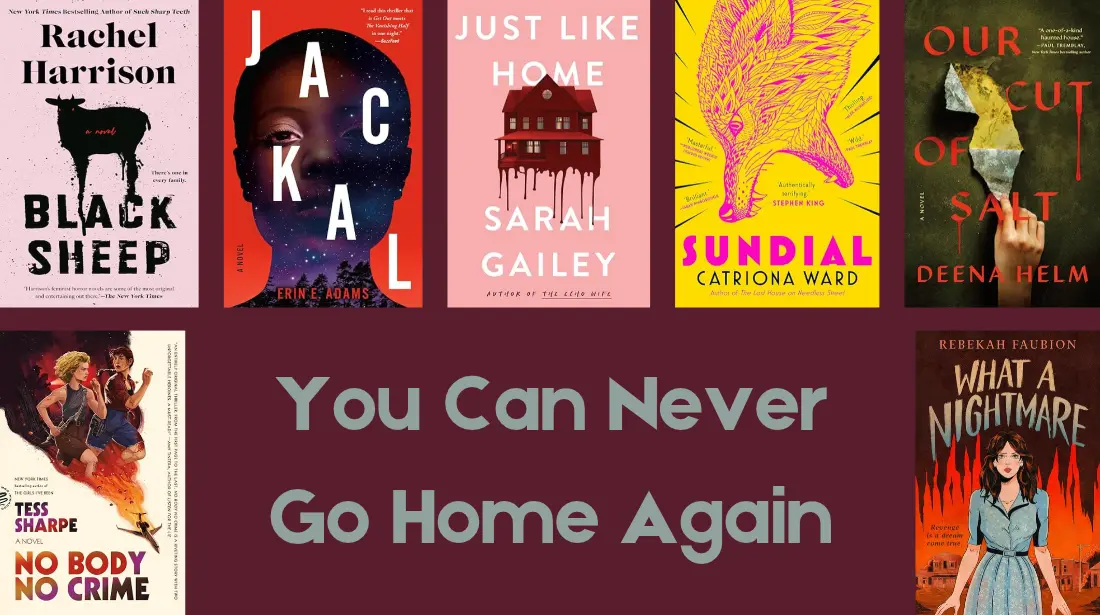
This analytical review examines seven standout contemporary releases that dissect the complexities, dread, and liberating catharsis of returning to one’s roots. From cult dynamics in religious enclaves to haunting legacies left behind by serial killers, these novels explore the dark underbelly of domesticity and prove that you can, in fact, go home again—though you may not survive the trip.
Read Also
Detailed Chronology: The Evolution of the "Return-to-Origin" Trope in Fiction
The narrative device of the prodigal child returning to a fraught environment has deep roots in gothic literature and classical tragedy. Historically, however, the journey was often framed through a lens of supernatural haunting or external threat. Over the past decade, a profound shift has occurred within speculative and thriller fiction. Authors have increasingly turned their gaze inward, prioritizing psychological realism, systemic small-town prejudice, and domestic abuse over traditional ghosts and ghouls.
The Mid-20th Century Blueprint: Gothic Isolation
Early precursors to modern domestic horror relied heavily on physical isolation—castles on windswept moors, decaying Southern mansions, or isolated rural estates. The protagonist was usually an outsider (a new bride, an estranged sibling, or an unwitting heir) stumbling upon pre-existing horrors.
The Late 20th Century: The Small-Town Secret
As suburbia expanded and rural communities grew more insular, the focus shifted to the collective guilt of small towns. Fiction began to explore how communities could collectively harbor predators, cover up crimes, and enforce rigid social conformity through ostracization and psychological violence.
The Modern Renaissance: Internalized Trauma and Agency
Today’s landscape, as highlighted by contemporary authors and critics alike, reframes the homecoming narrative as an exercise in confronting internalized trauma. The modern protagonist is rarely an innocent bystander; they are a survivor attempting to reclaim agency from the institutions, families, and geographic locations that forged their deepest insecurities. The horror no longer lurks solely in the shadows of the old homestead; it resides within the protagonist’s own memories, bloodlines, and behavioral conditioning.
Supporting Context & Metrics: The Appeal of Domestic Horror
Publishing industry metrics over the past five years indicate a significant surge in demand for psychological thrillers and horror novels centered on domestic and familial dynamics. According to independent bookselling data and genre-specific trade publications, readership for female-led, psychologically driven horror has grown by upwards of 35% since 2020.
Several cultural and psychological factors contribute to this literary trend:
- The Pandemic-Era Reevaluation of "Home": Years of lockdowns and forced domestic isolation caused many readers to re-examine the concept of home, transforming spaces of perceived safety into sites of claustrophobia and tension.
- The Rise of "Good For Her" Tropes: Readers increasingly gravitate toward narratives featuring complex, morally grey female protagonists who reject societal expectations of politeness, forgiveness, and maternal self-sacrifice in favor of survival, reclamation, and righteous vengeance.
- Deconstructing Generational Trauma: Modern psychological discourse has normalized conversations surrounding toxic family dynamics, religious trauma, and estrangement. Fiction that tackles these subjects provides readers with a form of cathartic validation.
Selected Literary Analyses: Seven Novels That Redefine the Homecoming Nightmare
Black Sheep by Rachel Harrison
For anyone who has ever wrestled with the suffocating expectations of a dysfunctional or hyper-religious family, Rachel Harrison’s Black Sheep offers an acutely relatable, albeit darkly supernatural, mirror.
The protagonist, Vesper, successfully carved out an independent life after breaking away from her insular, religious family. However, her hard-won distance is compromised when her former best friend—left behind in the cultish clutches of Vesper’s relatives—decides to marry. Forced to return to her childhood home for the ceremony, Vesper must confront her toxic mother, navigate landmines of suppressed trauma, and confront the reality of what she abandoned. Harrison expertly weaves signature wit and charm into a narrative that delivers both genuine scares and unexpected, deeply satisfying twists.
No Body No Crime by Tess Sharpe
Blending the gritty atmosphere of rural survivalism with intense character-driven suspense, Tess Sharpe’s No Body No Crime acts as an emotional lightning rod for fans of serialized, high-stakes mystery drama.
As a teenager, rural private investigator Mel helped her best friend Chloe bury a body. More than six years after Chloe vanishes, her estranged family hires Mel to track her down. When Mel finally locates her old friend, she discovers a hardened survivor entirely altered by the intervening years. United once more, the pair find themselves on the run from a vengeful past that refuses to stay buried. Delivering a fierce "sapphics in the Canadian wilderness" dynamic, the novel provides an adrenaline-fueled reading experience that resonates deeply with audiences craving complex queer protagonists navigating hostile landscapes.
Jackal by Erin E. Adams
Racial tension, systemic injustice, and atmospheric dread collide in Erin E. Adams’s acclaimed novel, Jackal. Liz Rocher has spent years maintaining a safe distance from her racially hostile, small hometown. When a close friend insists she return for an upcoming wedding, Liz reluctantly obliges, steeling herself for the inevitable discomfort of awkward reunions.
The singular bright spot of the trip is Caroline, the bride’s young daughter and Liz’s goddaughter. But when Caroline vanishes into the dense, notorious woods that locals have long warned people to avoid, Liz is thrust into a nightmare. In her frantic search, she unearths the dark, institutional truths behind the forest’s sinister reputation—and the horrifying danger that now holds her goddaughter captive. Voicey and propulsive, Adams’s work is a masterclass in grounded, socially conscious horror.
Just Like Home by Sarah Gailey
Few premises are as psychologically devastating as Sarah Gailey’s Just Like Home. Vera’s childhood residence is infamous: it was the site of multiple horrific murders committed by her father, a prolific serial killer who operated beneath the noses of his family and community.
When Vera’s estranged mother falls terminally ill, she is summoned back to the house of horrors. What follows is a profoundly uncomfortable reunion made even more unnerving as Vera begins unearthing deeply buried, terrifying secrets from her own past. Gailey delivers an emotional wallop, crafting a narrative that lingers in the reader’s psyche long after the final page is turned.
Sundial by Catriona Ward
Catriona Ward is widely recognized as a master of atmospheric, disorienting horror, and Sundial pushes the boundaries of maternal fear to harrowing new limits.
The story follows Rob, a mother who begins to notice deeply disturbing behaviors in her young daughter, Callie—including collecting animal bones and whispering to unseen entities. Terrified that her daughter is manifesting the same dark, sadistic traits as the twisted family Rob fled years ago, she makes a desperate decision. Rob takes Callie back to her isolated childhood home in the Mojave Desert, hoping to break the generational curse before it claims them both. Sundial is an essential read for anyone invested in the darker, psychologically complex corners of modern speculative fiction.
Our Cut of Salt by Deena Helm
Offering a lyrical and deeply poignant exploration of grief, heritage, and generational identity, Deena Helm’s Our Cut of Salt approaches the homecoming trope through the lens of diaspora and family history.
Following the death of her grandmother Nuhad, Marina travels to Haifa—the place where she was born, but which she has never truly known—to connect with her roots. However, as Marina delves deeper into her family’s past, she begins experiencing a mysterious, debilitating physical illness that ultimately requires her mother to intervene. Helm’s debut is a beautifully crafted meditation on three generations of women, examining how unaddressed familial truths can manifest as physical and emotional wounds capable of destroying a family from the inside out.
What a Nightmare by Rebekah Faubion
Rounding out this exploration of domestic terror is Rebekah Faubion’s What a Nightmare, a visceral and unapologetic dive into the consequences of female rage and suppressed power.
Growing up in a conservative small Texas town, Haven Powers was the rebellious girl community members wished would remain silent. Having spent years attempting to shrink herself to appease others, she managed to leave her hometown behind, but discovered that escaping physical geography does not automatically erase accumulated harm. When a terrifying nightmare about her predatory boss eerily manifests in reality, Haven recognizes the dangerous potential of her unchecked abilities. Seeking answers, she returns to her formidable family, only to be forced to confront her past through a lens of bloody, unapologetic retribution.
Official Statements and Author Insights
The psychological resonance of writing about the places we leave behind has long been a subject of fascination for creators working within the genre. In discussions surrounding the thematic underpinnings of small-town horror, authors frequently emphasize that the genre’s monsters are often proxies for societal pressures.
"When you write about returning home, you are inherently writing about accountability," notes one contemporary suspense author. "You are forcing a character to look at the version of themselves they tried to outrun. The horror isn’t just about what might be hiding in the closet; it’s about realizing that the environment that raised you programmed you in ways you are only beginning to understand."
Critics point out that contemporary horror has successfully democratized the concept of the monster. No longer confined to mythic beasts or isolated cabins, the primary antagonist in modern homecoming literature is often systemic indifference, familial manipulation, or the inescapable weight of memory.
Future Outlook
As the literary market continues to evolve, the appetite for stories that interrogate domestic spaces, family dynamics, and regional trauma shows no signs of slowing down. Publishers are increasingly investing in authors from diverse backgrounds who bring unique cultural and geographic perspectives to the horror genre, expanding the traditional boundaries of the "small-town nightmare."
In the coming years, industry analysts expect to see an even greater convergence of psychological suspense and speculative horror. As readers continue to seek out narratives that validate complex emotional realities—such as estrangement, trauma recovery, and feminist reclamation—the homecoming trope will remain a vital vehicle for exploring the darkest corners of human experience.
Ultimately, these novels remind us that while looking back can be terrifying, facing the ghosts of our past is often the only way to ensure we have a future.




Comments
Facebook App ID not configured. Please add it in the Customizer.