In 2022, a mysterious cardboard box materialized at a United Service Organizations (USO) office in New York City. Inside rested a time capsule of intimacy and conflict: more than 300 handwritten letters penned during the crucible of World War II. They were authored by Louis "Speedy" Weber, a 23-year-old soldier from the Bronx who found himself thrust from the comforts of a newly married life into the grueling mechanizations of global war. The letters, addressed to his wife Frances, offered an unfiltered, deeply human window into the wartime experience—sweeping from the mundane kitchen details of early military training to the thunderous crossing of the English Channel on D-Day.
For years, the origins of the donation remained an enigma. No donor card accompanied the box, and the fate of Speedy and Frances after V-E Day was entirely unknown. The collection eventually drifted to the USO’s national headquarters in Virginia, where it caught the eye of archivist and historian Michael Case. What followed was a multi-year investigative puzzle involving archival preservation, national media campaigns, a celebrity reading by actor Andrew Scott, and the dogged determination of an amateur genealogist in California.
Today, the mystery of Speedy Weber has partially unfurled. Through the genealogical breakthrough that tracked down his 84-year-old nephew, Arthur Serota, and niece Karen Weber Figilis, the world now has a face, a voice, and a richer context for the whimsical soldier who signed his dispatches with the enduring promise: “You are always in my heart.” Yet, even with these living links, central questions endure—most notably, who dropped the box off at the USO, and why were some of Speedy’s letters left stubbornly unopened by the woman he loved?
Detailed Chronology: From the Bronx to the Battlefields of Europe
The saga of Speedy Weber’s correspondence is mapped across multiple continents and nearly a decade of historical transformation.
1942: The Awakening of Military Life
In the summer of 1942, Louis Weber was learning how to survive the jarring transition from civilian life to the U.S. Army. Newly wed to Frances for barely a year, the 23-year-old New Yorker faced the daily indignities and exhausting routines of basic training: waking in the pitch-dark morning hours, enduring grueling kitchen duty until sunset, and sporting the mandatory 1.5-inch-long military haircut.
To cope with the acute homesickness, Speedy committed himself to writing. On June 17, 1942, he confessed to Frances:
“I don’t feel as blue as I did yesterday. They don’t give me a minute to think about anything but Army life, and in a way that’s the best thing for me, because if I stopped to think about home I’d go nuts.”
Even in these early, unseasoned days of his service, Speedy established a playful, evocative vernacular that would characterize his writing for the next three years. He showered Frances with a rotating cast of affectionate pet names—ranging from traditional monikers like "Dearest" and "Darling" to eccentric, whimsical inventions such as "Legs," "Knucklehead," "Shape," "the girl I care for most," and most famously, "Meatball."
1943–1944: Crossing the Atlantic and the Theater of War
As the American war effort expanded, Speedy shipped out to the European Theater. His letters began carrying atmospheric datelines scribbled at the top of the page: “somewhere in England,” “somewhere in France,” “somewhere in Luxembourg.”
Despite the looming dread of the front lines, Speedy maintained a literary flair that archivist Michael Case describes as "everyday elegant." He wrote home roughly ten times a month—averaging about 100 letters a year—making mail his primary psychological lifeline.
When Valentine’s Day approached in 1944, Speedy pivoted between hopeful romanticism and brooding angst. He plotted out their postwar future, promising Frances:
“Our second honeymoon is going to be even more nicer than the original one… we will go to some resort and have the grandest time of our lives.”
Yet, paragraphs later, the psychological toll of prolonged separation bled through:
“Until this is over, we will both exist, not live.”
By June 1944, Speedy found himself an eyewitness to history. Arriving in France shortly after the Normandy landings, he described his crossing of the English Channel in a letter dated June 14, 1944:
“It was quite thrilling and exciting to be able to be there when the curtain went up on the biggest show in the world… When I was on my way across the channel, I felt just as safe as if I were in your arms, because as far as the eye could see, there was nothing but ships of every description.”
Amid the grand scale of war, he retained his eye for absurd humor. In another dispatch, he mused about military chaplains: when a soldier is overburdened, “he can always go to the chaplain for sympathy… What I’m worried about is, who does the chaplain tell his troubles to? If you know, please enlighten me as soon as possible.”
1945–Postwar: Demotions, Aging, and Normalcy
Not all of Speedy’s updates were triumphant. In early 1945, he wrote to inform Frances that he had been demoted from private first class to private:
“I suppose you want to know why I was reduced. So do I. I must admit that a reason was given, but I think, and so does everyone else, that the reason is pretty flimsy.”
He quickly added a reassuring joke: Frances need not worry about him sinking any lower, because “there is no smaller grade than private.”
By October 1944, looking at a family photograph sent by his sister featuring his mother and young nephew Arthur (later identified as Arthur Serota), Speedy confronted the invisible aging wrought by the conflict. Noting that his mother looked profoundly older and worn down after just two years of war, he wrote:
“I’ll be perfectly frank with you… I didn’t like the way she looked. She looks so old and worried. I never realized that two years could make a person look so different… Now that I’ve seen all those changes, I’m beginning to wonder how you look.”
When the war finally ended, Speedy and Frances reunited in New York. They settled into a quiet, blue-collar normalcy: Speedy worked as a truck driver, while Frances managed a career at the U.S. Post Office. Though they never had children, they spent decades together, eventually retiring to Florida. Speedy passed away at age 78, and Frances at 87; they rest side-by-side in a Jewish cemetery.
Supporting Context & Metrics: The Lifeline of Wartime Mail
To understand the historical weight of the Weber archive, it is essential to examine the logistical scale of military correspondence during World War II.
The Volume of Communication: According to data from the Smithsonian’s National Postal Museum, the U.S. government actively incentivized communication between the home front and the front lines. Authorities provided free stationery and waived postage fees to maintain morale. By 1944, active-duty service members were dispatching letters, postcards, or single-page V-Mail at an astonishing rate of six times per week.
Preservation Asymmetry: As curator Lynn Heidelbaugh notes, the survival rate of letters mailed from the front lines vastly outstrips those sent to soldiers. Civilians at home could easily store, box, and preserve incoming mail in permanent residences, whereas soldiers constantly on the move through muddy European hedgerows and active combat zones had to travel light, frequently sacrificing or discarding personal belongings.
The Weber Collection Metrics: The box deposited at the USO in 2022 contained more than 300 letters, representing roughly three years of continuous documentation. Speedy averaged approximately 100 letters per year (one every three to four days), tracking his movements across Sicily, England, France, Belgium, Germany, Czechoslovakia, and North Africa.
Official Statements and Media Interventions
The journey of the letters from an anonymous donation to a recognized historical artifact required coordinated public outreach by the USO and major journalistic institutions.
The Archivist’s Perspective: Michael Case, the USO archivist who first processed the box at the organization’s Virginia headquarters, expressed profound awe at the collection. Speaking to Smithsonian magazine, Case remarked:
“We get a lot of donations, but usually it’ll be a photo or two, or a postcard, or a pin, or a button… Reading through the box, I really felt like I started to know Speedy Weber. It’s an everyday guy—not a general, no one famous—just doing his job and loving and being emotional and screwing up occasionally.”
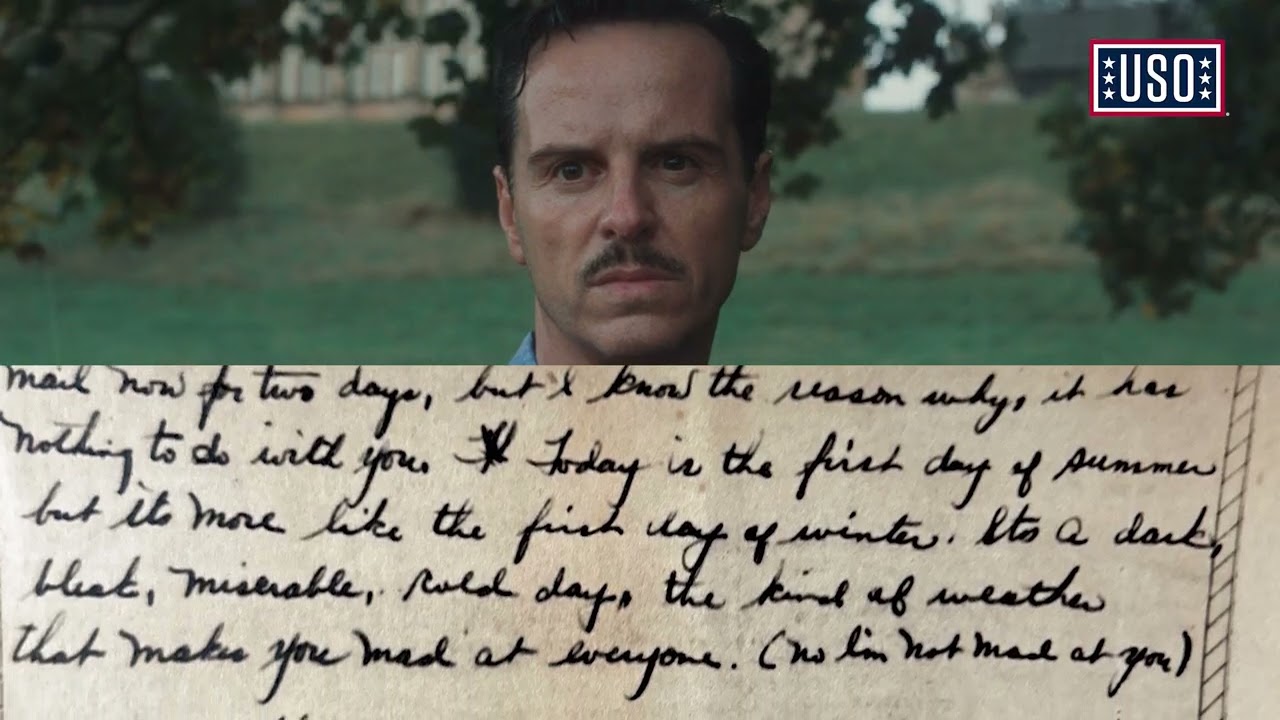
The USO’s Public Campaign: Recognizing the cultural resonance of the find, USO Vice President of Communications Jennifer Passey spearheaded efforts to bring the letters to light. In May 2026, coinciding with the release of the Focus Features World War II drama Pressure, the USO digitized selections of the archive. They enlisted Irish actor Andrew Scott—star of Pressure—to dramatically read excerpts of Speedy’s post-D-Day letters. Passey noted to the Washington Post:
“We’re putting the letters back out there as people are talking about this movie. We would love for anyone who may know more about Speedy or his wife, Frances, to reach out to us.”
The Breakthrough Connection: Despite initial media coverage by the Washington Post in late 2024 failing to yield immediate results, the digital rollout in 2026 caught the eye of California-based amateur genealogist Matthew Brown. Combing through Ancestry.com records, Brown identified a potential relative, Arthur Serota. Reporter Joe Heim of the Washington Post successfully tracked Serota down in Los Angeles, unlocking living memories of the whimsical soldier.
Family Memories: Now 84, Arthur Serota remembered Speedy as his favorite uncle—a man whose homecoming from the war stands as one of his earliest childhood memories.
“He was generous and just had this natural warmth that emanated from him,” Serota recalled.
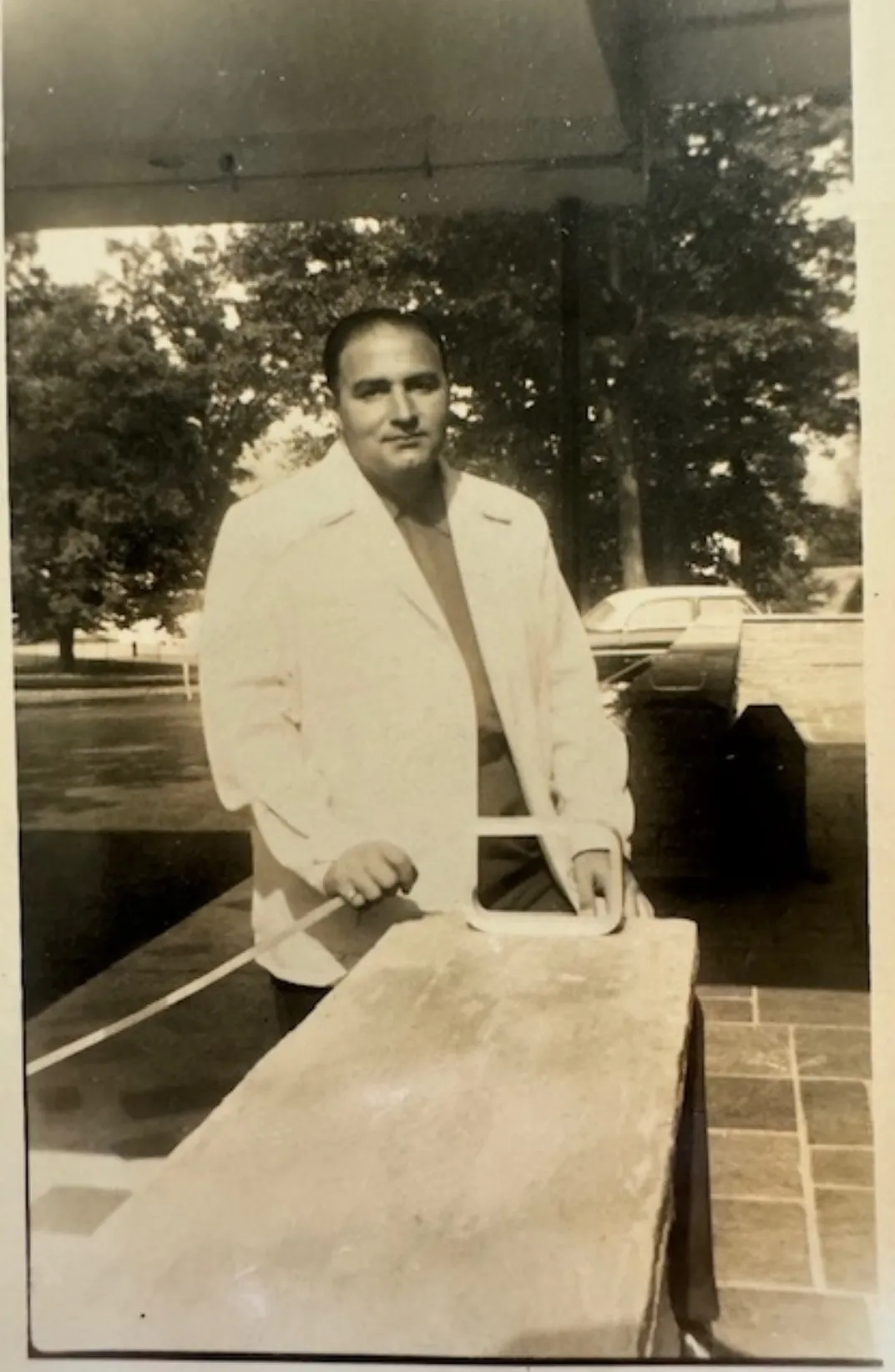
Serota connected researchers to another relative, niece Karen Weber Figilis, who remembered Frances as a "classy" woman who wore pencil skirts, spoke in a gravelly voice, and listened to Frank Sinatra with Speedy at family gatherings. Figilis provided the missing visual link: two black-and-white photographs showing Speedy and Frances in a group setting, and Speedy alone in a white jacket.
“Up to this point, I had no idea what he looked like,” Case marveled. “It was just great to put a face to the name.”
Future Outlook: Unresolved Mysteries of the Weber Archive
While the genealogical discovery of Arthur Serota and Karen Weber Figilis has breathed life into the historical record, significant chapters of the Speedy and Frances Weber story remain shrouded in mystery.
The Anonymous Donor: The most perplexing question facing the USO is how the box of 300 letters ended up on a New York City desk in 2022. Archivists theorize that a cleaner or distant relative may have discovered the box during an estate cleanout following the passing of a later-generation family member, recognizing the USO letterhead and returning the trove to its institutional origin. Whether the donor will ever step forward remains unknown.
Frances’s Missing Perspective: While Speedy’s voice echoes powerfully across hundreds of pages, Frances’s side of the correspondence is largely missing from the archive. Only two of her letters survived in the collection. Furthermore, historians have noted the curious detail that some of Speedy’s letters appear to have remained stubbornly unopened—leaving researchers to wonder if the emotional weight of reading them became too heavy for Frances to bear during the darkest months of the war.
Legacy and Archival Preservation: The Speedy Weber collection has transformed from an anonymous curiosity into a permanent pedagogical and cultural touchstone for the USO, illustrating how personal ephemera can humanize the macro-historical narratives of the 20th century. As Michael Case reflects, Speedy’s writings remind modern audiences of the sheer psychological stamina required to live through an era when military service meant signing up “until the war was over.”
Ultimately, Speedy Weber remains a testament to ordinary endurance—a whimsical Bronx soldier who stepped onto the world stage, looked into the abyss of total war, and chose to anchor his soul in the ink he sent back to his "Meatball."

/https://tf-cmsv2-smithsonianmag-media.s3.amazonaws.com/filer_public/fe/a4/fea4733a-0d55-495d-8871-35601a376f66/gettyimages-2186736524.jpg)
/https://tf-cmsv2-smithsonianmag-media.s3.amazonaws.com/accounts/headshot/Ellen_Wexler.png)
:focal(1500x1000:1501x1001)/https://tf-cmsv2-smithsonianmag-media.s3.amazonaws.com/filer_public/fe/a4/fea4733a-0d55-495d-8871-35601a376f66/gettyimages-2186736524.jpg)
/https://tf-cmsv2-smithsonianmag-media.s3.amazonaws.com/filer_public/94/0d/940dfb2b-7f54-4ad0-8162-d1b5b15d54bc/gettyimages-2186736369.jpg)
/https://tf-cmsv2-smithsonianmag-media.s3.amazonaws.com/filer_public/cc/06/cc0606eb-e5e8-41a8-842c-d31e30c1c266/gettyimages-2287835789.jpg)
/https://tf-cmsv2-smithsonianmag-media.s3.amazonaws.com/filer_public/95/2a/952a9cc4-a2ba-4d8c-ae2e-c7c7a0e4a418/louis_speey_weber_20260608_104427_gmail.jpg)


Comments
Facebook App ID not configured. Please add it in the Customizer.