
Executive Overview
The intersection of higher education, institutional diversity politics, and the relentless velocity of modern media has long been a volatile space. Yet, few events in recent memory have encapsulated this friction as starkly, or as tragically, as the rise and fall of Dr. Jason Arday. In March 2023, Arday was appointed professor of the sociology of education at the University of Cambridge. At just 37 years old, he made international headlines not merely for securing a chair at one of the world’s most prestigious academic institutions, but for a historic milestone: he was the youngest Black person ever appointed to a professorship in Cambridge’s 800-year history.
Accompanying this professional triumph was a striking, almost cinematic personal narrative. Arday’s biography frequently highlighted that a severe form of autism had left him unable to speak until the age of 11 and completely unable to read or write until he turned 18. Against what seemed to be insurmountable neurological and socio-economic odds, he achieved functional literacy, earned a PhD from Liverpool John Moores University, published extensively, and ascended rapidly through the ranks of British academia.
However, within months of his arrival at Cambridge, the foundation of this meteoric rise began to crumble. Investigations by academic peers and the British press revealed severe discrepancies, culminating in accusations of plagiarism in his 2015 doctoral thesis and the unravelling of his foundational personal claims. The ensuing media firestorm subjected Arday to an unprecedented level of public scrutiny.
Read Also
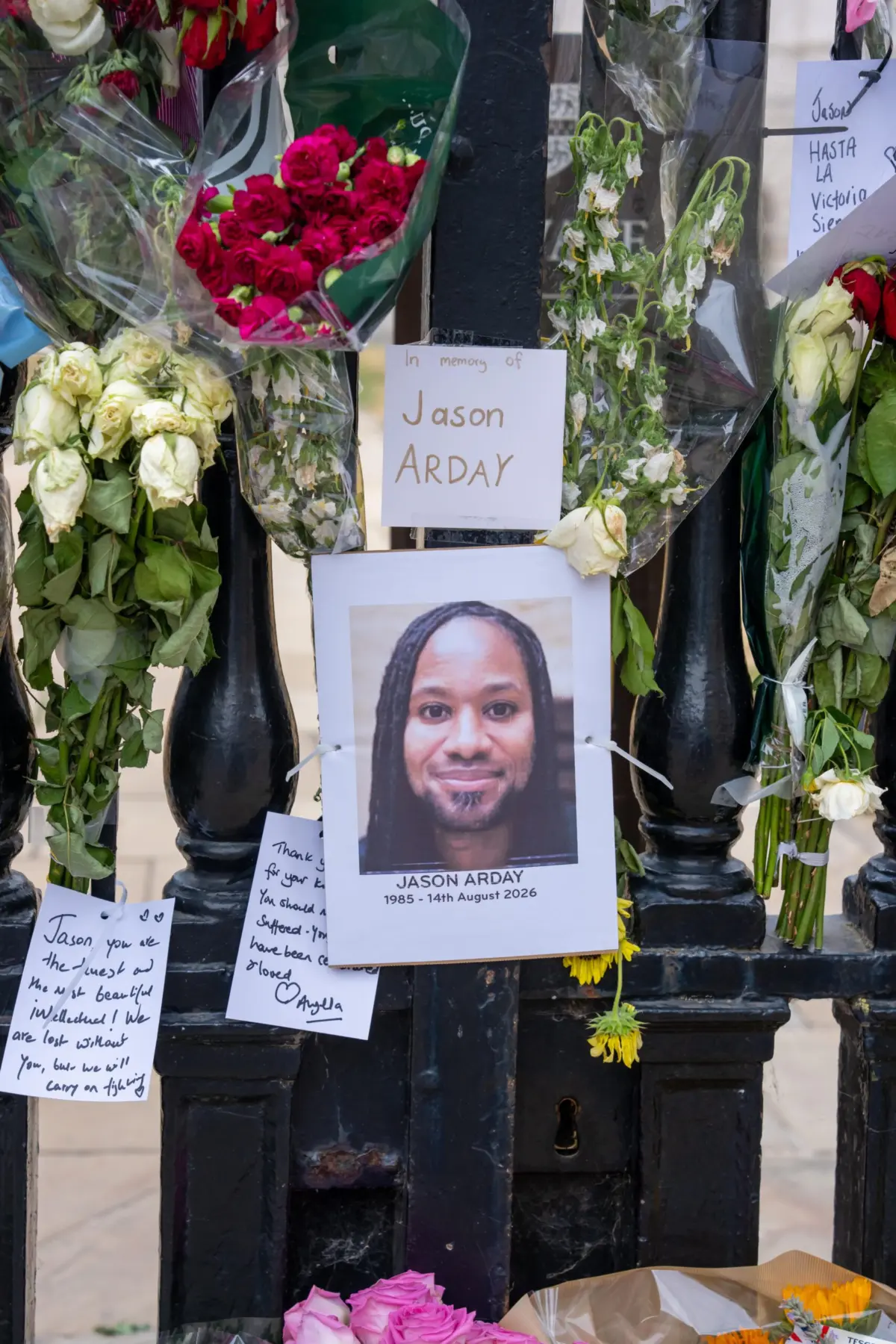
Earlier this month, overwhelmed by the intense pressure and relentless public exposure, Arday announced his resignation. Just nine days later, he was found dead in his home.
This tragic sequence of events has ignited a fierce global debate. The discourse exposes deep ideological fault lines regarding institutional accountability, the nature of media oversight, the pressures placed upon minority scholars within elite spaces, and the systemic vulnerabilities of higher education’s diversity initiatives. To dissect this complex tragedy, Today, Explained co-host Sean Rameswaram sat down with Atlantic staff writer Tyler Austin Harper, author of the essay "The Truths That Failed Jason Arday." This report explores the architecture of the scandal, the mechanics of Arday’s ascent, the role of the press, and the broader cultural implications of a tragedy that left the academic world reckoning with its own reflection.
Detailed Chronology: From Historic Milestone to Unraveling
To understand how a celebration of academic diversity devolved into a multi-front media spectacle and subsequent tragedy, one must trace the timeline of events with precision.
The Ascent (March 2023)
When the University of Cambridge announced the appointment of Jason Arday as professor of sociology of education, the news was heralded globally. The narrative was meticulously crafted and enthusiastically embraced by university leadership, publishing houses, and mainstream media outlets. Arday was marketed not just as a brilliant scholar, but as a living testament to resilience—a man who had conquered profound neurological disabilities and socio-economic disadvantage to reach the apex of global academia. His upcoming memoir was poised to be a major cultural event, cementing his status as a public intellectual of significant stature.
The Fractures Begin (Late 2023 – Early 2024)
Almost immediately after stepping into his role at Cambridge, cracks appeared in the narrative. Academic peers and investigative journalists began reviewing his published works and doctoral dissertation. In short order, allegations surfaced accusing Arday of plagiarizing portions of his 2015 doctoral thesis from Liverpool John Moores University.
What began as an internal academic integrity inquiry quickly leaked into the public sphere. As journalists began to comb through the biographical details that had propelled him to fame, additional inconsistencies emerged. Questions were raised regarding the veracity of several extraordinary claims in his personal history, transforming a standard academic misconduct inquiry into a broader investigation of his character and background.
The Climax and Resignation (August 2026)
As the British press intensified its coverage, publishing continuous updates and deep-dive investigations into every facet of Arday’s life and career, the pressure reached a breaking point. Earlier this month, Arday issued a public statement announcing his immediate resignation from Cambridge. In his final public writings, he detailed how the unrelenting scrutiny and personal attacks had inflicted a profound psychological toll on both himself and his family.
The relief sought through resignation, however, was tragically short-lived. Just nine days after stepping down from his post, Jason Arday was found dead in his residence. The news stunned the academic community, instantly shifting the conversation from questions of research ethics and resume padding to profound grief, mutual recrimination, and soul-searching across the international media landscape.
Supporting Context & Metrics: Anatomy of a Cultural Phenomenon
The unraveling of Jason Arday’s career cannot be understood in a vacuum. It sits at the complex intersection of institutional ambition, academic publishing culture, and the aggressive posture of the modern British press.
The Incentive Structure of Elite Academia
According to Tyler Austin Harper, Arday’s trajectory was fueled by a convergence of personal ambition and institutional desperation. Elite institutions like Cambridge have faced intense, sustained pressure to diversify their faculties and signal progressive modernization. In this environment, scholars who embody compelling narratives of overcoming historical exclusion become immensely valuable commodities.
"I think this is a person who is clearly a serial fabulist, and I think one could fairly say a con artist, who was able to, through an increasingly implausible array of stories about his background… flatter the vanities of people at Cambridge University who were very desperate to get a magical minority in the door," Harper explained during his conversation with Today, Explained.
Harper noted that Arday’s fabricated or exaggerated claims—ranging from being non-verbal until age 11 and illiterate until 18, to executing athletic feats approaching world records, alongside surviving multiple catastrophic health crises including brain tumors and cancer—were swallowed whole by institutions eager to validate their diversity initiatives. Rather than applying rigorous skepticism, elite gatekeepers overlooked glaring red flags because the narrative served institutional imperatives.
The Role of the British Press
While Arday’s fabrications formed the catalyst for the scandal, the relentless velocity and volume of the coverage by British media outlets transformed an internal academic integrity issue into an international spectacle. Day after day, major newspapers published exhaustive chronicles of every minute development in the affair.
This hyper-focus has drawn sharp criticism regarding double standards in journalistic oversight. Critics and commentators have questioned whether a white academic facing similar allegations of resume padding and thesis plagiarism would have been subjected to the same level of granular, relentless public exposure.
Official Statements & Expert Perspectives
The aftermath of Arday’s death has fractured public and intellectual discourse into deeply entrenched ideological camps, characterized by fierce debates over accountability, institutional complicity, and journalistic ethics.
The Debate Over Media Scrutiny and "Digital Lynching"
The intensity of the press response led prominent figures, including American scholar Ibram X. Kendi, to characterize the media’s treatment of Arday as a "lynching." This terminology, however, has faced severe pushback from analysts who argue that deploying such loaded historical metaphors for journalistic coverage trivializes actual racial violence.
Addressing this controversy, Tyler Austin Harper pushed back firmly against the metaphor while acknowledging the disproportionate nature of the press response:
"First of all, there are few things I find more grotesque, at least in terms of everyday discourse, than treating lynching as a metaphor… I think anyone who has seen a hanging tree knows that throwing the term around—‘lynching’—for mere journalistic scrutiny is vile beyond measure."
At the same time, Harper conceded that the British press engaged in an obsessive level of scrutiny that was difficult to separate from racial dynamics. He noted that while Arday was undeniably a public figure whose marketing as an 800-year first warranted journalistic inquiry, the sheer volume and tone of the coverage crossed the line from appropriate oversight into a punitive obsession.
Agency and Accountability
A central tension in the post-mortem analysis of Arday’s life is balancing institutional complicity with individual agency. Some commentators have inadvertently infantilized Arday, portraying him entirely as a passive victim of systemic pressures rather than an active participant in his own career trajectory.
Harper strongly rejects this framing:
"One of my frustrations with the way discourse of this story has unfolded, particularly after his tragic death, is he is being treated as somebody with no agency. And I think Arday, if you look at what he did, was clearly relatively savvy. He understood that there was a market… He knew that he could leverage these various identity claims in service of advancement, which is what happened."
Rather than placing primary blame solely on the media or solely on the individual, Harper argues for a distributed model of accountability. The publishing houses that overlooked clear inconsistencies, the institutions that rushed to enshrine him without standard due diligence, and the individual who fabricated his credentials must all share the weight of the institutional failure.
Future Outlook: Lessons Unlearned
As universities, media organizations, and cultural commentators attempt to process the legacy of Jason Arday, the prospects for meaningful self-reflection appear bleak. According to analysts of higher education culture, the tragedy has not served as a catalyst for reform, but rather as fuel for pre-existing ideological narratives.
Entrenched Camps and the Absence of Self-Reflection
In the wake of Arday’s passing, ideological factions have retreated into predictable postures:
- Progressive commentators and institutions have largely focused their critique on the media, condemning the intensity of the press coverage and viewing the scandal through the lens of targeted persecution.
- Conservative commentators and critics of higher education have seized upon the case to validate long-standing arguments against affirmative action, diversity, equity, and inclusion (DEI) frameworks, viewing the episode as proof that identity politics compromises academic rigor.
This polarization leaves little room for nuanced, systemic self-correction. As Harper observed:
"No. I think people have retreated into their camps… I haven’t seen a single lesson really learned. I’ve seen a lot of blame being apportioned. I don’t think there’s much reflection about whether or not these policies are good or bad… I see a lot of blame. And even as I’m wanting to say that there’s lots of people to blame, I also think we should be a little more self-critical."
Conclusion
The tragedy of Jason Arday stands as a sobering case study in the pathologies of modern institutional life. It lays bare the dangers of an academic marketplace that prioritizes optics over truth, the ethical boundaries of investigative journalism in the digital age, and the profound human cost when public figures are built up as symbols and subsequently torn down without mercy.
Ultimately, the story of Jason Arday is not merely about one man’s fabrications or a media storm; it is a mirror reflecting the deep anxieties, ideological fractures, and systemic vulnerabilities of contemporary higher education—a mirror that a polarized public, thus far, appears largely unwilling to look into.





Comments
Facebook App ID not configured. Please add it in the Customizer.