
Executive Overview
In the summer of 2024, an unconventional comic farce landed on Broadway with little guarantee of commercial survival. Written by and starring Cole Escola and directed by Broadway newcomer Sam Pinkleton, Oh, Mary! presented an absurd alternative history: a delusional, alcohol-dependent Mary Todd Lincoln harboring desperate aspirations of becoming a cabaret star, perpetually thwarted by her closeted president husband. Debuting originally off-Broadway at the Lucille Lortel Theatre before transferring to midtown’s Lyceum Theatre, the production defied industry skepticism to become a critical and box-office phenomenon. Two years after its premiere, the production continues to sell out night after night, sustained by a novel repertoire model: cycling acclaimed character actors through short, high-profile runs as the titular First Lady.
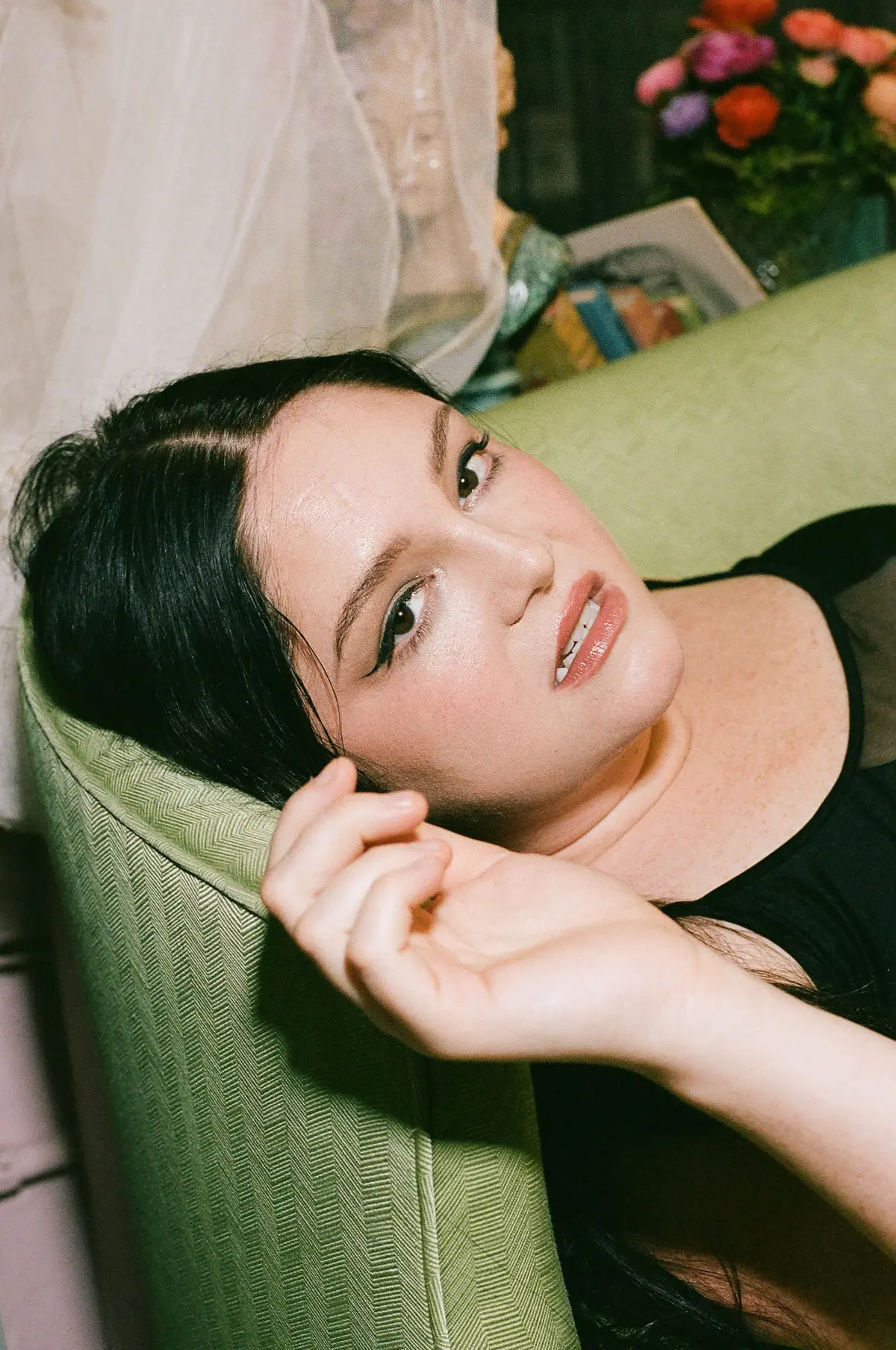
Among the lineage of performers stepping into Mary’s elaborate hoopskirt—a roster that includes Jane Krakowski, Maya Rudolph, Betty Gilpin, Jinkx Monsoon, John Cameron Mitchell, Titus Burgess, and upcoming star Bowen Yang—35-year-old comedian and actress Megan Stalter has delivered one of the run’s most compelling engagements. Fresh off the fifth and final season of HBO Max’s critically lauded comedy Hacks, Stalter’s Broadway tenure marks a key inflection point in a career defined by rapid evolution. From viral pandemic-era social media sketches to leading roles in Lena Dunham’s Netflix series Too Much, Stalter is dismantling traditional boundaries between avant-garde character study, mainstream television acting, and conceptual pop music.
Detailed Chronology
[Early Years] --------> [Chicago Era] --------> [NYC & Pandemic] --------> [Hacks Era] --------> [Broadway Triumph]
Pentecostal upbringing;   Improv at Second City,  Move to NYC; Cameo      Cast as Kayla in       Takes over lead in 'Oh, Mary!';
Dayton improv classes     Annoyance, Hideout      videos & viral reels    'Hacks' & 'Too Much'   launches pop music project
1. Origins and the Midwestern Improv Circuit
Raised in the Cleveland suburbia of Ohio within a devout Pentecostal household, Stalter’s early exposure to performance was unorthodox. Her father, the owner of Cleveland’s Voodoo Monkey Tattoo, introduced her to obscure comedy and cult classics, fostering an early appreciation for absurdist humor alongside her family’s deep spiritual life.
Read Also
Despite an unsettling middle-school experience marked by severe bullying, Stalter harbored an unshakeable desire to perform. After abandoning initial plans to pursue nursing at a local community college, she took her first formal improv class in Dayton, Ohio. Encouraged by her mother, Stalter relocated to Chicago, embarking on a multi-year grind through the city’s historic comedy ecosystem.
While working full-time as a nanny, she took classes and performed regularly at institutions including:
- The Second City
- ImprovOlympic (iO)
- The Annoyance Theatre
- The Hideout
During this period, Stalter developed her signature comedic sensibility—a blend of unearned confidence, character delusion, and subtle vulnerability. Collaborating with contemporaries such as Sarah Sherman, Stalter moved away from traditional punchline-driven standup toward experimental formats, utilizing slide presentations, physical gags, and intentional structural awkwardness to test the boundaries between bit and reality.
2. The New York Migration and Pandemic Resilience
Roughly seven months prior to the COVID-19 pandemic, Stalter moved to New York City after securing management. Her early foothold in the city’s comedy scene was bolstered by artist Cole Escola, who hired her for a paid writing and performance role on a National Lampoon podcast—a opportunity that allowed Stalter to transition fully into comedy as a primary livelihood.
When live venues shut down globally in early 2020, Stalter pivoted to digital spaces. She sustained herself financially through hyper-customized, extended-length videos on Cameo and gained widespread recognition for her front-facing, sub-minute character sketches on Instagram and TikTok. Her viral piece "Hi, Gay!"—a satirical takedown of performative corporate pandering during Pride Month—established her as a prominent voice in modern digital satire.
Key Milestone Timeline:
• 2019: Relocates to NYC; collaborates with Cole Escola on National Lampoon podcast.
• 2020: Pandemic shutdown; breakout via short-form character videos ("Hi, Gay!").
• 2021: Cast as Kayla in HBO Max's 'Hacks'.
• 2024: 'Oh, Mary!' opens on Broadway; Stalter stars in Lena Dunham's 'Too Much'.
• 2025–2026: Final season of 'Hacks'; Stalter assumes starring role in 'Oh, Mary!'.
3. Television Stardom and Red Carpet Performance Art
In 2021, Stalter landed her breakout television role as Kayla, the entitled yet inadvertently capable Hollywood agency assistant in Hacks, created by Paul W. Downs, Lucia Aniello, and Jen Statsky. Over five seasons, Stalter’s dynamic with Downs (who played her long-suffering boss, Jimmy) transformed her character from a chaotic foil into the emotional heart of the agency narrative.
Concurrently, Stalter and Downs turned industry marketing events into extensions of their comedic work. Their public appearances—including wearing matching custom orange leather ensembles spoofing viral celebrity paparazzi photos—demonstrated Stalter’s commitment to subverting red-carpet norms through deliberate metatheater.
Her screen presence caught the attention of director Lena Dunham, who cast Stalter as the lead in her Netflix romantic comedy series Too Much, cementing her status as a versatile leading actress.
4. Broadway Debut in Oh, Mary!
After watching Jinkx Monsoon perform the role of Mary Todd Lincoln at the Lyceum Theatre, Stalter auditioned for the production, securing a two-month engagement as the lead. Bringing a frantic, child-like physical volatility to the character, Stalter’s portrayal emphasizes the tragedy beneath the show’s manic exterior—depicting Mary as an emotionally stunted artist trapped by social expectations and personal isolation.
Supporting Context & Industry Metrics
The Oh, Mary! Commercial Model
The sustained success of Oh, Mary! offers a notable case study for modern Broadway economics. Originally conceived as an off-Broadway experimental comedy, the show overcame high financial risks through strategic theatrical programming:
| Metric / Parameter | Performance Data |
|---|---|
| Original Debut | Lucille Lortel Theatre (Off-Broadway) |
| Broadway Transfer | Lyceum Theatre (Summer 2024) |
| Run Duration | 2+ Years (Continuous Call) |
| Casting Strategy | Rotating short-term engagements with established talent |
| Notable Guest Leads | Jane Krakowski, Maya Rudolph, Betty Gilpin, Jinkx Monsoon, Titus Burgess, Megan Stalter, Bowen Yang |
By regularly recasting the main role with prominent figures from comedy, drag, and television, the production creates recurring audience engagement, driving repeat box-office sales without altering the core script or underlying stage design.
Broadway Audience Engagement Mechanics:
[Core Production Design] + [Fixed Script & Directing Framework]
                        ↓
[Rotating A-List Guest Leads (6-8 Week Stints)]
                        ↓
[Repeat Ticket Purchases + High Media Coverage]
Expanding into Conceptual Music
Paralleling her theatrical work, Stalter has launched a parallel music project, blurring the line between satire and actual pop production. Working with veteran songwriter Jesse Thomas, she released her debut single, "The Prettiest Girl in America," in May, followed by track releases such as "Little Black Dress" ahead of her full-length album, Crave.

Rather than framing the project as pure parody, Stalter approaches the music with genuine stylistic commitment, positioning it alongside artists who integrate comedic persona work directly into contemporary pop culture.
Official Statements & Creative Philosophy
Speaking over tea and classic theater-district fare at Manhattan’s historic Joe Allen during her Broadway run, Stalter offered detailed insight into her technical approach, spiritual perspective, and artistic identity.
On Physicality and the Mechanics of Oh, Mary!
Reflecting on the physical demands of playing Mary Todd Lincoln—a performance that requires dramatic physical maneuvers, desk jumps, and deliberate vocal strain—Stalter highlighted the discipline needed for high-frequency theater runs:
*"Live theater is so crazy because you’re constantly thinking, ‘What if I just passed out or threw up?’ I realize I can’t do as much during the day as I normally would. On two-show days, you essentially reserve every drop of energy for the stage.
My instinct with Mary was to play her exceptionally young. When no one is seeing her, she feels like a child throwing a full-body tantrum. She’s profoundly terrified of the low that follows a high—an ache that a lot of artists can relate to. It’s deeply sad, thinking that someone is scared to feel happiness because it guarantees another fall."*
Stalter's Performance Continuum:
[Absurdist Character Delusion] ↔ [Child-like Physical Volatility] ↔ [Underlying Emotional Vulnerability]
On Faith, Identity, and Political Integrity
Addressing her upbringing within the Pentecostal church and her current status as an openly queer artist, Stalter rejected the idea that religious faith and LGBTQ+ identities are mutually exclusive:
*"I feel just as close to God now as I did growing up, probably closer because I know myself better. I never felt judged by God for being queer—ever. The story I want to tell with my film work is my way of showing that you are allowed to be gay and love God. It’s unfair that people who grew up in the church are told they have to forfeit their faith simply because of who they love.
Faith should never be weaponized for hatred or cruelty. When I see people using Christianity to justify malice, it contradicts everything true belief stands for. My relationship to God exists entirely outside of dogmatic institutional judgment."*
On Directorial Collaborations and Creative Freedom
Comparing her television work under the direction of Lena Dunham on Too Much with her collaborative experience on Hacks, Stalter emphasized the value of directorial trust:
"Working with Lena taught me immense trust in a director’s vision. She moves with complete confidence, knows precisely what she needs, and creates an environment that feels like creative play. Both Lena and the ‘Hacks’ team—Paul, Lucia, and Jen—granted me the freedom to improvise within structured character arcs. That trust allows a performer to bring their full, uninhibited self to the work."
Future Outlook
As Megan Stalter completes her run at the Lyceum Theatre—handing off the role of Mary Todd Lincoln to Bowen Yang—her upcoming slate spans film, television, and music.
1. Church Girls Feature Film Transition
Originally developed as a television pilot, Stalter’s semi-autobiographical project Church Girls is currently being restructured into a feature film. Drawing from her youth in Ohio, the film explores the complications of coming of age as a queer teenager within an evangelical religious community. By shifting the project to a feature format, Stalter aims to deliver a focused cinematic narrative that balances affectionate satire of church culture with a defense of queer spirituality.
2. Music Distribution and the Crave National Tour
Following the release of her pop album Crave, Stalter is preparing a multi-city national concert tour featuring a full dance ensemble. Designed as a crossover between a traditional pop show and a comedic performance art piece, the tour will extend Stalter’s exploration of celebrity culture, delusion, and musical subversion.
3. Long-Term Industry Footprint
Stalter’s swift progression from viral online comedy to theatrical and cinematic projects reflects a broader shift in the entertainment landscape. By using self-developed, character-driven material as a foundation for broader dramatic work, Stalter has established a versatile career model. Whether on a Broadway stage, a television set, or a pop concert platform, her work continues to challenge traditional divisions between high camp, genuine emotion, and modern performance art.




Comments
Facebook App ID not configured. Please add it in the Customizer.