
Executive Overview
Popular conceptions of farming tend to draw a direct line between environmental virtue and good animal welfare—an intuition so deeply rooted that behavioral researchers have coined the term the "humane halo" effect. Under this psychological bias, consumers told that a farm utilizes environmentally progressive practices automatically assume it also treats its livestock humanely.
Against this backdrop, a controversial new scientific paper published in Royal Society Open Science has sent shockwaves through agricultural and environmental policy circles. The study examined the environmental impacts of different egg-farming systems and concluded that cage-free, free-range, and organic eggs generate significantly higher greenhouse gas emissions, demand more land use, and cause greater environmental harm than confining hens in traditional or enriched wire cages.
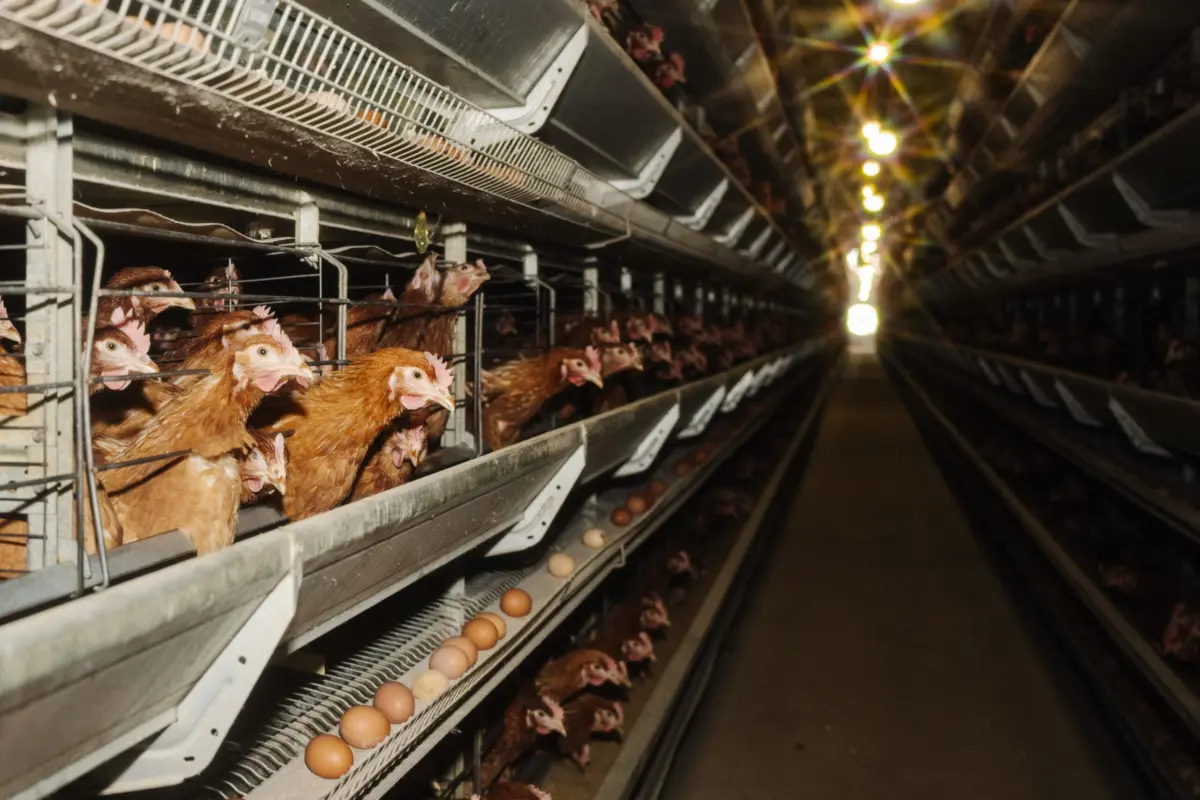
At any given moment, more than 8 billion egg-laying hens inhabit farms across the globe. The vast majority of these birds spend their lives inside intensive wire systems that severely restrict basic behaviors, including spreading their wings or even turning around. This profound immobilization frequently induces depression-like states, rendering hens the largest population of terrestrial animals subjected to lifelong caging.
Read Also
The new study highlights a well-known, tragic trade-off within animal agriculture: animals allotted more room to roam and express natural behaviors inevitably consume more resources, driving up their environmental footprint. Yet, this paper—and the intense public discourse surrounding it—throws a harsh spotlight on "climate reductionism," a dangerous tendency to reduce complex moral and ethical issues strictly to a carbon ledger. By examining the true scope of the study, the limitations of its methodology, and the lived realities of the birds themselves, this investigation unpacks why sacrificing animal welfare on the altar of carbon efficiency is a fundamentally flawed pursuit.
Detailed Chronology & Policy Context
Over the past few decades, a concerted global campaign led by animal welfare advocates has sought to grant hens relief from extreme confinement. Activists have successfully lobbied legislative bodies to pass sweeping bans on conventional battery cages while persuading major grocery chains, multinational restaurant corporations, and institutional food service providers to transition exclusively to cage-free sourcing.
The shift has been monumental:
- The United States: Nearly half of all egg-laying hens are now raised in cage-free environments.
- The European Union: Approximately two-thirds of laying hens have transitioned out of traditional cages.
- The United Kingdom: Up to four-fifths of all eggs consumed originate from cage-free systems.
However, conventional cages remain the industry standard in several high-income nations, including Canada, Japan, South Korea, and Israel. Concurrently, this advocacy work has expanded into low- and middle-income countries, where the vast majority of the world’s hens reside and predominantly remain caged.

The release of the Royal Society Open Science paper arrives at a precarious political moment. Governments in the UK and the European Union are actively weighing complete legislative bans on caged egg production. Critics and policy analysts note that the study’s timing weaponizes carbon metrics against ongoing welfare-driven legislative fights, forcing policymakers to weigh carbon efficiency against ethical standards of living.
Supporting Context & Metrics: Unpacking the Study
Authored by researchers using historical data from the UK, the study compared five distinct egg production frameworks:
- Traditional battery cages
- Enriched colony cages (which offer slightly more space)
- Cage-free indoor barns
- Free-range systems
- Organic free-range operations
Fully indoor cage-free systems remain the primary large-scale alternative utilized during transitions away from cages in the US and globally. The researchers evaluated these systems across four primary environmental pillars: greenhouse gas emissions, nutrient pollution in waterways, soil acidification, and land use.
The Environmental Price of Space
Across all four metrics, the study found that farms utilizing enriched cages—which afford each hen a living space comparable to a single sheet of printer paper—exhibited the lowest environmental impacts. Standard battery cages ranked second lowest. To produce an equivalent volume of eggs, cage-free indoor barns emitted roughly 56.1 percent more greenhouse gases than enriched cages and 33.8 percent more than standard battery cages.
The underlying mechanics are straightforward: hens permitted to walk, flap their wings, fly, and perch consume more biological energy and calories than birds trapped in motionless confinement. Consequently, their resource utilization and overall environmental footprint escalate.
Methodological Vulnerabilities and Pushback
The study’s heavy reliance on data published over a decade ago has drawn sharp rebukes from agricultural scientists.
"The paper is methodologically flawed," wrote Dr. Ilias Kyriazakis, a professor at Queen’s University Belfast and senior author of the baseline research utilized in the new study. "It relies on our data from 2010 to construct scenarios intended to represent national conditions in 2023, without adequately accounting for the substantial changes that have occurred over that period." Kyriazakis added that the authors likely overestimated the emissions and resource burdens of non-cage production systems.

Other peer-reviewed literature supports this critique, demonstrating that modern cage-free operations have steadily closed the environmental gap. Furthermore, research indicates that the composition of a hen’s feed often exerts a far more profound influence on carbon emissions than its housing architecture. One notable US study found that certain cage-free farms actually registered lower emissions due to the deployment of environmentally optimized feed compositions.
Official Statements and Expert Perspectives
The study’s lead author, Dr. Oliver Martini—who recently completed his PhD in animal and food science at the University of Padova—stressed that the paper was not intended to justify lifetime caging, but rather to establish transparent metrics for ongoing industry transitions.
"We recognise that the transition toward cage-free production is important for improving animal welfare," Martini stated in an email correspondence. "The long-term goal should be to develop cage-free systems that combine high standards of animal welfare with improved production efficiency and lower environmental impacts. If we can achieve that, the environmental gap between cage-free and caged systems could be substantially reduced."
Lewis Bollard, managing director for farm animal welfare at the philanthropy Coefficient Giving, offered a sobering critique of the study’s underlying logic on social media, pointing out the moral absurdity of utilizing carbon metrics to justify systemic confinement:
"Caging humans would reduce our emissions, too. No one would ever suggest doing that, because a lower carbon footprint cannot turn a morally indefensible practice into a good idea."
Furthermore, experts emphasize that eggs represent a minute fraction of the global agricultural emissions ledger. Animal agriculture overall accounts for 12 to 20 percent of global greenhouse gas emissions, but eggs are responsible for a mere 3 percent of those livestock emissions—translating to roughly 0.6 percent of total global emissions. As Dr. Kyriazakis noted: "There’s no doubt that eggs are the least environmentally impacting animal product per unit." To put this in perspective, lifecycle analyses published in Science demonstrate that a single beef burger generates a carbon footprint roughly equivalent to producing five dozen cage-free eggs.
Future Outlook: Beyond the Carbon Ledger
The intense focus on the carbon footprint of egg production exposes a systemic flaw in modern agricultural research: the tendency to evaluate animal welfare through the lens of industrial productivity rather than the subjective experiences of the animals themselves.

When stripped of corporate efficiency metrics, the reality of mass-producing laying hens reveals deep systemic crises that transcend housing design. Modern laying hens have been selectively bred through intensive genetic modification to channel their physiological resources into producing upward of 300 eggs per year—a staggering leap from their wild ancestors, the red junglefowl, which naturally lay just 10 to 15 eggs annually. This hyper-productivity violently depletes the birds’ skeletons of calcium, leaving them exceptionally prone to agonizing bone fractures and severe reproductive pathologies.
Meanwhile, transitioning to cage-free systems does not equate to a pastoral paradise. Hens in cage-free barns often inhabit sprawling, windowless sheds alongside tens of thousands of other birds, where high population densities frequently trigger injurious pecking, aggressive crowding, and elevated stress levels. Ultimately, regardless of the housing system, commercial laying hens face premature slaughter the moment their biological productivity dips.
The Path Forward for Consumers and Policymakers
On a macro-societal scale, regulatory pushes toward cage-free systems represent a vital harm-reduction strategy, alleviating unimaginable physical suffering for millions of sentient creatures trapped in unyielding confinement. However, chasing absolute environmental efficiency through industrial animal farming is an ethical dead end.
For individual consumers navigating these complex trade-offs, the most direct and impactful solution requires looking beyond the poultry aisle altogether. Plant-based alternatives—such as tofu, beans, and lentils—possess a tiny fraction of the greenhouse gas emissions associated with even the most efficient egg systems, successfully bypassing the profound moral costs inherent in mass-producing animal products. As the debate over sustainable food systems evolves, policymakers and consumers alike must recognize that a lower carbon footprint can never substitute for basic ethical stewardship.




Comments
Facebook App ID not configured. Please add it in the Customizer.