
Executive Overview
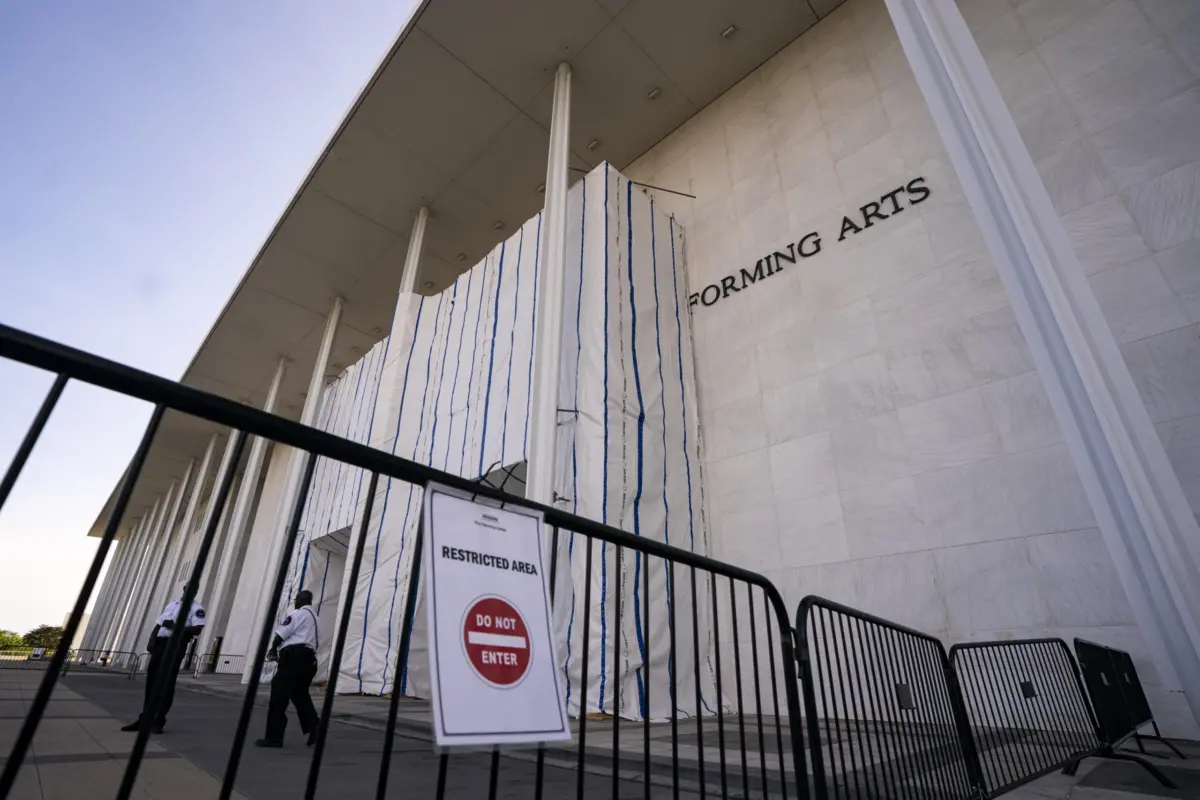
The iconic John F. Kennedy Center for the Performing Arts—a living presidential memorial and America’s national cultural hub—finds itself at the epicenter of a high-stakes legal, political, and architectural war of attrition. In a dramatic escalation filed late Monday, the United States Department of Justice (DOJ) asserted that if federal courts block proposed $250 million renovation plans tied explicitly to presidential branding, the historic structure may deteriorate beyond repair. According to the government’s filing, the facility could face ultimate demolition, making way for a scaled-down alternative such as a large outdoor amphitheater.
At the heart of the controversy is a tangled web of presidential legacy, institutional funding, and fierce legislative pushback. The Trump administration has aggressively pursued efforts to affix Donald Trump’s name, titles, and purported financial contributions to the landmark venue. These efforts follow a protracted legal battle that previously forced the removal of the 45th and 47th president’s name from the facility earlier this year.
However, critics, watchdogs, and Democratic lawmakers—led by Representative Joyce Beatty (D-OH)—contend that the administration’s apocalyptic warnings are a manufactured crisis designed to bully the judiciary and force public acceptance of a partisan takeover of a national cultural monument. Official financial records and recent investigative reporting complicate the administration’s narrative further, revealing that public funds have already been secured for the project, and that previous attempts to brand the center under the Trump moniker resulted in sharp declines in private donations and ticket sales, precipitating a multi-million-dollar financial deficit.
Read Also
This report examines the intricate timeline of the dispute, analyzes the conflicting claims regarding structural safety and funding, explores the broader financial realities facing the institution, and considers the long-term implications for one of Washington’s most revered cultural landmarks.
Detailed Chronology: From Memorial Status to Legal Warfare
The conflict over the identity and physical upkeep of the Kennedy Center is not an isolated policy disagreement; it is the latest chapter in a multi-year contest over public space, historical memory, and executive authority.
The Initial Renovation Push and Judicial Reversal
The friction began intensifying in mid-2025, when the Trump administration initially moved to rebrand sections of the Kennedy Center. Established by an act of Congress in 1958 as a bureau of the Smithsonian Institution and later designated as the sole official memorial in Washington, D.C., to President John F. Kennedy, the center has historically operated above the fray of partisan politics.
When the administration first applied Trump’s name to the institution, it triggered immediate legal action. Representative Joyce Beatty, alongside a coalition of preservationists and congressional watchdogs, filed a lawsuit arguing that renaming a federal memorial established by bipartisan consensus violated federal statutes governing national monuments and administrative overreach. A federal court agreed, issuing an injunction that resulted in the removal of Trump’s name from the facility in June.
The Counter-Offensive: Stacking the Board and Passing New Tributes
Undeterred by the judicial setback, the administration executed a structural pivot. Over the subsequent months, the Kennedy Center’s board of trustees—increasingly populated by loyalists and Trump appointees—began laying the groundwork for a massive overhaul.
Earlier this month, the newly aligned board voted unanimously to approve a sweeping $250 million renovation package. Crucially, the board tied the multi-million-dollar architectural overhaul to three distinct tributes honoring Donald Trump:
- The inscription "renovated and restored by President Donald J. Trump" emblazoned on the building’s primary facade.
- The inscription "endowed by The Trump Kennedy Center Fund" accompanying the first.
- The official renaming of the expansive surrounding grounds to "President Donald J. Trump Plaza."
The DOJ’s Monday Filing and the "Demolition" Threat
Recognizing that these branding conditions would immediately trigger renewed legal challenges from congressional opponents, the Justice Department intervened directly on behalf of the administration. In a stark court filing submitted late Monday night, government attorneys argued that any judicial order blocking the board from recognizing President Trump would cause private donors to flee, financial contributions to dry up, and structural rehabilitation to grind to a halt.
The DOJ brief went a step further, offering a dire prognosis for the brutalist-style structure designed by architect Edward Durell Stone: without the specific renovations tied to the Trump brand, "the center will deteriorate further into an unsafe, decrepit structure that will be required to be taken down" and replaced by an alternative structure, "such as a large outdoor amphitheater."
Representative Beatty’s legal team, however, views the filing as legal extortion—an attempt to hold a national cultural treasure hostage to secure permanent self-aggrandizement on federal property.
Supporting Context & Metrics: Unraveling the Financial and Structural Claims
To properly evaluate the DOJ’s assertions, investigators, architectural experts, and financial analysts have parsed the actual state of the Kennedy Center’s coffers and the mechanics of its funding streams. The administration’s narrative relies on the premise that private philanthropic capital, unlocked exclusively by presidential branding, is the singular lifeblood keeping the structural project afloat. Public records tell a markedly different story.
The Reality of Congressional Funding
According to federal budgetary records, Congress already approved a substantial $257 million allocation specifically earmarked for the rehabilitation of the Kennedy Center infrastructure last year. In fact, when the funding was initially secured, the Kennedy Center board itself heavily touted the appropriation in an official press release, explicitly crediting Donald Trump for the legislative win.
This undermines the DOJ’s primary argument that the structural overhaul is financially dependent on new, private donations contingent upon the proposed inscriptions. The core capital required to execute the physical repairs—fixing aging roofs, upgrading mechanical systems, and remediating concrete decay—is already publicly accounted for through federal taxpayer funds authorized by Congress.
The Cost of Branding: Plummeting Revenues and Deficits
Furthermore, empirical data challenges the notion that associating the Kennedy Center with Donald Trump acts as a financial boon. An exhaustive investigative report published by The Washington Post revealed that the initial rebranding effort in 2025 had the opposite effect of what proponents claimed: rather than drawing an influx of enthusiastic patrons and donors, it triggered a sharp, measurable backlash.
- Ticket Sales: Subscription renewals and single-ticket purchases dropped significantly among core performing arts patrons following the initial name change.
- Donational Fallout: Major philanthropic donors, corporations, and legacy patrons paused contributions or redirected funds away from the institution.
- The Deficit: The resulting financial fallout created a staggering $23 million operational deficit, forcing the institution to implement deep, painful spending cuts across its educational and artistic programming.
Critics point to this data to argue that the administration’s insistence on the Trump inscriptions is not a fundraising strategy, but a political priority that actively damages the institution’s financial stability and cultural mission.
Official Statements and Perspectives
The unfolding drama has drawn sharp reactions from across the political and cultural spectrum, highlighting deep divisions over the preservation of public institutions and historical integrity.
- The Administration’s Stance: Proponents of the renovation argue that executive leadership is uniquely positioned to rescue neglected federal infrastructure from bureaucratic stagnation. Through DOJ filings and statements from board loyalists, the administration maintains that recognizing major executive initiatives is a time-honored tradition and that legal challenges by opposition lawmakers are politically motivated maneuvers designed to sabotage national renewal projects.
- Congressional Opposition: Representative Joyce Beatty and her congressional allies view the administration’s actions as a dangerous precedent. In public statements regarding the ongoing litigation, Beatty has emphasized that federal memorials belong to the American public, not to the individual politicians currently holding office. Lawmakers argue that leveraging the physical survival of a national landmark to force personal political branding violates statutory protections and subverts the intent of the lawmakers who established the memorial.
- Cultural and Preservationist Community: Architectural historians and arts advocates have expressed alarm over the administration’s framing of the center’s structural future. Many note that while the building—completed in 1971—requires ongoing maintenance typical of large-scale brutalist architecture, framing its future as a binary choice between "Trump branding or demolition" is a false dichotomy manufactured to bypass legislative oversight.
Future Outlook: What Lies Ahead for the Cultural Hub?
As the legal briefs fly and the court prepares to weigh Representative Beatty’s latest injunction request, the immediate future of the John F. Kennedy Center for the Performing Arts remains intensely uncertain.
- The Legal Battleground: Federal courts will soon have to decide whether the board’s vote to tie federal renovation funds to explicit personal presidential tributes violates administrative law and statutory restrictions on public memorials. A ruling against the administration could halt the plaque installations and plaza renaming, setting off a new round of appeals.
- Operational Continuity: Amid the legal maneuvers, the Kennedy Center continues to host national and international artistic performances, though staff and management navigate a strained financial landscape attempting to recover from the $23 million deficit incurred during the previous branding controversy.
- The Broader Precedent: Beyond the concrete and marble of the Potomac waterfront, the case serves as a critical test case for the limits of executive power over federal cultural institutions, national monuments, and the preservation of bipartisan public spaces in an increasingly polarized political environment.
In related national news this week, the cultural landscape mourns the loss of universally beloved country music icon Dolly Parton, who passed away on Tuesday at the age of 80. Tributes continue to pour in for the legendary artist, whose expansive philanthropic footprint—most notably her Imagination Library literacy program, which has gifted over 332 million books to children worldwide—remains a towering testament to public service and cultural enrichment.





Comments
Facebook App ID not configured. Please add it in the Customizer.