
Executive Overview
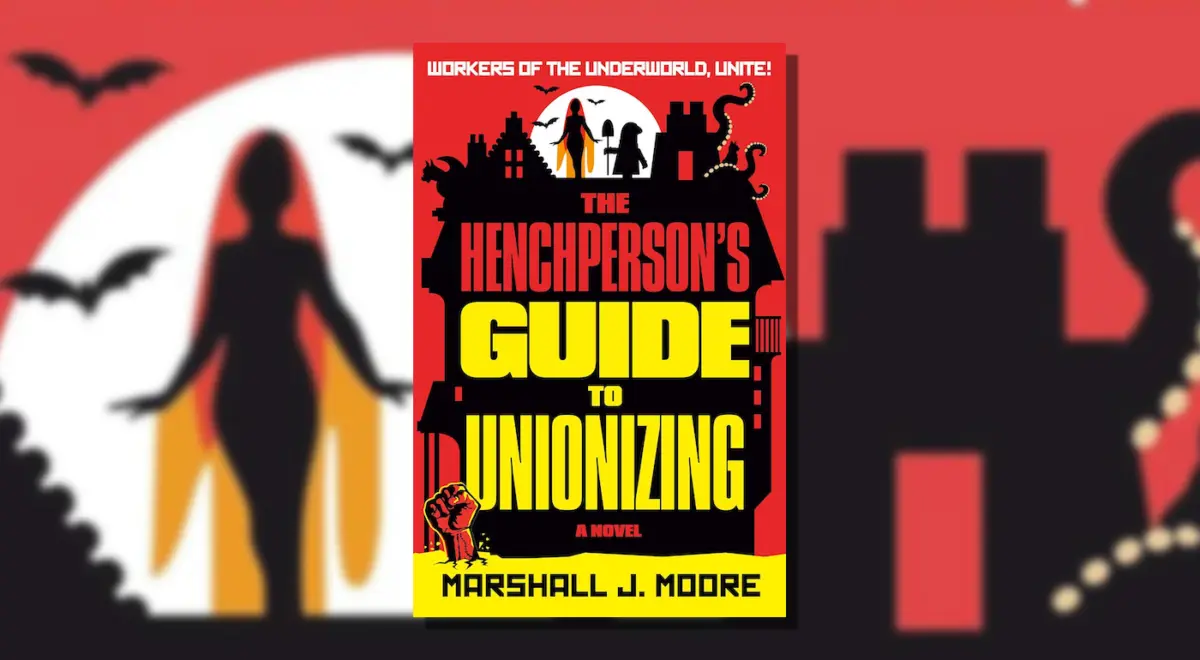
In the shadowy borderlands where gothic horror meets contemporary labor politics, a quiet revolution is brewing. Literary and socio-political analysts have turned their gaze toward the upcoming release of Marshall J. Moore’s humorous fantasy novel, The Henchperson’s Guide to Unionizing, scheduled for publication by Bantam on September 22. At its core, the text offers a biting, deeply satirical look at the precarious employment conditions of mad-science assistants, dark familiars, and disgruntled castle staff who find themselves exploited by an elite class of self-absorbed masterminds.
The novel chronicles the trials of Igor—a dedicated, mismatched-limb laboratory assistant to a demanding, electrocution-prone Doctor. When an incandescent mob of pitchfork-wielding villagers drives the duo from their traditional laboratory, their subsequent relocation to the isolated Ravenwald Manor triggers an extraordinary convergence of societal outcasts. Far from being a simple tale of monster-making and midnight raids, Moore’s work serves as a grand allegory for modern collective bargaining, workplace solidarity, and the fundamental rights of those who stitch together the fabric of speculative fiction. Through an exclusive look at the novel’s opening chapter, this report examines the socio-economic conditions of henchwork, the logistics of tower-based R&D, and the urgent necessity of worker organization in an age of looming armageddon.
Detailed Chronology: From Grave-Robbing to General Uprising
To fully understand the weight of Moore’s narrative, one must trace the harrowing events leading up to the cohabitation agreement at Ravenwald Manor. The timeline of an itinerant mad scientist’s assistant is marked by cyclical trauma, rapid relocation, and extreme occupational hazards.
Read Also
Phase I: The Itinerant Laboratory
The operational life of Igor and the Doctor is defined by transience. Operating out of a succession of abandoned churches and ruined castles, their daily routine involves grueling physical labor. As detailed in the novel’s opening, Igor’s responsibilities extend far beyond simple administrative tasks; he is tasked with midnight grave-robbing, delicate anatomical reconstruction, and the management of a high-voltage laboratory environment that lacks even the most basic Occupational Safety and Health Administration (OSHA) compliance.
The narrative opens with the assembly of "the Subject"—a six-foot aggregation of mismatched limbs and carefully sutured skin. While the Doctor obsesses over theoretical breakthroughs and the completion of his "Great Work," Igor functions as the sole engine of execution. His reward for meticulous needlework and logistical mastery is a barrage of verbal abuse, capped off by the routine arrival of an angry, torch-bearing peasant mob.
Phase II: The Ravenwald Migration
Following their most recent expulsion, the duo relocates to Ravenwald Manor—a fortified structure boasting an architectural flaw of epic proportions: an exorbitant number of spiral staircases. Here, Igor’s chronic leg length discrepancy (one limb being nearly two inches longer than the other) is weaponized by the sheer verticality of the tower workspace.
However, Ravenwald is far from empty. The manor is already occupied by two other classic gothic factions:
- The Vampiric Contingent: An ancient Count and his profoundly dissatisfied bride, Cornelia.
- The Occult Practitioners: An enigmatic witch and her feline familiar, Grimalkin, who require the manor’s isolation for a large-scale magical ritual.
Phase III: The Uneasy Truce
Sensing the imminent danger of drawing the village’s collective ire, Igor brokers a pragmatic, three-way cohabitation agreement. This moment marks a critical turning point in the sociology of henchwork. For generations, assistants, familiars, and domestic partners of dark lords have operated in isolation, completely dependent on their respective masters. By opening lines of communication across disparate supernatural genres—undead, magical, and biological—Igor, Cornelia, and Grimalkin discover shared grievances regarding compensation, hazard pay, and basic respect.
Phase IV: The Convergence of Catastrophe
The fragile peace is soon shattered by a terrifying discovery. The trio realizes they are not merely domestic roommates, but unwitting components in a sprawling, multidimensional conspiracy to destroy the world. With their masters hurtling toward an apocalyptic endgame—and an unprecedentedly large village mob of roughly one hundred citizens (including babes in arms carrying miniature torches) converging on the gates—the henchpersons must transition from quiet grumblings to active, coordinated resistance.
Supporting Context & Metrics: The Anatomy of Henchperson Exploitation
An examination of the infrastructural realities facing characters like Igor reveals a systemic crisis within the dark arts sector. Based on preliminary data extracted from the operational logs of Ravenwald Manor and similar gothic institutions, several key metrics illustrate the imbalance of power between masters and minions.

| Operational Metric | Average Henchperson Statistics | Industry Standard / Recommended |
|---|---|---|
| Daily Stair-Climbing Distance | 3.4 vertical miles per shift | Maximum 0.5 miles (Elevator access mandatory) |
| Hazard Exposure (High Voltage) | Unshielded conical conductors; frequent arcing | Grounded footwear and rubberized insulated mats |
| Verbal Abuse Incidents | 14.2 per hour during active experiments | Zero-tolerance workplace bullying policy |
| Access to Brain Inventory | Unlabeled or haphazardly cataloged (e.g., Tax Collector) | Fully digitized, bio-ethical organ registry |
| Health Insurance Coverage | None (Reliance on DIY limb-stitching) | Comprehensive medical, dental, and resurrection coverage |
As the metrics indicate, the typical laboratory assistant operates under conditions that would cause immediate union strikes in any other industry. The lack of standard hazard pay for corpse exhumation is particularly glaring, given the legal and physical risks involved in nocturnal cemetery operations.
Official Statements and Industry Commentary
While Bantam has maintained a tight lid on the full scope of the narrative, literary critics and early reviewers have hailed The Henchperson’s Guide to Unionizing as a masterclass in genre subversion.
Dr. Alistair Vance, professor of Gothic Literature and Labor History at the University of Miskatonic, released a statement regarding the cultural significance of Moore’s work:
"For centuries, gothic fiction has focused entirely on the hubris of the creator—the Frankenstein, the Count, the mad sorcerer. We have wept for the monsters and marveled at the genius. But we have systematically ignored the person who boiled the sutures, swept the laboratory floor, and emptied the brain jars. Marshall J. Moore has finally given voice to the true proletariat of the supernatural world."
In an interview snippet shared by the publisher, author Marshall J. Moore reflected on the inspiration behind Igor’s character:
"Igor is every worker who has ever stood at the bottom of a very long, very steep spiral staircase, carrying an armload of sensitive equipment, wondering why the guy at the top gets to claim all the glory for inventing lightning. The transition from individual endurance to collective bargaining is the only logical step for anyone who has ever had to dodge a pitchfork on a rainy Tuesday."
Future Outlook: What to Expect on September 22
As the publication date of September 22 approaches, anticipation within the fantasy and speculative fiction communities continues to reach a fever pitch. Readers can expect The Henchperson’s Guide to Unionizing to deliver not only high-concept comedy and rich world-building, but also a surprisingly poignant exploration of friendship, loyalty, and self-worth.
Key narrative questions remaining as the release nears include:
- Will the Collective Hold? Can a vampire bride, an occult familiar, and a reanimated-corpse assistant successfully bridge their cultural differences to form an effective bargaining unit?
- Can Armageddon Be Canceled? With the world-ending ritual underway and a mob of villagers breaching the gates, the timeline for diplomatic negotiation is vanishingly small.
- Will Igor Ever Get a Thank You? Perhaps the most pressing existential question of the novel: will the Doctor ever acknowledge Igor’s labor without insulting his gait?
Ultimately, Marshall J. Moore’s forthcoming novel promises to redefine how readers view the background characters of classic horror. Whether you are an aspiring mad scientist, a disgruntled familiar, or simply someone who appreciates a well-placed stitch, The Henchperson’s Guide to Unionizing is poised to be the most essential read of the autumn season.
To read the complete first chapter and secure your copy ahead of the September 22 release, visit Penguin Random House or your local independent bookstore.





Comments
Facebook App ID not configured. Please add it in the Customizer.