When HBO first announced that it was developing a live-action series centered around DC Comics’ iconic intergalactic police force, the project was immediately met with both intense excitement and measured skepticism. Adapting the sprawling, cosmic mythology of the Green Lantern Corps for television is a monumental undertaking, historically burdened by the baggage of the poorly received 2011 feature film. However, the creative team spearheading the network’s new series—aptly titled Lanterns—quickly pivoted the narrative during early promotional cycles by pitching the show with a deceptively simple yet provocative elevator pitch: True Detective, but with space cops.
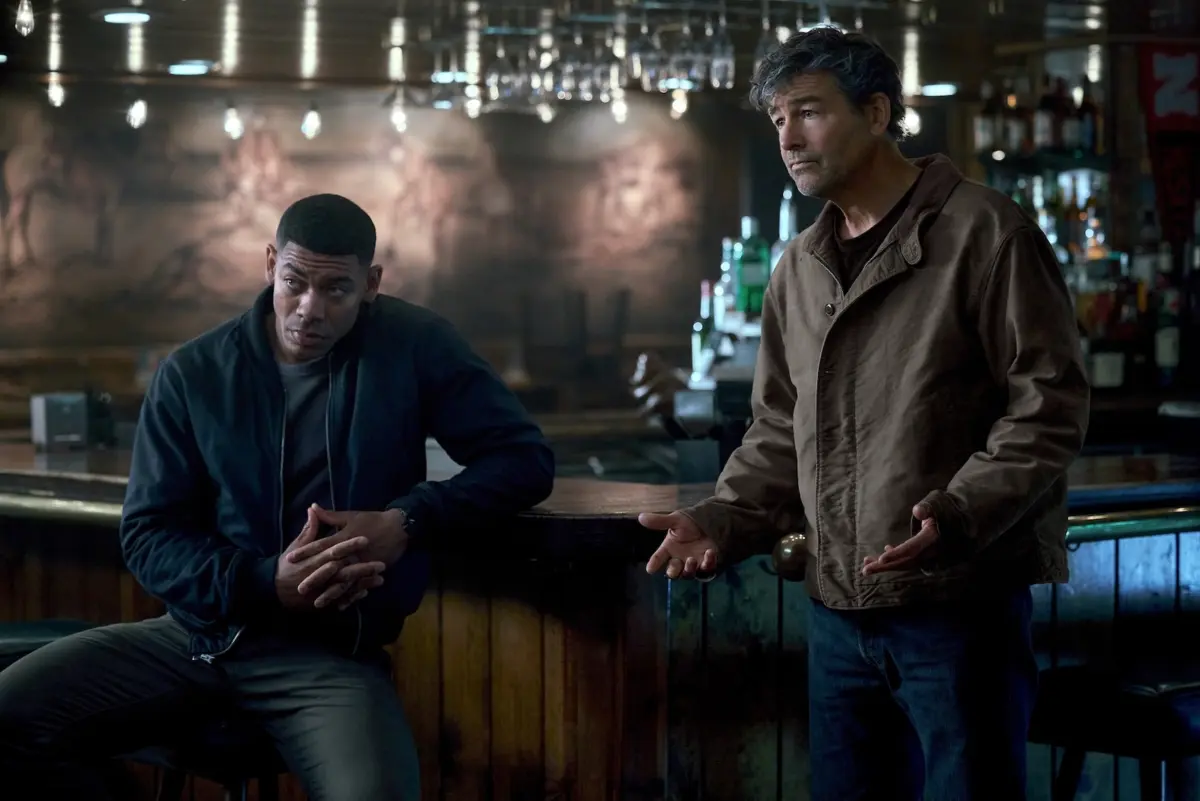
For a modern television audience saturated with traditional superhero content, this tonal descriptor was an absolute masterstroke. It promised a gritty, grounded, and intensely psychological crime procedural set against the backdrop of the DC Universe. Yet, as audiences dive into the show’s debut episodes and witness the dynamic interplay between a hardened, veteran Hal Jordan (portrayed by Kyle Chandler) and his brilliant, idealistic trainee-turned-successor John Stewart (portrayed by Aaron Pierre), it becomes abundantly clear that True Detective is merely the tip of the iceberg.
During an exclusive press conference attended by industry critics, the series’ esteemed co-creators—Damon Lindelof, Chris Mundy, and Tom King—pulled back the curtain on the sprawling tapestry of cinematic, literary, and historical inspirations that shaped the series. Far from relying solely on decades of comic book continuity, the writers’ room drew from unexpected influences ranging from neo-Western crime thrillers and 1980s buddy-cop action comedies to classic romantic comedies, historical father-son dynamics, and even the rebellious, anti-establishment ethos of the comic medium’s legendary creators. This comprehensive look explores how these disparate creative threads were woven together to redefine what a comic book adaptation can achieve on premium television.
The genesis of Lanterns did not happen overnight; it is the product of years of strategic repositioning within DC Studios as leadership sought to streamline their television and film properties under a cohesive, prestige-focused banner.
The Evolution of the Pitch
Initially, Warner Bros. and DC had spent years attempting to bring various iterations of a Green Lantern television series to life. Early developments focused on sprawling cosmic epics featuring multiple Earth-based Lanterns across different time periods. However, under the newly minted DC Studios leadership, the creative strategy underwent a dramatic shift. Recognizing the fatigue associated with CGI-heavy, world-ending superhero spectacles, the studio opted for a radically scaled-down, character-driven approach.
By framing the narrative around a localized murder mystery in a small-town Nebraska setting, the creators found their thematic anchor. The decision to cast an older, battle-worn Hal Jordan alongside a sharper, psychologically complex John Stewart allowed the series to bypass the traditional origin story tropes entirely. Instead, the narrative immediately plunges the audience into a deeply strained mentorship dynamic, echoing the existential weariness found in prestige crime dramas.
Developing the Creative Partnership
Bringing together Damon Lindelof (known for prestige television heavyweights like Lost, The Leftovers, and Watchmen), Chris Mundy (showrunner of the critically acclaimed crime drama Ozark), and Tom King (a former CIA operative turned Eisner Award-winning comic book writer) created an intellectual powerhouse in the writers’ room. Each creator brought a distinct sensibility to the table: Lindelof’s penchant for existential mystery and generational trauma, Mundy’s mastery of localized crime syndicates and mounting pressure-cooker tension, and King’s deep-seated reverence for comic book history and humanized heroism.
Supporting Context & Metrics: The Unconventional Inspirations
To understand the unique flavor of Lanterns, one must examine the eclectic cinematic and cultural touchstones that the co-creators utilized to construct the world of Hal Jordan and John Stewart.
1. The Neo-Western Landscape of No Country for Old Men
When discussing the show’s atmospheric setting, co-creator Chris Mundy pointed directly to the 2007 Coen brothers masterpiece, No Country for Old Men. Interestingly, this reference carries a clever meta-textual layer: Lanterns cast members Kelly Macdonald and Garret Dillahunt both played pivotal roles in the original film. However, Mundy’s inspiration went far beyond mere casting nostalgia.
The desolate backdrop, the unforgiving geography, and the slow-burn atmospheric dread of the small-town Nebraska setting in Lanterns are heavily indebted to McCarthy’s borderlands. Furthermore, the narrative employs a similar sense of inevitable, building pressure. Just as the characters in No Country find themselves caught in a web of violence they cannot fully comprehend or outrun, Hal and John find their mundane investigative routine upended by a cosmic conspiracy that feels entirely too large for the cornfields of the American Midwest.
2. The Buddy-Action Dynamic of Midnight Run
Balancing a gritty, noir-infused murder mystery with characters who possess godlike weapons capable of generating hard-light constructs is a delicate balancing act. To navigate this tonal tightrope, the writers looked to Martin Brest’s 1988 classic buddy-action comedy, Midnight Run, starring Robert De Niro and Charles Grodin.
Mundy highlighted the intricate psychological dance between De Niro’s bounty hunter and Grodin’s eccentric accountant as a foundational blueprint for Hal and John.
"There’s a relationship with Robert De Niro and Charles Grodin, where they’re on the same path together even though one’s being escorted as a prisoner," Mundy explained during the press conference. "The banter is always funny and yet the stakes are always real. We were always trying to figure out what line we could get up to in terms of the funny thing, where it just didn’t become empty calories."
This friction translates directly onto the screen. Hal Jordan, weary and set in his ways, is forced to shepherd John Stewart—a man who approaches the universe with an entirely different philosophical outlook. The resulting verbal sparring provides much-needed levity without ever undercutting the grave stakes of the central mystery.
3. The Structural Logic of the Romantic Comedy
Perhaps the most unexpected reference cited in the writers’ room was the classic Hollywood romantic comedy. While Lanterns is fundamentally a sci-fi crime thriller, Mundy revealed that the narrative arc between the two protagonists mirrors the classic rom-com formula.
"Sometimes we went far afield in our references," Mundy admitted. "We talked about rom-coms because, in a way, it’s strangely like Hal and John: [they] start apart, fall in love, and fall apart again."
This framework highlights the emotional vulnerability at the heart of the series. The partnership between the two Green Lanterns is not merely professional; it is an intimate, high-stakes psychological entanglement where mutual trust is hard-won, frequently tested, and occasionally shattered.
4. Generational Trauma and the Western Archetype
Damon Lindelof expanded on the psychological underpinnings of the characters, noting that father-and-son dynamics served as a constant thematic North Star throughout the writing process. Both Hal Jordan and John Stewart are depicted as processing deeply complicated, fractured relationships with their respective fathers.
Lindelof also pointed to classic 1940s and 1950s Westerns, analyzing how the ubiquitous John Wayne-esque archetype established rigid, often toxic cultural constructs around manhood. Both Hal and John have inherited these outdated ideals—whether directly from their fathers or from the broader cultural milieus in which they were raised—and the series charts their ongoing efforts to dismantle or reconcile these inherited expectations.
Official Statements & Creative Philosophy
While cinematic influences provided the stylistic framework, the creators remained deeply conscious of the rich literary history belonging to DC Comics. Tom King, drawing on his extensive background writing premier comic book runs, anchored the conversation in the foundational creators of John Stewart himself: Neal Adams and Dennis O’Neil.
King spoke passionately about the legacy of Neal Adams, describing him not merely as an artist, but as a revolutionary force within the comic book industry.
"Neal was a true rebel, the guy who’s like, we need healthcare, we need to get paid," King stated. "He turned the tables over and said we’re looking at this industry all wrong, let’s do it different. And that’s the spirit he brought when he created John Stewart… John just won’t take the world the way it’s given to him, the same way Neal wouldn’t take the world the way it’s given to him."
This rebellious, anti-authoritarian streak is precisely what distinguishes John Stewart from his veteran partner. While Hal Jordan has spent decades operating within the rigid, bureaucratic structures of the Green Lantern Corps, John Stewart approaches the badge with a critical eye, refusing to accept the interstellar status quo at face value. This ideological clash serves as the beating heart of the series’ overarching narrative arc.
Future Outlook: What Lanterns Signals for the Future of DC
As Lanterns continues its weekly rollout on HBO, its reception will likely serve as a vital bellwether for the future of James Gunn and Peter Safran’s overarching DC Universe (DCU). By consciously stripping away the glossy, over-produced aesthetic traditionally associated with comic book adaptations and replacing it with the patient, character-driven storytelling of prestige cable television, HBO is proving that superhero properties can mature alongside their audiences.
The fusion of neo-Western dread, classic buddy-cop banter, romantic-comedy structural beats, and deep-seated industry rebellion creates a viewing experience that is as intellectually stimulating as it is visually arresting. Whether solving a localized murder mystery in Nebraska or unraveling a sprawling cosmic conspiracy that threatens the entire universe, Hal Jordan and John Stewart have firmly established that the most compelling element of the Green Lantern mythos isn’t the ring on their finger—it’s the friction between the men wearing them.
Catch new episodes of Lanterns as they premiere on HBO and stream on Max on Sunday nights at 9:00 PM ET/PT.



Comments
Facebook App ID not configured. Please add it in the Customizer.