In the western Pacific nation of Palau, a quiet scientific revolution is underway inside store-bought plastic picnic coolers. As rising global temperatures and unprecedented marine heat waves accelerate the systemic collapse of coral reefs worldwide, traditional conservation efforts—historically reliant on passive protection or slow, laboratory-bound genetic experimentation—are failing to keep pace with ecological devastation.
Over the past decade, governments, NGOs, and hospitality sectors have poured hundreds of millions of dollars into replanting coral reefs. Yet, mounting evidence reveals a fatal flaw: much of the painstakingly planted coral dies months or years later as oceans overheat. It is an ecological crisis akin to planting trees in a forest destined to be consumed by a wildfire.
Enter marine ecologist Steve Palumbi of Stanford University and his colleagues at the Palau International Coral Reef Center (PICRC). Eschewing multimillion-dollar lab setups in favor of a low-cost, high-efficiency "fitness test" powered by basic Coleman coolers and submersible heaters, Palumbi’s team is sorting through thousands of coral fragments to identify the rare "champions"—colonies that exhibit natural resilience to extreme heat.
While the scientific community remains divided on whether short, rapid thermal stress tests can reliably predict multi-week survivability in the wild, the urgency of the planetary biodiversity crisis leaves little room for hesitation. This investigative feature explores how researchers in remote Micronesia are attempting to reengineer the future of marine ecosystems before time runs out.
Detailed Chronology: A Stormy Expedition into Palau’s Coral Gardens
Navigating Super Typhoon Bavi
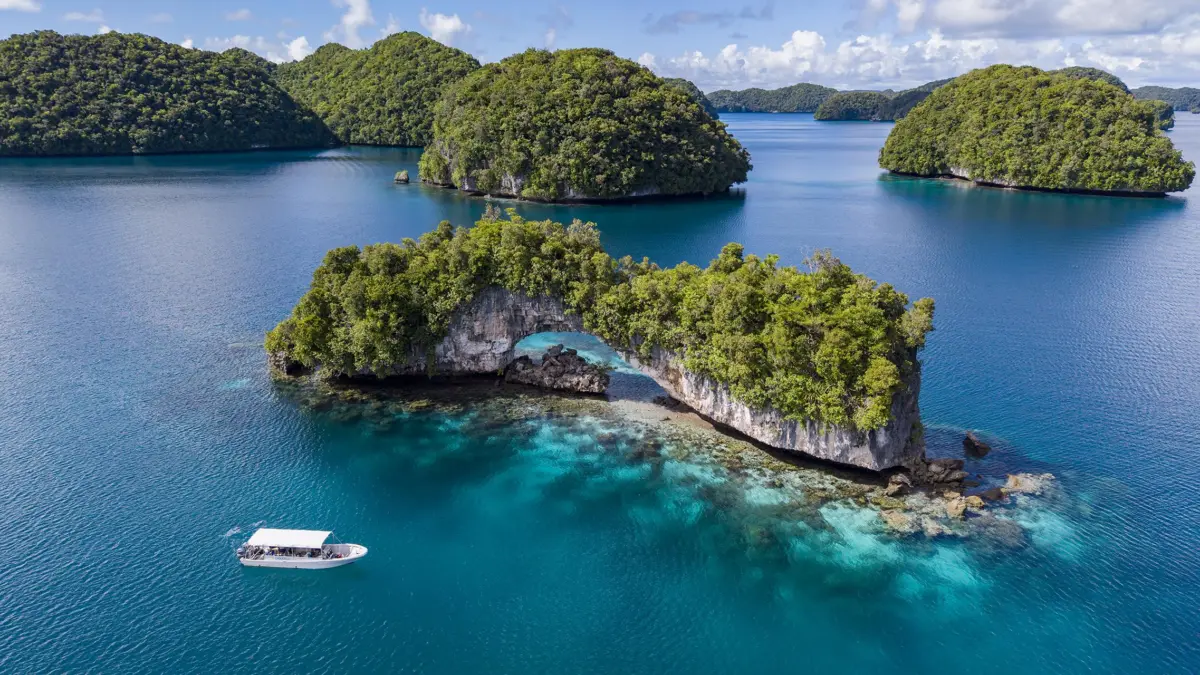
The journey out to sea was, in a word, unpleasant. The coastal waters of Palau—an isolated archipelago comprising over 340 tree-powdered islands whose eroded bases make them appear to float like the mountains of Avatar’s Pandora—are typically calm and electric blue. The island nation has enacted some of the world’s most rigorous marine protections, preserving an environment boasting more than 400 coral species (by comparison, the Caribbean features roughly 70).
Yet on a turbulent morning in July, a super typhoon named Bavi churned north in the Philippine Sea. Darkened storm clouds battered the research vessel with torrential rain as it seesawed across swells toward northwestern Palau. The destination: a "coral garden" established two years prior by local researchers attempting to rebuild a damaged fishery reef in Ngaraard State.
Despite being soaked, cold, and nauseated, the expedition team strapped on masks and dove beneath the surface.
The Underwater Laboratory
Ten feet below, dozens of star-shaped metal structures anchored to the seafloor were studded with coral varieties shaped like neon blue antlers, fluffy green mittens, and human vertebrae. These were not random samples; they were survivors of a rigorous preliminary screening process conducted on land.
Days prior to the typhoon, Palumbi and PICRC researchers—including senior scientist Lauren Piot and researcher Uly Olsudong—embarked from the east coast to harvest living fragments from established nursery grids. Armed with wire cutters, the team snapped off small branches from donor colonies. Just as taking horticultural clippings does not kill a terrestrial plant, these parent colonies continue to grow while their fragments are subjected to extreme physiological pressure.
Back at the PICRC facility, the outdoor workspace resembles a classic marine laboratory featuring a labyrinth of pipes, pumps, and holding tanks housing sea urchins and giant clams. Yet tucked away on a wooden shelf sat the beating heart of Palumbi’s operation: eight red-and-blue plastic picnic coolers.
Supporting Context & Metrics: The Scale of the Crisis and the Cooler Experiment
The Mechanics of Bleaching
To understand why heat testing is paramount, one must understand the biological architecture of coral. A "coral" is not a single organism, but a colony of hundreds or thousands of genetically identical polyps that clone themselves to build stony calcium carbonate structures. Polyps rely on an endosymbiotic partnership with single-celled algae (zooxanthellae) embedded within their tissue. Through photosynthesis, these algae supply the coral with solar energy and vibrant coloration in exchange for nutrients and shelter.
Under extreme thermal stress, this cellular partnership catastrophically breaks down. Overheated algae malfunction and begin producing toxic reactive oxygen species, forcing the polyps to expel them. This process, known as coral bleaching, strips the coral of its primary food source and color. A bleached coral is starving, not yet dead, but facing certain mortality unless surrounding water temperatures drop rapidly.
The Financial and Ecological Toll
The economic and defensive value of coral reefs cannot be overstated:
Economic Impact: A 2024 study estimated that Asia-Pacific reefs alone contribute approximately $25 billion annually to regional economies through fisheries and tourism. In Palau, fisheries and tourism account for over 25% of the national GDP.
Coastal Protection: Healthy reefs act as self-regenerating seawalls that reduce wave energy from tropical storms by an average of 97 percent, saving nations billions in avoided infrastructure damage and flood mitigation.
Global Losses: Since the 1950s, rising ocean temperatures and anthropogenic pollution have killed off an estimated 50 percent of live coral globally.
Restoration Scale: A network called the Coral Restoration Consortium tracks over 900 reef restoration projects worldwide managed by 350+ organizations, which have collectively invested upwards of $250 million over the past decade.
Despite these investments, historical success rates remain dismal. Prominent marine ecologist Steve Palumbi noted bluntly:
"Show me a square mile of reef that has been successfully restored. There isn’t one."
The prime illustration of this failure occurred during the record-breaking marine heat wave of summer 2023. In the Florida Keys—home to the world’s third-largest barrier reef—decades of replanting efforts involving tens of thousands of threatened staghorn and elkhorn corals were wiped out. Nearly all replanted colonies bleached white and died, reducing them to functional extinction. Similar catastrophic losses have been documented across Colombia, Costa Rica, Indonesia, and the Seychelles.
The Low-Tech "Pressure Cooker" Protocol
Traditional genetic cross-breeding initiatives—such as crossing South Florida corals with heat-tolerant strains from Honduras—take years, require specialized facilities, and are financially prohibitive for developing island nations.
Palumbi’s picnic cooler method upends this paradigm. Costing less than $1,000 in total equipment expenses (including coolers, submersible heaters, and small circulation pumps), the protocol operates as follows:
Baseline Seawater: Coral fragments are placed in coolers holding water at the local baseline high temperature of 30°C (86°F).
Stepped Thermal Stress: Over a four-day testing cycle, water temperatures in the experimental coolers are dialed up incrementally each day—reaching 34°C (93.2°F) on day one, 35°C (95°F) on day two, and peaking near 37°C (98.6°F) by the final morning.
Visual Scoring: Each morning, researchers lay fragments out on a standardized white grid, evaluating discoloration on a scale from 1 (unaffected) to 5 (fully bleached).
Identifying Champions: While the majority of fragments expel their algae and turn stark white like cauliflower florets, a small percentage retain their rich, brownish-orange pigmentation. These heat-resistant specimens are deemed the "champions" and earmarked for propagation.
Official Statements and Expert Perspectives
While the accessibility of the cooler method has democratized reef restoration research across the Pacific via initiatives like Courtney Klepac’s Coral Futures Academy, the broader academic community remains cautious regarding its predictive validity.
Ilan Bubb (University of Amsterdam): Comparing short thermal shocks to prolonged marine heat waves, Bubb likened the methodology to forecasting a runner’s marathon time based solely on a 100-meter sprint. "We know there’s some correlation there, but how good is that correlation? How much information you can get about that marathon from a hundred-meter sprint is still just undetermined."
Liam Lachs (University of Queensland): Lachs emphasizes that heat tolerance is only one piece of a complex biological puzzle. Selecting solely for thermal resistance might inadvertently discard colonies possessing vital immunities against emerging coral diseases.
James Guest (Newcastle University): Guest acknowledges the practical utility of low-tech screening while stressing the ultimate prerequisite: "We all know that we have to solve the bigger problem. If we don’t reduce carbon emissions and we don’t deal with climate change, nothing we do is going to help corals."
Courtney Klepac (Stanford University): Offering validation for the methodology, Klepac pointed to unpublished field data from Palau’s 2024 bleaching event. Monitoring sites planted with short-test "winners" demonstrated significantly higher survival rates during natural marine heat waves compared to control groups. "I am probably one of the few people that you will talk to that kind of low-key gets a little excited for bleaching events," Klepac remarked. "It is a very true test of what we’ve been doing."
Future Outlook: A Humble Strategy for Survival
As the field of marine biology grapples with the Anthropocene, the overarching philosophy guiding reef restoration is shifting. Scientists no longer harbor illusions about immediately restoring pristine, historical ecosystems in the face of unabated global emissions.
Instead, as James Guest notes, the objective is much more humble—and sobering: to prevent regional species and genetic populations from plunging into an irreversible extinction vortex.
By leveraging inexpensive tools like plastic coolers to identify stress-tolerant genotypes, conservationists can buy precious time. If and when global climate policies eventually succeed in stabilizing atmospheric carbon and cooling ocean temperatures, these resilient genetic reserves will ensure that something vital remains on the seafloor to regrow tomorrow’s oceans. Until then, in remote island outposts like Palau, science is embracing radical, low-tech improvisation simply to keep the ocean’s most iconic ecosystem alive.








Comments
Facebook App ID not configured. Please add it in the Customizer.