
Executive Overview
International soccer tournaments have long served as a magnifying glass for national identity, cultural trauma, and political ambition. However, the modern iteration of the World Cup has evolved into something far more volatile: an all-consuming theater of hyper-nationalism, collective grievance, and psychological transference.
At the center of this socio-cultural storm is the Argentine national team—a squad burdened not merely by the weight of athletic expectations, but by a 32-year-old catalog of perceived injustices, historical ghosts, and socio-political myths. From the legacy of Diego Maradona and the haunting shadows of the 1994 tournament to the enduring geopolitical phantom of the Falklands (Malvinas) War, contemporary soccer fandom has crossed a threshold. It is no longer just a passive weekend pastime; it has become an active, artisanal co-creation of reality where fans and players alike weaponize history.
This investigative report examines the architecture of modern fandom during the recent World Cup cycle. By analyzing the structural mechanics of the tournament, the psychological allure of tribalism, and the alarming bleed of sports-stadium rhetoric into broader geopolitical discourse, we explore how the beautiful game has been co-opted by the mechanics of mass psychological excess.
Read Also
Detailed Chronology: From Locker Room Chants to the Edge of the Final
To understand the volatile energy defining the modern Argentine side, one must trace a timeline that bends backward through three decades of athletic heartbreak and geopolitical memory.
The 32-Year Ghost: 1994 to the Present
Even within the eccentric lexicon of soccer chants, the locker room anthem echoing from the Argentine camp ahead of the tournament demanded parsing. The lyrics read:
“Thirty-two years later, Scaloni will avenge / the Cup stolen from number ten! . . . for Las Malvinas! / For El Diego! / For the last one with Leo! / Argentina wants to see a repeat champion!”
A backward glance to 1994 reveals Argentina’s exit from the North American World Cup: a chaotic 3–2 loss to Romania in the Round of 16. Yet, the archival footage hardly justifies a three-decade grudge. In that match, Argentina benefited from a dubious penalty yet was clinically dismantled by Romania’s counter-attacking maestro, Gheorghe Hagi.
The true grievance predates the final whistle of that match. Before taking the field, Diego Maradona was expelled from the 1994 tournament after testing positive for five ephedrine metabolites. While fans cite this as an unmitigated "theft," the narrative elides historical reality: by 1994, Maradona was far past his physical prime. Suspended in 1991 following a cocaine positive, his subsequent years were marred by erratic behavior, missed training, and dwindling goal tallies. He had shaped up for the World Cup, but his presence could not have reversed the structural deficiencies of a waning squad.
The Semifinal Wars and the Politics of Grievance
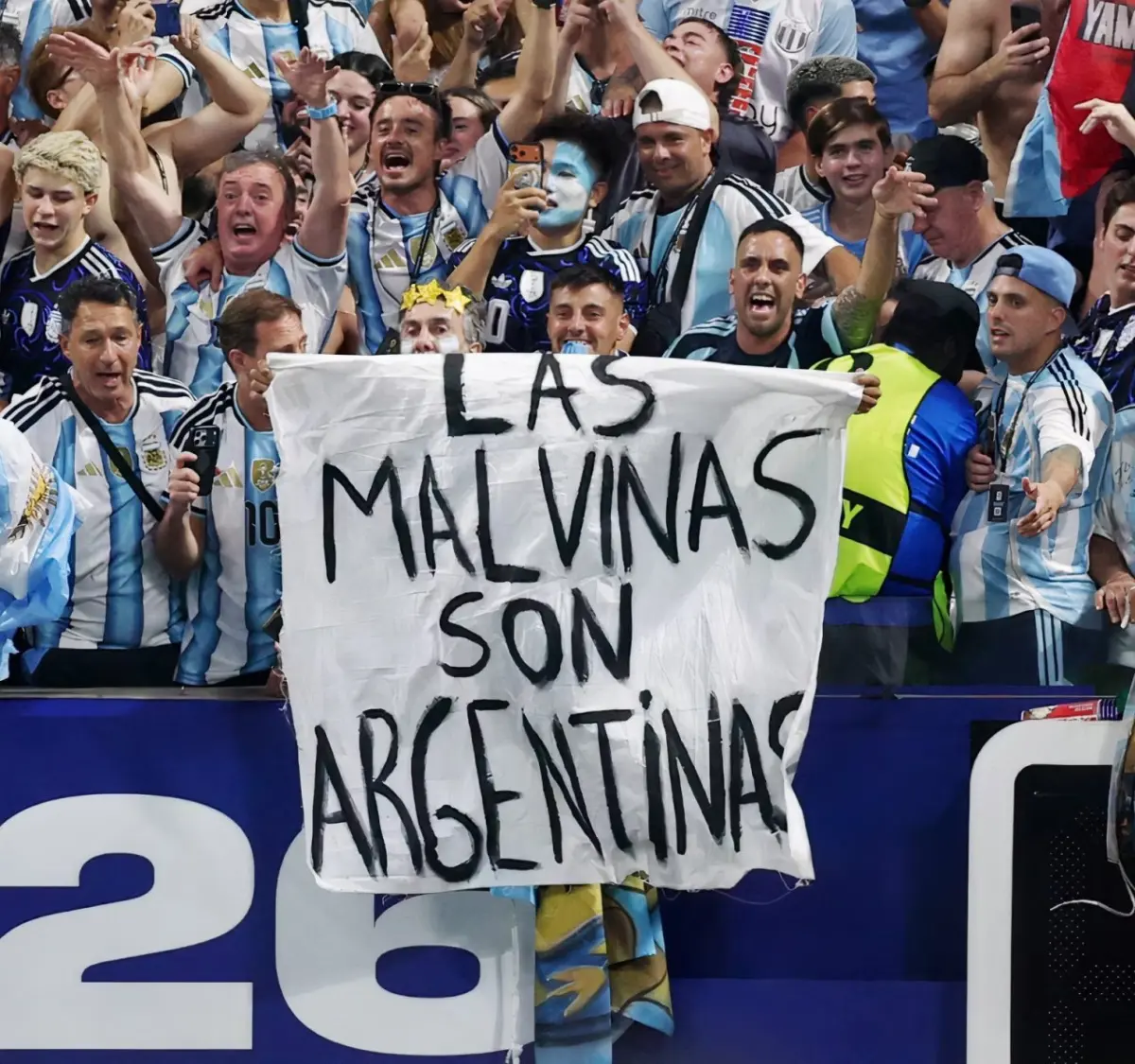
As the tournament progressed into the knockout stages, motivation hardened into ideological warfare. In the semifinals, Argentina crossed paths with England—a fixture forever freighted with the ghost of the 1982 Falklands War, a conflict fought years before any of the current players were born. When England imploded in the final half-hour, fans unfurled banners declaring Las Malvinas son Argentinas, demonstrating that the sun never sets on the fanatic’s empire of insult.
Concurrently, the other side of the bracket featured a clash between French individualist "great-man" theory and Spanish collective systemic ideology. Spain’s methodical, possession-heavy machine ultimately choked the life out of France’s star-studded roster.
The Final: Spain vs. Argentina
The final itself was a masterclass in the clash of styles and temperaments. Argentina, exhausted by their own self-imposed myth-making and desperate for an outcome their raw technical abilities could not guarantee, played like the ultra-passionate fans they embodied.
- Midfield Mastery: Spain’s metronome, Rodri, quietly completed 101 passes, dictating the tempo with cold geometric precision.
- The Dark Arts: Argentina, meanwhile, relied on kinetic disruption. Fullback Nahuel Molina engaged in sly altercations, midfielder Leandro Paredes orchestrated tactical fouls and sideline brawls, and the team accumulated more referee appeals for technical red cards than actual shots on target.
- The Climax: Despite Lionel Messi’s pre-match plea to his teammates—"Estemos tranquilos, muchachos… Olvidémonos de todos, solo juguemos" ("Let’s stay calm, boys… Let’s forget everything, just play")—the team could not escape the weight of the historical narratives they had been fed for weeks. Spain secured a clinical 1–0 victory in extra time, locking down one of the most one-sided low-scoring finals in World Cup history.
Supporting Context & Metrics: The Anatomy of Fandom
Etymology and Evolution: From Shrine to Stadium
The word fan derives from the Latin fanaticus—pertaining to a fanum, or temple/shrine. Eighteenth-century lexicographer Samuel Johnson defined a fanatick as "an enthusiast; a man mad with wild notions of religion." When the term was first adopted into sportswriting in the 1850s to describe American baseball spectators, it carried this direct theological weight.
Modern fan-studies scholars note that fandom is no longer a passive preference; it is an active, co-creative practice. In soccer, one does not merely watch the game—one authors it through chants, synchronized rituals, and collective memory.
The Geopolitical Context of the Falklands (Malvinas) Conflict
To fully grasp the psychic weight of the Malvinas chants, one must examine the historical spark of March 1982.
- The Catalyst: A scrap-hauling crew raised the Argentine flag on the remote, barely inhabited South Georgia Island, prompting the UK to deploy the patrol ship Endurance.
- Escalation: Argentina’s ruling military junta, desperate to distract a restless populace from failed economic policies and domestic human rights abuses (the "disappearances" of political dissidents), launched an amphibious invasion of the Falkland Islands.
- The Aftermath: British Prime Minister Margaret Thatcher, facing her own sliding approval ratings, responded with a massive naval and ground task force. The resulting 74-day war cost 907 lives. Thatcher’s victory revitalized her political career, while the junta’s humiliation catalyzed Argentina’s transition back to democracy in 1983.
Today, the islands remain a British overseas territory. Yet, in the mind of the fan, geopolitical reality bends to emotional narrative. As Barbara Paredes, sister of Argentine midfielder Leandro Paredes, remarked after the tournament:
"Getting this far and beating England meant everything to us. We might not have the fourth star, but we have the Falklands for ourselves."
Official Statements & Public Discourse
The psychological toll of the tournament elicited stark reactions from players, managers, and cultural commentators alike.
- Lionel Messi on the Burden of Expectation:
Reflecting on the overwhelming external pressures placed on the squad throughout the tournament, Messi emphasized the necessity of isolation from noise:"We have to isolate ourselves from what people are saying. The pressure is immense, but on the pitch, it is 11 against 11. We carry a country’s dreams, but we must remember how to play the game simply."
- The Sociological Critique of Fandom:
Cultural analysts observing the tournament noted a dangerous shift in spectator behavior. Dr. Elena Vance, a professor of sports sociology at Oxford, remarked:"What we witnessed in Qatar and subsequent international windows is the failure of the stadium container. Fandom used to be a safe quarantine for tribal aggression. Today, those behavioral models are bleeding out of the sporting arena and contaminating political, artistic, and social discourse."
- The Argentine Camp’s Defiance:
Despite drawing international condemnation for tactical cynicism, simulation, and borderline disciplinary infractions, the Argentine federation maintained a posture of defiant solidarity. Internal team communiqués consistently framed their aggressive style as a necessary defense against systemic European bias within international officiating bodies.
Future Outlook: The Bleed of Hyper-Nationalism
As international soccer looks toward the expanded, multi-nation formats of upcoming World Cups, the systemic integration of hyper-nationalism poses distinct challenges for governing bodies such as FIFA.
1. The Commercialization of Grievance
National federations and marketing agencies have increasingly realized that historical trauma sells. Fabricating or amplifying narratives of underdog persecution and historical vendettas generates unprecedented levels of engagement, merchandise sales, and viewer retention. Future tournaments will likely see an intensification, rather than a calming, of manufactured national rivalries.
2. Off-Pitch Spillover
The most pressing concern for sociologists and security experts is the erosion of the boundary between athletic rivalry and real-world geopolitical hostility. When chants celebrating mid-20th-century military conflicts become standard terrace repertoire, stadiums cease to be neutral zones of play. Without robust intervention from regulatory bodies and national associations, the risk of cross-border diplomatic friction sparked by fan behavior will escalate.
3. The Future of the "Fan Zone"
If fandom is indeed a psychological quarantine designed to siphon societal aggression into harmless, symbolic play, the containment walls are cracking. The challenge for the next decade will be determining whether sports can reclaim its status as a celebration of human athletic achievement, or if it will permanently solidify as proxy warfare fought with cleats, television cameras, and historical grudges.




Comments
Facebook App ID not configured. Please add it in the Customizer.