
Executive Overview
The 2026 primary election cycle has laid bare a profound existential crisis within the Democratic Party. Far from presenting a unified front against their political opposition, key swing-state contests across the country have highlighted a widening, structural rift between the party’s entrenched moderate establishment and its increasingly assertive progressive wing. As razor-thin primary victories and high-profile insurgent victories unsettle political strategists, the traditional party apparatus faces intense scrutiny over its platform, candidate selection strategy, and long-term vision.
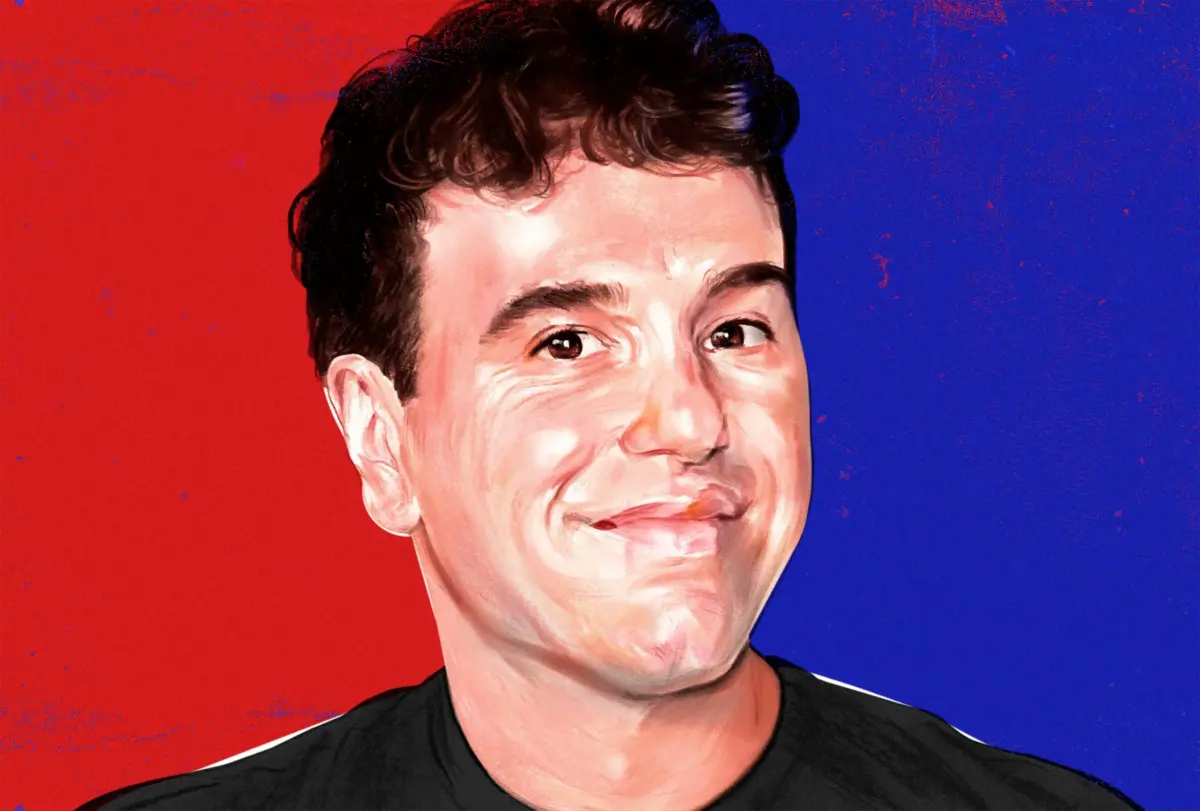
The central dilemma facing the party was articulated during an in-depth dialogue on The New Yorker Radio Hour, where host David Remnick sat down with political commentator and former presidential speechwriter Jon Lovett. Lovett—a former speechwriter for Hillary Clinton and Barack Obama turned co-founder of Crooked Media and host of Pod Save America and Lovett or Leave It—occupies a unique vantage point spanning both the party hierarchy and its modern grassroots critics.
Lovett offered a blunt diagnosis of the establishment’s failing strategy: centrist leadership continues to deploy defensive, risk-averse candidates while issuing a tacit ultimatum to the electorate—“Vote for us, or else.” However, primary voters and broader swing-state electorates are increasingly choosing "or else," signaling a rejection of fear-based mobilization and a demand for an affirmative, transformational policy agenda. As the party pivots toward the 2028 presidential election, this ideological impasse raises fundamental questions about whether the Democratic establishment can articulate a compelling platform capable of reconstituting its coalition.
Read Also
Detailed Chronology
[Post-2024 Election Cycle] ──> [Late 2025 Recruitment Phase] ──> [Spring 2026 Primary Season] ──> [Summer 2026 Contests] ──> [2028 Strategic Horizon]
  Structural debate begins       Establishment pushes centrists     Insurgent gains in Rust Belt     Establishment platform questioned   Search for unified vision
The Post-2024 Recalibration (Late 2024 – Mid-2025)
Following the turbulent 2024 general election cycle, national Democratic leaders sought to stabilize party ranks by prioritizing fiscal moderation and traditional electoral pragmatism. Party strategists actively discouraged ideological debate, operating under the assumption that suburban swing voters would prioritize policy continuity over structural reform.
The Recruitment Drive and Candidate Cleavages (Late 2025)
By late 2025, official campaign arms—including the Democratic Senatorial Campaign Committee (DSCC) and Democratic Congressional Campaign Committee (DCCC)—began actively endorsing candidates in contested open-seat primaries. In crucial battlegrounds such as Pennsylvania, Michigan, Wisconsin, Arizona, and Georgia, party leadership heavily favored candidates with traditional backgrounds in local government, corporate law, or military service. Concurrently, progressive organizations and local labor coalitions began recruited insurgent candidates running on explicit platforms of economic reform, housing affordability, national healthcare expansion, and anti-monopoly enforcement.
The Spring 2026 Primary Volatility (March – May 2026)
As the 2026 primary calendar opened, establishment candidates faced unexpected challenges in high-stakes districts. Early elections in Midwestern industrial centers demonstrated that moderate candidates relying on high-volume media buys and national party endorsements were underperforming historic benchmarks. Grassroots campaigns powered by low-dollar micro-donations scored notable upsets in suburban and urban-fringe districts, signaling that voter turnout was driven more by policy contrast than by party loyalty.
The Midterm Primary Climax and National Debrief (June – August 2026)
By mid-2026, close finishes across key swing states produced a fractured primary outcome: while establishment candidates secured narrow nominations in several statewide races, insurgent platforms dominated local races and turnout metrics. This operational friction prompted national media reflection, culminating in key discussions across political media—including Jon Lovett’s feature on The New Yorker Radio Hour—addressing whether the Democratic establishment had lost its ability to communicate a coherent national identity.
Supporting Context & Metrics
The tension within the party is not merely rhetorical; it is reflected in key shifts in voter participation, campaign finance structures, and platform alignment across swing-state primaries.
Financial Mobilization: Small-Dollar vs. Super PAC Expenditure
A comparative analysis of primary spending in contested 2026 Democratic races illustrates a widening gap between grassroots funding and centralized donor support:
| Metric / Indicator | Moderate/Establishment Campaigns | Progressive/Insurgent Campaigns |
|---|---|---|
| Primary Funding Source | Super PACs, High-Dollar Donors | Micro-donations, Grassroots PACs |
| Average Contribution Size | $1,850 – $3,300 | $27 – $45 |
| Ad Strategy Focus | General Election Electability, Threat of Opposition | Minimum Wage, Healthcare, Housing Rights |
| Voter Reach Model | Broadcast TV, Targeted Digital Ads | Direct Canvas, Field Organizing |
While establishment candidates maintained a distinct advantage in total dollars raised—often bolstered by independent expenditure groups—progressive challengers matched or surpassed them in field organization and direct door-to-door contacts.
Voter Sentiment and Demographic Disconnects
Polling conducted across key Midwestern and Sun Belt swing states during the 2026 primary season highlights significant demographic and motivational divides:
- The "Electability" Gap: Over 62% of primary voters under the age of 45 reported that a candidate’s specific policy platform was more important than their perceived "electability" in a general election. Conversely, voters aged 65 and older prioritized electability by a margin of nearly 3 to 1.
- The Cohesion Deficit: When polled on party messaging, fewer than 35% of self-identified Democratic voters agreed that the national party possessed a clear, unified economic message. A plurality described the party’s platform as primarily reactionary—defined more by opposition to its political rivals than by an affirmative vision.
- Turnout Metrics: Swing-state precincts characterized by high concentrations of working-class households and young voters saw significant drops in primary participation when presented with ballot options limited to two establishment-oriented candidates, reinforcing concerns over voter apathy.
Voter Motivation Split (2026 Primaries)
  [████████████████████] Policy-Driven Voters (<45 y/o): 62%
  [████████] Electability-Driven Voters (>65 y/o): 71%
Official Statements
Jon Lovett on The New Yorker Radio Hour
Speaking with David Remnick, Jon Lovett delivered a candid assessment of the party’s strategic shortfalls, drawing on his experience as a senior speechwriter in the Obama White House and his decade-long role as an independent media host.
Lovett challenged the fundamental premise of establishment candidate selection, which relies heavily on risk mitigation rather than ideological inspiration:
"In a broad trend, centrist Democrats put up candidates, and they say, ‘Vote for us, or else.’ And voters just keep picking ‘or else.’ Across the board, I don’t know what this establishment of the Democratic Party stands for, and neither does the country."
Lovett highlighted that the establishment’s reliance on negative turnout—mobilizing voters solely by emphasizing the dangers of political opponents—has diminishing returns. He argued that after multiple election cycles of crisis messaging, voters require a clear explanation of what party leadership intends to achieve with power once acquired.
David Remnick’s Interrogative Context
David Remnick, Editor of The New Yorker and host of The New Yorker Radio Hour, framed the discussion around the broader implications for the 2028 presidential election cycle:
"The primary contests of 2026 are not merely isolated local battles; they serve as a testing ground for the soul of the Democratic Party. The recurring friction between moderate pragmatism and progressive ambition suggests that the party’s center of gravity is shifting—leaving the establishment to determine whether it can adapt its platform to meet an increasingly impatient electorate."
Institutional and Factional Responses
The debate has prompted distinct responses from key factions within the Democratic eco-system:
- Establishment Campaign Strategists: Maintain that moderation remains the only viable pathway in hyper-competitive swing districts. Representatives from centrist political action committees argue that insurgent platforms, while popular in safe metropolitan districts, risk alienating independent and moderate Republican voters necessary to secure general election majorities.
- Progressive Mobilizers: Contend that establishment caution is precisely what depresses turnout among essential voting blocs, including labor households, young voters, and working-class communities. Factional leaders argue that without bold commitments on wage growth, healthcare costs, and cost-of-living relief, the party cannot build a sustainable coalition.
Future Outlook
The unresolved ideological division highlighted during the 2026 primary season presents critical strategic imperatives for the Democratic Party as it approaches the 2028 presidential campaign.
1. The Breakdown of Threat-Based Mobilization
The strategy of defining party identity largely in opposition to the rival party is yielding diminishing returns. As Lovett noted, relying on a "Vote for us, or else" framework creates a volatile dynamic where fatigued voters opt for alternative candidates, third-party options, or non-participation. Moving forward, national leaders must articulate an affirmative economic narrative that delivers tangible, material benefits to working-class households.
2. Platform Realignment for the 2028 Primary
The close results of the 2026 primaries guarantee that the 2028 Democratic presidential nominating contest will be an intense fight over the party’s programmatic agenda. Potential presidential candidates will likely fall into two distinct camps:
- The Pragmatic Reformers: Candidates advocating for incremental policy adjustments, fiscal discipline, and bipartisan governance.
- The Economic Populists: Candidates advocating for systemic economic reform, expanded labor rights, aggressive corporate taxation, and structural institutional changes.
3. Rebuilding the Infrastructure of Consensus
To prevent a destructive general election turnout slump, the Democratic National Committee (DNC) and party leadership must reconsider how candidate endorsement decisions are made. Establishing transparent primary processes that permit genuine debates over economic vision, foreign policy, and institutional governance will be necessary to reintegrate disillusioned grassroots activists back into the national party structure.
Without a fundamental shift from defensive politics to a coherent, proactive vision, the Democratic Party risks remaining in an ongoing cycle of internal debate—struggling to define what it stands for at the precise moment voters demand clear solutions.





Comments
Facebook App ID not configured. Please add it in the Customizer.