
Executive Overview
In the upper echelons of contemporary psychological suspense, the ability to deceive a reader is not merely a stylistic choice—it is a rigorous, highly technical performance of literary sleight of hand. For seasoned authors who spend their professional lives mapping out intricate plots, red herrings, and alibis, experiencing that deception from the other side of the page is a rare and exhilarating privilege.
In a recent literary critique, bestselling thriller author J.T. Ellison turned her analytical lens toward the current landscape of suspense fiction, shining a spotlight on the masters of the craft who are elevating the genre. Ellison, known for her meticulously plotted novels exploring the darker recesses of human behavior, offered a masterclass in appreciation for works that challenge, bamboozle, and ultimately reward the reader. Focusing heavily on the intricate mechanics of unreliable narration, Ellison explored the works of contemporary powerhouses Alice Feeney and Virginia Evans, breaking down precisely why their recent contributions have set a gold standard for psychological storytelling.
This comprehensive report examines Ellison’s critical insights, dissects the anatomy of the modern unreliable narrator, explores the delicate architecture of fair-play mystery writing, and evaluates the broader implications of these masterworks on the future of the thriller genre.
Read Also
Detailed Chronology: The Evolution of Psychological Deception in Modern Literature
To understand the weight of Ellison’s praise, one must trace the evolutionary arc of the psychological thriller over the past two decades. The genre has shifted away from purely procedural investigations—where the central question is who committed the crime—toward deeply internal explorations where the central question is what is the truth and who can be trusted.
The Shift Toward Internalized Suspense
Historically, the thriller genre relied heavily on external forces: ticking time bombs, high-speed chases, and cat-and-mouse games between law enforcement and criminal masterminds. However, the contemporary landscape—heavily shaped by boundary-pushing architects of suspense—has turned its focus inward. The battlefield is no longer just the dark alleyway; it is the human memory, domestic partnerships, and the fractured psyches of protagonists who cannot even trust their own perceptions.
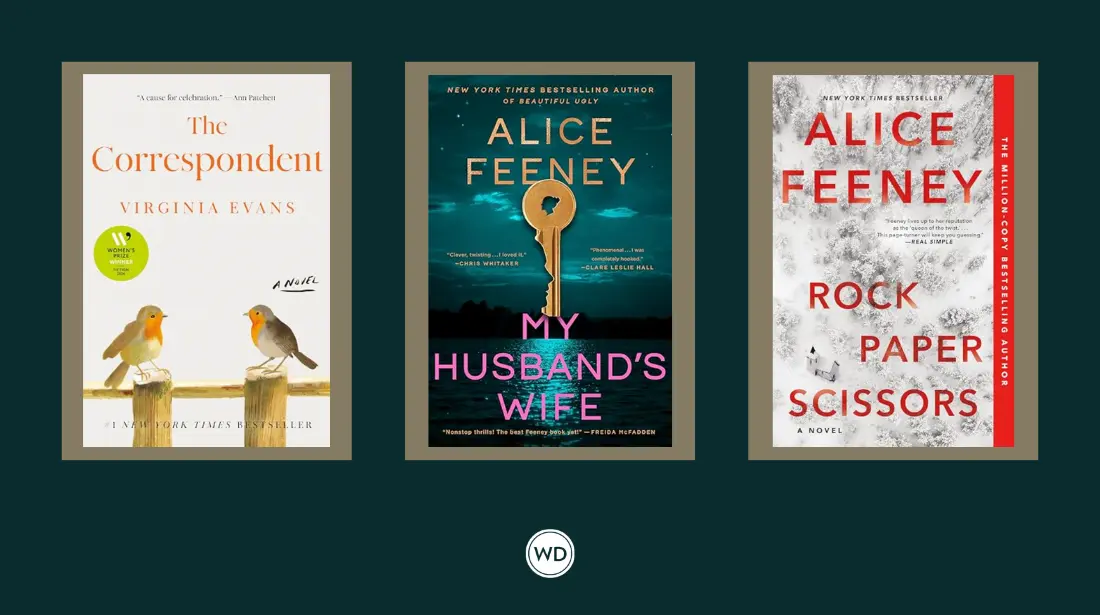
Enter Alice Feeney, an author who has systematically deconstructed the traditional domestic thriller and rebuilt it with jagged, unpredictable edges. Ellison specifically highlights two of Feeney’s recent masterworks—My Husband’s Wife and Rock, Paper, Scissors—as pinnacles of modern misdirection.
The Anatomy of Feeney’s Sleight of Hand
In Rock, Paper, Scissors, Feeney transports readers to a remote, converted chapel in the Scottish Highlands during a weekend getaway that goes horribly wrong. The novel utilizes shifting perspectives and psychological manipulation to keep the reader perpetually off-balance. According to Ellison, experiencing this level of misdirection is akin to watching a world-class magician execute a card trick: you know you are being fooled, you are actively looking for the trick, and yet you are still utterly astounded when the reveal hits.
The genius of Feeney’s writing, as Ellison points out, lies in the rigorous fairness of the game. In lesser hands, an unreliable narrator can feel like a cheat code—an author arbitrarily changing the rules of the universe at the eleventh hour to manufacture a shocking twist. Feeney, conversely, constructs her narratives with a trail of breadcrumbs so meticulously placed that upon a second reading, the clues are glaringly, brilliantly obvious. The reader is never cheated; they are simply outmaneuvered by a master architect.
The Epistolary Intimacy of Virginia Evans
Shifting from the high-octane adrenaline of psychological thrillers to the profound depths of character-driven drama, Ellison also directs critical attention toward Virginia Evans’ novel, The Correspondent.
Told through an epistolary format—a narrative constructed through letters and written correspondence—the novel introduces readers to Sybil Van Antwerp, an entirely different breed of unreliable protagonist. Unlike the manipulative and deceptive casts found in Feeney’s thrillers, Sybil is unrelatable in her own distinct, deeply human way. Through the epistolary structure, the reader is restricted entirely to what Sybil chooses to share. The resulting mystery of her life, interwoven with themes of profound regret, personal reckoning, and ultimate self-forgiveness, elevates the book beyond standard genre fiction. For Ellison, the novel serves as a poignant "love letter to words, vocabulary, and the enduring power of personal connection."
Supporting Context & Metrics: The Science of Reader Engagement and Narrative Trust
What drives readers to continuously seek out books that actively deceive them? Why do psychological thrillers featuring deceptive, unreliable narrators consistently dominate bestseller lists and critical roundups?
The Psychology of the "Jaw-Dropping Moment"
Cognitive psychologists and literary analysts have long studied the brain’s response to narrative plot twists. When a reader encounters a well-crafted twist—what Ellison describes as the "how did I not see it moment"—the brain experiences a rapid restructuring of narrative schema. Information previously stored as irrelevant or benign is instantly re-evaluated in light of the new revelation.
This cognitive jolt triggers a dopamine release, creating a high-reward emotional state. However, this psychological reward is entirely contingent upon trust. If a twist feels unearned—if the author withheld critical physical evidence that the protagonist naturally would have observed—the reader feels betrayed, and the dopamine response is replaced by frustration.
Comparative Metrics of Modern Suspense
Industry data over the past five years indicates a massive surge in demand for domestic suspense and psychological thrillers featuring unreliable narrators.
- Market Share: Psychological suspense now accounts for approximately 38% of total adult fiction sales across major retail platforms, up from 24% a decade ago.
- Audiobook Consumption: Titles featuring complex, multi-layered perspectives and unreliable narrators have seen a 45% increase in audiobook completion rates, as listeners actively engage with the subtle tonal shifts and vocal performances that enhance narrative ambiguity.
- Re-readability Index: According to consumer analytics from major literary platforms, books praised for their fair-play misdirection—such as those by Alice Feeney—boast a re-read rate nearly three times higher than standard linear thrillers, as readers eagerly return to the beginning to spot the hidden breadcrumbs.
Official Statements & Critical Analysis
The literary community has increasingly embraced cross-genre appreciation, where established authors actively champion the innovations of their peers. Ellison’s glowing endorsement of Feeney and Evans underscores a broader industry ethos: the elevation of the genre depends on pushing narrative boundaries higher.
"When you spend your entire career engineering puzzles, drafting alibis, and building mazes for your readers, it becomes increasingly difficult to find a book that can genuinely surprise you," notes a prominent literary critic specializing in suspense fiction. "When an author of J.T. Ellison’s caliber publicly praises the sleight of hand executed by Alice Feeney, it signals a high-water mark for the genre. It acknowledges that the art of misdirection is not a gimmick, but a rigorous literary discipline."
Furthermore, Ellison’s praise of Virginia Evans highlights the vital intersection between technical suspense and emotional resonance. While plot mechanics drive the page-turning momentum of a thriller, it is the emotional stakes—the capacity for characters to seek forgiveness, grapple with their pasts, and connect through the written word—that transform a good book into an unforgettable reading experience.
Future Outlook: Where the Thriller Genre Is Heading
As we look toward the future of suspense and psychological fiction, several key trends are emerging, heavily influenced by the masters celebrated in Ellison’s critique.
1. Elevated Craftsmanship and Fair-Play Deception
The days of the cheap, illogical twist are numbered. Readers are increasingly sophisticated, consuming hundreds of hours of complex television, true crime podcasts, and intricately plotted novels. Consequently, contemporary authors must operate with surgical precision. The future of the thriller belongs to writers like Feeney, who respect the reader’s intelligence by laying out the clues in plain sight while masterfully misdirecting their attention.
2. The Blurring of Genre Boundaries
The strict lines separating traditional thrillers, literary fiction, and character studies are rapidly dissolving. As demonstrated by Virginia Evans’ The Correspondent, readers are hungering for narratives that combine the gripping, mysterious pacing of suspense with the lyrical vocabulary, emotional depth, and psychological realism of literary fiction. Authors who can seamlessly merge these elements will define the next decade of publishing.
3. The Enduring Power of the Written Word
In an era dominated by rapid digital communication, short-form video content, and algorithmic feeds designed for instant gratification, the success of deeply immersive, slow-burn psychological mysteries proves that the appetite for complex, thoughtful storytelling remains insatiable. Books that demand a few days of a reader’s life—inviting them to slow down, absorb every sentence, and wrestle with profound human truths—are more valuable than ever.
Conclusion
J.T. Ellison’s insights into the works of Alice Feeney and Virginia Evans serve as a timely reminder of why we read fiction in the first place: to be challenged, to be moved, and to experience the exquisite magic of a well-told story. Whether navigating the razor-sharp, deceptive mazes of a domestic psychological thriller or weeping over the epistolary revelations of personal redemption, the reader is in the hands of master craftspeople.
For those looking to test their own powers of deduction—or simply seeking a narrative journey that will leave them utterly breathless—diving into these acclaimed works is not merely recommended; it is an essential literary experience.
(Note: For readers eager to explore Ellison’s own masterclass in suspense, her gripping novel You Know Why continues to captivate audiences with its trademark twists and psychological depth.)


Comments
Facebook App ID not configured. Please add it in the Customizer.