
Executive Overview
The publication of "Father’s Feet," an excerpt from acclaimed Sinophone Malaysian writer Zhang Guixing’s novel The Crossing of the Boars—translated into English by Christopher G. Rea and Julie Ming Wang—marks a significant milestone in global Sinophone literature. Set against the backdrop of Kampong Krokop (the "Village of the Boars") in post-World War II Sarawak, Borneo, the narrative provides an unforgettable exploration of historical violence, bodily survival, and inherited psychological trauma.
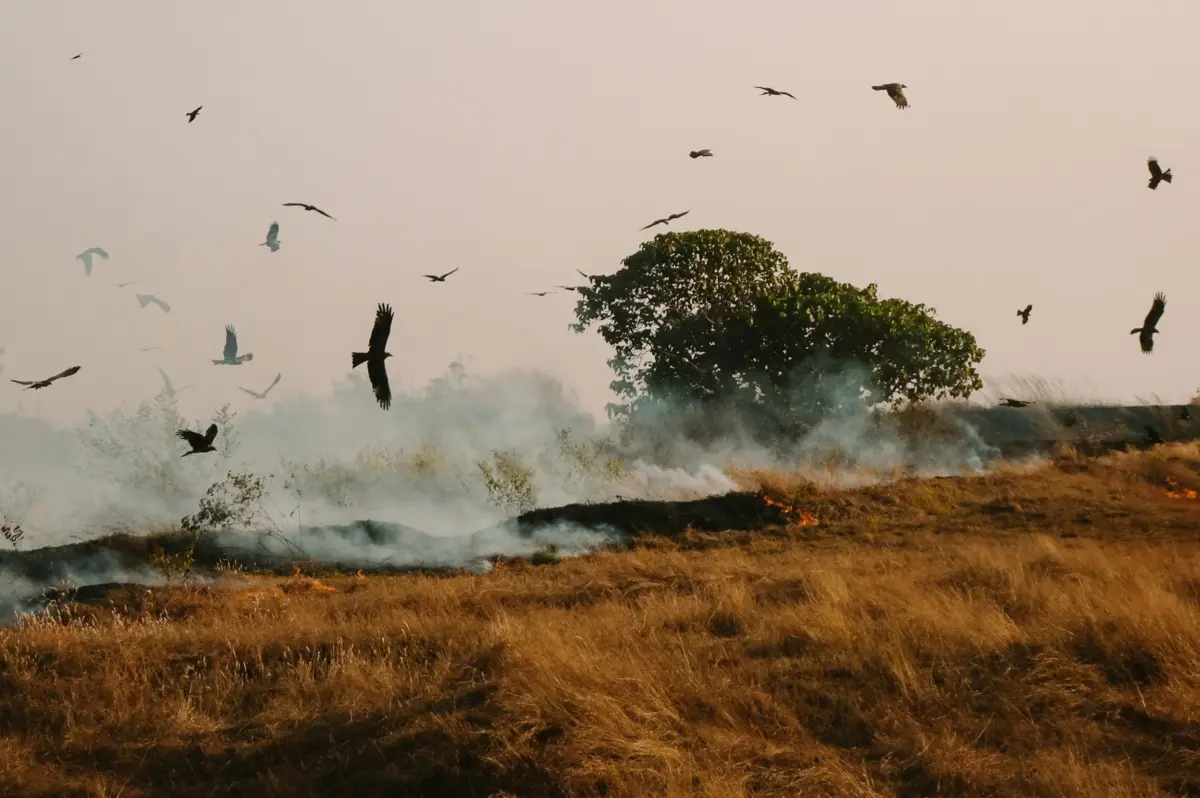
The story opens with a shocking central event: the suicide of Guan Ah-fung, a handless storekeeper and war veteran who hangs himself from a jackfruit tree while a wildfire consumes the surrounding fields of lalang grass. Ah-fung, who lost both arms at age twenty-one, had spent years defying his physical disability through extraordinary mastery over his feet—using them to whittle slingshots, hunt wild boars with a double-barreled shotgun, build elaborate kites, and ride a cargo bicycle with his young son, Bag-rhong.
However, an investigation into Ah-fung’s final months reveals that his physical mastery was ultimately undermined by resurfacing memories of the Japanese occupation of Borneo. The inciting incident occurred in mid-1952, when local children discovered a buried crate filled with wartime relics—Japanese yōkai masks and mechanical windup toys—beneath Ah-fung’s stilt house. The discovery triggered a dramatic mental collapse, culminating in nocturnal vigils, horrifying visions of war atrocities, and Ah-fung using his dexterous feet to construct his own noose.
Read Also
This deep-dive report analyzes the narrative structure, socio-historical context, eco-critical motifs, and psychological underpinnings of Zhang Guixing’s work, contextualizing its contribution to contemporary literary studies and Southeast Asian historical memory.
Detailed Chronology
[1940s: WWII Period] --------------------------------------------------------------------> [Mid-1952] ------------------------------> [Late 1952]
Ah-fung loses arms at age 21;                             Children uncover hidden Japanese           Ah-fung orders toys burned;
develops extreme pedal dexterity;                         crate under stilt house; play with         begins 6-month descent into
ambushes Japanese forces in Krokop.                       masks & windup toys near jackfruit tree.   hallucinations & nocturnal vigils.
                                                                                                                |
                                                                                                                v
                                                                                                          [Late 1952 / Suicide]
                                                                                                          Ah-fung uses toes to tie noose
                                                                                                          and hangs self during wildfire.
1. The Inciting Incident and Immediate Discovery
- Setting the Scene: At sundown, a wildfire rages through fields of dry lalang grass, casting a dense, sulfurous haze across Kampong Krokop. As smoke rolls into the village of several hundred stilt houses (rumah panggung), panic spreads among residents and livestock.
- The Discovery: While local children hunt fleeing birds with slingshots amidst the smoke, they peer into Guan Ah-fung’s garden and discover his corpse hanging from a high branch of a jackfruit tree.
- The Irony of the Instrument: Ah-fung hangs from a hemp rope that his son, Bag-rhong, had installed a year prior to suspend a tire swing. Villagers confirm that Ah-fung, despite having no hands, climbed the tree, maneuvered the rope, tied the noose, and executed his own suicide entirely using his toes.
2. A Legacy of Physical Adaptation (Pre-1952)
- Overcoming Loss: Having lost his arms at twenty-one, Ah-fung retrained his feet to perform complex tasks with extraordinary precision.
- Craftsmanship and Hunting: Ah-fung crafted lethal slingshots for Bag-rhong using a parang machete held between his toes. He constructed bamboo kites, tapped cigarette ashes with his feet, and successfully defended his cassava field by firing a double-barreled shotgun with his right middle toe, killing two foraging wild boars.
- Community Mobility: Ah-fung routinely navigated the muddy tracks of Krokop on an aging imported Raleigh cargo bicycle, balancing his son on the rear rack while steering and braking with his feet as he traveled to the Gang-rhun General Store.
3. The 1952 Relic Unearthing
- The Uncovering: In June 1952, during the durian harvest, Bag-rhong and local children explored the crawl space beneath Ah-fung’s stilt house. They discovered a large wooden crate bound with hemp rope.
- Contents: The crate contained Japanese wartime artifacts: terrifying yōkai masks (bird-beaked snouts, red-haired cyclopes, bloodthirsty demons) and vintage mechanical toys (hopping chickens, drumming rabbits, chirping cicadas, and a metal Spanish snowman).
- The Confrontation: The children donned the masks, played with the toys, and roasted pigeon nestlings over an open fire beneath the jackfruit tree. Discovering them, Ah-fung flew into a violent rage, ordering the children to remove the masks and clear the premises immediately.
4. Psychological Collapse and Night Vigils (Mid-to-Late 1952)
- Destruction of the Relics: Ten days after the incident, Ah-fung forced Bag-rhong to burn all the masks and toys under the jackfruit tree. (Children later recovered surviving metal spring mechanisms from the ashes).
- Personality Shift: Over his final six months, Ah-fung transformed from a quiet storekeeper into a shell-shocked recluse. He sat silently at the store counter with "blade-cold" eyes and spent nights on his veranda chain-smoking upwards of a hundred cigarettes while staring into the jungle.
- Nightmare Visions: Ah-fung frequently woke his son in the middle of the night, shining a flashlight into the darkness while describing vivid hallucinations of wartime violence:
- A headless man circling the jackfruit tree playing a Japanese folk song on a charred harmonica.
- A white-haired crone wielding a scythe, chasing a disembodied flying head.
- A Japanese bicycle infantry unit riding over children’s corpses, their spokes tangled with human viscera.
5. The Final Pilgrimage
- Three Days Prior to Suicide: Ah-fung took Bag-rhong to a local grassy hill—a location fraught with personal history, including a wild boar den he had raided years ago and the site where he had ambushed Japanese forces.
- The Last Vision: Standing on the hill, Ah-fung detailed a final hallucination to his son, describing an approaching rōnin with a drawn katana, a camouflaged assassin in a khaya tree with a blowgun and poison darts, and a woman leaping into a bomb crater with a machete.
- The Final Act: Three days later, as wildfire smoke enveloped the village, Ah-fung climbed the jackfruit tree and ended his life.
Supporting Context & Metrics
Historical & Geographical Context: The Shadow of WWII in Sarawak
Zhang Guixing’s narrative is deeply rooted in the historical reality of Japanese-occupied Borneo (1941–1945). Sarawak experienced severe military brutality, guerilla resistance, and Allied bombings. Ah-fung’s missing arms, his hidden crate of Japanese masks and toys, and his intimate knowledge of bomb craters highlight the unresolved trauma borne by survivors. Rather than fading over time, the physical and mental scars of the war remain buried beneath the daily routines of post-war village life, waiting for a catalyst to break back through to the surface.
+-----------------------------------------------------------------------------------+
|                        THEMATIC STRUCTURE OF THE TEXT                             |
+-----------------------------------+-----------------------------------------------+
| NARRATIVE LAYER                   | EXPRESSIVE ELEMENT / MOTIF                    |
+-----------------------------------+-----------------------------------------------+
| Ecological Environment            | Wildfires, choking smoke, lalang grass,       |
|                                   | greater coucals, wheeling hawks.              |
+-----------------------------------+-----------------------------------------------+
| Physical Adaptation               | Masterful pedal dexterity, parang carving,    |
|                                   | shotgun operation, Raleigh cargo bike.        |
+-----------------------------------+-----------------------------------------------+
| Historical Trauma                 | Buried Japanese yōkai masks, windup toys,     |
|                                   | guerilla warfare memories, Allied craters.    |
+-----------------------------------+-----------------------------------------------+
| Psychological Breakdown           | Intrusive hallucinations, chain-smoking,      |
|                                   | night vigils, shadow puppet trauma projections.|
+-----------------------------------+-----------------------------------------------+
Eco-Critical Dynamics and Animal Imagery
The excerpt relies heavily on dynamic, often apocalyptic eco-critical imagery. The natural landscape of Kampong Krokop is not merely a passive backdrop, but an active participant in the drama:
- The Wildfire: Represents an uncontrollable, consuming force that echoes both the destruction of war and Ah-fung’s internal psyche.
- Avian Distress: The greater coucals crying in distress as their nests burn mirror the human inability to protect offspring from systemic violence. Hawks hovering like "winged snakes" emphasize a predatory environment.
- Wild Boars: The recurring motif of wild pigs—from the village name to the den on the grassy hill—symbolizes untamed nature, survival, and the brutal reality of hunter-versus-hunted dynamics in the jungle.
The Physicality of Trauma: Hands vs. Feet
A central theme of the narrative is the tension between physical capacity and psychological vulnerability:
[ PHYSICAL MASTERY ]                              [ PSYCHOLOGICAL FRAGILITY ]
- Carves tools with parang                        - Triggered by Japanese relics
- Shoots wild boars with shotgun   <===========>  - Haunted by wartime hallucinations
- Rides Raleigh cargo bicycle                     - Incapable of erasing war memory
- Performs intricate shadow puppets               - Executes self-destruction with toes
Ah-fung’s feet serve as a testament to human resilience. He adapts so completely to his disability that his feet fulfill every function of hands—including artistic expression via shadow puppet shows on the plank walls of his home. Yet, this remarkable physical self-sufficiency cannot shield his mind when historical trauma is reignited. In a tragic irony, the very physical agility that allowed him to survive and provide for his son ultimately enables him to end his own life without assistance.
Critical Perspectives & Analysis
Literary scholars and critics highlight several key elements of Zhang Guixing’s narrative technique and structural framing in The Crossing of the Boars:
1. Stylistic Realism and Tropical Gothic
Critics note Zhang’s signature "Tropical Gothic" style—a blend of dense sensory prose, magical realism, historical violence, and equatorial environmental detail. The description of setting suns glowing like red candles, rivers transformed into glowing firefly lanterns, and disembodied ghosts brings a surreal intensity to the narrative.
2. The Mechanics of Translation
Translators Christopher G. Rea and Julie Ming Wang preserve the text’s rhythmic tension and vivid vocabulary. Their rendering maintains the jarring contrast between the playful innocence of the village children and the horrific violence haunting Ah-fung’s inner world.
3. Historical Trauma and Memory Transmission
Scholars of Sinophone Malaysian (Mahua) literature point out that Ah-fung’s shadow puppet shows serve as an allegory for generational trauma transmission. When Ah-fung projects spirit snakes and military battlefields onto the wall for his sleeping son, he unwittingly passes down the ghost-ridden history of the war to the next generation.
Future Outlook & Literary Impact
The release of translated works like The Crossing of the Boars is expanding the reach of Southeast Asian Sinophone fiction in global literary markets.
+-----------------------------------------------------------------------------------+
|                           FUTURE LITERARY IMPACT                                  |
+-----------------------------------------------------------------------------------+
|  1. EXPANSION OF SINOPHONE STUDIES                                                |
|     Increases global visibility of Malaysian-Chinese (Mahua) historical narratives|
|     outside traditional East Asian settings.                                      |
|                                                                                   |
|  2. RE-EVALUATION OF WWII HISTORIOGRAPHY                                          |
|     Pushes literary discourse to further examine the Pacific Theater's localized |
|     impact on rural Bornean communities.                                          |
|                                                                                   |
|  3. ADVANCEMENT OF DISABILITY & TRAUMA NARRATIVES                                 |
|     Offers a complex model for analyzing physical adaptation alongside unresolved |
|     psychological PTSD in contemporary fiction.                                   |
+-----------------------------------------------------------------------------------+
As Zhang Guixing’s novel reaches a broader international readership, "Father’s Feet" stands out as a masterclass in literary construction. It demonstrates how historical conflicts endure long after armistices are signed, living on in the land, the body, and the quiet tragedies of everyday life.



Comments
Facebook App ID not configured. Please add it in the Customizer.