
Executive Overview
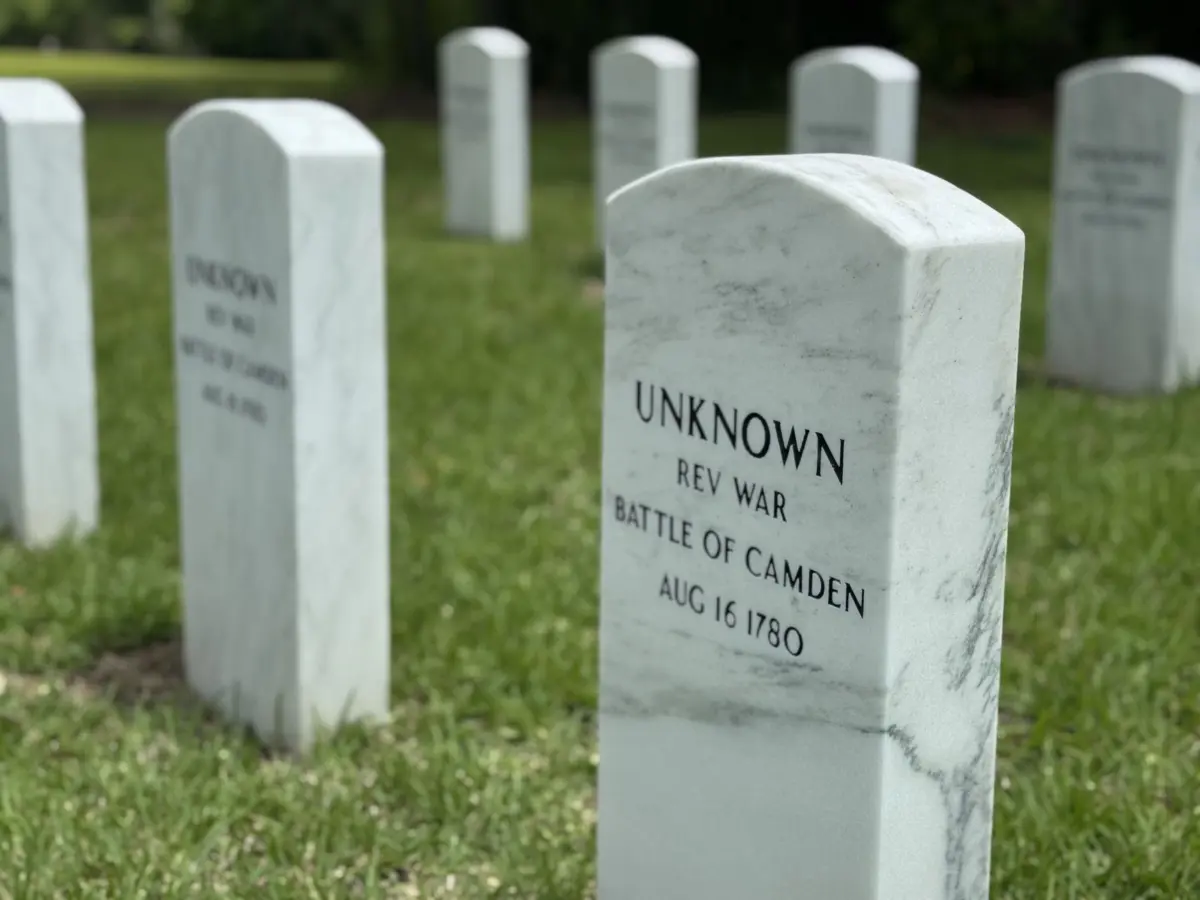
For nearly two and a half centuries, the resting place of a young Continental Army soldier remained a nameless footnote to the American Revolution. Enlisting at roughly 14 years of age and marching more than 1,000 miles across a fractured continent, the boy met his end at the catastrophic Battle of Camden in South Carolina in 1780. Thrust into unmarked soil, he was forgotten by history, becoming one of the oldest "John Doe" forensic investigations in the United States.
Now, cutting-edge genetic genealogy, ancient DNA extraction, and exhaustive archival detective work have finally restored his name. He was Private John Pumphrey of the Seventh Maryland Regiment.
Announced by a specialized team of forensic scientists, genealogists, and historians, Pumphrey’s identification marks a monumental milestone: believed to be the first time an individual who died in the 1700s has been positively identified using a modern genetic genealogy profile. The breakthrough not only links the distant past to the present through approximately 20,000 living DNA matches but also brings a profoundly human face to the founding era of the United States as the nation approaches its 250th anniversary.
Read Also
Detailed Chronology: From Battlefield Chaos to Genetic Discovery
1777–1780: A Boy’s Journey to War
The tragic trajectory of John Pumphrey’s short life began long before he picked up a musket. Born into an apparently prosperous Maryland family, his fortunes inverted dramatically following the death of his parents. Orphaned around the age of ten, Pumphrey and his siblings saw their stability vanish when a cousin reportedly seized control of their father’s estate. Left with sparse resources and few economic prospects, the young teen took a fateful step.
In 1780 records reflect his earlier 1777 enlistment in the Seventh Maryland Regiment of the Continental Army. When he signed his enlistment papers, he did so with a simple "X"—a stark indication that he had never learned to write his name. Over the course of three and a half grueling years, Pumphrey marched over 1,000 miles, eventually accepting a $100 re-enlistment bonus in 1779.
/https://tf-cmsv2-smithsonianmag-media.s3.amazonaws.com/filer_public/f2/1f/f21fd14f-3eff-49e4-abcf-8bf3ccdc8115/img_3924_1.jpeg)
His journey abruptly concluded at the Battle of Camden on August 16, 1780. In what proved to be a devastating rout for Patriot forces, roughly 4,000 American troops—many of whom were debilitated by dysentery—were crushed by 2,000 professional British soldiers. Pumphrey was officially listed as "missing," and his remains were unceremoniously interred in a shallow, unmarked battlefield grave.
2020–2022: Excavation and Exhumation
The modern chapter of this historical cold case opened in 2020, when archaeologists conducting systematic surveys of the Camden battlefield using metal detectors made a sobering discovery. Amid artifacts like musket balls and uniform buttons, they uncovered human skeletal remains protruding from the earth. Further excavation revealed a total of 14 Revolutionary War soldiers buried in shallow, hasty graves.
The remains were carefully exhumed and transferred to the Richland County Coroner’s Office for anthropological examination. Recognizing the historical weight of the discovery, local officials reached out to FHD Forensics, a Texas-based firm with a track record of cracking difficult modern John Doe cases using investigative genetic genealogy.
2025–2026: Cracking the 250-Year-Old Code
The technical hurdle was unprecedented: could methods designed for modern criminal investigations extract viable data from bone samples dating back to the 18th century?
Experts at Astrea Forensics, a California laboratory specializing in ancient DNA, successfully extracted and sequenced genetic material from two of the soldiers, including the remains cataloged as "Camden 9B." This created the oldest genetic genealogy profiles the lab had ever produced.
/https://tf-cmsv2-smithsonianmag-media.s3.amazonaws.com/accounts/headshot/Ellen_Wexler.png)
FHD Forensics uploaded the data to consumer genetic databases like FamilyTreeDNA and GEDmatch, where users had explicitly opted into forensic comparisons. To the team’s astonishment, Camden 9B matched prominent families originating from Maryland’s Anne Arundel County.
Deploying a triad of genetic markers—autosomal, X-chromosome, and Y-chromosome DNA—alongside meticulous archival research, genealogists traced the genetic threads directly to Private John Pumphrey. Historical military rolls confirmed his service record, and biographical research mapped his lineage back to a New Jersey carpenter who had relocated the family to the Baltimore area in 1713.
Osteological analysis added poignant detail to his final days. The growth plates around Pumphrey’s knees had not fully closed, corroborating his young age. While his exact cause of death remains unconfirmed, anthropologists noted an absence of visible skeletal trauma, suggesting he likely succumbed to a soft-tissue wound, such as a bayonet strike.
Supporting Context & Metrics
The identification of Private John Pumphrey is supported by a robust framework of data, historical archives, and genetic matches:
- Age at Enlistment: Approximately 14 years old.
- Military Service Span: ~3.5 years (enlisted 1777, perished in 1780).
- Distance Marched: Over 1,000 miles across multiple states.
- Battle Context: The Battle of Camden (August 16, 1780) featured roughly 4,000 American troops facing 2,000 British soldiers, compounded by widespread illness among the Patriot ranks.
- Forensic Scale: Genetic genealogy analysis successfully generated approximately 20,000 DNA matches linking the fallen teenager to living descendants of his siblings and first cousins.
- Reburial: Given full military honors and reburied in South Carolina in 2023.
Official Statements
The historic breakthrough has drawn profound reactions from historians, forensic experts, and living descendants alike:
:focal(2016x1517:2017x1518)/https://tf-cmsv2-smithsonianmag-media.s3.amazonaws.com/filer_public/f2/1f/f21fd14f-3eff-49e4-abcf-8bf3ccdc8115/img_3924_1.jpeg)
-
Allison Peacock, President of FHD Forensics:
"As far as we knew, this was the first time somebody that died in the 1700s had been identified with their genetic genealogy profile… The earth shifted dramatically under John Pumphrey’s feet. A young teen from an apparently prosperous family, and once with a bright, predictable future, now had little prospects."
-
Rick Wise, Executive Director of the South Carolina Battleground Preservation Trust:
"He has waited almost 246 years for his name to be said out loud again. The blood that ran through his veins is going through yours."
-
James Legg, Archaeologist Leading the Excavation:
/https://tf-cmsv2-smithsonianmag-media.s3.amazonaws.com/filer_public/ea/d0/ead06dd3-b89f-4d26-91d4-8a657acb3dd0/card_grid_john_pumphrey.jpg)
"It’s almost like a mythology, the Revolution; like a story we all agree happened, but may not feel that it was real. These gravesites make it real."
-
Julie Strickland, Pumphrey’s Living Descendant (from Lugoff, South Carolina):
"I was born a Pumphrey. I was put up for adoption when I was 6 weeks old and later found both sides of my family. I started out without a name. He wound up without a name. And now we both know our name."
Future Outlook
The monumental success of identifying Private John Pumphrey has opened a promising new frontier in historical forensics. Researchers emphasize that this case serves as a proof-of-concept, demonstrating that ancient DNA and investigative genetic genealogy can effectively bridge a multi-century gap to restore identities to the nameless dead.
However, significant hurdles remain. Investigations of this caliber are extraordinarily complex, requiring coordinated efforts across specialized academic and private institutions. Furthermore, they are cost-prohibitive, with individual identifications running into tens of thousands of dollars, leaving researchers actively seeking sustainable philanthropic and government funding.
/https://tf-cmsv2-smithsonianmag-media.s3.amazonaws.com/filer_public/4f/7d/4f7d7d3b-4244-47ef-bfb6-de5e63f0d51d/jpumph-re-enlist-s997-16-113.jpg)
Buoyed by this success, the team is already pivoting to the next challenge: identifying the second Revolutionary War soldier whose DNA was successfully sequenced alongside Pumphrey’s. For lead genealogist Allison Peacock—who discovered she is personally related to the second soldier—the work is deeply personal.
As the United States marks its 250th anniversary, these ongoing efforts promise to pull more figures out of the shadows of anonymity, transforming historical abstractions into tangible, breathing human stories that resonate directly with modern generations.



Comments
Facebook App ID not configured. Please add it in the Customizer.