

In the realm of aesthetics, philosophy, and cognitive science, a growing critical movement is examining how transformative art acts as a psychological circuit-breaker. Moving far beyond traditional narrative frameworks, contemporary scholarship increasingly points toward nonduality—the elimination of the artificial boundaries dividing subject and object, self and world—as the hidden engine driving our most profound cultural artifacts.
Whether manifested through the ancient oral traditions of Zen Buddhism, the minimalist precision of modern poetry, or the haunting, dislocative frames of mid-century European cinema, artists across eras have consistently sought to bypass the literal-focused mind. By dismantling the structures of dualistic thinking, these works challenge audiences to inhabit what the poet John Keats famously termed "Negative Capability"—an embrace of uncertainty, mystery, and un-knowing.
This report explores the mechanics of nondualistic art. Drawing a direct lineage from the foundational awakening of Huineng, the Sixth Patriarch of Zen, to the radical poetic disruptions of Chase Twichell, and finally to the cinematic dissolution of Michelangelo Antonioni’s masterwork L’avventura, we examine how art breaks through the glass of literal language to offer a direct, unmediated encounter with reality.
Read Also
Detailed Chronology: From the Marketplaces of Lingnan to Modern Aesthetic Theory
The historical and conceptual lineage of nondualistic art unfolds through a series of radical disruptions in human perception, tracing a path from medieval Chinese folklore to twentieth-century European modernism.
The Awakening in Lingnan (c. 650 CE)
According to foundational Zen lore, a young, impoverished firewood gatherer named Huineng lived in the cold spring of Lingnan. Sent by his mother to the market to trade wood for provisions, Huineng encountered a group of traveling monks from the northern Gunin Daiman monastery. One monk was publicly reciting verses from the Diamond Sutra:
All conditioned phenomena
Are like a dream! An illusion! A bubble! A shadow!
Like dew or a flash of lightning! Thus we shall perceive them!
For Huineng, hearing these lines triggered a seismic psychological shift. The boundaries between his physical body—his hemp robe, sandals, and belt—and the surrounding dirt, wood, and stalls vanished. He later walked hundreds of miles north to study under the patriarchs, eventually anchoring the Southern School of Zen, which rejected gradual intellectual study in favor of sudden, unmediated enlightenment (satori).
The Codification of Negative Capability (1817)
Centuries later, Western Romanticism independently circled the same psychological precipice. In a letter to his brothers George and Thomas, English poet John Keats coined the phrase Negative Capability. Keats praised individuals who were "capable of being in uncertainties, mysteries, doubts, without any irritable reaching after fact and reason." This conceptual framework posited that the highest artistic achievements occur when the creator abandons the compulsion to explain, categorize, or resolve, stepping instead into the fertile void of non-knowing.
The Poetic Interruption of Literal Space (Late 20th Century)
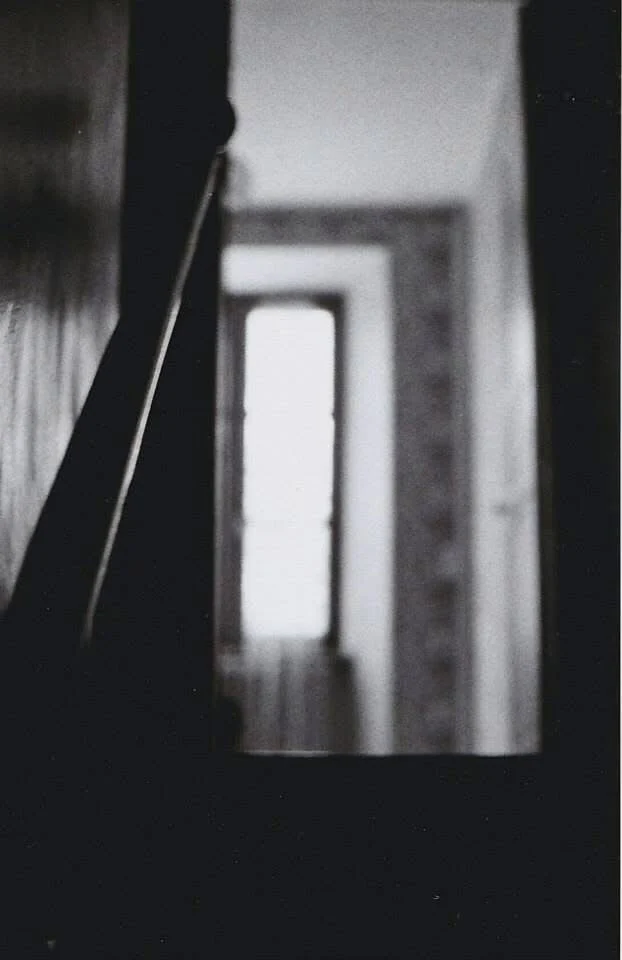
In the modern era, poets began weaponizing syntax to shatter the reader’s default dualistic trance. Utilizing strategies akin to Zen koans—such as Master Joshu’s famous non-answer "Mu!"—poets like Giuseppe Ungaretti (Mattina: "I illuminate myself with immensity") and Chase Twichell constructed linguistic traps. Twichell’s works, such as Makeshifts, deliberately invite the reader into a vivid natural landscape only to pull back the curtain, reminding the audience that language itself consists merely of the "husks of their names… gathered and paralyzed."
The Cinematic Dissolution of Narrative (1960)
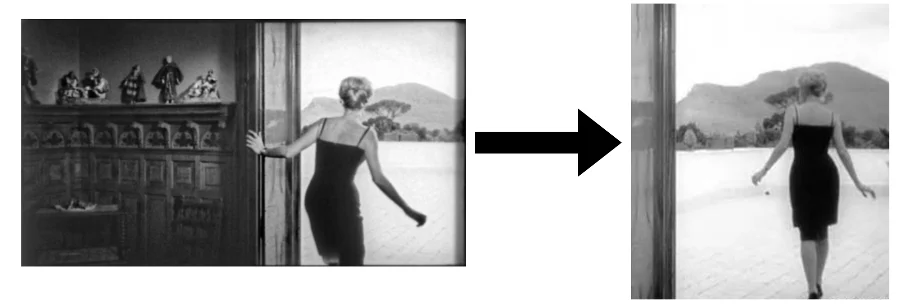
The nondualistic impulse reached a towering cinematic milestone with the release of Michelangelo Antonioni’s L’avventura in 1960. Rejecting traditional plot structures, narrative closure, and psychological exposition, Antonioni tracked characters who seemed afflicted by an existential amnesia. By repeatedly utilizing architectural thresholds—a phenomenon mirroring the psychological "doorway effect"—Antonioni systematically stripped away his characters’ narrative tethers, culminating in an ambiguous, unresolvable final shot beneath the brooding shadow of Mount Etna.
Supporting Context & Metrics: The Mechanics of Nonduality
To understand why certain works of art provoke profound disorientation followed by deep peace, one must examine the intersection of linguistics, psychology, and cognitive architecture.
Linguistic Limitations and Dualistic Structures
Human language is inherently dualistic. Grammar relies on subjects acting upon objects within a framework of time and space. Because language requires separation to function, it fundamentally struggles to articulate unmediated reality.
- The Literal Mind: Programmed for survival and utility, the literal-focused mind categorizes, measures, and defends the ego against uncertainty.
- The Nondual Shift: As poet Chase Twichell notes, "Poetry’s not window cleaning. / It breaks the glass." Art forces the brain to process information outside of standard semantic utility.
| Medium | Dualistic Tether (The Illusion) | Nondualistic Disruption (The Break) |
|---|---|---|
| Zen Buddhism | Intellectual debate & doctrine | The Koan (e.g., Master Joshu’s "Mu!") |
| Poetry | Literal narrative & description | Metaphorical leaps & self-reflexive syntax |
| Cinema | Plot continuity & character psychology | Spatial disorientation & threshold framing |
The "Doorway Effect" in Art and Psychology
In cognitive psychology, the doorway effect describes how walking through a physical doorway causes a sudden, temporary lapse in working memory as the brain updates its spatial model of the environment.
Directors like Antonioni and writers like Huineng harness a psychological equivalent of this phenomenon. By forcing characters—and by extension, audiences—to repeatedly cross thresholds, transition between linguistic registers, or confront unanswerable mysteries, art induces a temporary ego-death. The viewer is momentarily unmoored from their personal history, social status, and temporal anxieties, entering a timeless field of pure perception.
Official Statements and Critical Perspectives
The tension between language, dualism, and artistic expression has drawn profound commentary from leading contemporary writers, critics, and philosophers.
-
Jane Hirshfield on Multiplicity:
"Non-duality is not the negation of multiplicity in favour of some idea of the absolute; it is also not the nihilism so many Westerners think Buddhism to be."
Hirshfield emphasizes that nondualistic art does not erase the world; rather, it intensifies our perception of individual phenomena by stripping away the ego’s possessive labeling. -
Chase Twichell on Mind-to-Mind Transmission:
"Zen is said to be a ‘mind-to-mind transmission.’ The best poems are exactly that: they leap from one mind to another without stopping to explain exactly how they did it. Poetry cannot be paraphrased because it can’t be apprehended by a purely literal mind."
Twichell highlights why poetry alienates casual readers—not because it is intellectual elitism, but because it demands an entirely different mode of cognitive processing. -
Michelangelo Antonioni on Narrative Resistance:
When critics and studio executives besieged the Italian auteur after L’avventura’s divisive premiere, begging for clear narrative exposition regarding the fate of the missing character Anna, Antonioni’s response effectively mirrored the legendary Zen master’s ultimate rejection of dualistic demands: Mu!
Future Outlook: Art in an Era of Hyper-Literalism
As society accelerates further into an era dominated by data quantification, algorithmic categorization, and hyper-literal digital communication, the human need for nondualistic interruption becomes increasingly urgent.
The survival of poetry, slow cinema, and contemplative arts is not merely a matter of preserving niche cultural forms; it is a psychological necessity. When algorithms continually feed users content designed to reinforce their digital ego and mirror their existing biases, transformative art serves as the ultimate counter-measure.
Future aesthetics will likely continue to explore spaces where narrative dissolves into pure atmosphere. By embracing "Negative Capability," creators will continue to construct cultural koans—works that refuse to comfort, explain, or resolve. In doing so, they will invite modern audiences to step out of the dark cave of dualistic illusion, look directly at the forms of reality, and rediscover the radical, unnameable immensity of being alive.


Comments
Facebook App ID not configured. Please add it in the Customizer.