
Executive Overview
The intersection of imperial history, real estate speculation, and modern geopolitics offers a stark window into the mechanics of statecraft and sovereignty. Recent high-level proposals from Washington regarding the acquisition of Kalaallit Nunaat (Greenland)—characterized by the White House as a transactional real estate deal and defended through historical assertions of discovery—did not emerge in a political vacuum. Rather, they represent the latest chapter in a long-standing American tradition of purchasing, claiming, and leveraging northern territories that dates back to the mid-19th century.
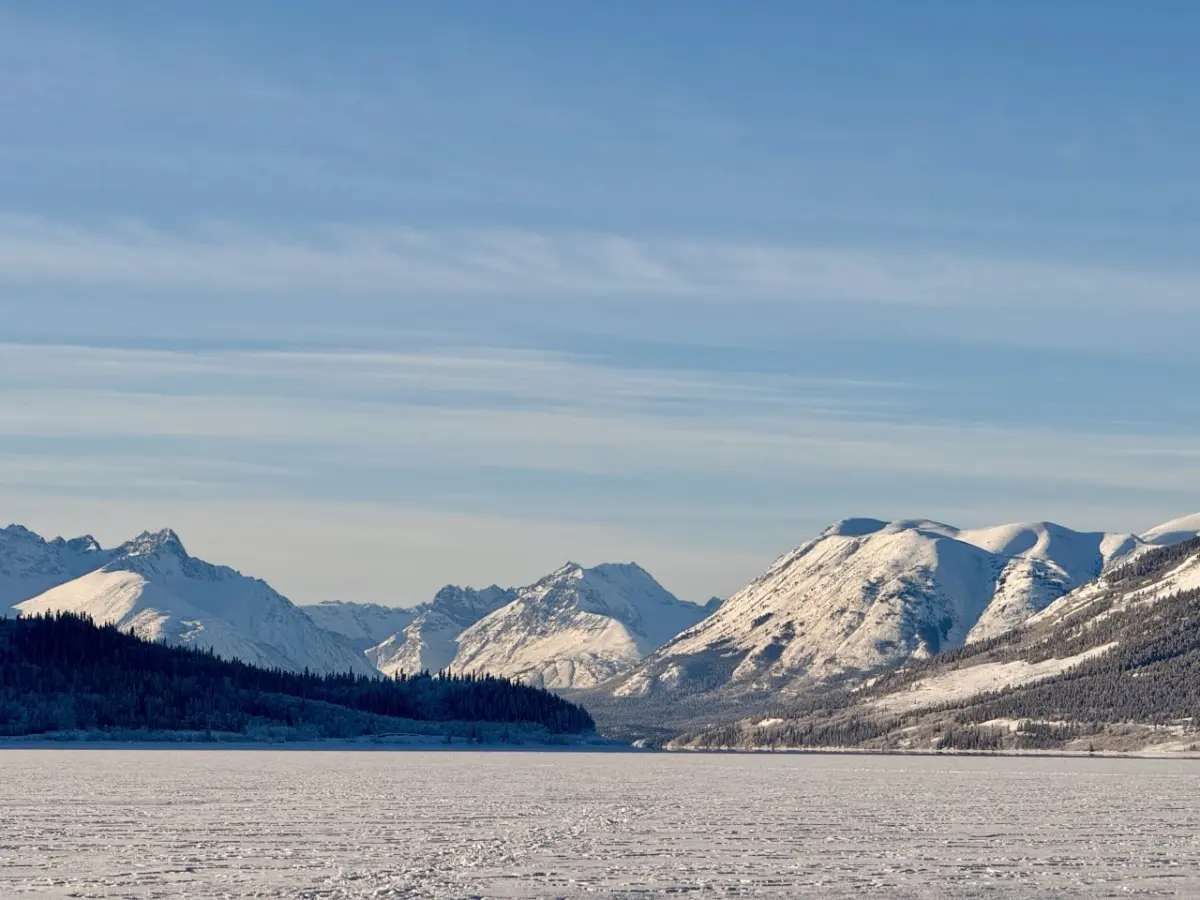
This deep history of expansionism is inextricably linked to the foundations of some of America’s most prominent modern fortunes. The family wealth underpinning the current American political administration originated in the remote reaches of Canada’s Yukon Territory during the Klondike Gold Rush of the late 1890s. There, an immigrant entrepreneur capitalized on the desperation of prospectors by exploiting Indigenous lands and turning human necessity into profit.
By examining the historical continuum from the 1867 purchase of Alaska to contemporary maneuvers in the Arctic, this investigation explores how the rhetoric of terra nullius—territory belonging to no one—continues to mask the realities of colonial expropriation. As climate change rapidly melts the polar ice caps, opening new maritime trade routes and exposing vast mineral deposits, the Arctic has once again become a theater for great-power competition. Yet, as contemporary responses from Greenlandic and Indigenous self-governing bodies demonstrate, the modern era is increasingly defined by a rejection of colonial substitution, raising fundamental questions about the permanence of empire and the rights of indigenous self-determination.
Read Also
Detailed Chronology: From the Yukon Mud to the Arctic Circle
The historical trajectory bridging 19th-century resource extraction with 21st-century territorial ambitions can be traced through several critical milestones:
- 1867: The United States purchases Alaska from the Russian Empire for $7.2 million under the stewardship of Secretary of State William Seward. The transaction sets a precedent for acquiring sovereign territory through financial purchase rather than direct military conquest, bypassing the consent of the indigenous Tlingit, Inupiat, and Athabascan populations.
- 1897–1898: In the wake of the Klondike gold discovery, over 18,000 prospectors flood the traditional trade paths of the Tlingit and Tagish peoples near Mën Chó (Lake Bennett) in the Yukon. Frederick Trump, a recent German immigrant, establishes a lucrative enterprise selling provisions, horseflesh, and lodging to miners, founding the New Arctic Hotel and Restaurant. The profits generated from this exploitation of indigenous land and human desperation seed the Trump family real estate empire.
- 1902: Kashxóot, a Tagish leader, dispatches a formal letter to Canada’s Superintendent General of Indian Affairs, demanding compensation for the expropriation of indigenous lands and hunting grounds by white settlers, explicitly challenging the colonial veneer of "progress."
- 1917: The United States acquires the Virgin Islands from Denmark, utilizing a combination of financial compensation and the formal relinquishment of American exploratory claims in northern Greenland secured by polar expeditions.
- 1951: Amid escalating Cold War tensions, the United States and Denmark sign a defense treaty permitting the construction of over a dozen military installations across Greenland, including the nuclear-powered Camp Century. This agreement lays the groundwork for a lasting, albeit environmentally controversial, US military footprint on the island.
- 1979: Greenland achieves home rule from Denmark, initiating a decades-long constitutional progression toward increased autonomy and self-governance for the island’s Inuit majority.
- 2023–2026: Greenlandic self-government advances with the drafting of a proposed independent constitution. Concurrently, renewed public interest from the United States in acquiring the island sparks diplomatic friction with Denmark and triggers mass demonstrations in Nuuk, where citizens explicitly reject foreign annexation.
Supporting Context & Metrics: The Economics and Geopolitics of Northern Expansion
To understand the persistent American focus on the Arctic, one must examine the convergence of strategic geography, resource economics, and climate change. The valuation of northern latitudes has historically oscillated between dismissal—typified by contemporaneous 19th-century derision of Alaska as "Seward’s Folly" or "Seward’s Icebox"—and intense strategic covetousness.
The Geography of Extraction
From William Seward’s original calculations in the 1860s, which recognized Alaska and potential holdings in Greenland as nodal points for an independent line of interoceanic telegraph and trade routes linking the Atlantic and Pacific, northern acquisitions have served as geopolitical anchors. Today, these calculations are amplified by tangible subterranean and maritime assets:
- Mineral Wealth: Greenland possesses the world’s eighth-largest reserves of rare earth elements, critical for modern technology, green energy infrastructure, and aerospace applications.
- Strategic Access: The melting of polar ice has transformed the Northwest Passage and other Arctic sea routes from perilous hazards into increasingly navigable shipping lanes, drastically reducing transit times between Asian and North American markets.
- Climatic Displacement: According to glaciological data, Greenland is currently losing an estimated 262 gigatons of glacial mass annually into the ocean. This unprecedented melting is physically altering the island’s topography—causing the underlying landmass to rise by roughly a third of an inch per year—while simultaneously exposing previously inaccessible mineral veins.
The Architecture of the "Donroe Doctrine"
Modern policy discourse surrounding Arctic acquisitions reflects a modernized extension of the 1823 Monroe Doctrine. Proponents of expanded US influence in Greenland frequently frame the issue through a binary lens of great-power competition: if Western powers do not assert sovereign or quasi-sovereign control over the island’s security and mineral sectors, rival global actors—specifically China and Russia—will fill the vacuum.
However, historians note that this security rationale often serves as a rhetorical veil for resource extraction. Negotiations involving Arctic infrastructure routinely incorporate provisions for exclusive mineral rights, underscoring that when imperial powers look north, control and extraction remain inextricably linked.
Official Statements & Public Discourse
The public and diplomatic fallout surrounding recent proposals to acquire Greenland revealed a profound cognitive dissonance within mainstream Western political culture. While international media coverage largely focused on the diplomatic disruption of NATO alliances and the protocol-breaking nature of the proposals, domestic American commentary frequently oscillated between incredulity and historical amnesia.
The Reaction from Nuuk
In Greenland’s capital, responses from elected officials and citizens were unequivocal. The Greenlandic parliament issued a definitive statement asserting that "the future of Greenland must be decided by the Greenlandic people." Thousands of citizens took to the streets during the winter months wearing red "Make America Go Away" hats.
Prominent Greenlandic figures articulated a clear rejection of colonial paternalism. Sara Olsvig, former leader of the pro-independence Inuit Ataqatigiit party, stated in interviews:
"Not repeating the wrongdoings of past imperialism is important. There is no such thing as a better colonizer."
Aleqatsiaq Peary, a 42-year-old Inuit hunter, echoed this sentiment to international broadcasters, describing potential incorporation into the United States as simply "switching from one master to another, from one occupier to another."
Mainstream Media and the "Hiding of Empire"
In contrast, mainstream American political analysis often struggled to contextualize the historical roots of the debate. Commentary in publications such as The Wall Street Journal defended potential real estate transactions by arguing potential economic benefits, while mainstream outlets like The New York Times published warnings that acquiring foreign territory against the will of its citizens would thrust the United States "into the category of conquerors"—a framing that historians argue conveniently overlooks the foundational methods by which North American territory was originally consolidated.
This squeamishness around naming the origins of state territory reflects what historian Daniel Immerwahr terms the impulse for "hiding the empire." By treating sovereignty acquisitions as bizarre anomalies rather than the continuation of a 200-year historical playbook, public discourse maintains an unwritten statute of limitations on conquest.
Future Outlook: The Transience of Sovereignty
As the 21st century progresses, the governance of northern latitudes will serve as a critical test case for international law, indigenous rights, and the legacy of colonialism.
The path forward hinges on two competing trajectories:
- The Continuation of Resource Realism: A reversion to 19th-century imperial dynamics, wherein melting ice and critical mineral deposits invite heightened great-power friction, militarization, and transactional diplomacy that overrides local sovereignty.
- The Consolidation of Indigenous Self-Determination: The ongoing strengthening of autonomous governance frameworks—exemplified by the modern successes of the Carcross Tagish First Nation in the Yukon and Greenland’s progressive constitutional self-determination—which assert that sovereignty cannot be bought, sold, or transferred without the explicit, uncoerced consent of the populations who have inhabited these lands for millennia.
The deep histories of the Yukon Territory and Greenland demonstrate that landscapes are not static, nor are empires permanent. Just as the tent cities of the Klondike gold rush faded back into the boreal forest, and as glaciers retreat under the pressures of a warming planet, human political arrangements are similarly transient. Whether future Arctic governance will be defined by the antiquated mechanics of the Doctrine of Discovery or by the vindication of indigenous sovereignty remains the defining geopolitical question of the northern century.




Comments
Facebook App ID not configured. Please add it in the Customizer.