
Executive Overview
In an era characterized by hyper-connectivity, relentless digital noise, and the atomization of public discourse, the necessity for a fixed intellectual and moral anchor has never been more acute. The modern attention economy thrives on perpetual crisis—war abroad, the resurgence of radical political ideologies, artificial intelligence upending foundational human paradigms, and an endless cycle of online outrage. Rather than cultivating thoughtful readers, the contemporary media ecosystem demands captive users enslaved to the tyranny of the present moment.
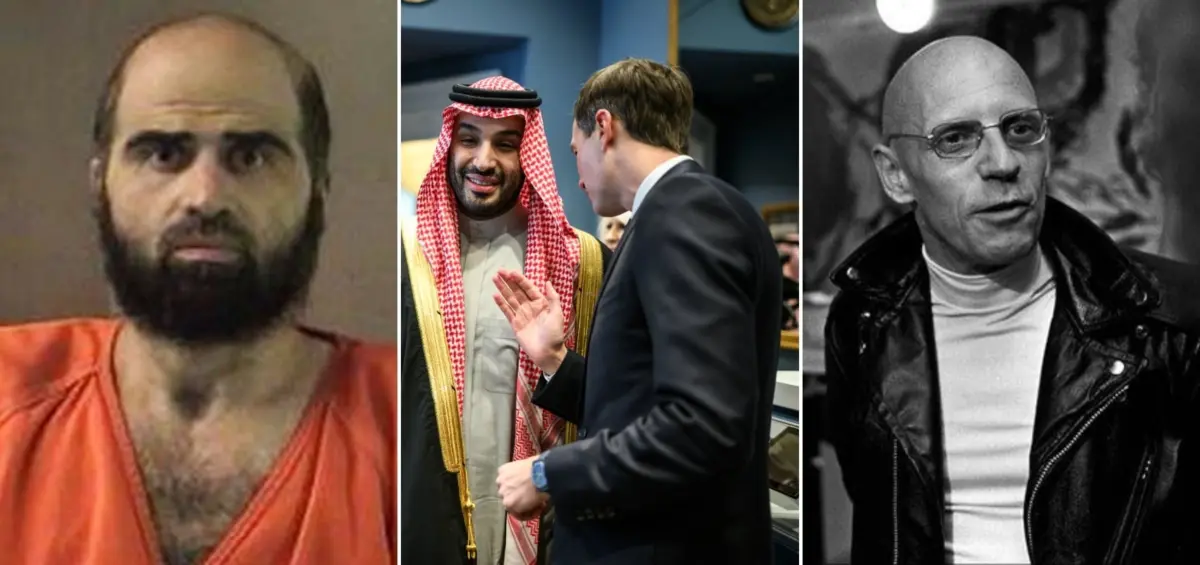
Against this backdrop of cultural disorientation, the editors of First Things convened for their regular podcast discussion to dissect three seemingly disparate yet profoundly interconnected cultural flashpoints. These topics form a jagged cross-section of contemporary life: the abrupt cancellation of the livestreamed execution of Nidal Hasan, the persistent allegations of systemic corruption enveloping the Trump administration, and the intellectual legacy of French philosopher Michel Foucault, whose birth centenary invites a rigorous reassessment of power, surveillance, and institutional control.
This article explores the core themes addressed by the editorial board, examining the theological, political, and philosophical implications of a society that simultaneously sensationalizes and sanitizes state violence, normalizes institutional decay, and grapples with the theoretical frameworks that govern modern governance. Furthermore, as publications like First Things strive to maintain intellectual independence amid economic and cultural upheaval, the broader struggle to preserve literary excellence and timeless truths in a reactionary age takes on existential urgency.
Read Also
Detailed Chronology: Unpacking the Editorial Agenda
To understand the trajectory of the editors’ discussion, it is vital to trace the historical and immediate contexts of the three primary subjects under review. Each issue represents a distinct facet of late-modern crisis, bridging law, politics, and philosophy.
[The Modern Attention Economy]
       │
       ├─► 1. The Nidal Hasan Execution (The Spectacle of State Violence)
       ├─► 2. Political Corruption & Governance (The Decay of Public Trust)
       └─► 3. The Foucault Centenary (The Philosophy of Surveillance & Power)
1. The Canceled Livestream: The Spectacle and Sanitization of Capital Punishment
The decision to cancel the scheduled livestreaming of the execution of Nidal Hasan—the U.S. Army major convicted of the 2009 mass shooting at Fort Hood, Texas, which left 13 people dead and more than 30 injured—triggered a fierce debate regarding transparency, voyeurism, and the moral weight of state-sanctioned death.
For decades, the American penal system has grappled with the optics of capital punishment. As executions moved from public hangings to secluded, sterile chamber procedures behind closed doors, the state sought to balance the retributive demands of justice with the sanitization of lethal force. The proposal to livestream Hasan’s execution promised to drag the ultimate exercise of state power out of the shadows and directly into the digital public square.
The editorial discussion interrogated the implications of this cancellation. On one hand, broadcasting an execution risks reducing a profound moral tragedy and an act of retributive justice to a sensationalized digital spectacle, feeding the very bloodlust and algorithmic voyeurism that plagues the modern internet. On the other hand, shielding the public from the reality of state killing risks insulating citizens from the grim mechanics performed in their name. The editors explored whether the cancellation reflects a healthy societal revulsion toward public executions or a cowardly bureaucratic impulse to sweep the machinery of death out of sight and out of mind.
2. The Persistence of Corruption: The Trump Administration Under the Microscope
Moving from the theater of criminal justice to the corridors of political power, the editors turned their analytical lens toward the enduring narrative of corruption associated with the Trump administration. Years after Donald Trump’s initial ascent to the presidency, the institutional norms, ethical boundaries, and legal precedents challenged during his tenure continue to cast a long shadow over American governance.
The conversation moved beyond partisan talking points to examine the systemic rot that transcends any single administration. The "stench of corruption" in modern politics is not merely a matter of individual malfeasance; it is symptomatic of a broader institutional collapse where public office is increasingly viewed as an instrument of personal enrichment, factional warfare, or corporate capture. The editors discussed how the normalization of political scandals has numbed the electorate, transforming flagrant abuses of power into white noise within an already saturated news cycle.
3. Michel Foucault at 100: Power, Knowledge, and the Panoptic State
Providing a philosophical framework for the day’s political and legal anxieties, the discussion coincided with the 100th anniversary of the birth of Michel Foucault (born October 15, 1926). Foucault, one of the twentieth century’s most influential and controversial thinkers, revolutionized how modern society understands the mechanics of power, discipline, and knowledge.
Foucault’s concepts of biopolitics, governmentality, and the panopticon—where power is decentralized, internalized, and exerted through institutions such as prisons, hospitals, schools, and digital networks—offer startlingly prophetic lenses through which to view contemporary phenomena. Whether analyzing the management of public health during global crises, the algorithmic surveillance economies of Big Tech, or the punitive mechanisms of the modern carceral state, Foucault’s shadow looms large.
The First Things editors engaged in a critical dialogue regarding Foucault’s legacy. While traditionalists often eye postmodern and post-structuralist thought with deep suspicion—viewing it as a solvent that dissolved objective truth and moral certainty—Foucault’s diagnostic tools remain indispensable for diagnosing the very mechanisms of control that define the twenty-first-century technocratic state.
Supporting Context & Metrics: The Crisis of the Attention Economy
The intellectual labor of sustaining serious journals of opinion takes place within a volatile socioeconomic and media ecosystem. The modern attention economy is engineered not to inform, but to capture, monetize, and exhaust human cognitive capacity.
The Metrics of Distraction
- Information Overload: According to media analytics studies, the average digital consumer is exposed to thousands of commercial and political messages daily, drastically shrinking the average attention span.
- The Polarization Index: Algorithms deployed by major social media platforms systematically prioritize outrage and moral panic over nuanced discourse, directly contributing to political radicalization and social fragmentation.
- The Readership Decline: Independent print and long-form digital journalism face severe structural headwinds as advertising revenue migrates to algorithmic platforms that reward brevity and clickbait.
In response to these structural pressures, publications that champion intellectual depth find themselves swimming against a powerful cultural tide. First Things, as a leading voice of religious and cultural critique, explicitly positions itself as an antidote to this digital malady. By offering literary excellence, theological grounding, and a fixed point of reference, the publication attempts to rescue its readership from what it terms "the tyranny of the present."
Official Statements and Editorial Insights
The dialogue among the First Things editors encapsulates a distinct philosophy of cultural engagement. While transcripts of editorial meetings often balance spontaneous debate with rigorous analysis, the underlying consensus points toward a unified critique of modern institutional decay.
"The modern attention economy doesn’t want readers—it wants users enslaved to the tyranny of the present. We are witnessing a systematic erosion of historical memory, institutional integrity, and moral seriousness. Whether we are looking at the sanitization of state execution, the normalization of systemic political corruption, or the panoptic structures analyzed by thinkers like Foucault, the common thread is a crisis of truth and accountability."
— Editorial Board Summary, First Things
The editors emphasize that addressing these crises requires more than partisan posturing or superficial policy debates. It demands a recovery of metaphysical depth—an understanding that political and legal systems mirror the spiritual and moral health of the culture that produces them.
Future Outlook: Sustaining Intellectual Resistance
As the cultural landscape grows increasingly volatile—marked by escalating geopolitical conflicts, the mainstreaming of radical political factions, and the disruptive arrival of artificial intelligence into everyday life—the role of independent, principled intellectual institutions becomes paramount.
The challenges discussed by the First Things editors—ranging from the legal and ethical boundaries of state punishment to the pervasive corruption of political elites and the theoretical challenges of surveillance and power—will continue to define the contours of public life for the foreseeable future. Navigating these challenges requires rejecting the ephemeral hysteria of the 24-hour news cycle in favor of long-term wisdom, historical consciousness, and moral clarity.
To ensure that such voices endure, publications rely heavily on the active partnership of their communities. Initiatives such as the First Things Fall Campaign—seeking to raise vital operational funds to sustain the magazine’s mission—underscore the fragile economic reality facing independent journals of ideas today. As the publication reminds its readers: preserving an anchor in the permanent things is not merely an editorial preference, but a cultural necessity for a society seeking to find its bearings in a disoriented world.





Comments
Facebook App ID not configured. Please add it in the Customizer.