
Executive Overview
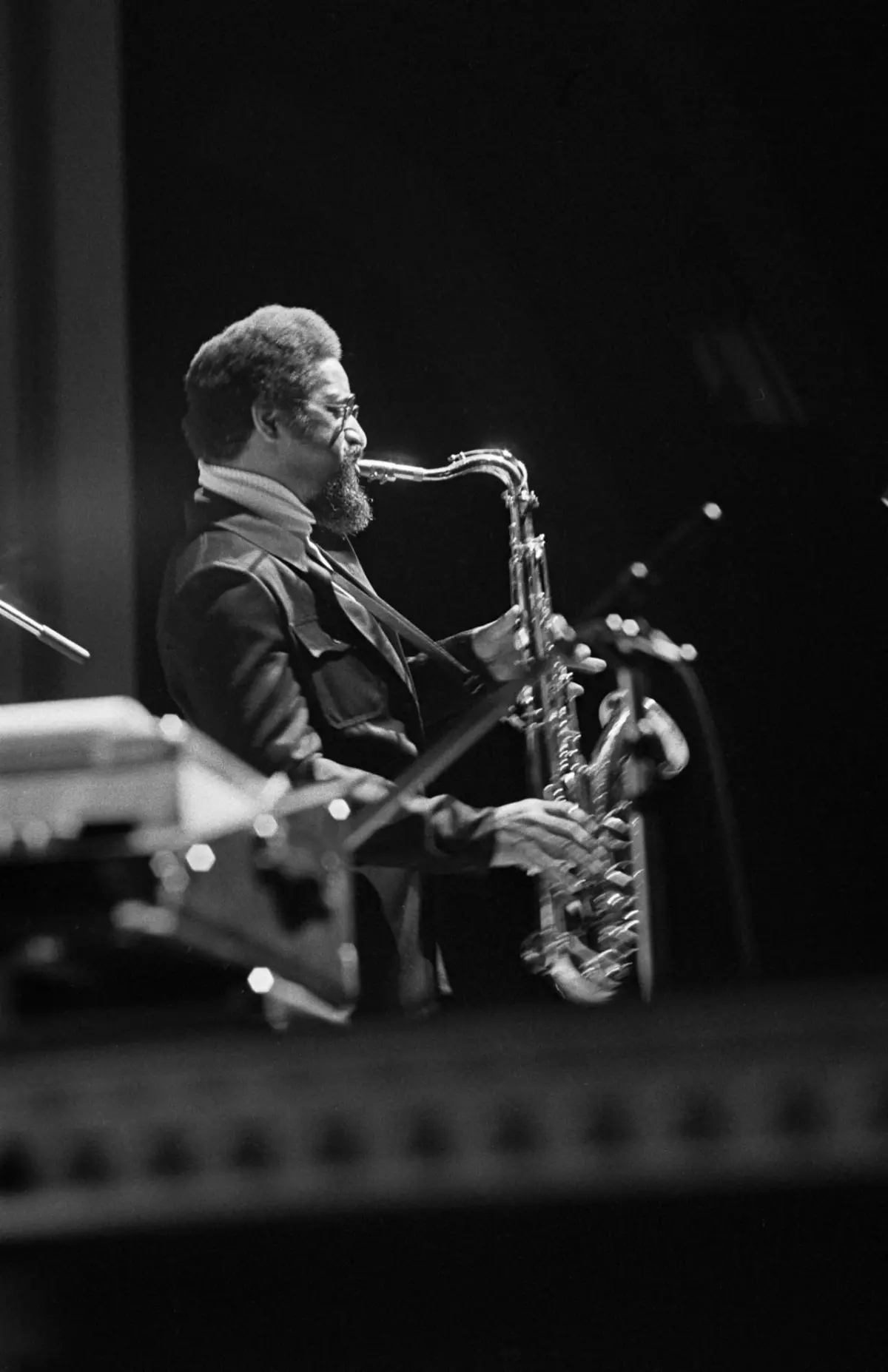
The global music community is mourning the loss of Walter “Sonny” Rollins, who passed away on May 25 at the age of 95. Widely acknowledged as the "Godzilla of saxophone" and the final surviving giant of a golden age in American art, Rollins’s death marks the close of a foundational chapter in jazz history.
Rollins stood as the last direct link to an era of unbridled artistic experimentation, having shared stages and recording studios with early bebop pioneers while continuously pushing the boundaries of rhythm, tone, and form. His career spanned nearly eight decades, encompassing the transition from swing and bebop to hard bop, the avant-garde, and the vibrant rhythms of Caribbean calypso.
Beyond his technical mastery, Rollins defined a standard of uncompromising artistic integrity. From his legendary, self-imposed practice sessions on the Williamsburg Bridge to his sudden retreats from the public eye in search of deeper self-realization, Rollins treated jazz not merely as a commercial medium, but as an existential pursuit. As the final terminal representative of jazz’s restless need to evolve, his passing raises critical questions about the future of a genre that has increasingly traded audacious spontaneity for reverent historical preservation.
Read Also
Detailed Chronology: From Harlem to the World Stage
Early Life and the Crucible of Bebop (1930–1954)
Walter "Sonny" Rollins was born in Harlem on September 7, 1930, to parents who had recently migrated from the islands of Saint Croix and Saint Thomas. Largely self-taught on the saxophone, the young Rollins demonstrated a fierce and relentless dedication to his craft. By his teenage years, he was already performing and recording alongside bebop architects such as singer Babs Gonzales and trombonist J.J. Johnson.
However, this vibrant creative period coincided with a devastating era of socio-economic strain and widespread substance abuse among jazz musicians. Caught in the destructive undertow of heroin addiction that claimed many of his contemporaries—including idols Charlie Parker and Miles Davis—Rollins’s early career was repeatedly derailed. At age twenty, he served a nine-month sentence at Rikers Island for theft. Despite intermittent periods of sobriety, a subsequent parole violation landed him back in incarceration. Unlike many of his peers, however, Rollins ultimately summoned the fortitude to break the cycle, achieving and maintaining long-term sobriety that would anchor the remainder of his prolific career.
The Ascent of a Colossus (1955–1959)
A newly clean Rollins returned to the recording studio in 1955, embarking on an unprecedented run of landmark albums. Initially joining a stellar quintet led by drummer Max Roach and trumpeter Clifford Brown, Rollins experienced a profound personal blow when Brown and pianist Richie Powell died tragically in a 1956 car crash.
The loss ignited a fierce, almost manic creative drive in Rollins. Adopting Brown’s legendary work ethic—fabled for practicing relentlessly even in hotel closets—Rollins rapidly emerged as the preeminent tenor saxophonist of his generation. The year 1956 alone yielded two masterworks of the modern canon: Saxophone Colossus and Tenor Madness, the latter featuring a legendary summit with fellow titan John Coltrane. Rollins had scaled the heights of both critical acclaim and commercial success, yet his restlessness demanded an even more radical path.
The Williamsburg Bridge and the Search for Pure Sound (1959–1961)
At the height of his fame in 1959, Rollins abruptly vanished from the public eye. Eschewing the distractions of clubs and studios, he spent the next two years engaged in a monastic pursuit of self-improvement. Every single day, from the fall of 1959 through the summer of 1961, Rollins could be found standing high above the East River on the pedestrian walkway of the Williamsburg Bridge, practicing his saxophone for hours on end.
This unconventional "practice room" provided the acoustic isolation and solitude he needed to forge a genuinely original voice, free from the dominant shadow of Charlie Parker’s bebop lexicon. When Rollins returned to the studio in late 1961 to record an album aptly titled The Bridge, the results were transformative. His tone was noticeably larger, richer, and more physically commanding—a direct product of projecting sound en plein air against the elements.
Exploration, Calypso, and Avant-Garde Freedom (1962–2014)
Throughout the 1960s and 1970s, Rollins navigated the turbulence of the free-jazz revolution on his own terms. While contemporaries like Ornette Coleman and Cecil Taylor constructed entirely new harmonic languages, Rollins redefined "freedom" by drawing fluidly upon the entire spectrum of musical history. He could effortlessly juxtapose wild, avant-garde shrieks against the polite melodies of Tin Pan Alley show tunes or swing-era standards.
Following another two-year hiatus in the early 1970s—this time dedicated to yoga, meditation at an ashram near Mumbai, and his first journey to the Caribbean—Rollins experienced a profound artistic rebirth. Connecting with his ancestral roots, he integrated the infectious, bouncing dance rhythms of Trinidadian calypso into his music. Albums like Don’t Stop the Carnival (1978) showcased this triumphant fusion of calypso, soul, and funk.
Rollins continued to challenge conventions well into his later decades, exploring the saxophone as a solo unaccompanied instrument and even venturing into orchestral composition with a concerto written for the Yomiuri Nippon Symphony Orchestra. Although health issues forced his retirement from live performance in 2014, he remained a venerated elder statesman of American music until his passing.
Supporting Context & Metrics
To understand Rollins’s unique footprint in cultural history, musicologists and critics often examine the distinct mechanical and artistic metrics of his playing:
- The Tone as a Physical Object: Unlike the emotional, searing cry of John Coltrane or the bird-like flitting runs of Eric Dolphy, Rollins’s sound was remarkably dense and compact. Every pitch, regardless of tempo, possessed a solid, brick-like weight and was saturated with rich overtones.
- Rhythmic Elasticity: Rollins tested the boundaries of swing by placing notes late, early, or precisely in the middle of quarter notes, creating a delightful tension that constantly kept listeners delightfully off-balance.
- Improvisational Output: Across legendary live engagements—such as his multi-volume recordings at the Village Vanguard (1957) and the Village Gate (1962)—Rollins demonstrated a staggering imagination, frequently executing multiple extended solos on a single tune without ever repeating a melodic phrase.
- The Final Continuum: Rollins was the last major artist to actively participate in and shape nearly every foundational era of jazz:
- Swing: Collaborations and stylistic nods to the big band era.
- Bebop: Early recordings with Babs Gonzales and J.J. Johnson.
- Hard Bop: Landmark releases with Max Roach and Clifford Brown.
- Free Jazz: Boundary-pushing works like East Broadway Run Down.
- Fusion/Cross-Genre: Integration of calypso, funk, and modern orchestral settings.
Official Statements and Tributes
The announcement of Rollins’s death on May 25 elicited an outpouring of grief and reverence from cultural institutions, fellow musicians, and historians worldwide:
"Sonny Rollins was the absolute embodiment of the jazz musician’s quest for truth. He approached the saxophone not as an instrument to be mastered, but as a vessel to probe the limits of human expression. With his passing, an irreplaceable pillar of American culture has fallen."
— The Jazz Foundation of America"To listen to Sonny was to witness a mind operating at the absolute edge of possibility. He never repeated himself, he never compromised his sound for commercial comfort, and he left every ounce of his soul on that bridge over the East River. We have lost our elder, our magus, and our moral compass."
— Aidan Levy, Biographer
Cultural commentators have similarly emphasized Rollins’s standing not merely within jazz, but alongside the most fiercely independent iconoclasts in American artistic history, comparing his uncompromising ethos to figures such as painter Jackson Pollock, writer Gertrude Stein, and essayist James Baldwin.
Future Outlook: The State of Jazz After the Last Titan
Rollins’s departure leaves the jazz community to confront an existential question: Can the music survive without its founding architects?
In his later years, Rollins observed a notable shift in the ecosystem of jazz. Once driven by a feral, forward-looking impulse to break rules and court failure, the art form has increasingly become institutionalized. Modern conservatory training and competitive circuits frequently reward young performers for technical polish and historical replication rather than radical, dangerous reinvention.
Yet, Rollins’s legacy offers both a warning and a blueprint. He proved that an artist could command global respect while completely ignoring commercial pressures, fashion trends, and institutional expectations. As contemporary musicians and students continue to parse his recorded output—studying how he deconstructed a simple melodic cell or pushed a ballad into the altissimo register—they inherit a standard of courage that transcends genre.
The loss of Walter "Sonny" Rollins closes a monumental chapter in the history of American music. But as listeners return to their turntables to drop the needle on The Bridge or Saxophone Colossus, the invitation remains: to sit between the speakers, embrace the risk, and let everything change.




Comments
Facebook App ID not configured. Please add it in the Customizer.