
Executive Overview
A profound wave of grief, anger, and disillusionment has swept across Pakistan, ignited by a series of harrowing tragedies that have exposed deep-seated systemic failures in public safety, institutional governance, and child protection. From the catastrophic fire at the Pakistan Institute of Medical Sciences (PIMS) that claimed the lives of 14 newborns, to alarming cases of violence against women and children, the country’s collective conscience has been pushed to a breaking point.
Amidst a pervasive atmosphere of official inertia, prominent figures from Pakistan’s entertainment industry have taken to social media to break their silence. Utilizing their vast platforms, actors such as Mahira Khan, Bushra Ansari, Sonya Hussyn, Naimal Khawar, and Durefishan Saleem have transformed digital spaces into arenas of resistance and accountability. Moving beyond conventional expressions of condolence, these celebrities have leveled direct criticism at government apathy, administrative negligence, and societal complicity. This unprecedented outpouring reflects a broader societal consensus: Pakistan is facing a profound moral and structural crisis where the most vulnerable—newborn infants, women, and children—are continuously left unprotected by the institutions designed to safeguard them.
Detailed Chronology of Recent Tragedies
The current wave of outrage is not isolated to a single event, but rather serves as a cumulative reaction to a series of devastating, preventable tragedies that have unfolded across the country within a short span.
Read Also
The PIMS Hospital Fire and Institutional Neglect
The epicenter of the public outrage is the devastating fire that swept through the neonatal unit of the Pakistan Institute of Medical Sciences (PIMS), resulting in the tragic deaths of 14 newborn babies. These infants perished before they even had a chance to experience the world outside the incubator. Rather than receiving compassionate support, grieving parents seeking answers faced abrasive conduct from public officials. Reports emerged of administrative hostility and high-handedness from figures including Health Minister Mustafa Kamal, who allegedly berated distressed families during their most vulnerable moments. The incident laid bare severe deficiencies in fire safety protocols, emergency preparedness, and the baseline standard of care within premier public healthcare institutions.
Karachi Nazimabad Incident and Human Trafficking Concerns
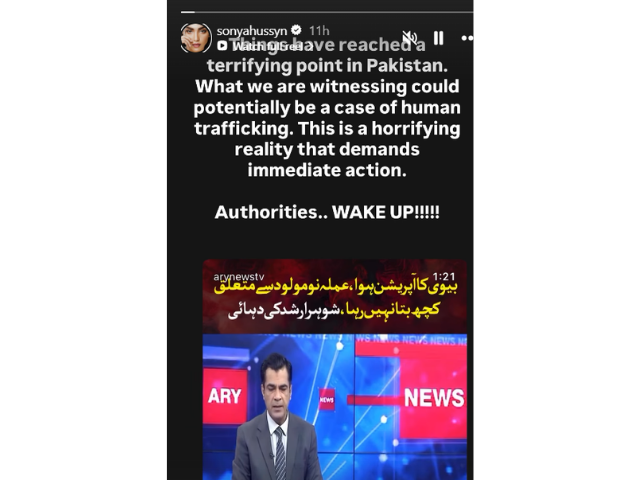
Compounding the healthcare crisis, the commercial hub of Karachi witnessed distressing scenes outside a private medical facility in the Nazimabad area. A desperate family was captured on video protesting alleged malpractice and systemic exploitation. Actor Sonya Hussyn, who amplified the footage online, noted that the chaotic and suspicious circumstances pointed toward potential human trafficking rings operating under the guise of medical institutions. The incident underscored a terrifying reality: the breakdown of regulatory oversight in private healthcare has left impoverished citizens prey to predatory practices.

A Litany of Unresolved Violence
The public consciousness has also been haunted by a series of violent crimes targeting women and young girls, cases that have lingered in the shadows of judicial delay. Celebrities specifically invoked the names of victims whose stories have come to symbolize the systemic failure of justice:
- Hina Javaid: A victim of unimaginable domestic and public violence whose pursuit of justice has stalled within bureaucratic legal corridors.
- Aizel: A young child whose grieving mother has found herself fighting an uphill battle against a lethargic investigative apparatus.
- Mir Raza: A case representing systemic violence and the abuse of power by entrenched elite elements.
- Ayat Noor: A young life cut short, leaving a grieving father to demand accountability in a system heavily tilted against the defenseless.
These cases, taken together, paint a bleak portrait of a society where accountability is elusive, and justice is frequently denied to those without influence.
Supporting Context & Metrics: A Broken Social Fabric
The fury expressed by the artistic community is symptomatic of deeper, systemic rot within Pakistan’s infrastructural and legal frameworks. To understand the gravity of the celebrities’ outcries, one must examine the structural vulnerabilities plaguing public welfare sectors.
Healthcare Infrastructure and Safety Standards
Public healthcare in Pakistan remains chronically underfunded, receiving a fraction of the national GDP that international health standards recommend. Hospitals like PIMS are frequently overburdened, operating without basic fire-suppression mechanisms, modern electrical wiring audits, or functional emergency evacuation plans. The loss of 14 newborns is a direct indictment of capital neglect; budgetary allocations are routinely diverted away from essential patient safety infrastructure, leaving premature infants vulnerable to preventable hazards like electrical short circuits and equipment failure.
The Crisis of Child and Female Protection
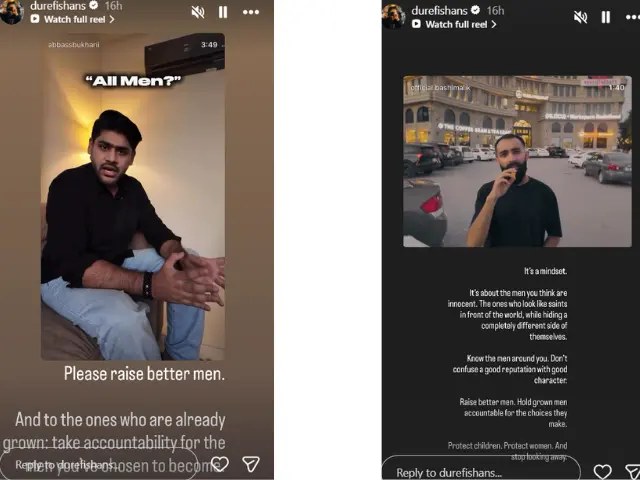
Pakistan ranks persistently low on global gender equality and safety indexes. According to human rights monitors, thousands of cases of violence against women and children go unreported annually due to social stigmas, compromised police investigations, and a sluggish judicial process. The pervasive nature of domestic violence, coupled with a cultural environment that historically shields perpetrators through out-of-court settlements or societal pressure, has created a culture of impunity. When public figures like Durefishan Saleem urge society to "raise better men" and warn against confusing a "good reputation with good character," they are addressing the root cultural pathology that normalizes misogyny and toxic masculinity.
Official Statements and Public Backlash
The response from the government and institutional authorities to these tragedies has added fuel to the fire, transforming grief into intense political anger.
The Controversy Surrounding Health Minister Mustafa Kamal
Veteran actress Bushra Ansari directed her public video message squarely at Health Minister Mustafa Kamal, condemning his callous treatment of the families who lost their newborns at PIMS. Ansari captured the disbelief of the nation, noting:
"A lot of incidents are happening before us. These 14 kids passed away before even opening their eyes; there is a lot of negligence… You can’t scold them at the moment when they’re going through such grief. People will complain about it to you, and they’re distressed, and you’re scolding them?"
Ansari’s pointed directive—that the minister should either execute his duties competently or step aside to listen to the grievances of the populace—resonated widely across digital platforms, highlighting a profound disconnect between the ruling elite and the common citizenry.
Celebrity Digital Activism as a Counterweight
With mainstream political accountability frequently faltering, social media has transformed into an alternative court of public opinion.
- Mahira Khan articulated the collective psychological exhaustion of the country, noting that she felt "sick to my stomach" and "hopeless to the core" as she watched the unending cycle of tragedy. Invoking the revolutionary imagery of Faiz Ahmed Faiz’s iconic poem Hum Dekhenge (We Shall Witness), Khan channeled a desperate hope that systemic oppression and institutional apathy will eventually be dismantled.
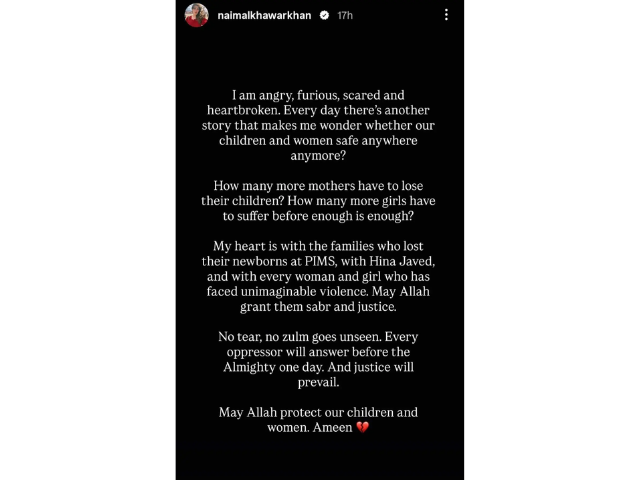
- Naimal Khawar questioned the fundamental safety of the nation’s demographics, writing on Instagram: "Angry, furious, scared and heartbroken, every day there is another story… How many more mothers have to lose their children? How many more girls have to suffer before enough is enough?"
- Durefishan Saleem focused on internal cultural reform, challenging patriarchal norms and demanding that adult men take immediate ownership of their behavior and societal impacts.
These interventions illustrate a shifting paradigm within Pakistan’s cultural sphere: celebrities are shedding their traditional apolitical stances to demand structural reforms, legislative enforcement, and moral reckoning.
Future Outlook: Will Justice Prevail or Fade?
As the initial shockwaves of the PIMS fire and associated tragedies begin to recede from immediate headline cycles, a critical question remains: will this digital outcry translate into tangible, long-lasting reform, or will it fade into the background noise of transient outrage?
Historically, public agitation in Pakistan over institutional failures follows a predictable trajectory: acute media coverage, emotional public discourse, ministerial assurances of transparent inquiries, and subsequent institutional amnesia. However, the depth of despair articulated by cultural icons suggests that the threshold for public tolerance has been severely tested.
For real change to materialize, several foundational steps must be taken:
- Independent Judicial Inquiries: Transparent, uncompromised investigations must be conducted into the PIMS hospital fire, with findings made public and criminal negligence prosecuted regardless of political affiliations.
- Regulatory Overhaul: Comprehensive safety audits must be mandated across all public and private medical facilities, ensuring that fire codes, sanitation standards, and neonatal care units meet international benchmarks.
- Legal Reform for Protection of Women and Children: Law enforcement agencies must expedite the prosecution of violent crimes, dismantling the systemic barriers that discourage victims from coming forward.
- Cultural and Educational Shifts: Long-term societal initiatives must be introduced to address the root causes of misogyny and institutional indifference, beginning with curricula that emphasize empathy, accountability, and human rights.
Without these structural interventions, the grief expressed by actors, activists, and ordinary citizens will remain cyclical. As Mahira Khan poignantly asked on behalf of millions, "Who cares who is responsible? How does it even matter, when nobody has ever been held responsible?" Until Pakistan breaks this cycle of impunity, the nation will continue to mourn its most defenseless citizens, trapped in an endless loop of unfulfilled promises and deferred justice.




Comments
Facebook App ID not configured. Please add it in the Customizer.