
Executive Overview
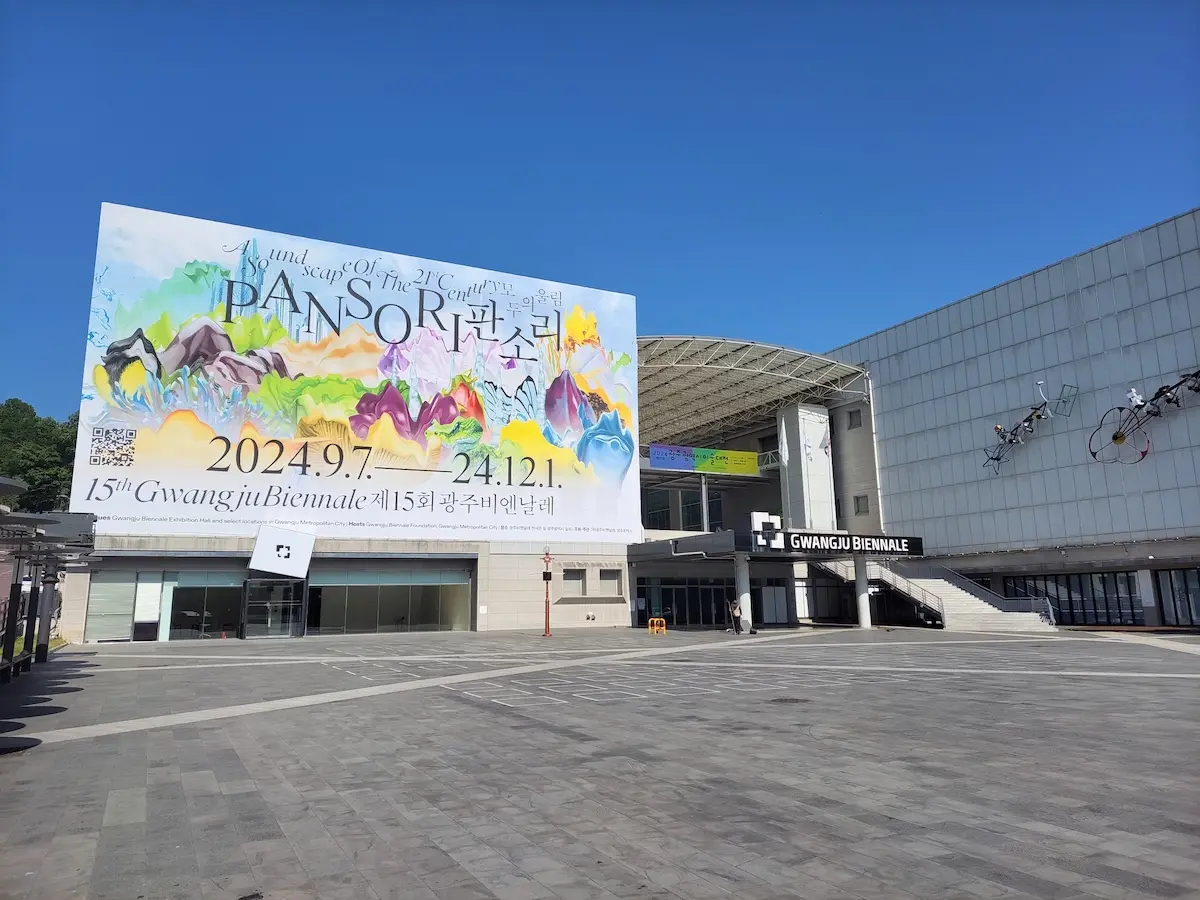
The intersection of contemporary art and volatile East Asian geopolitics has once again manifested in high-stakes diplomatic friction. In a dramatic escalation of an ongoing sovereignty dispute, the Chinese ambassador to South Korea has officially ordered all Chinese artists, curators, and installation personnel to withdraw from the upcoming 16th Gwangju Biennale. Scheduled to open on September 5, the prestigious international art exhibition has been plunged into a multi-layered diplomatic crisis following the decision by the Gwangju Biennial Foundation (GBF) to permit Taiwanese exhibitors to officially participate under the designation "Taiwan."
The fallout materialized swiftly after a high-level meeting at Gwangju City Hall between Chinese Ambassador Dai Bing and Gwangju Mayor Min Hyung-bae. During the closed-door discussions, Ambassador Dai expressed profound "regret and concern" over the local administration’s capitulation to demands made by Taiwan’s Ministry of Culture. Prompted by Beijing’s uncompromising stance on the "One China" principle—which rejects any international recognition of the self-governed island’s sovereignty—Dai issued a direct directive commanding Chinese cultural workers to halt all preparations immediately and pull their works from the Hajeongung Art Museum, a primary venue slated to host a high-profile special exhibition.
The crisis highlights the acute vulnerability of international cultural institutions when caught in the crossfire of cross-strait tensions. For the Gwangju Biennale—an institution born out of South Korea’s blood-soaked historical struggle for democracy and civil liberties—this controversy strikes at the very heart of its foundational ethos. As organizers scramble to salvage the exhibition with less than a month before opening day, the unfolding drama offers a sobering study in how contemporary art festivals are increasingly being leveraged as arenas for soft-power dominance and territorial contestation.
Read Also
Detailed Chronology of the Dispute
The roots of the current conflagration extend far beyond the immediate weeks leading up to the September opening, tracing a tortuous path of bureaucratic maneuvering, institutional arm-twisting, and public outcry that has simmered for over a year.
The Genesis of the Renaming Controversy
The dispute initially ignited more than a year ago concerning a major satellite exhibition tied to the biennale. Originally slated to feature under the unambiguous banner of the "Taiwan Pavilion," the exhibition’s designation became a lightning rod for behind-the-scenes pressure. Facing intense diplomatic pressure from Beijing and its diplomatic missions in South Korea, the Gwangju Biennial Foundation sought a compromise to appease mainland authorities without alienating its international partners.
Consequently, the GBF pressured Taiwanese organizers to alter the pavilion’s name from "Taiwan" to the "NTMoFA Pavilion"—an acronym referencing its primary commissioning body, the National Taiwan Museum of Fine Arts. At the time, the foundation presented the move as a pragmatic administrative adjustment designed to ensure the smooth execution of the exhibition. However, Taiwanese cultural authorities viewed the forced nomenclature change as an egregious capitulation to Chinese political censorship.
The Boiling Point: August 15 and the Accusation of Censorship
For months, the compromise remained an uneasy status quo. However, the fragile arrangement shattered on August 15, when Taiwan’s Ministry of Culture released a scathing public statement leveling explicit accusations of political censorship against the GBF. The ministry condemned the foundation for capitulating to foreign pressure, arguing that suppressing the name "Taiwan" fundamentally violated the autonomy of artists and the integrity of cultural exchanges.
The public rebuke transformed what had been a quiet administrative headache into an international reputational crisis for the biennale. Artists, curators, and cultural commentators from both Taiwan and mainland China began speaking out, condemning the renaming controversy as a betrayal of the biennale’s historical commitment to free expression.
The Reversal and the Beijing Backlash
Recognizing the escalating damage to the institution’s global standing—and running out of time ahead of the September 5 launch—the GBF executive board made an abrupt about-face. On Tuesday, the foundation officially announced that Taiwan’s exhibition would be permitted to open under the uncompromised moniker of the "Taiwan Pavilion" and could be freely advertised as such in all official promotional materials, catalogues, and digital platforms.
The GBF’s concession, while celebrated by Taiwanese cultural advocates, triggered an immediate and severe reaction from Beijing. The Chinese Embassy in Seoul viewed the reversal not merely as a local administrative decision, but as a direct challenge to Beijing’s core territorial claims. Ambassador Dai Bing’s subsequent intervention and order for a total Chinese withdrawal represent the culmination of this high-stakes diplomatic tug-of-war.
Supporting Context & Metrics
To fully understand the gravity of the Gwangju Biennale crisis, one must examine both the deep historical significance of the host institution and the broader geopolitical chessboard of East Asia.
The Legacy of the 1980 Gwangju Uprising
Established in 1994, the Gwangju Biennale was not conceived as a standard, apolitical showcase of elite contemporary art. Rather, it was founded to commemorate the tragic and heroic events of the May 18 Gwangju Uprising of 1980. During this dark chapter in South Korea’s modern history, citizens, students, and workers rose up against the military dictatorship of Chun Doo-hwan, demanding democratic reforms.
The military regime responded with brutal, lethal force. Upwards of 2,300 South Korean civilians are estimated to have been killed during the military crackdown. Because of this harrowing lineage, the Gwangju Biennale has historically positioned itself as a champion of human rights, freedom of expression, and resistance against authoritarian oppression. It is precisely this foundational identity that makes the foundation’s initial capitulation—and the subsequent heavy-handed censorship by Beijing—so acutely painful to the local and international arts community, who view political interference as a betrayal of Gwangju’s democratic bloodline.
The Cross-Strait Arts Battleground
The incident in Gwangju is far from an isolated cultural clash; it is part of a systemic, global campaign by the People’s Republic of China (PRC) to systematically erase official or quasi-official representations of Taiwanese sovereignty on the international stage. In recent years, Beijing has exerted immense pressure on international film festivals, book fairs, museums, and biennial exhibitions to force Taiwanese participants to rebrand under names such as "Chinese Taipei" or obscure institutional acronyms.
For Taiwan, maintaining the name "Taiwan" in international cultural forums is viewed as a vital existential necessity to preserve its distinct cultural identity and international visibility. The National Taiwan Museum of Fine Arts and Taiwan’s Ministry of Culture have increasingly pushed back against these international restrictions, utilizing global platforms to assert cultural autonomy despite Beijing’s diplomatic isolation tactics.
Official Statements and Institutional Responses
As the September 5 opening date looms, the crisis has elicited a flurry of carefully calibrated official statements from the various stakeholders caught in the geopolitical storm.
The Gwangju Metropolitan Government and the GBF
During the tense summit at Gwangju City Hall, Mayor Min Hyung-bae attempted to erect a firewall between municipal administration, artistic expression, and international diplomacy. According to reports from the Munhwa Broadcasting Corporation (MBC), Mayor Min firmly told Ambassador Dai that "political considerations should not affect the field of art."
Despite the Mayor’s rhetorical defense of artistic autonomy, the Gwangju Biennale Foundation finds itself in an unenviable operational crisis. In a formal statement released to the South Korean press following the Chinese ambassador’s boycott order, the biennale administration expressed deep anxiety over the logistical nightmare unfolding on their doorstep:
"There is not much time left until the opening on September 5, and we are closely monitoring the situation, hoping the exhibition will proceed smoothly."
The Beijing Perspective
While the Chinese Embassy in Seoul did not issue a sprawling public manifesto, Ambassador Dai Bing’s actions spoke with absolute clarity. By formally registering "regret and concern" directly to the municipal government and subsequently commanding Chinese artists and installation staff to abandon the Hajeongung Art Museum, Beijing signaled that economic and diplomatic retaliation will swiftly follow any international validation of Taiwanese sovereignty. For Beijing, the appearance of a "Taiwan Pavilion" constitutes an intolerable breach of the One China principle, superseding the cultural value of the biennale entirely.
Future Outlook: The Stakes for Global Biennials
As the 16th Gwangju Biennale prepares to swing its doors open to the public, the immediate future of the exhibition remains precarious. The sudden withdrawal of Chinese artists and curators threatens to leave gaping physical and conceptual voids within the exhibition spaces—most notably at the Hajeongung Art Museum. Organizers are currently locked in emergency meetings to determine whether remaining international artists can fill the vacated spaces or if the exhibition footprint must be radically reconfigured at the eleventh hour.
Beyond the logistical scramble in Gwangju, this crisis establishes a troubling precedent for the global arts ecosystem. International biennials, which pride themselves on being cosmopolitan spaces of intercultural dialogue and boundless expression, are increasingly finding themselves on the front lines of geopolitical conflict.
The events in South Korea serve as an urgent warning to cultural institutions worldwide: the era of insulating art from geopolitics has come to a definitive end. As major state actors weaponize cultural participation to enforce territorial and ideological boundaries, art institutions must decide whether they will stand firm as sanctuaries of free expression or yield to the coercive demands of authoritarian diplomacy. How the Gwangju Biennale navigates the wreckage of this dispute will be closely watched by cultural administrators across the globe as a bellwether for the future of international art festivals in a fractured world.

Comments
Facebook App ID not configured. Please add it in the Customizer.