
Executive Overview
In an era dominated by corporate-vetted blockbusters and algorithmically optimized content, a dedicated subculture of cinephiles continues to gather in sold-out theaters to celebrate a very different kind of filmmaking: the monumentally inept, utterly sincere "trash movie." Unlike formulaic holiday romances or sanitized franchise sequels, trash cinema thrives in the vast chasm between monumental artistic ambition and technical accomplishment. These films—distinguished by garbled dialogue, bewildering plotting, lo-fi visual effects, and an absolute absence of self-awareness—have forged a distinct aesthetic category that challenges conventional definitions of cinematic value.
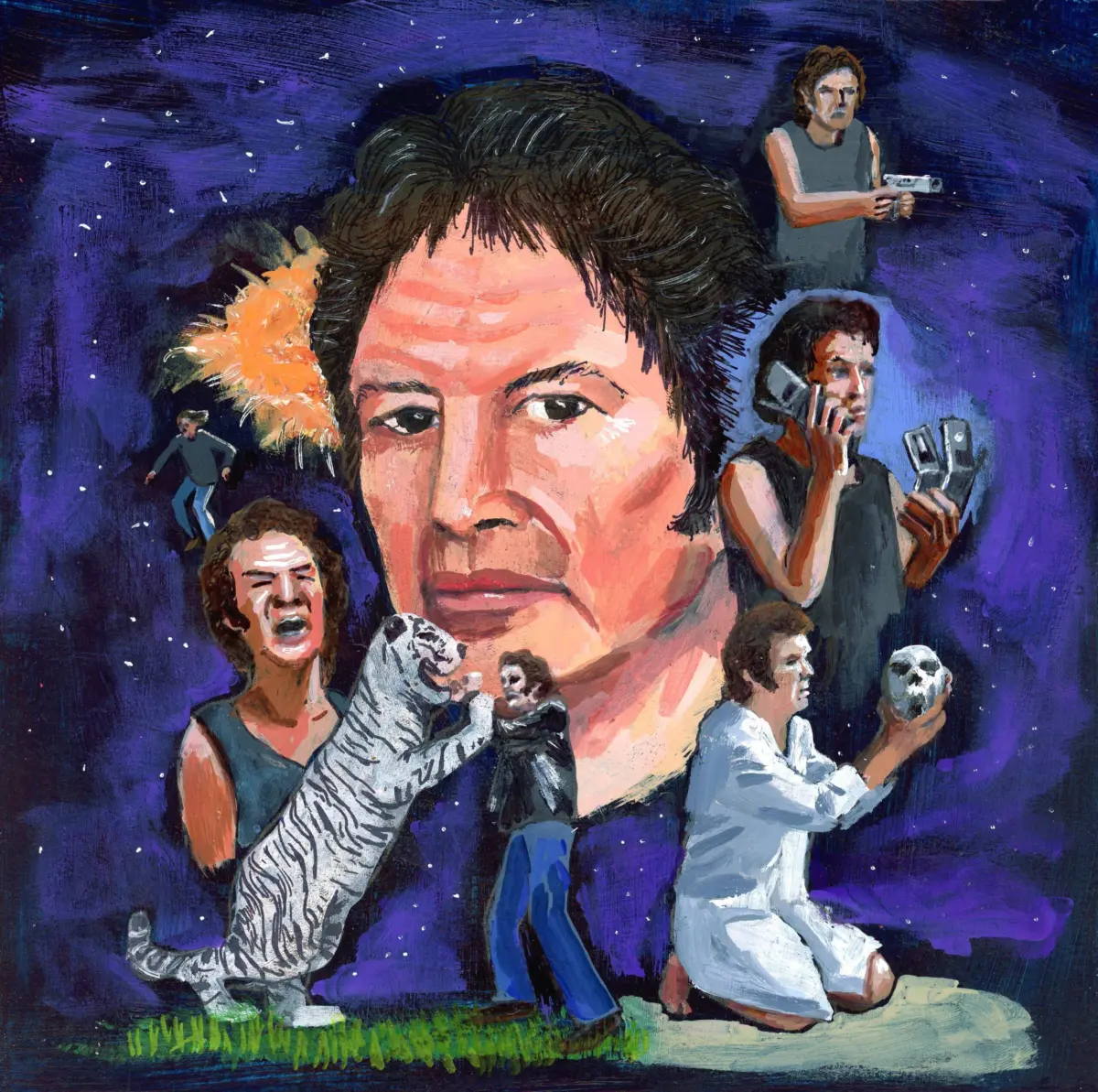
The movement reached a new milestone on May 15, 2024, at the Independent Filmmakers Showcase L.A. Film Festival in downtown Los Angeles. Hundreds of devotees filled the Regal Cinema for the premiere of Dire Duplicity, the seventh feature film by Neil Breen—a former architect and real estate licensee widely regarded by connoisseurs as the undisputed auteur of modern trash cinema. Breen’s rise highlights a growing cultural counter-movement. As artificial intelligence and algorithmic recommendation engines threaten to homogenize cultural output into frictionless "slop," the unfiltered, deeply idiosyncratic, and human failures of trash cinema serve as a vital refuge for audiences seeking genuine artistic authenticity.
Detailed Chronology: The Evolution of Sublime Incompetence
The elevation of cinematic failure from technical flaw to artistic fascination has developed over several decades, marked by pivotal releases, shifting critical frameworks, and the rise of vanity-project auteurs.
Read Also
[1958] 'Plan 9 from Outer Space' establishes the template for captivating cinematic failure.
  │
[1964–1969] Cultural theorists define the aesthetic: Susan Sontag ('Notes on "Camp"', 1964);
  │         Pauline Kael ('Trash, Art, and the Movies', 1969).
  │
[1980s–1990s] Golden Era of B-Movie Ineptitude: 'Hard Ticket to Hawaii' (1987), 'Miami Connection' (1988),
  │           'Troll 2' (1990), 'Samurai Cop' (1991).
  │
[2003] Tommy Wiseau releases 'The Room', inaugurating the modern vanity-project era.
  │
[2005] Neil Breen debuts 'Double Down', initiating his seven-film body of work.
  │
[2010] James Nguyen releases 'Birdemic: Shock and Terror'.
  │
[May 15, 2024] Breen premieres 'Dire Duplicity' at the Regal Cinema in Los Angeles.
Phase I: The Foundations of Bad Cinema (1950s–1990s)
The modern appreciation for paradoxically captivating cinema began with Ed Wood’s Plan 9 from Outer Space (1958), a film whose visible set wobbles, erratic stock footage, and nonsensical dialogue established the archetype for endearing failure. Critical acceptance of lowbrow entertainment gained momentum in the 1960s. In her landmark 1964 essay "Notes on ‘Camp,’" Susan Sontag noted that "intending to be campy is always harmful," laying down the foundational rule that unstudied seriousness is essential for genuine aesthetic trash. Five years later, critic Pauline Kael published "Trash, Art, and the Movies" (1969) in Harper’s, defending the raw vitality of unpretentious pop entertainments over respectable, sterile high art.
Throughout the 1980s and 1990s, micro-budget genre movies expanded the canon. Cult favorites such as Hard Ticket to Hawaii (1987), Miami Connection (1988), Troll 2 (1990)—a sequel famous for featuring zero trolls—and Samurai Cop (1991) built dedicated followings through bootleg VHS trading, midnight screenings, and public-access television riffing programs like Mystery Science Theater 3000.
Phase II: The Vanity-Project Era (2000s–2010s)
At the turn of the millennium, the medium shifted from low-budget crew productions to singular vanity projects financed, written, directed, and starred in by eccentric self-funders. Tommy Wiseau’s The Room (2003) became an international phenomenon, inspiring midnight screenings worldwide and generating a best-selling memoir and Hollywood adaptation (The Disaster Artist). In 2010, tech salesman James Nguyen entered the canon with Birdemic: Shock and Terror, promoting his eco-thriller by driving around the Sundance Film Festival in a minivan decorated with fake birds.
Phase III: The Breen Canon and the Premiere of Dire Duplicity (2005–Present)
Neil Breen launched his career in 2005 with Double Down, followed by I Am Here. . . Now, Fateful Findings, Pass Thru (2016), Twisted Pair, and Cade: The Tortured Crossing. Unlike predecessors who eventually leaned into self-parody, Breen has remained entirely resistant to camp self-awareness.
The premiere of his seventh feature, Dire Duplicity, on May 15, 2024, showcased the enduring pull of his work. Fans traveled from across the West Coast to fill two sold-out screenings at the Regal Cinema in Los Angeles, transforming a standard corporate multiplex into a celebratory showcase for underground cult cinema.
Supporting Context & Metrics: Analyzing the Aesthetics of Trash
The Breen Formula and Production Mechanics
Trash cinema operates under strict internal dynamics. True trash must not be confused with forgettable commercial fare (such as formulaic TV holiday films) or high-budget studio misfires (such as 2019’s Cats or 2024’s Megalopolis). Authentic trash flourishes in the dramatic gap between grand socio-political ambition and minimal technical execution.
| Aesthetic Dimension | Traditional Corporate Cinema | Algorithmic "Slop" | Sublime Trash Cinema (e.g., Neil Breen) |
|---|---|---|---|
| Production Model | Studio committee / Focus-tested | Automated / AI-assisted | Extreme auteurism (One-man production) |
| Self-Awareness | High (Calculated humor / Irony) | Zero (Programmatic outputs) | Zero (Absolute, earnest seriousness) |
| Visual Style | Polished / Homogenized | Seamless / Synthetic | Glitchy CGI / Repeated stock footage |
| Narrative Logic | Standard three-act structure | Predictable pattern replication | Incomprehensible plots / Sudden non sequiturs |
| Audience Relation | Passive consumption | Background streaming | Active, communal engagement |
Breen’s body of work exemplifies extreme auteurism. Screen credits routinely attribute writing, directing, producing, casting, production design, lighting, editing, catering, and makeup entirely to Breen. Production details reflect a distinct, lo-fi signature:
- Locations: Filmed primarily at Breen’s private residence in Nevada, nearby desert landscapes, and recognizable public spaces (such as the Nevada State University campus operating as secret government agencies).
- Prop & Vehicle Motifs: Frequent appearances of Breen’s personal vehicles—including a Ferrari with a customized license plate reading "FARRARI"—alongside plastic weaponry and broken laptops.
- Visual Effects: Heavy reliance on static green-screen backgrounds, Sims-like graphics, and repeated cycles of public-domain stock footage.
- Thematic Tropes: Protagonists are invariably played by Breen as messianic figures—hyper-competent hackers, augmented warriors, or extraterrestrial judges—battling shadowy global cabals of "bankers," "CEOs," "politicians," and "insurance companies."
   [ The Anatomy of a Neil Breen Narrative ]
   ┌─────────────────────────────────────────┐
   │ High-Concept Messiah / Hacker (Breen)   │
   └────────────────────┬────────────────────┘
                        │
                        ▼
   ┌─────────────────────────────────────────┐
   │ Confronts Vague Corrupt Elite           │
   │ ("Stockbrokers", "Bankers", "CEOs")     │
   └────────────────────┬────────────────────┘
                        │
                        ▼
   ┌─────────────────────────────────────────┐
   │ Unfolds via Green-Screen Technobabble   │
   │ & Recycled Stock Footage                │
   └────────────────────┬────────────────────┘
                        │
                        ▼
   ┌─────────────────────────────────────────┐
   │ Ends in Shocking On-Screen Resignations │
   │ or Sudden Cosmic Purification           │
   └─────────────────────────────────────────┘
Community Dynamics and Cultural Reach
The audience for trash cinema forms what philosopher Ted Cohen termed an "affective community"—a group bound together by a shared emotional and aesthetic reaction to a specific work.
Digital commentary channels have expanded the reach of these films. Popular YouTube shows such as Adam Johnston’s Your Movie Sucks (YMS), RedLetterMedia’s Best of the Worst, and podcasts like My Scene with Breen have introduced millions of viewers to bad-movie appreciation. Rather than encouraging cynical mocking, these online spaces foster a communal culture where fans organize collective viewings, develop internal lore (such as the fan tradition of the "Breen Mitzvah"—watching a single Breen title thirteen times), and treat midnight premieres as major cultural events.
Official Statements and Industry Perspectives
The premiere of Dire Duplicity brought together cast members, digital critics, film industry veterans, and the auteur himself, providing rare insight into the creative intent and reception of trash cinema.
The Auteur’s Intent
Speaking to the audience at the Los Angeles premiere, Neil Breen reiterated the moral framework driving his latest work:
"Remember: every betrayal begins with trust. Heath [the protagonist] is an unaugmented human being—the best agent at a secret international agency in direct contact with the President."
When questioned during the post-screening Q&A about thematic choices—such as why an elderly character required an oxygen tank—Breen offered a characteristic, unadorned response:
"He’s an elderly man. You know, when you’re over forty, you need oxygen."
Cast Reactions
Actors appearing in Breen’s productions describe a unique, highly untraditional set environment. Cast members receive partial script pages immediately before filming, contributing to their deer-in-headlights delivery.
Kansas Bowling, co-star of Dire Duplicity:
"It’s kind of bittersweet, because I know I’ll never be in a better movie than this."
William Preston Bowling, actor portraying the oxygen-dependent elder:
"It’s a total dream, and I feel high as a kite right now. [Cast over the phone], we had to share a pair of cowboy boots on set, so I padded them with extra socks."
Critical and Professional Commentary
Film professionals and digital analysts emphasize that the power of trash cinema lies in its unvarnished human sincerity.
Adam Johnston, founder of YouTube channel Your Movie Sucks (YMS):
"When somebody makes an attempt at comedy and pretends they’re in on the joke, it’s not interesting. It’s interesting when we see some form of sincerity. Sincerity is what sells—not just sells, but what makes it art."
Joe Carnegie, Hollywood producer and screenwriter:
"I think there’s a lot of filmmakers at this screening. We all started at this place where we were making movies with a camcorder in our house, and when we needed a girl, our mom played the girl, and when we needed a doctor it was our grandpa. And I’m so reminded of that, watching these movies."
Phil Christman, cultural critic and essayist (writing in The Hedgehog Review):
"To a child, the adult world is oppressive in part because of its apparent competence, its air of knowing what ought to be done… The unending, dogged, elaborate, even painstaking failure of Plan 9—the way it seems to go out of its way to fail—was tonic to the imagination."
Future Outlook: The Human Imperative Against Algorithmic "Slop"
As generative artificial intelligence and corporate consolidation reshape creative industries, trash cinema faces a stark contrast with a new phenomenon: algorithmic "slop."
┌────────────────────────────────────────────────────────────────────────┐
│                        THE LANDSCAPE OF MEDIA                          │
├───────────────────────────────────┬────────────────────────────────────┤
│         ALGORITHMIC SLOP          │            HUMAN TRASH             │
├───────────────────────────────────┼────────────────────────────────────┤
│ • Machine-generated / Smoothed    │ • Handcrafted / Lo-fi flaws        │
│ • Homogenized & predictable       │ • Erratic, singular vision         │
│ • Corporate committee assembly    │ • Unfiltered auteur earnestness    │
│ • Pulverized, frictionless badness│ • Sharp, memorable incompetence    │
└───────────────────────────────────┴────────────────────────────────────┘
Slop represents the homogenization of badness. Unlike trash—which is sharp, personal, erratic, and deeply human—slop is liquid, frictionless, and synthetic. It is the product of predictive models trained on existing content, designed to yield predictable, audience-vetted results. Where slop erases every human error to produce slick mediocrity, trash foregrounds human error in all its unpolished glory.
The future of bad cinema hinges on this conflict:
- The Preservation of Inadvertence: As low-cost AI tools make basic digital effects and script formatting effortless, true inadvertent failure may become increasingly rare. Software will automatically correct continuity errors, smooth out lighting flaws, and polish dialogue, threatening the lo-fi aesthetic that defines authentic trash.
- The Imperative of Sincerity: Audiences are likely to place a higher premium on genuine human authorship. Movies manufactured to be bad will continue to fail critically with trash enthusiasts, while works produced with absolute, unironic passion—regardless of technical limitations—will command intense devotion.
- The Survival of Offline Communities: The live experience of gathering in theaters to laugh, cheer, and marvel at singular artistic visions offers a vital alternative to isolated, algorithmic streaming consumption.
Trash cinema remains one of the few places where artistic expression remains completely unmonitored by corporate committees or predictive code. A film like Dire Duplicity serves as an unexpected monument to human individuality—proving that even in profound technical failure, unvarnished human sincerity holds lasting power.




Comments
Facebook App ID not configured. Please add it in the Customizer.