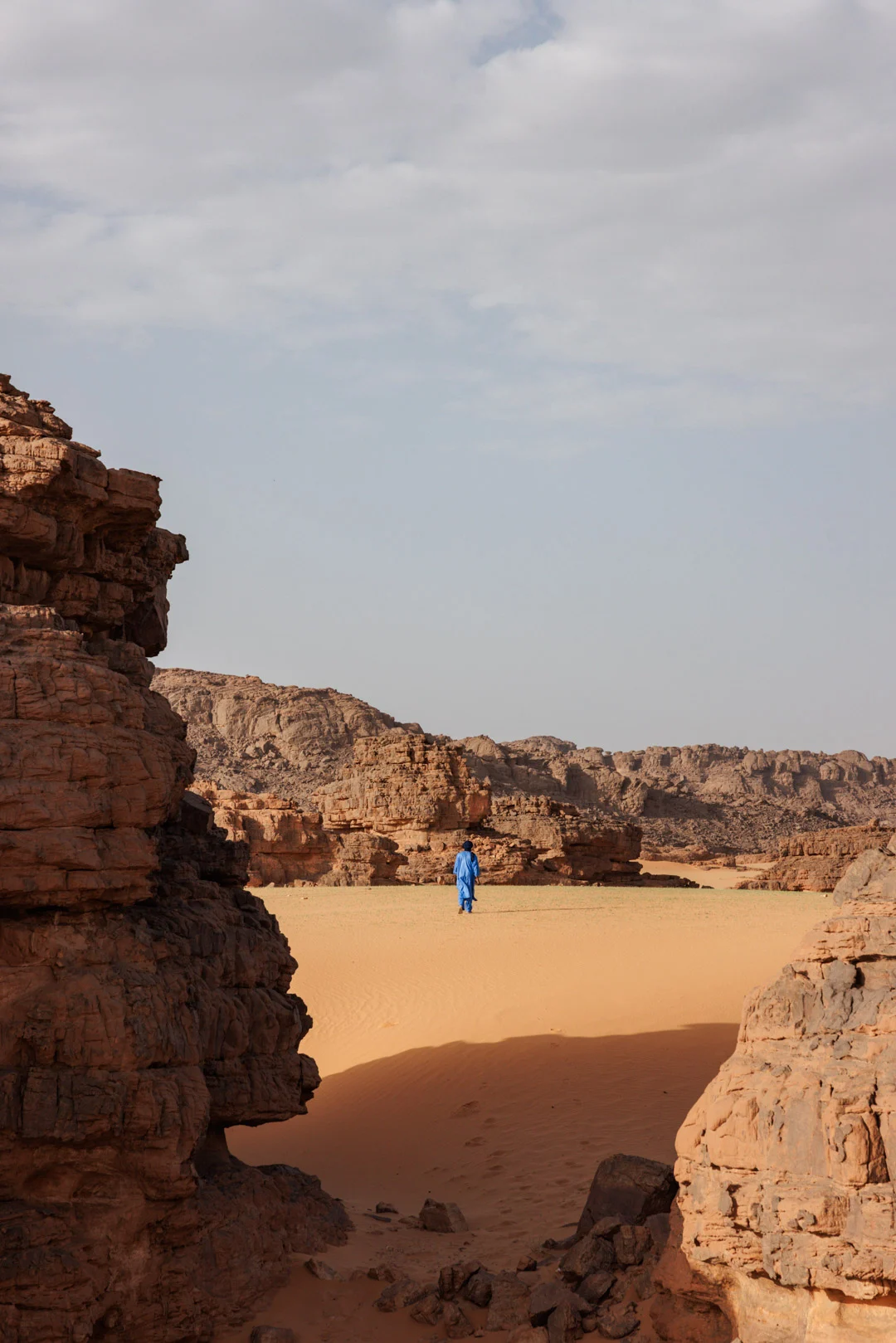
Deep in the heart of the Algerian Sahara, within the isolated oasis town of Djanet, a profound transformation occurs whenever the desert receives rain. Against all expectations, the barren ochre landscape briefly flushes with the faintest tinge of green, shattering the illusion of absolute stasis that defines the collective imagination of the desert. It is within this shifting, living expanse that the annual Sebeïba festival takes place—a ritualistic contest of dance, drumming, and poetry widely believed to stretch back three millennia.
Authored and documented through the collaborative lens of writers Ben Buckland and Carissa Western, the unfolding narrative of Sebeïba offers a rare window into the culture of the Imuhar (preferred by locals over the exonym Tuareg). Far from a static cultural reenactment, Sebeïba serves as a vibrant, highly politicized, and constantly evolving crucible of identity.
Today, the festival navigates a delicate tightrope. On one hand, it acts as a crucial anchor for a marginalized indigenous community whose transnational ties and historical gatherings across Saharan borders have been steadily suppressed or dismantled. On the other hand, it faces the acute pressures of modernity: the rise of domestic tourism from northern Algeria, the pervasive glow of mobile phone screens, and the commercialization of sacred traditions. Through an exhaustive examination of its origins, mechanics, and socio-political realities, this report explores how Sebeïba remains a resilient pillar of identity while confronting the inexorable forces of the twenty-first century.
Detailed Chronology: From the Fog of Algiers to the Heart of the Sahara
The Northern Threshold and the Midnight Flight
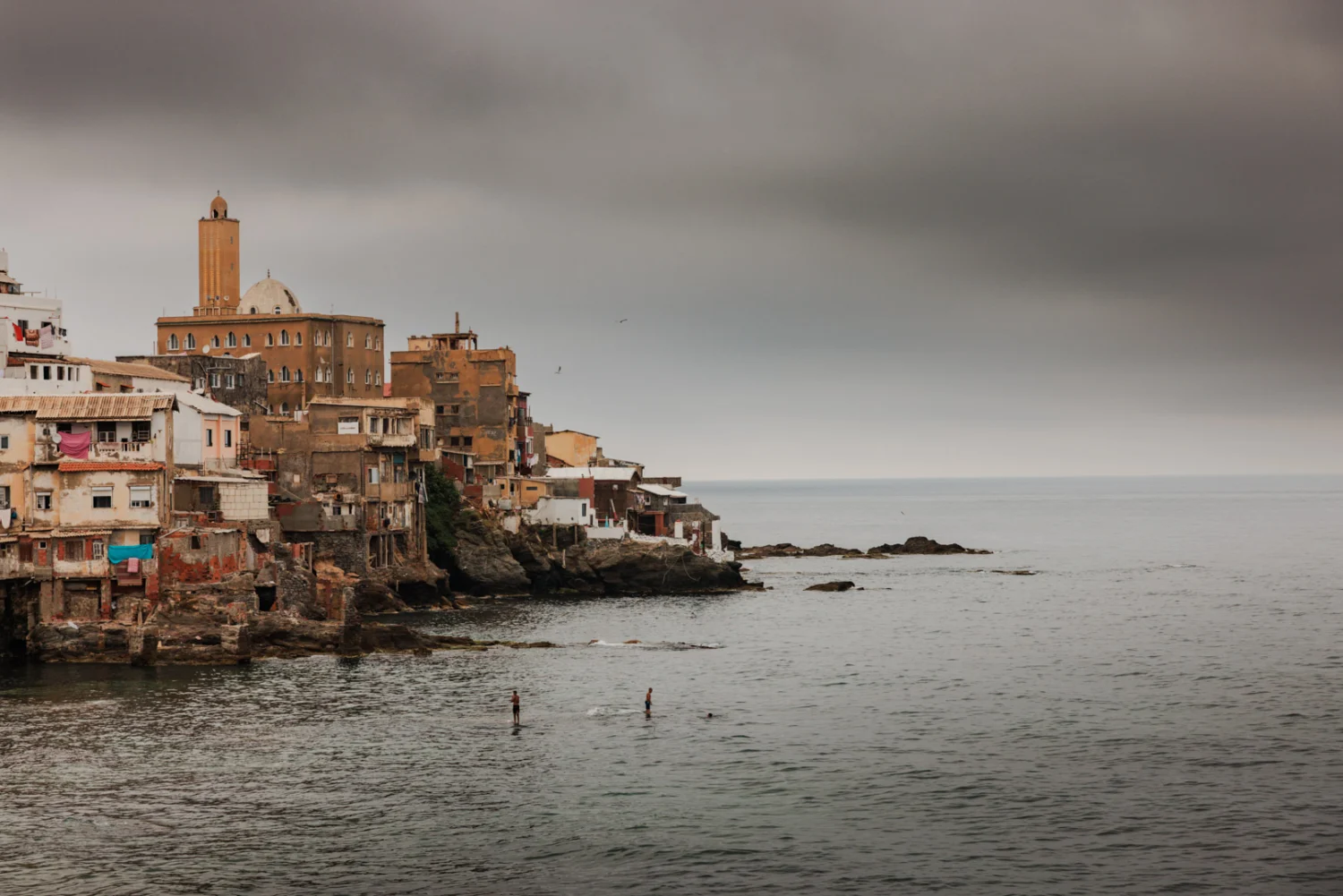
The journey to the heart of Sebeïba begins days prior in Algiers, the Mediterranean capital known historically as El Djezaïr ("The White"). Here, a bitter sea fog rolls off the water, creeping through the ancient stone alleys of the Casbah and wrapping nineteenth-century Haussmann boulevards and minarets in pale scarves. This northern metropolis carries deep historical scars. It is a city forged through the profound cruelties of the twentieth century—the epicenter of the brutal urban pacification known as the Battle of Algiers, followed decades later by the harrowing violence and uncounted casualties of the Algerian Civil War, a period whose lingering questions of accountability (“qui tue qui”) remain potent.
Leaving the Mediterranean behind, travelers bound for the deep Sahara board night flights to Djanet. These nocturnal departures are characteristic of the region’s logistical realities; whether scheduled to avoid extreme daytime atmospheric turbulence or to prioritize prestigious northern routes during daylight hours, arriving at midnight plunges visitors into absolute darkness. The desert road is aggressively reclaimed by the elements, with wind-driven sand dunes spilling across the asphalt like the surface of a surging river caught in vehicle headlights. It is an immediate reminder that the Sahara tolerates human presence only by grace.
The Oasis Awakening and Preparations
In Djanet, preparations for Sebeïba consume weeks before the actual festival day. The community mobilizes along distinct geographic and tribal lines, specifically between the rival ksours (fortified oasis quarters) of El Mihan and Zelouaz.
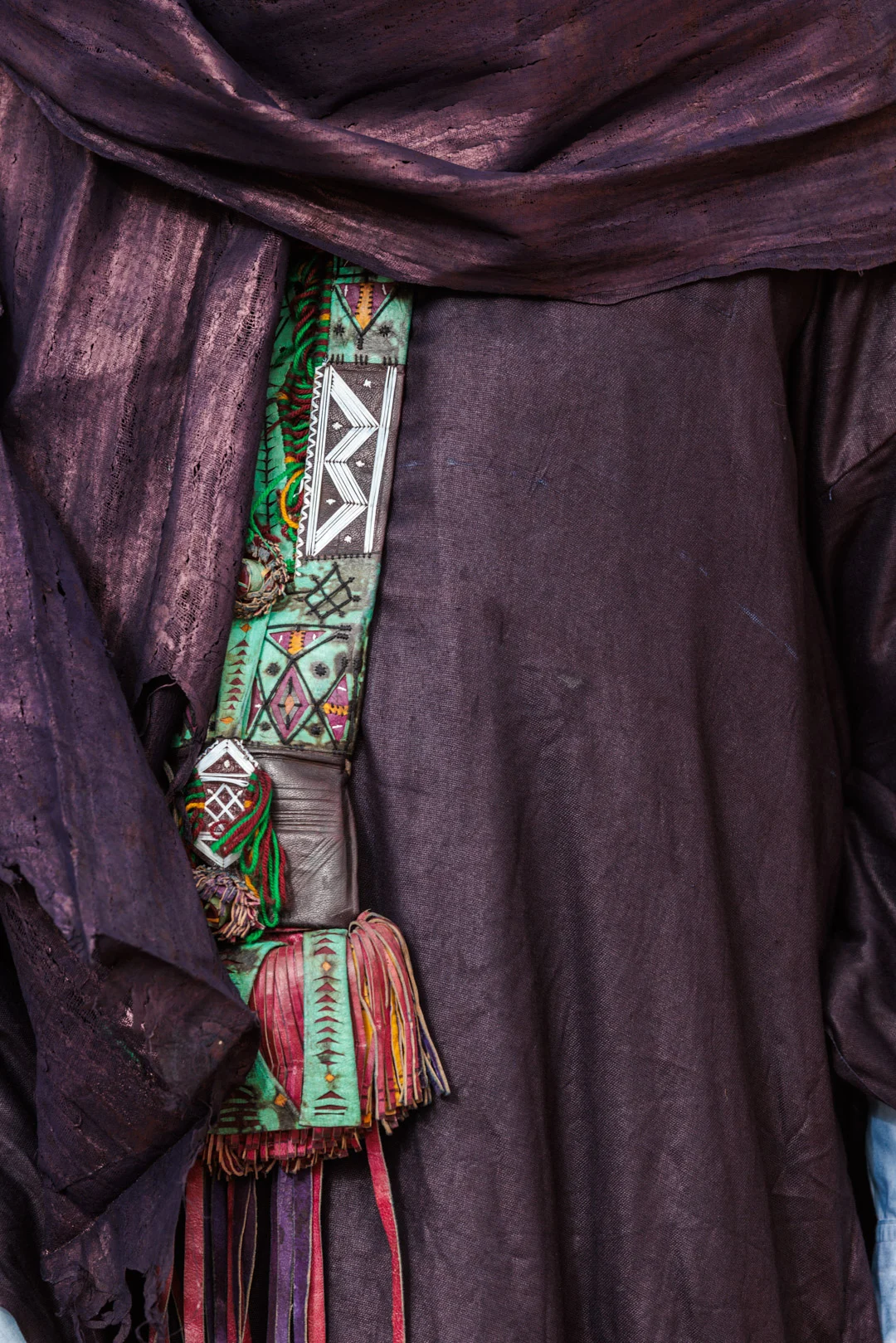
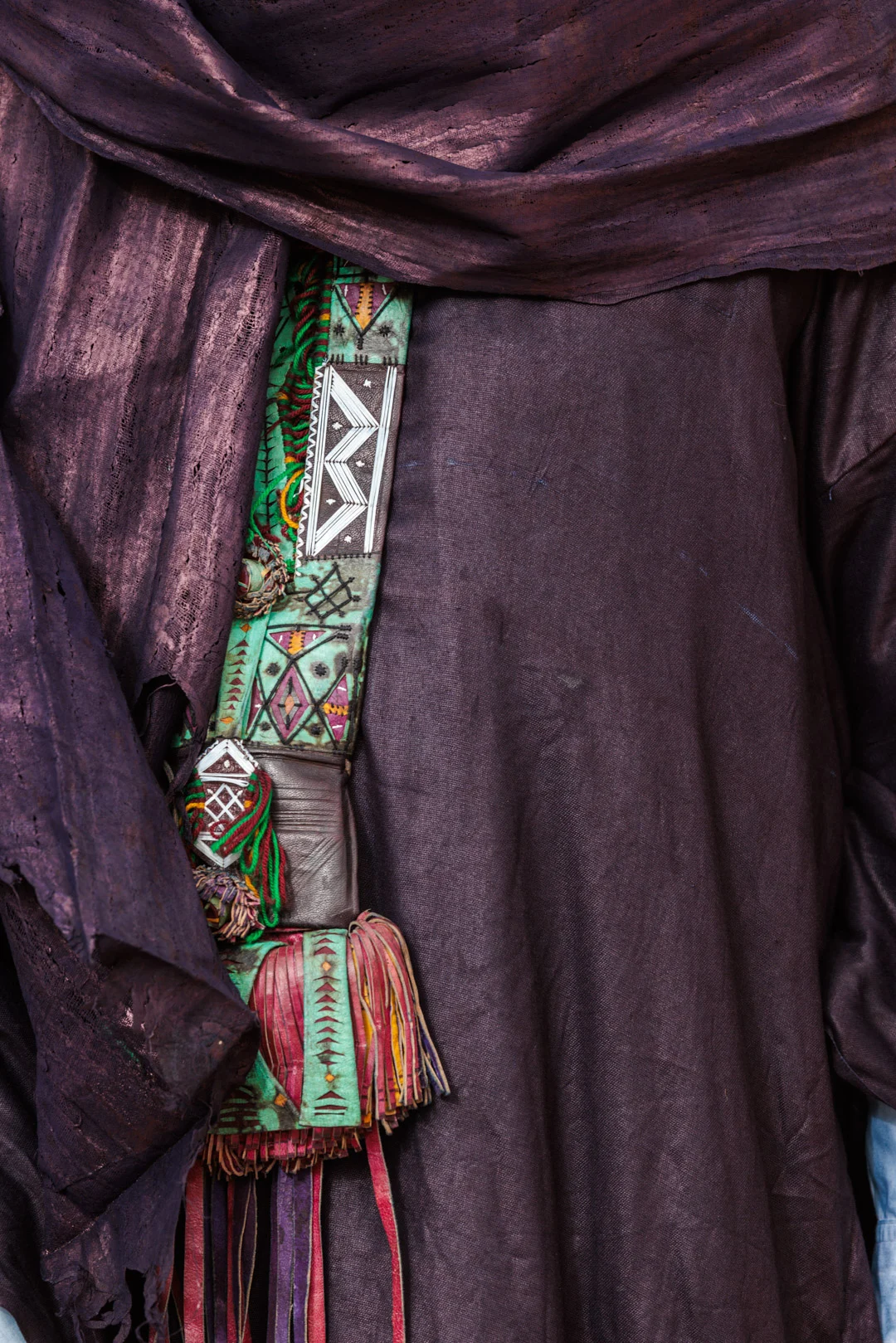
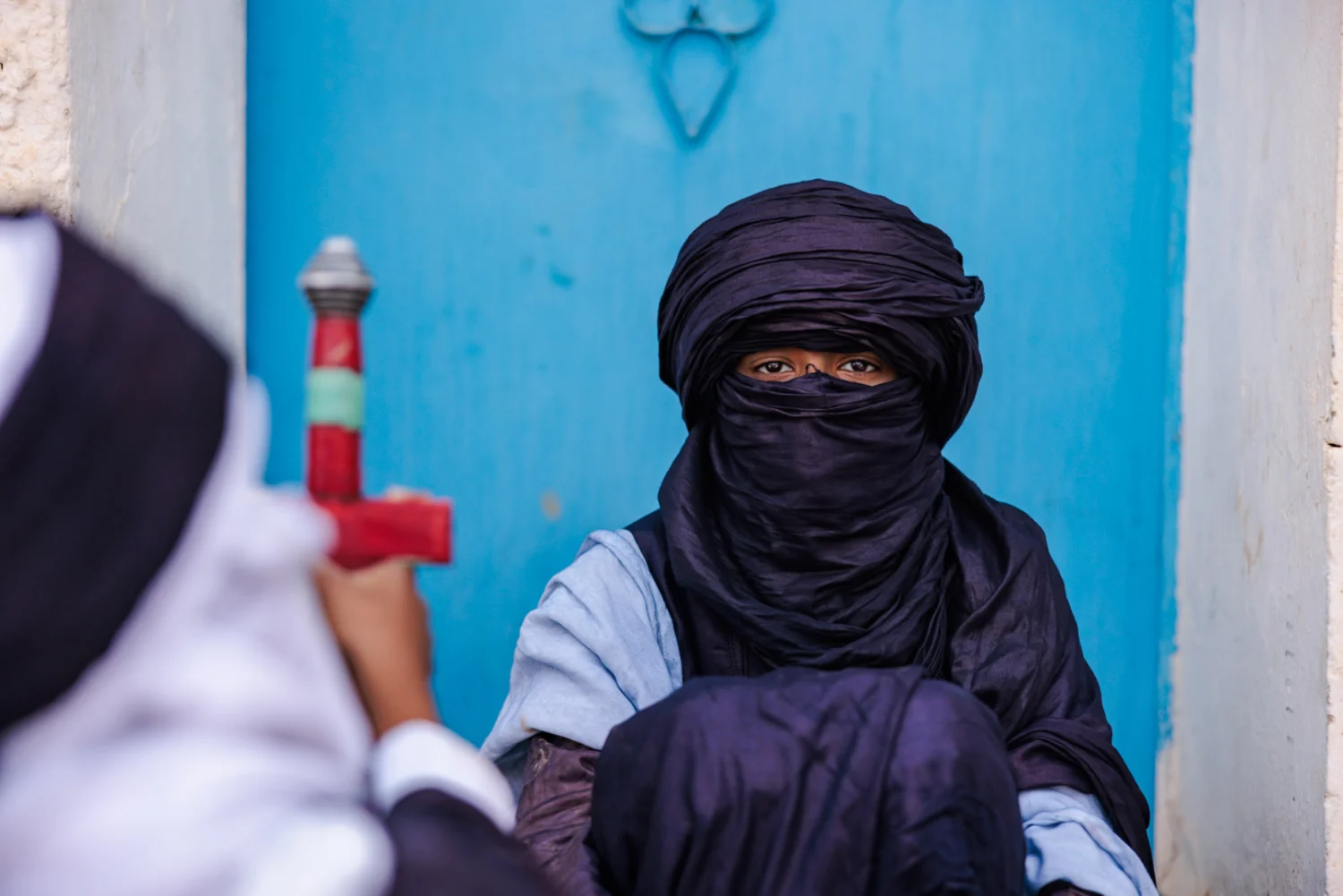
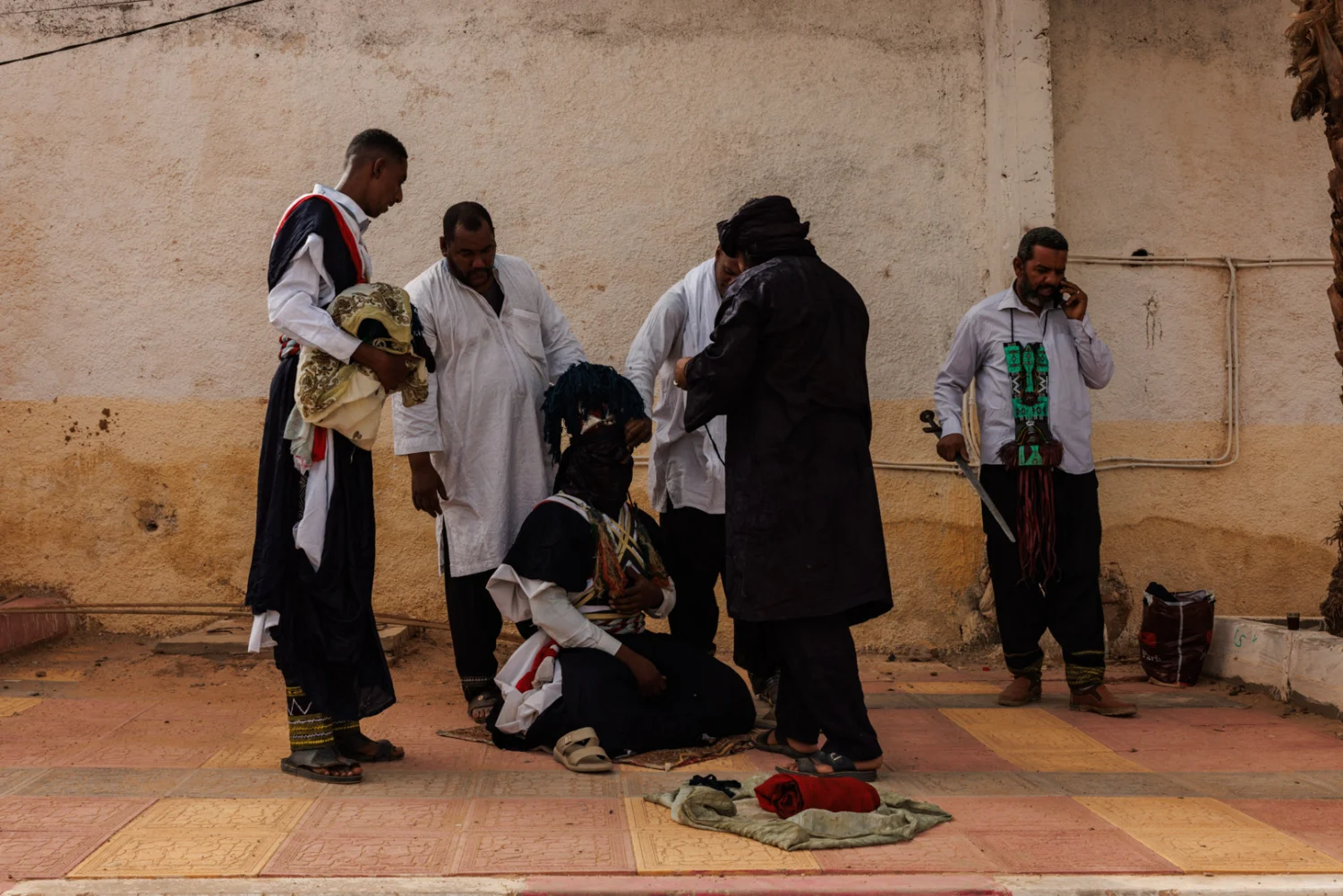
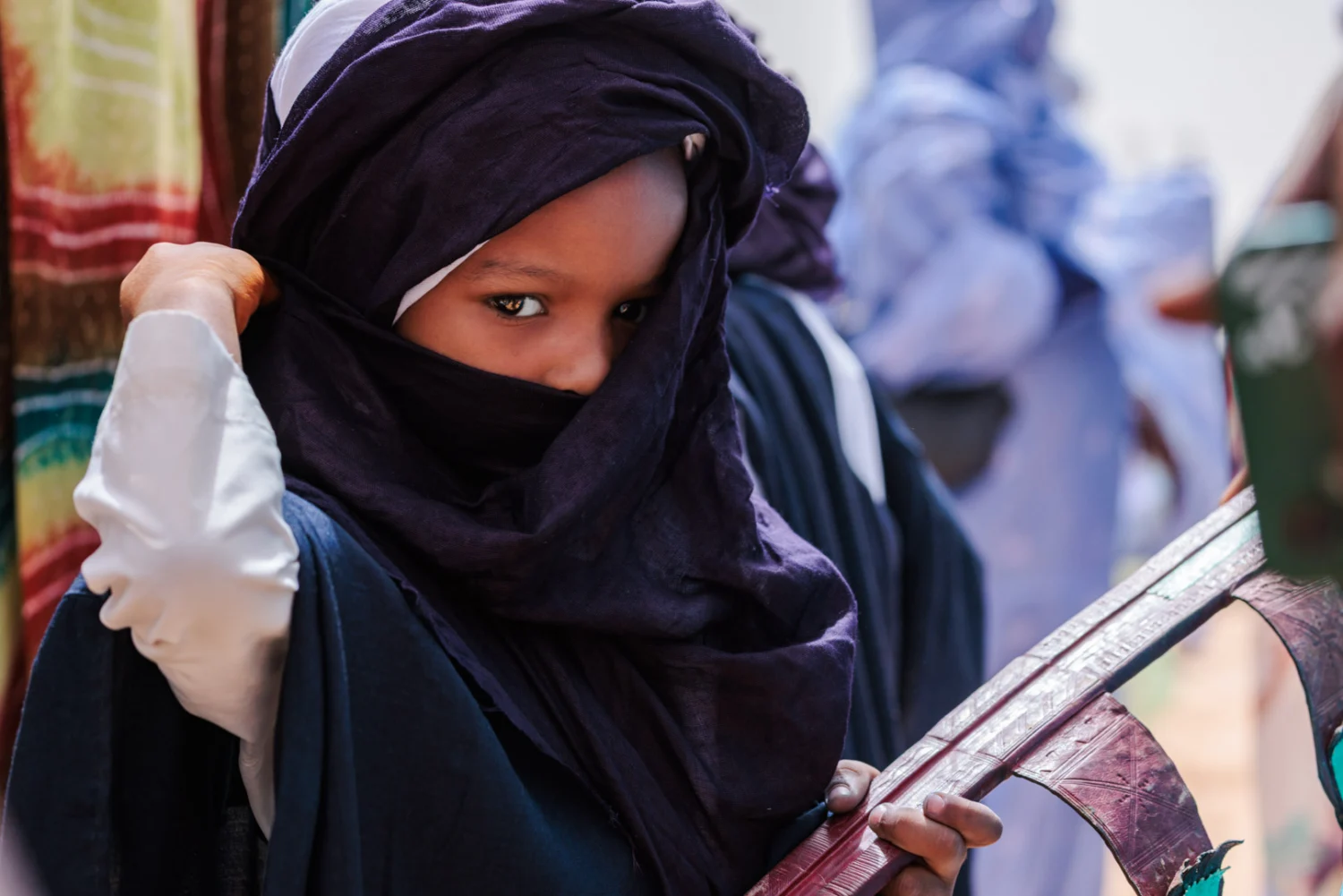
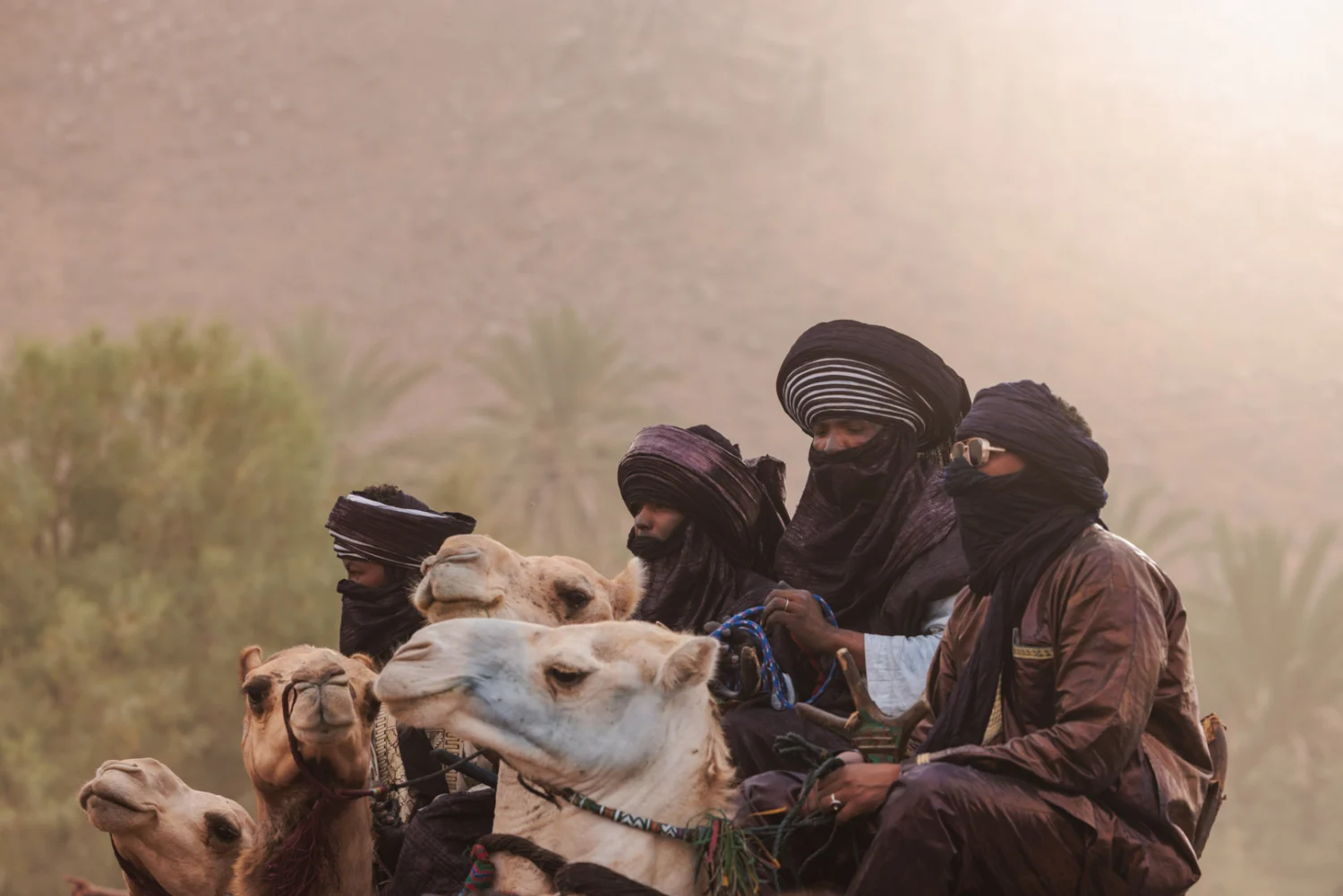
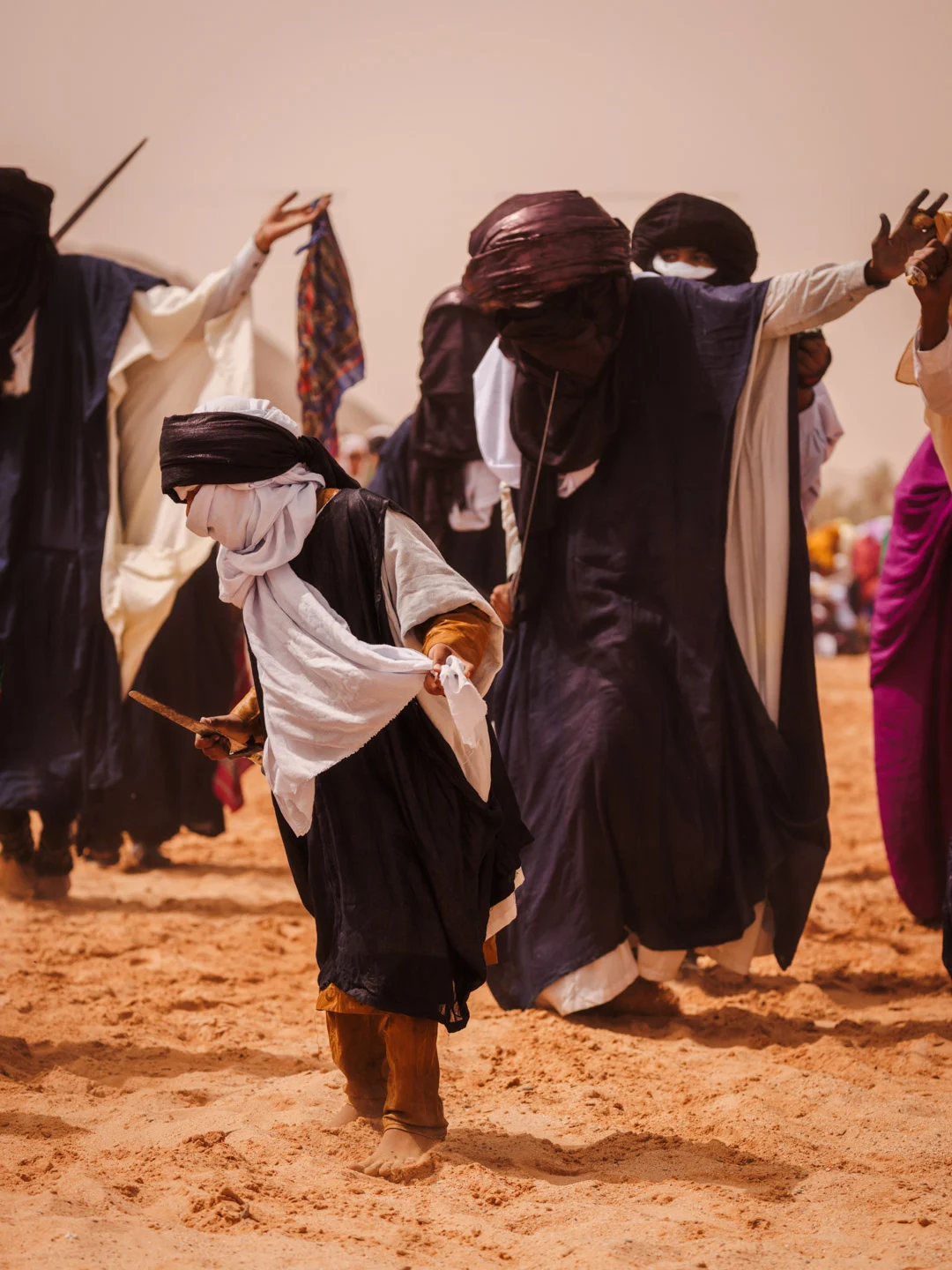
Behind the scenes in ordinary courtyards and tiled forecourts, women orchestrate the logistical and artistic core of the event. They polish antique silver jewelry, inspect precious lengths of indigo-dyed cotton (tagelmust)—which appears nearly black in the shade—and prepare the specialized percussion instruments. Crucially, the days preceding the main event serve as intensive training grounds. Historically, the strictest boundaries excluded the younger generation from participating on the primary festival day. Today, however, community leaders like Moussa emphasize that in an era of rapid social change, opening the ritual rehearsal space to children is vital to instilling an enduring emotional attachment to Sebeïba.
The Day of Contention
When the festival day breaks, the physical environment transforms into a sensory overload of sound, color, and kinetic energy. The event unfolds across the wadi, divided into two distinct parts:
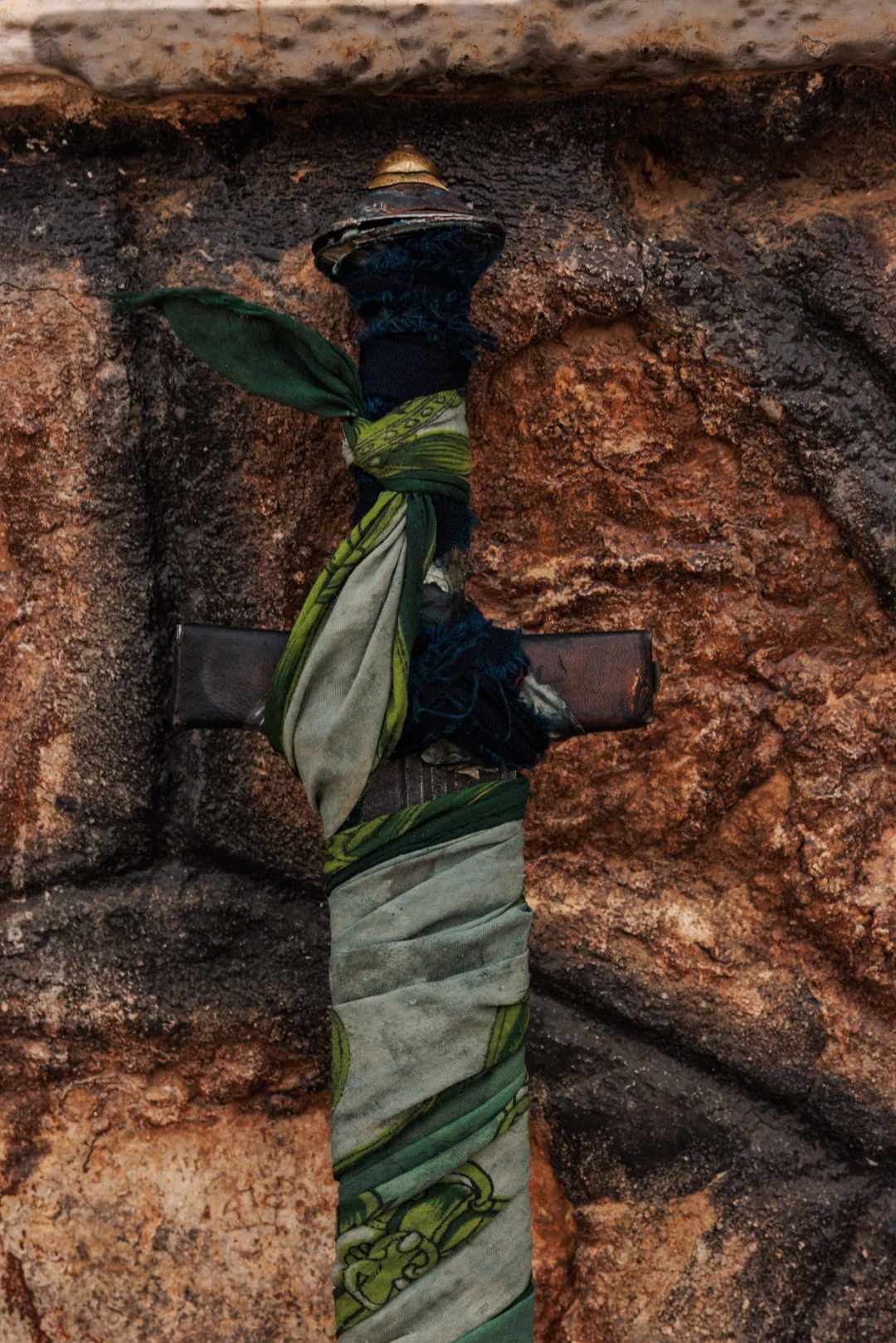
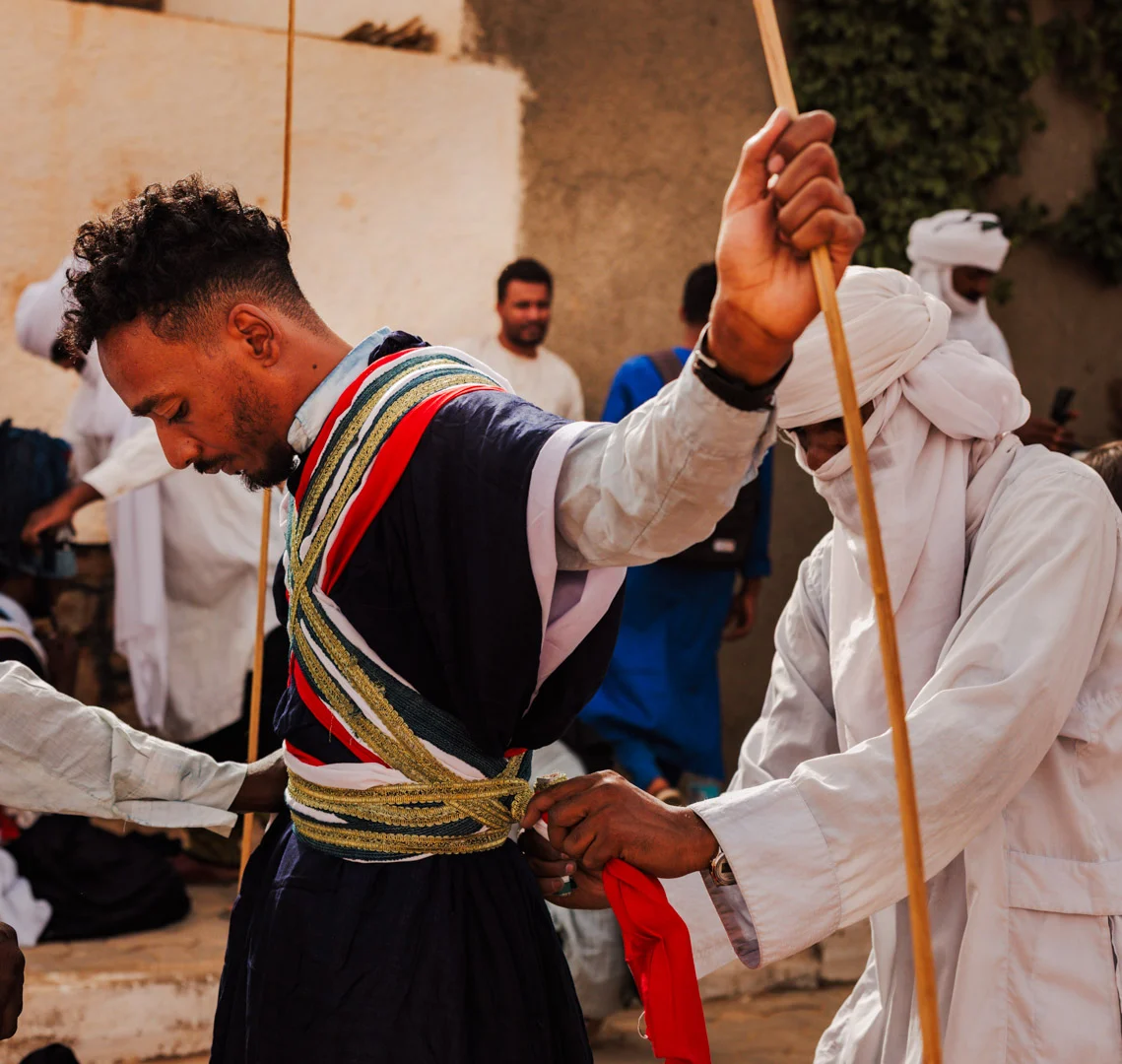
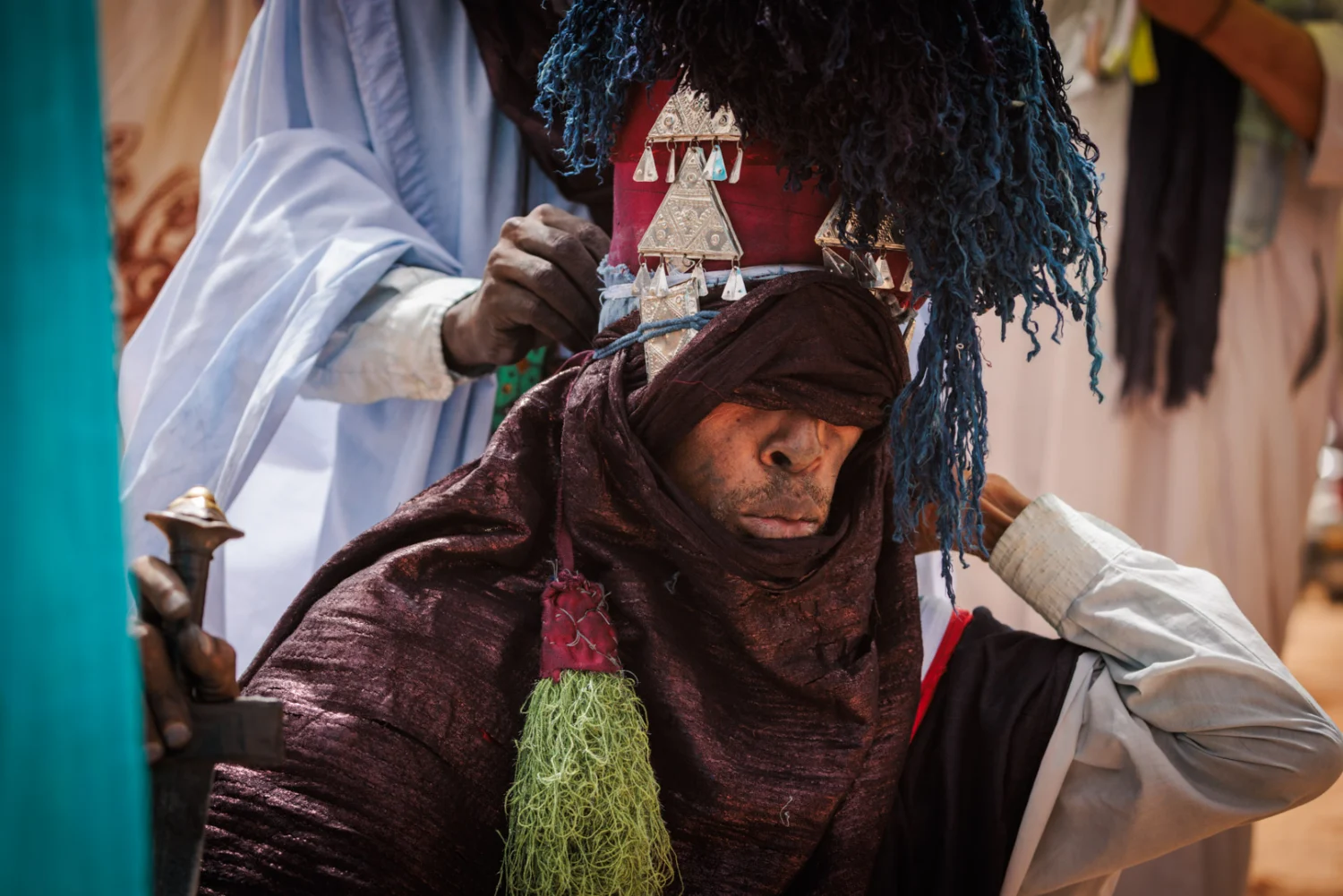
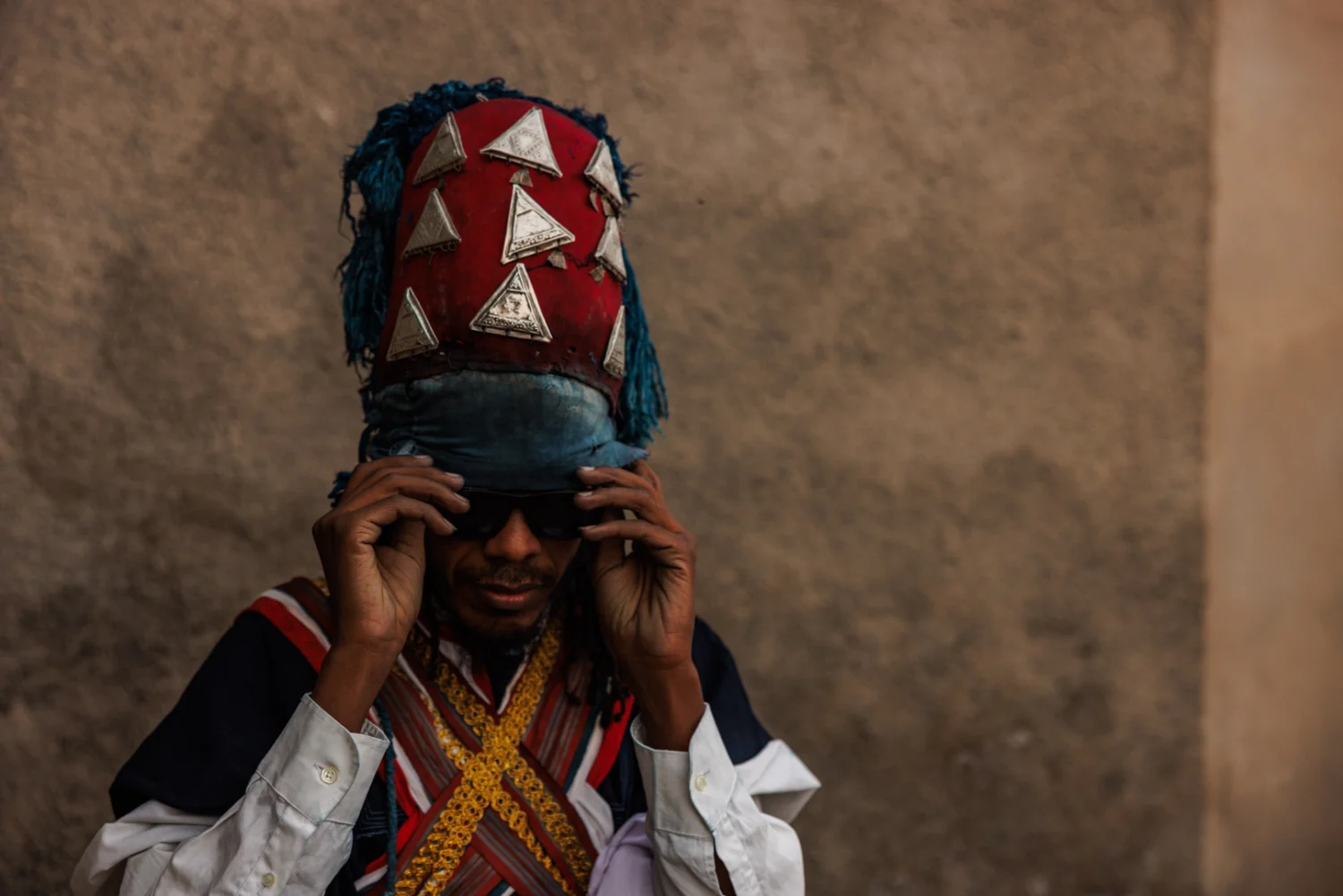
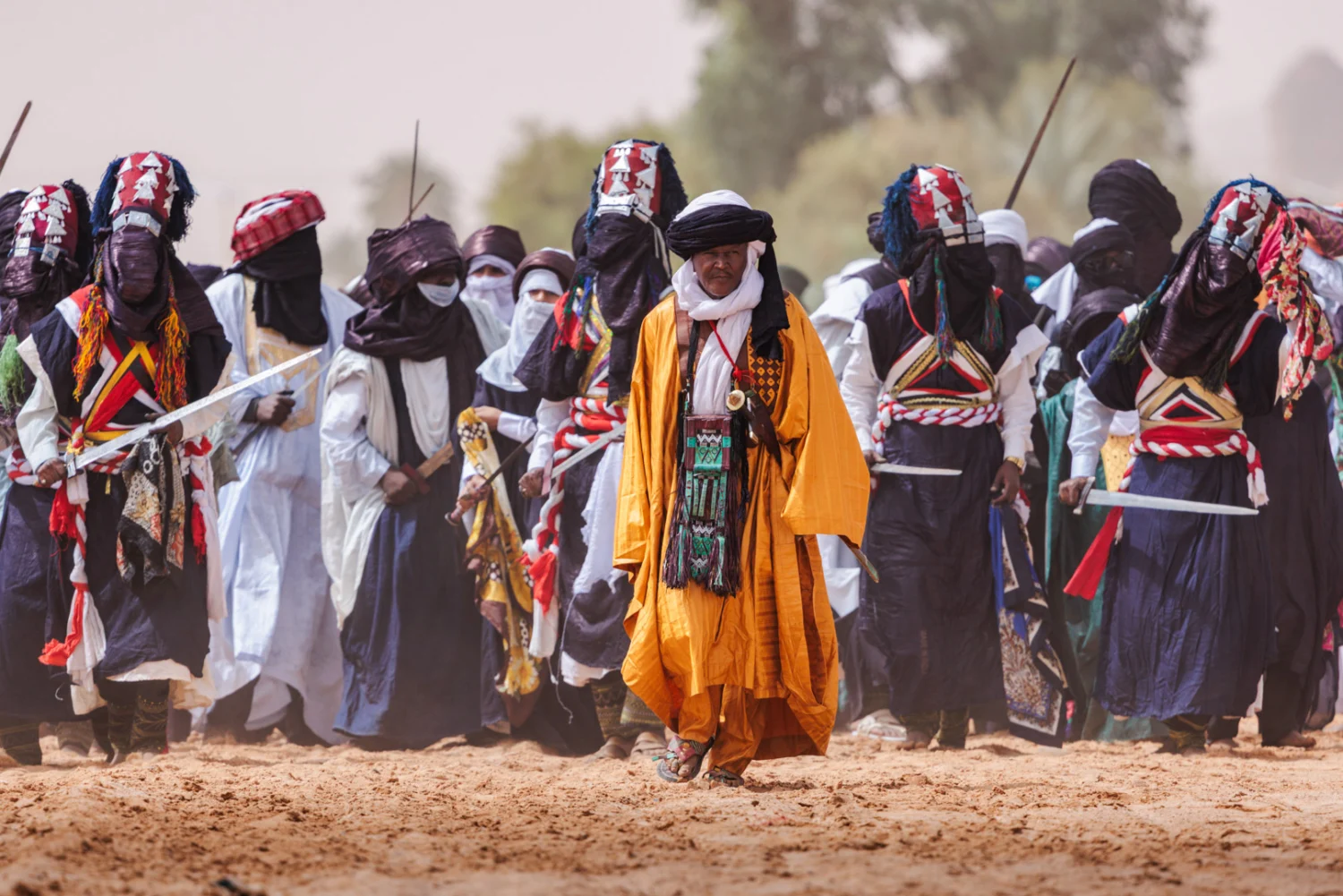
Tunfar (The Morning Contest): Judged meticulously by the community based on the quantitative display of traditional regalia—specifically the number and quality of the tall red hats (tkumbut), the breadth of indigo garments, and the presence of ceremonial swords (Tekamest).
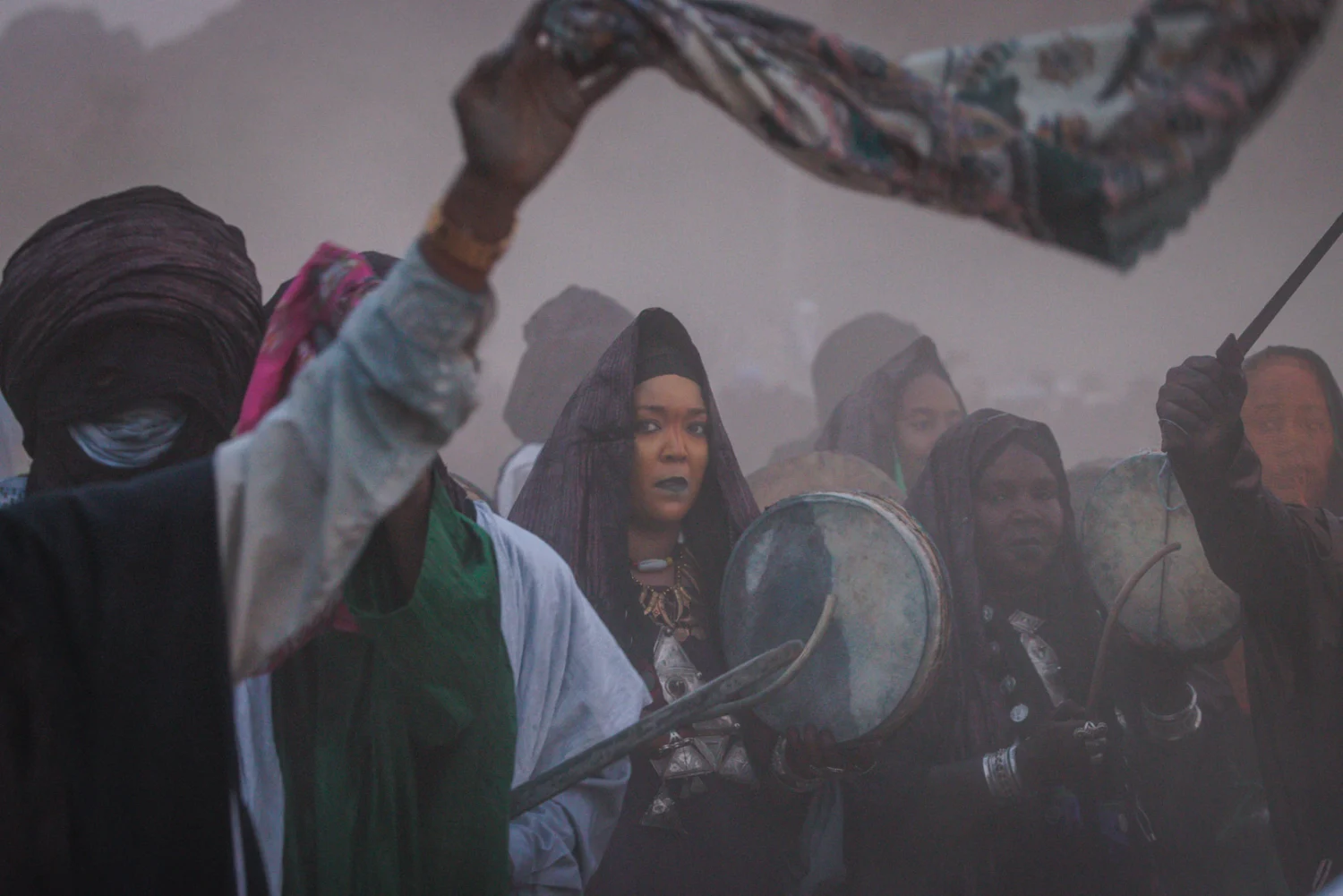
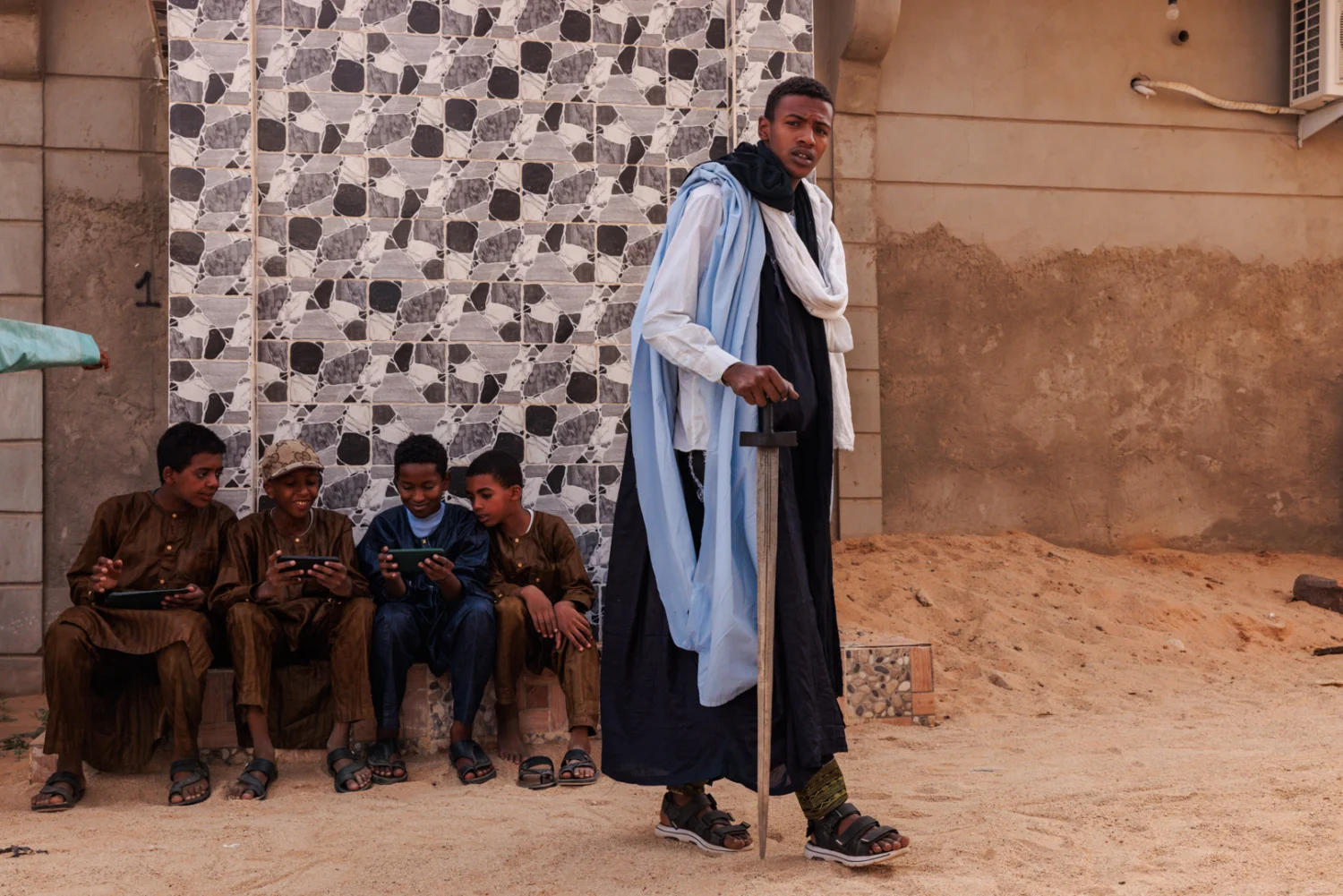
The Afternoon Performances: As the dust rises and the desert light softens, the rhythm accelerates. Dancers engage in the low, hypnotic "step-step" movement, holding razor-sharp blades in one hand while waving pristine white scarves of peace in the other. Overhead, the rhythmic pulse of the women’s elganga drums dictates the entire tempo of the field.
Supporting Context & Metrics: History, Mythology, and Material Culture
Competing Genesis Narratives
Sebeïba resists singular definitions, anchored instead by multiple, overlapping foundational myths that reflect the complex heritage of the oasis:
The Mosaic Peace Accord: According to Moussa, whose family line in Djanet stretches back generations as custodians of the tradition, the festival originated when two rival oasis tribes, locked in a protracted war, laid down their arms upon hearing the news of Moses’s victory over Pharaoh.
The Queen of Sheba Memorial: Alternatively, the ritual is understood as a profound period of mourning dedicated to the Queen of Sheba. The iconic tkumbut (tall red cap studded with silver triangles) was crafted as a memorial emblem so successive generations would perpetually remember that their noble queen had passed.
The Wind and the Silt: Elders also attribute the festival’s psychological roots to the ancient primal fear of the desert winds, acting as a spiritual appeasement against the encroaching sand haze (tesist).
The Matriarchal Engine of the Festival
As historian Ibrahim and local performer Aicha emphasize, Imuhar society is fundamentally matriarchal. This structural reality finds its ultimate expression during Sebeïba:
Composing the Culture: All poetic compositions sung during the festival are authored exclusively by women.
The Musical Foundation: The rhythmic architecture is driven entirely by women playing the heavy elganga drums. As Aicha notes, "All the music and rhythm is from the women, everything is from the women, the men just dance."
The Adjutum Formation: During the afternoon performances, women arrange themselves into a living architectural pyramid—the adjutum—ranging from the oldest matriarchs down to the youngest girls. Young women advance upward by one position each year, marking their passage through life within the community.
Evolution of Material Culture
The physical artifacts of Sebeïba bear witness to both continuity and compromise:
The Tkumbut: Once strictly inherited items passed directly from father to son, these towering red hats are now frequently pooled by the municipality and assigned strictly to the most accomplished dancers.
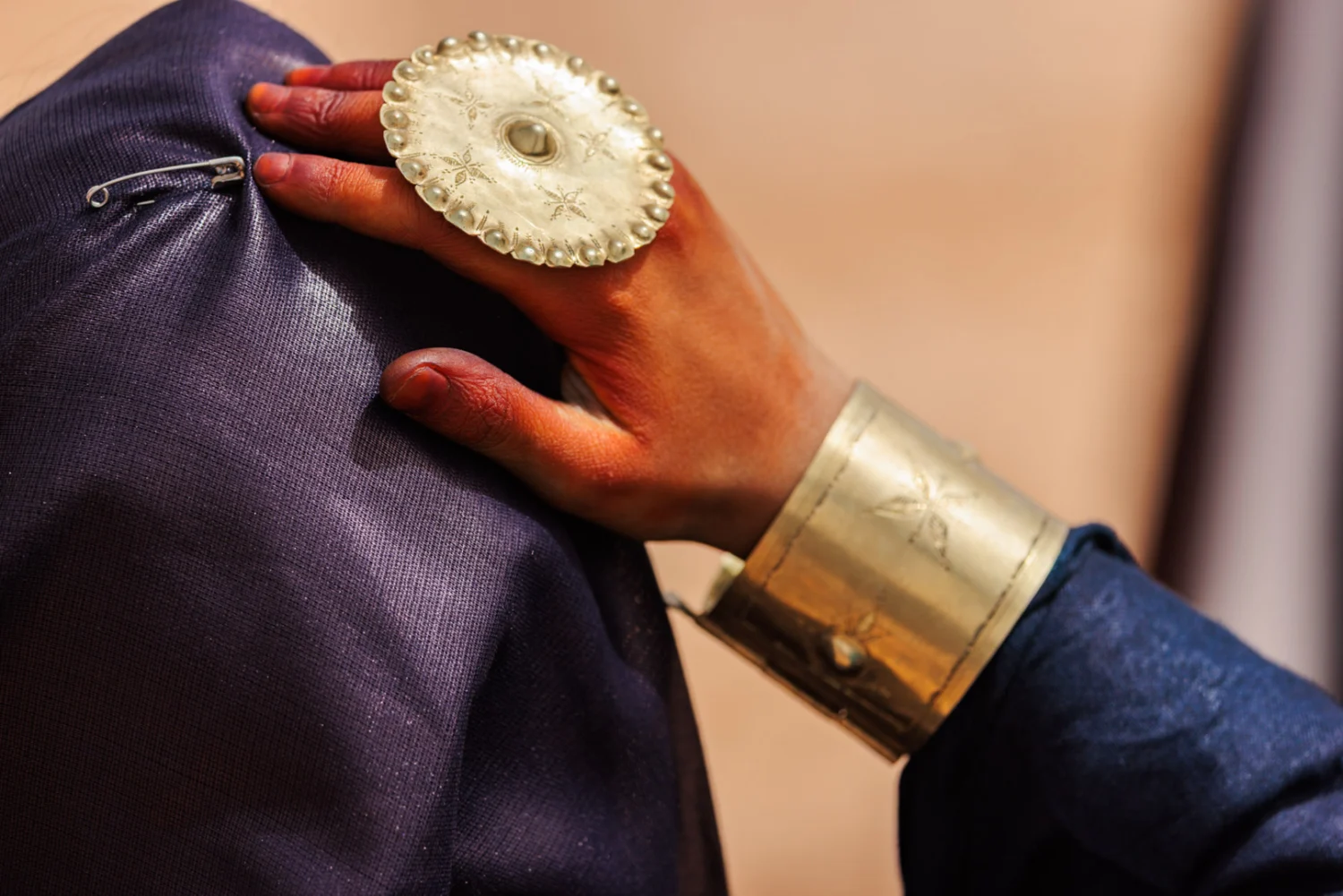
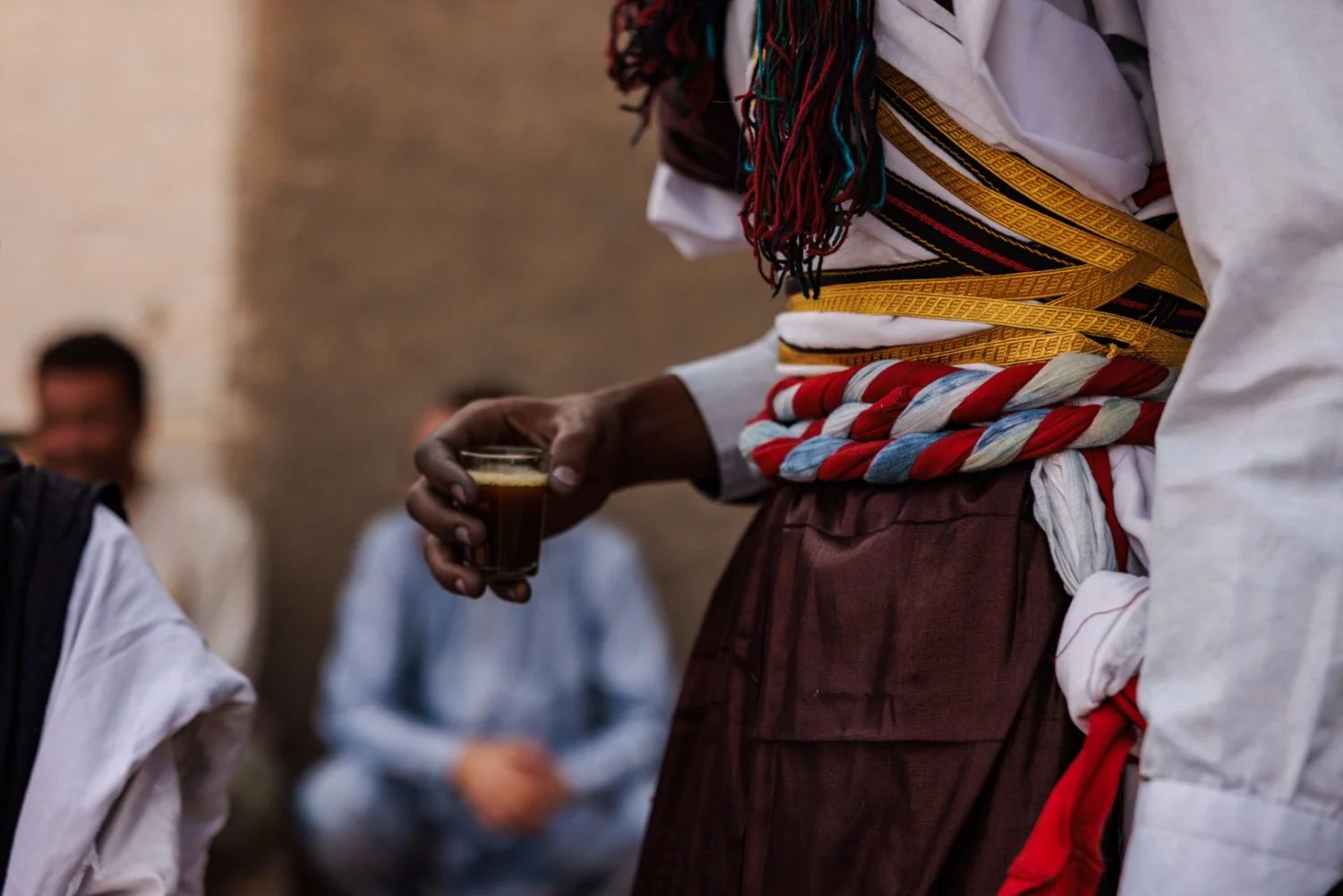
Jewelry and Craftsmanship: Traditional silverwork, once crafted by the Inaden (hereditary Tuareg artisans) using pure silver and exquisite geometric designs, has seen a dilution of technique. Due to economic pressures and the disappearance of specialized workshops, modern jewelry frequently incorporates nickel and zinc. Performers now wear cherished heirloom pieces alongside modern accessories, such as smartphones clutched in hands weighed down by ancestral silver cuffs.
Textiles: While indigo remains the ultimate visual marker of the amawal (nomad), modern fabrics—including shimmering Indian saris and glossy cottonades—have increasingly infiltrated the wardrobe, sparking fierce debates among traditionalists regarding the authenticity of the ritual.
Official Statements and Perspectives
Ibrahim on the Dangers of Commercialization
Ibrahim, a veteran educator and respected historian of the region, offers a sobering critique of how outside forces threaten to alter the soul of Sebeïba. Reflecting on the encroaching presence of northern Algerian tourists, state television crews with boom mics, and buzzing camera drones, Ibrahim warns against the passive fossilization of culture:
"We fear that one day people will go looking for Sebeïba and we’ll be forced to buy a ticket… like at the cinema."
Furthermore, addressing the incremental shifts in material traditions—such as the introduction of non-traditional fabrics and mass-produced ornaments—Ibrahim issues a philosophical warning about societal integrity:
"If you have changed, you will change again and again… if you falsify today, you’ll falsify your whole life."
Moussa on Identity and Sovereignty
For Moussa, whose familial lineage places him among the primary guardians of the festival’s unwritten codes, Sebeïba is far more than a cultural showcase; it is an existential anchor. Speaking on the indispensable nature of the ritual in an increasingly globalized world, he remarks:
"Sebeïba is my ID card in the world… You will not find Sebeïba in other places."
Future Outlook: Preservation at the Crossroads
The future of the Sebeïba festival is emblematic of the broader struggles facing indigenous minority cultures across the modern Maghreb and the broader Sahel. Several critical trajectories will define its coming decades:
Geopolitical Isolation vs. Local Inwardness: Historically, Sebeïba functioned as a transnational gathering point, drawing judges and participants from across borders in Niger and Libya. However, heightened state security concerns regarding cross-border movements, regional instability, and armed insurgencies have effectively severed these international networks. In response, Sebeïba has been forced to turn inward. The community now judges itself, replacing foreign arbiters with internal consensus. While this insulates the festival from certain external disruptions, it also risks parochialism.
The Paradox of Domestic Tourism: As traditional Saharan cross-border pathways close, the Algerian state has increasingly turned its administrative and promotional gaze toward the deep south, encouraging domestic tourism from the urban north. While these visitors inject vital economic life into Djanet and foster cross-cultural appreciation among northern Algerians who previously viewed the desert through a lens of peripheral indifference, it simultaneously accelerates the commodification of sacred rituals.
Generational Transmission: The deliberate inclusion of youth in the rehearsal and ritual spaces represents a beacon of hope. By lowering the historical barriers that once excluded children from the main festival day, community leaders are actively engineering a generational bridge. As long as young people are taught to feel the weight of the Tkumbut, the cadence of the elganga, and the gravity of the poetry, Sebeïba will retain its vitality.
As the sun sets over the Tassili sandstone towers—rising like dark, silent forests from the rippling dunes—and a pair of desert jackals dart noiselessly across the wadi, Sebeïba concludes not as a museum piece, but as a living pulse. It proves that just as the desert hides the green of life beneath its arid surface, the human spirit in Djanet continues to bloom against all odds, fiercely guarding its identity in an uncertain world.




Comments
Facebook App ID not configured. Please add it in the Customizer.