
Executive Overview
The publishing landscape is experiencing a period of profound structural evolution, defined by the rapid democratization of literary success, the monetization of parasocial media communities, and an urgent public appetite for socio-political accountability. In this week’s analysis of the national hardcover bestseller lists, we examine four distinct publishing stories that capture the pulse of contemporary culture.
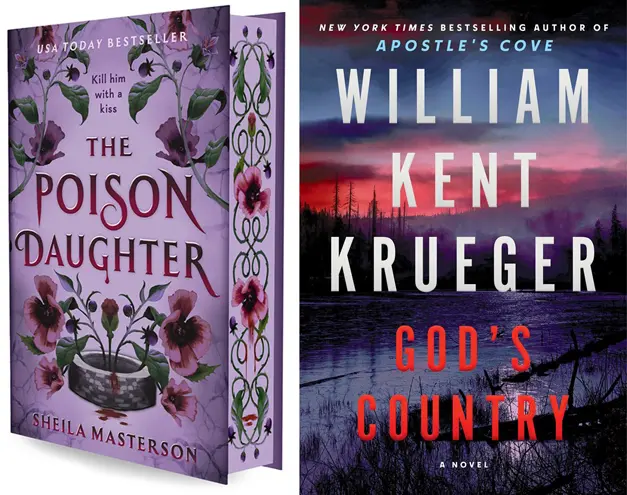
At the summit of the hardcover fiction list sits Sheila Masterson, a self-publishing success story whose ascent exemplifies the immense valuation of the "romantasy" genre by traditional media conglomerates. Not far behind, the nonfiction sector is dominated by new-media royalty: Dan “Big Cat” Katz and Eric “PFT Commenter” Sollenberger of the sports and pop-culture empire Barstool Sports. Their flagship podcast Pardon My Take has translated its massive audio audience into a print juggernaut, shattering recent sales records previously held by their own platform’s founder, Dave Portnoy.
Simultaneously, the nonfiction list reflects a rising tide of investigative urgency. Journalist Gil Durán’s debut exposé, The Nerd Reich, enters the top tier by interrogating the complex, often shadowy intersections of Silicon Valley wealth and antidemocratic governance. Rounding out this week’s highlights is veteran mystery author William Kent Krueger, whose 22nd Cork O’Connor installment, God’s Country, underscores the enduring power of foundational independent bookstore partnerships in cultivating a fiercely loyal readership.
Read Also
Together, these developments paint a picture of an industry in transition—one where algorithmic virality, digital fandoms, deep-seated political anxieties, and grassroots community loyalty are rewriting the rules of commercial publishing.
Detailed Chronology: From Digital Genesis to Bestseller Dominance
The TikTok-to-Television Pipeline: Sheila Masterson’s Meteoric Ascent
The journey of author Sheila Masterson from independent obscurity to the apex of the hardcover fiction list is a masterclass in modern literary momentum. Masterson initially entered the ring in 2023 with the self-publication of The Lost God, an immersive entry into the booming romantic fantasy ("romantasy") market. Over the subsequent two years, she methodically built a dedicated readership through consistent releases and direct-to-consumer engagement via social media platforms, most notably TikTok.
The inflection point of her career arrived with the 2025 standalone release of The Poison Daughter. The novel instantly generated an extraordinary wave of organic digital buzz, characterized by video reviews, aesthetic mood boards, and fan theories that flooded feeds across the globe. This viral digital wave did not go unnoticed by traditional publishing gatekeepers.
In April of this year, publishing house Slowburn acquired the title, moving quickly to capitalize on the built-in momentum. The publishing apparatus accelerated further in early August when Hulu announced a major series development deal for The Poison Daughter, translating the book’s thematic resonance into high-stakes Hollywood IP development. This week, the strategic synergy of social media virality, swift corporate acquisition, and audiovisual adaptation culminated in the Slowburn edition of Masterson’s novel debuting at the very top of the hardcover fiction list.
The Barstool Dynasty: A Decade of Pardon My Take
Just months ago, the media world watched as Dave Portnoy, the controversial founder of Barstool Sports, seized the #1 spot on the hardcover nonfiction list with Cancel Me If You Can, moving an impressive 35,000 print copies in its initial window. This week, however, the digital empire’s flagship audio properties have proven that lightning can, in fact, strike twice—and with even greater force.
Dan “Big Cat” Katz and Eric “PFT Commenter” Sollenberger, the masterminds behind Pardon My Take—consistently ranked among the most popular sports podcasts globally—have landed at the exact same summit with their commemorative text, Pardon My Book. Marking a full decade of the program’s irreverent, boundary-pushing broadcasting, the book has shattered expectations by outperforming Portnoy’s recent debut by a remarkable 14,000 print copies.
The launch of Pardon My Book highlights a fascinating paradox in contemporary publishing: the successful transition of hyper-niche, highly verbal digital personalities into physical collectors’ items. Rather than smoothing out the rough edges of their broadcast personas for a broader literary audience, Katz and Sollenberger have leaned heavily into the chaotic, unpolished energy that made their podcast a cultural touchstone.
Supporting Context & Metrics: Analyzing the Figures
| Title | Author(s) | Publisher / Imprint | Genre / Category | List Placement | Key Metric / Milestone |
|---|---|---|---|---|---|
| The Poison Daughter | Sheila Masterson | Slowburn | Hardcover Fiction | #1 | Translated TikTok virality into a Hulu series deal and top hardcover debut. |
| Pardon My Book | Dan Katz & Eric Sollenberger | Barstool / Commercial | Hardcover Nonfiction | #1 | Outsold platform founder Dave Portnoy’s recent #1 book by 14,000 print copies. |
| The Nerd Reich | Gil Durán | Independent / Trade | Hardcover Nonfiction | #6 | Received a starred PW review for its investigation of tech billionaires. |
| God’s Country | William Kent Krueger | Atria / Traditional | Hardcover Fiction | #6 | 22nd installment in the Cork O’Connor series; launched via a 26-year bookstore tradition. |
The data points illuminating this week’s bestseller lists reveal stark truths about reader behavior across demographics. In fiction, the dominance of The Poison Daughter underscores the immense commercial gravity of the romantasy genre, which continues to command the attention of younger, digitally native demographics. Publishers who fail to monitor algorithmic trends on platforms like TikTok risk missing out on breakout titles that arrive pre-vetted by millions of readers long before a physical book hits warehouse shelves.
In nonfiction, the commercial triumph of Pardon My Book demonstrates the monetization potential of established parasocial relationships. Traditional publishing models have historically prioritized polished editorial curation and authorial polish. However, the 14,000-copy margin by which Katz and Sollenberger beat Portnoy’s previous record suggests that audiences are increasingly purchasing books not necessarily for pristine prose, but as tangible extensions of communities they spend hours listening to every week.
Simultaneously, socially conscious nonfiction continues to find a robust, active readership. Gil Durán’s The Nerd Reich debuted at #6 on the hardcover nonfiction list, proving that readers are actively seeking intellectual frameworks to understand the rapidly shifting political and technological landscape.
Official Statements & Industry Perspectives
The ethos behind this week’s top-performing titles is best captured in the unvarnished statements of the creators themselves. Addressing the unconventional editorial standards of Pardon My Book, Eric Sollenberger made it clear in a recent podcast episode that traditional literary gatekeeping was intentionally left by the wayside.
"We care more about telling than spelling," Sollenberger remarked, capturing the raw, anti-establishment attitude that has endeared the podcast to millions of listeners.
Co-author Dan Katz offered a similarly self-deprecating assessment of the volume’s physical contents, openly acknowledging during a broadcast that the book contains "some god-awful writing." Rather than hindering sales, this radical transparency appears to have acted as a powerful marketing tool, reassuring fans that the book is an authentic extension of the unscripted audio program they have followed for ten years.
On the other end of the literary spectrum, investigative journalist Gil Durán offers a sobering, deeply analytical perspective on the thesis driving his acclaimed debut, The Nerd Reich. In a pre-publication interview with trade publication Publishers Weekly, Durán dissected the dangerous convergence of unchecked technological monopoly and political authoritarianism.
"People have been slow to realize how radicalized these guys have become and how much power they’re seizing," Durán stated, pointing directly to the digital oligarchs linked to the shifting political tides of the second Trump administration.
Offering a call to collective civic action, Durán framed the current cultural moment as an existential fork in the road for global citizenry:
"The good news is that there are 8.5 billion people in the world and only 3,000 or so billionaires. We have to figure out how to create a world where we don’t become servants of their power. We have to make a choice: billionaires or democracy? Because it will not be both."
Meanwhile, the human element of bookselling remains vital, as illustrated by veteran mystery writer William Kent Krueger. Releasing God’s Country—the 22nd installment in his beloved Cork O’Connor series—Krueger maintained a sacred tradition by launching the book at the Poisoned Pen Bookstore in Scottsdale, Arizona. Krueger has visited the independent bookstore for every single book he has published, beginning with his 1998 debut, Iron Lake. Notably, this collaborative loyalty persisted through logistical hurdles, including the COVID-19 pandemic, during which Krueger faithfully spoke with store owner Barbara Peters even when public health restrictions precluded an in-person audience.
Future Outlook: What the Numbers Mean for Publishing’s Horizon
As the publishing industry looks toward the remainder of 2026 and beyond, the trajectories of this week’s bestselling authors offer a clear roadmap of where commercial viability lies.
First, the boundary between digital content creation and traditional publishing will continue to blur. The rapid conversion of Sheila Masterson’s self-published romantasy into a mainstream publishing property—complete with a lucrative Hulu development deal—demonstrates that Hollywood and traditional publishing houses are increasingly outsourcing their talent scouting to social media algorithms. We can anticipate an aggressive acceleration in acquisitions editors monitoring niche digital communities, web-novel platforms, and self-publishing channels for the next breakout sensation.
Second, the unprecedented commercial triumph of Pardon My Book signals that audience loyalty trumps traditional editorial conventions when paired with massive distribution channels. As podcasting networks continue to mature into multimedia conglomerates, physical books will increasingly serve as commemorative merchandise for digital fandoms. Publishers must learn to collaborate with unconventional creators without attempting to sanitize their voices, preserving the raw appeal that drew millions of consumers to them in the first place.
Finally, the strong performance of political and investigative works like Gil Durán’s The Nerd Reich highlights a sustained public demand for critical discourse regarding power, democracy, and technology. As wealth concentration reaches historic highs, books that challenge corporate overreach and examine threats to democratic institutions will likely remain vital anchors of the nonfiction market.
Ultimately, whether driven by the algorithmic enchantment of TikTok fantasy worlds, the unfiltered humor of sports podcasters, the urgent warnings of investigative journalists, or the steadfast community of independent bookstores, the written word proves resilient, adaptable, and profoundly reflective of the cultural currents shaping our world today.


Comments
Facebook App ID not configured. Please add it in the Customizer.