
Executive Overview
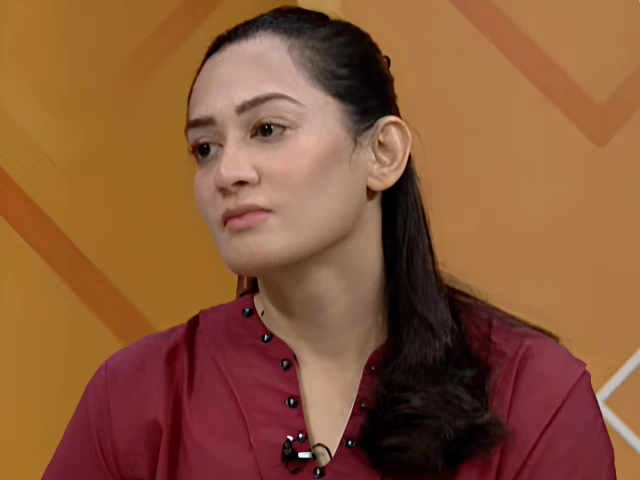
In the fast-paced, high-stakes environment of contemporary television production, the journey from a writer’s initial draft to the final cut is rarely a straight line. Script revisions, last-minute creative disputes, and the delicate dance between directorial vision and audience reception are constant companions in the entertainment industry. Recently, actor and former documentarian Hani Taha offered a rare, unfiltered glimpse into these behind-the-scenes mechanics during a comprehensive interview discussing the hit drama series Aik Mohabbat Aur.
Starring alongside prominent television heavyweights Ahad Raza Mir and Maya Ali, Taha shared candid insights regarding the collaborative—and occasionally chaotic—nature of bringing a complex narrative to life. Among her most striking revelations was the existence of a discarded early subplot for Qudsiya Ali’s character, Maham—a narrative thread that Taha playfully, yet pointedly, attributed to the influence of "a very bad Indian drama."
Beyond the creative trials of Aik Mohabbat Aur, Taha used the platform to address broader systemic issues plaguing the Pakistani entertainment landscape. From the logistical volatility of actor contracts and the emotional toll of early-career rejections—including a heartbreaking near-miss opposite acclaimed icon Saba Qamar—to the deeply entrenched debates surrounding local crew competencies and artistic accountability, Taha’s reflections paint a vivid picture of an industry in transition.
Read Also
This article explores the multifaceted dimensions of Taha’s revelations, tracing the anatomy of a television script rewrite, analyzing the precarious realities of early-career survival in South Asian media, and evaluating the overarching artistic philosophies driving one of Pakistan’s most versatile contemporary performers.
Detailed Chronology: From Concept to Screen in Aik Mohabbat Aur
The Evolving Landscape of Television Production
The creation of a serialized television drama is an exercise in endurance and adaptability. Script drafts rarely survive first contact with the production set unchanged. For Taha, this reality became starkly apparent during the filming of Aik Mohabbat Aur. Reflecting on the dynamic interplay between actors and directors on set, Taha emphasized that the true magic of performance often materializes in the moment of execution.
"The whole point of having a really good director and a really good actor is that you improvise together," Taha explained during the interview, underscoring that not every word written on paper makes the final transition to the screen. In an industry where shooting schedules are notoriously tight and network demands fluctuate constantly, the ability of a cast and crew to pivot on a dime is essential for creative survival.
The Anatomy of a Discarded Subplot
However, improvisation on set is one thing; fundamental structural changes during the writing and pre-production phases are entirely another. Taha disclosed that early iterations of the Aik Mohabbat Aur script included a narrative tangent that could have drastically altered the trajectory of the series.
According to Taha, an early draft of the script featured a subplot where Qudsiya Ali’s character, Maham, was initially written to develop romantic or emotional feelings for Ahad Raza Mir’s character, Haroon. In a television ecosystem frequently criticized for relying on tired tropes—such as unnecessary love triangles, forced complications, and protracted misunderstandings—this early conceptual direction raised red flags among the creative team.
With a touch of candid humor, Taha revealed that the team ultimately traced the conceptual roots of this specific plot device back to "a very bad Indian drama." Recognizing that the inclusion would dilute the core focus of the narrative, the creative leadership made the executive decision to excise the subplot before filming commenced.
"It was removed very rightfully, because it would have taken away from the whole story," Taha noted. Yet, she did not shy away from critiquing the initial inclusion, calling the original writing choice "such an irresponsible thing." This critique highlights a growing sentiment among modern actors and writers within the Pakistani diaspora and domestic sphere: a demand for tighter, more purposeful storytelling that respects the intelligence of the viewing public.
Navigating Viewer Criticism and the Director’s Vision
No modern television drama escapes the immediate, often unfiltered scrutiny of social media. During the broadcast of Aik Mohabbat Aur, Taha found herself and her character at the center of viewer debates regarding a specific, controversial scene. Rather than distancing herself from the creative choice or shifting blame, Taha adopted an unyielding stance of loyalty to the director’s overarching vision.
"I am a director’s actor. I completely trust the director. And I completely trusted him with it," Taha asserted. She maintained that artistic expression is inherently subjective and perpetually open to public interpretation. "It’s up to people if someone liked or disliked it. I honestly did not think there was anything wrong with that shot. Otherwise, I would have addressed it at that time that this is not right."
This unwavering commitment to the directorial framework speaks volumes about professional discipline on a television set. In an era where actors frequently court public favor by throwing production teams under the bus during online backlashes, Taha’s stance reflects a traditional, collaborative respect for the hierarchy of filmmaking.
Supporting Context & Metrics: The Reality of the Pakistani Entertainment Industry
Debunking Industry Myths: Talent Versus Infrastructure
Moving beyond the micro-level examination of a single television project, Taha’s interview broadened into a trenchant critique of systemic narratives surrounding the Pakistani film and television sector. A recurring talking point among certain industry veterans is the alleged scarcity of skilled technical crew members, cinematographers, sound designers, and post-production specialists. Taha categorically rejected this premise.
"There are so many film schools in our country, so you can’t say that there is no talent. People know. People are dying for opportunities," she argued forcefully.
Taha’s perspective is grounded in her own extensive background in documentary filmmaking and journalism—a world where technical precision, resourcefulness, and raw talent are non-negotiable. Her assertion points to a deeper structural disconnect: rather than a genuine lack of capability, the industry often struggles with distribution networks, equitable talent pipelines, and institutional willingness to take risks on fresh, highly trained graduates emerging from local and international academic institutions.
The Precariousness of the Acting Profession
For those on the outside looking in, the lives of television and film stars appear glamorous, defined by red carpets, adoring fans, and lucrative contracts. Taha’s retrospective on her own career trajectory serves as a sobering reminder of the volatility that defines the entertainment business, particularly for newcomers.
The road to recognition is paved with administrative uncertainty and psychological hurdles. Taha candidly detailed the precarious nature of casting agreements early in her career:
- The Broken Contract: Actors frequently experience scenarios where a contract is signed, sealed, and delivered, only for production houses to reverse decisions without warning.
- The Mid-Shoot Cancellation: In more extreme instances, actors step onto the set, complete days of intensive shooting, only for the director or producer to abruptly declare a change of direction, discarding the footage and leaving the performer sidelined.
These administrative bottlenecks highlight the urgent need for stronger labor protections, standardized union representation, and enforceable contract standards within the Pakistani entertainment industry. Without these safeguards, emerging talent remains uniquely vulnerable to the whims of shifting production dynamics.
The Pain of Early Rejection
Every seasoned actor carries a catalog of missed opportunities, but few are willing to discuss the emotional fallout of early-career rejections with the vulnerability demonstrated by Taha. Reflecting on her formative years in the industry, she recalled losing out on a coveted project opposite celebrated star Saba Qamar—an experience that left a lasting emotional impact.
"This happens a lot, unfortunately, in business. I cried a lot; I was very young," Taha shared.
This poignant memory humanizes the polished public personas of television stars. It illustrates that the path to success in acting is as much about psychological resilience and emotional recovery as it is about raw talent or screen presence. Losing a role alongside an actor of Saba Qamar’s caliber is a devastating blow to any aspiring performer, yet it serves as a crucible that tests an artist’s long-term commitment to the craft.
Official Statements and Industry Philosophy
From Documentarian to Dramatist: A Unique Creative Lens
To fully understand Hani Taha’s approach to acting, one must examine her unique professional lineage. Unlike many contemporaries who enter the entertainment industry through modeling or traditional talent hunts, Taha’s artistic foundation was forged in the rigorous, reality-driven worlds of documentary filmmaking and broadcast journalism.
Before transitioning to fiction and television, Taha worked extensively as a filmmaker and documentarian, collaborating with global news giants such as the BBC and Al Jazeera. Furthermore, she worked closely with Academy Award-winning director Sharmeen Obaid-Chinoy, an experience that undoubtedly instilled a deep appreciation for socially conscious storytelling and rigorous narrative structure.
Her transition into acting began with critically acclaimed and socially resonant projects. She appeared in the feature film Motorcycle Girl—a biographical drama about Zenith Irfan, the first woman to travel solo across Pakistan on a motorcycle—and the powerful short film In a Hail of Broken Glass. These cinematic outings paved the way for her eventual migration into mainstream television, where she took on diverse roles in serials such as Saraab, Neem, Mian Biwi Bachon Samait, and Meri Zindagi Hai Tu.
The Social Responsibility of Art
Given her roots in investigative journalism and documentary filmmaking, it is unsurprising that Taha maintains a deeply philosophical view regarding the purpose of artistic expression. In an entertainment landscape frequently driven by commercial pressures, high ratings, and algorithmic trends, Taha champions a return to foundational artistic accountability.
"The job of an artist is to reform society, and we should do something that has a positive impact on society," Taha articulated during the interview.
This statement encapsulates her creative philosophy. Whether she is analyzing the necessity of excising a poorly conceived subplot from a drama script or defending a director’s creative choices against online pushback, Taha views performance not merely as a vehicle for personal celebrity, but as an active intervention in the cultural conversation. Her journey from the editing suites of international news agencies to the dramatic sets of prime-time television reflects a rare consistency of purpose: a commitment to telling stories that matter, and telling them with integrity.
Future Outlook
The Road Ahead for Pakistani Television
Hani Taha’s candid reflections arrive at a critical juncture for the Pakistani entertainment industry. As domestic dramas increasingly find global audiences via streaming platforms and international distribution networks, the demand for narrative sophistication, structural rigor, and professional accountability has never been higher.
The public revelation regarding the discarded Aik Mohabbat Aur subplot serves as a case study in modern script development. It signals to writers, producers, and network executives that audiences and actors alike are growing weary of derivative tropes imported from external media markets. The conscious rejection of a "bad Indian drama" trope in favor of narrative purity indicates a growing desire within the Pakistani creative community to cultivate a distinct, self-reliant storytelling identity.
What Lies Next for Hani Taha
For Taha herself, the trajectory points toward continued artistic expansion. Armed with a formidable technical background in documentary filmmaking, high-level mentorship from industry pioneers like Sharmeen Obaid-Chinoy, and a growing body of respected television credits, she occupies a unique niche in the Pakistani media ecosystem.
As she continues to navigate the complexities of television production—balancing commercial demands with her personal philosophy of social responsibility—Taha stands as a representative of a new wave of multi-hyphenate artists. These are performers who not only understand how to inhabit a character on screen, but also comprehend the mechanics of the camera, the politics of the script, and the profound cultural weight of the stories they choose to tell.
Ultimately, Taha’s willingness to pull back the curtain on the triumphs and tribulations of television production enriches the broader discourse surrounding Pakistani entertainment. By speaking openly about script rewrites, contract volatility, and the emotional scars of early rejection, she demystifies an often-opaque industry, paving the way for a more honest, resilient, and creatively ambitious future.


Comments
Facebook App ID not configured. Please add it in the Customizer.