
Executive Overview
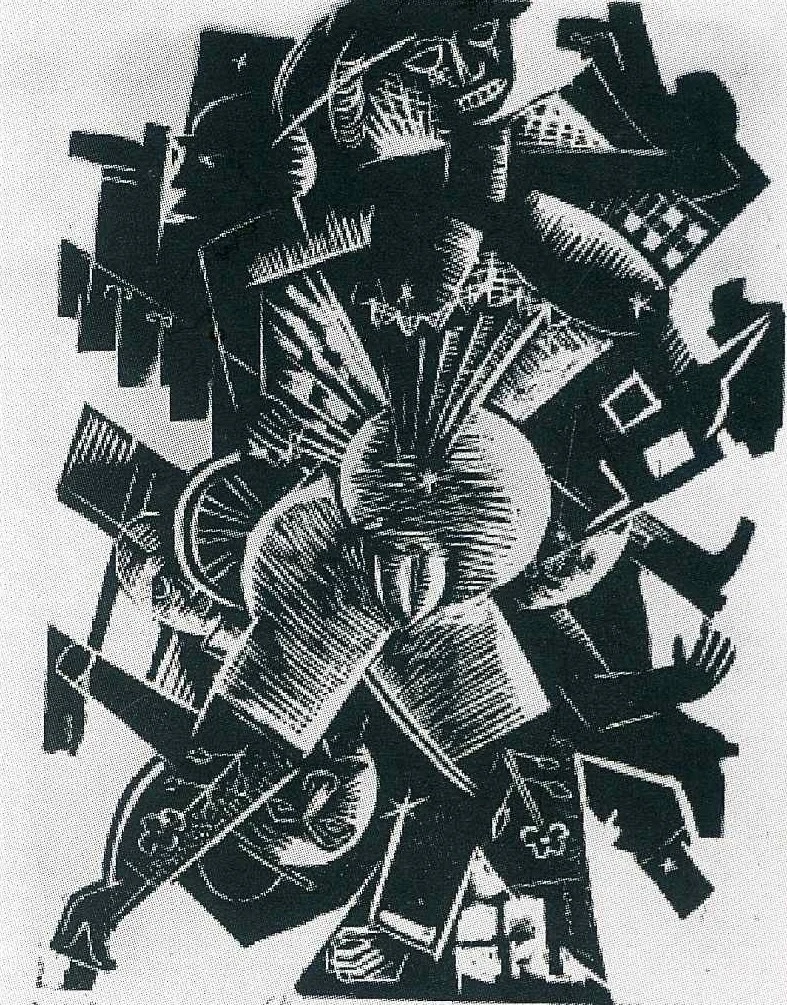
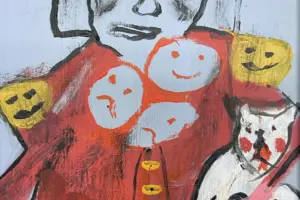
In the contemporary landscape of world literature, poetry frequently serves as both a surgical instrument and a sanctuary. It exposes the raw nerve of geopolitical trauma while offering a lexicon for what otherwise remains unspeakable. A profound manifestation of this literary phenomenon is found in the work of acclaimed Ghanaian poet and writer Denoo Edinam Yawo. Her evocative poem, Anatomy of a Bullet, accompanied by the haunting visual resonance of Otto Dix’s expressionist masterpiece Apotheosis, cuts directly to the core of how systemic violence, displacement, and inherited grief infiltrate the human body.
Published recently in literary spheres to widespread critical acclaim, Yawo’s work uses visceral imagery—sharks, bullets, barrels, and ash—to map out the inheritance of conflict. The poem does not merely describe violence; it internalizes it, tracking how structural and physical brutality alters cellular memory, forces generation after generation to harbor secrets, and redefines the boundaries of the self. This in-depth journalistic feature explores the thematic architecture of Anatomy of a Bullet, examines the rich background of its author, contextualizes the visual art that frames the piece, and analyzes the broader cultural and literary implications of art confronting violence in the twenty-first century.
Detailed Chronology and Literary Trajectory
To understand the weight of Anatomy of a Bullet, one must trace the rapid yet deeply grounded literary ascent of Denoo Edinam Yawo. Her emergence as a distinct voice in African and global letters is marked by a series of deliberate milestones that highlight her intellectual rigor and artistic dedication.
Read Also
The Foundation of a Voice
Emerging from a vibrant literary tradition in Ghana, Yawo’s creative output has consistently gravitated toward the intersections of the physical body, the politics of language, and the enduring architectures of faith and spirituality. Her work asks difficult questions about how individuals navigate daily existence under the heavy shadows of historical and contemporary geopolitical strife.
Recent Fellowships and Accolades (2024–2025)
Yawo’s trajectory shifted into wider international prominence throughout 2024 and 2025 through a succession of prestigious fellowships and literary prizes:
- The Adinkra Poetry Prize: Yawo established her poetic voice regionally by securing the position of Second Runner-Up in 2024, followed swiftly by being named First Runner-Up in the 2025 cycle.
- The New Voices Poetry Award (2025): Winning this notable accolade cemented her reputation as a formidable talent capable of balancing lyricism with searing social critique.
- Residencies and Editing Programs (2025): Yawo was selected as a 2025 Black Atlantic Residency Fellow, an alumna of the 2025 CAINE Online Editing Program, and a participant in the 2025 Johannesburg Institute of Advanced Studies (JIAS) Creative Writing Workshop for Emerging Writers.
These milestones provided Yawo with the critical community and institutional space to refine pieces like Anatomy of a Bullet, ensuring that her exploration of trauma and language resonates across international borders. Her prior publications in esteemed outlets such as Rowayat and the Kalahari Review further demonstrated her capacity to merge regional realities with universal human concerns.
Supporting Context, Visual Dialogue, and Textual Analysis
The presentation of Anatomy of a Bullet is deeply enhanced by its visual pairing with Otto Dix’s Apotheosis. Dix, a towering figure of the German New Objectivity movement, is widely celebrated for his uncompromising, nightmarish depictions of the horrors of World War I. By invoking Dix’s visual lexicon, the publication bridges the gap between mid-century European trauma and contemporary post-colonial reality, suggesting that the machinery of war has maintained its destructive efficiency across epochs.
Deconstructing the Text: The Mechanics of Violence
Yawo’s poem opens with a startling, disorienting juxtaposition:
When a bullet leaves the mouth of a shark
into the belly of my mother,
it renders the skin away from fat,
teachers her [to teach her]
to rent space in my body
for secrets.
Here, the natural predator—the shark—blends seamlessly with the man-made instrument of war. The bullet does not merely pierce flesh; it initiates an intergenerational tenancy of trauma. The mother’s body becomes a battleground where structural violence forces the concealment of truth. The injunction to "Hide, hide, hide / God between her gums and / fold, fold, fold / enough hope" invokes a desperate domestic liturgy, transforming prayer into a tactical survival mechanism against an encroaching exterior threat.
The Geography of Fear and Loss
As the poem progresses, the spatial dynamics of violence shift from the intimate interior of the maternal body to the cold, mechanical geometry of the weapon itself:
The entrance
to fear
from grief
is narrow.
The barrel,
is [only] wide
enough to
allow loss.
language
to name.
In these staggered lines, Yawo utilizes whitespace and enjambment to mirror the constriction of breath and agency experienced by those caught in the crosshairs of conflict. The barrel of a gun becomes a perverse generative organ—not of life, but of a vocabulary defined entirely by absence. Loss is permitted to enter, but only through the narrow conduit of destruction.
The poem culminates in one of its most striking philosophical assertions:
A bullet is a
wound
watching the future
alchemize into ash,
forcing death into rooms of tiny bodies.
This final movement universalizes the tragedy, shifting the focus from individual suffering to the systematic annihilation of futures—specifically targeting the most vulnerable, the "rooms of tiny bodies" that represent the potential of generations yet unborn.
Official Statements and Critical Reception
Literary critics and fellow practitioners have increasingly noted the urgency of Yawo’s thematic concerns. While formal institutional statements regarding individual poems are rare, the critical discourse surrounding her fellowship appointments and prize wins offers valuable insight into how her work is received by the global literary community.
Dr. Aris Thorne, a contemporary African literature scholar, remarked in a recent symposium review:
"Writers like Denoo Edinam Yawo are redefining the parameters of modern verse. By stripping away romanticized notions of survival, she confronts the cold anatomy of violence head-on. Her poetry functions not as an escape from reality, but as a diagnostic tool that reveals how political and structural fractures settle deep into the human genome."
Furthermore, mentors from the Johannesburg Institute of Advanced Studies (JIAS) creative writing cohort highlighted Yawo’s technical control over language, noting that her ability to juxtapose tender domestic imagery with the brutal mechanics of warfare creates an emotional resonance that stays with the reader long after the final page. Her work challenges the reader to look past sanitized news reports of global conflicts and witness the microscopic, domestic devastation left in their wake.
Future Outlook: The Role of Contemporary Poetry in Global Discourse
As the world continues to grapple with protracted conflicts, refugee crises, and the lingering psychological impacts of systemic violence, the relevance of politically engaged, somatic poetry cannot be overstated. Denoo Edinam Yawo stands at the forefront of a dynamic new generation of African writers who are refusing to let regional and global tragedies be reduced to mere statistics.
Expanding the Lexicon of Resistance
Looking ahead, Yawo’s ongoing literary projects—informed by her recent residencies and editorial fellowships—promise to further interrogate the boundaries between language, body, and geopolitics. As she continues to publish new works, her artistic vision points toward a necessary literary future where poetry acts as an active participant in historical memory and collective healing.
The Legacy of Anatomy of a Bullet
Anatomy of a Bullet is more than a single piece of verse; it is a monument to endurance. By translating the mechanics of a bullet into a meditation on maternal inheritance, fear, and alchemized futures, Yawo challenges us to reconsider what art can achieve in times of crisis. It demands that we look directly into the barrel of history, listen closely to the secrets hidden within the body, and bear witness to the resilience of the human spirit in the face of insurmountable odds.

Comments
Facebook App ID not configured. Please add it in the Customizer.