In the wake of shifting global politics, deepening societal divides, and the lingering psychological aftershocks of the global pandemic, contemporary culture finds itself standing at a precarious crossroads. For years, critics and cultural commentators have debated the precise trajectory of creative expression. Do current cultural works lean toward proactive engagement, or have they retreated into safe, easily digestible comfort?
A recent essay by critic Bob Nickas, written as a meditation on the work of musician Steven Stapleton, offered a sobering diagnosis of the contemporary art world. Nickas characterized the cultural landscape as tepid and unchallenging, arguing that the post-pandemic era and a pronounced rightward political shift have ushered in an unfortunate evolution. According to Nickas, art has increasingly pivoted away from works carrying a "seriousness of purpose" and drifted toward "palliative escapism"—a sanitized realm of production where the inherent danger of aesthetic and intellectual disturbance is minimized, if not entirely eradicated.
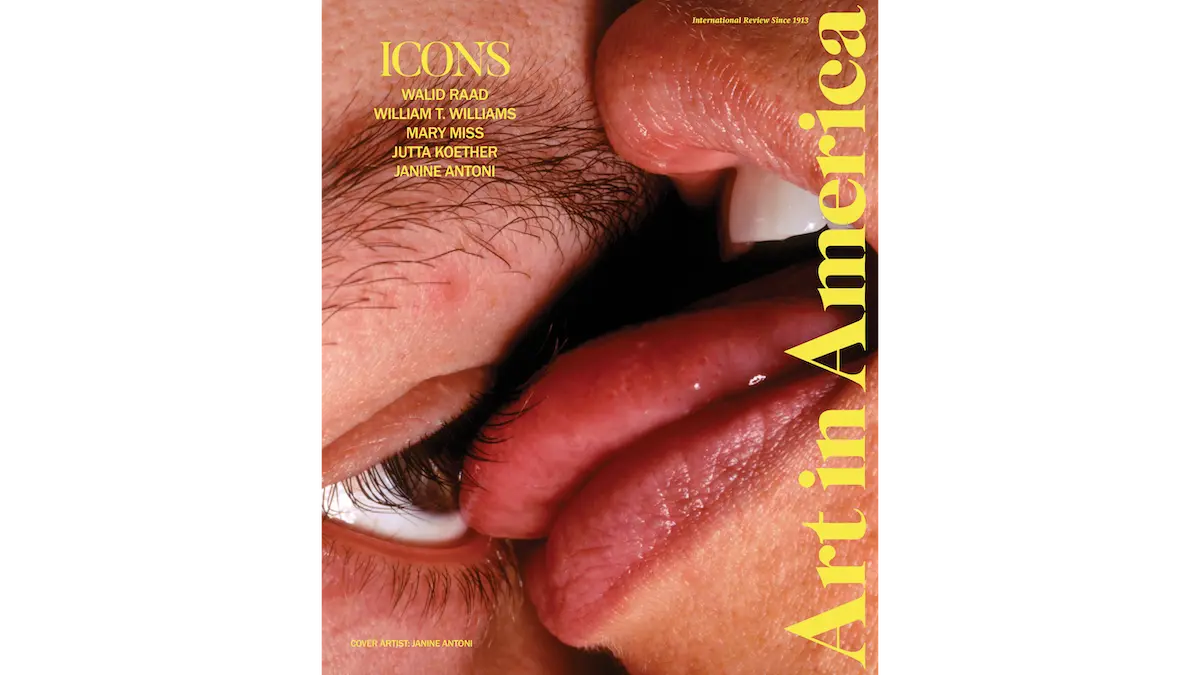
This diagnostic frame serves as the intellectual launching pad for Art in America’s latest flagship release: its annual Icon Issue. Rather than accepting a landscape defined by comfort and placation, the editorial board at Art in America has deliberately curated a roster of visionary artists who run counter to this trend. The five figures profiled in the new issue—Janine Antoni, Walid Raad, William T. Williams, Mary Miss, and Jutta Koether—offer the direct antithesis of palliative escapism. Their work invites confrontation, forces difficult reckonings, and maintains a high capacity for disturbance.
This comprehensive report examines the thematic undercurrents of the new Art in America issue, breaks down the individual practices of its chosen icons, and explores the wider assortment of features, critiques, and cultural assessments shaping the critical discourse this season.
Detailed Chronology and Editorial Evolution
The conceptual framework of the new Art in America issue did not materialize in a vacuum; it emerged from a growing urgency within the critical community to reevaluate the social contract binding artists, institutions, and audiences.
The Diagnostic Spark
Bob Nickas’s critique of Steven Stapleton’s oeuvre functioned as a broader cultural litmus test. By pointing out that artists and audiences alike have increasingly sought refuge in comforting narratives, Nickas highlighted a systemic fatigue. In times of profound socio-political stress, institutions and commercial markets often favor works that soothe rather than provoke, minimizing friction to protect financial bottom lines and appeal to risk-averse patrons.
The Editorial Realignment
As the editorial team finalized the publication’s contents, Nickas’s assertions resonated with their selection process for the annual Icon artists. The editors recognized that choosing figures "who speak to the times" meant looking past market trends and focusing on creators whose practices resist easy consumption. The resulting lineup spans decades of radical experimentation, ranging from foundational 1970s abstraction to contemporary installation art rooted in geopolitical friction.
From Concept to Print: The Feature Lineup
The editorial architecture of the issue pairs rigorous theoretical framing with deep-dive profiles into each Icon artist, alongside a robust slate of columns, reviews, and cultural inquiries:
Janine Antoni bridges the history of feminist performance art through physical endurance and bodily memory.
Walid Raad transforms geopolitical absences and institutional erasures into haunting, complex artistic interventions.
William T. Williams maintains a six-decade-long interrogation of abstract painting, carving out foundational space for Black avant-garde artists.
Mary Miss continuously reimagines public art, embedding radical interventions directly into the fabric of urban environments.
Jutta Koether deploys canvases that act as chaotic, unyielding storms of imagery, refusing to cohere into comfortable resolutions.
Supporting Context & Metrics: Breaking Down the Issue
The structure of the new Art in America edition offers a multifaceted view of contemporary cultural production, balancing historical retrospectives with pressing contemporary debates.
Feature Articles Breakdown
Artist / Subject
Focus / Medium
Author
Core Theme
Walid Raad
Installation / Conceptual Art
Emily Watlington
Turning history’s structural absences and institutional censorship into tangible, critical artworks.
Jutta Koether
Painting
Barry Schwabsky
Delivering heavy conceptual weight through a light, gestural touch on canvas.
William T. Williams
Abstract Painting
Maximiliano Durón
Six decades of sustained curiosity, innovation, and spatial carving for Black abstractionists.
Janine Antoni
Performance & Sculpture
Nicole Kaack
Solidifying and expanding the historical lineage of feminist performance art.
Mary Miss
Public Art / Urban Intervention
Eleanor Heartney
Resourcefulness as resilience in shaping public spaces.
Critical Encounters and Cultural Debates
Beyond the core profiles, the issue engages with broader cultural phenomena through specialized departments:
Cringe Culture: Eugenie Brinkema tackles the modern obsession with "cringe," analyzing what this pervasive affective response looks like and how it operates in contemporary media and art.
The Fair Circuit: A classic institutional face-off is staged in "Battle Royale," where the editors pit Frieze London against Art Basel Paris, evaluating the economic and curatorial health of the fall art fair juggernauts.
Interdisciplinary Inquiries: Lucy Sante discusses the unique capabilities of collage over traditional prose in an interview with Andy Battaglia, anchored by her recent project Radioactive (2025).
Technological Critiques: Louis Bury evaluates the world’s first AI-funded art museum, casting a critical eye on its paradoxical attempts to honor and represent the rainforest.
Official Statements and Critical Perspectives
The overarching ethos of the issue is perhaps best summarized by the publication’s editorial stance on why challenging times necessitate uncompromising art.
"To come back to Nickas, I believe our challenging times demand works with ‘seriousness of purpose’—and it is artists like these Icons who can show the way."
This declaration rejects the notion that art should serve primarily as a therapeutic balm during periods of political regression or social instability. Instead, it repositions rigorous artistic practice as a vital apparatus for cognitive dissonance and social awareness.
Highlights from the Front Lines of Criticism
The Cover Statement: Janine Antoni’s cover image serves as "Exhibit A" for the issue’s thesis. By creating a long-echo allusion to the iconic, razor-to-the-eye scene in Luis Buñuel and Salvador Dalí’s 1929 surrealist masterwork Un Chien Andalou, Antoni issues a direct challenge to the viewer: keep your eyes open, regardless of how disturbing or confronting the reality before you might be.
Geopolitical Resonance: Walid Raad’s installation project, realized in collaboration with graphic designer Pierre Huyghebaert, demonstrates how artistic subversion can hide in plain sight. At first glance resembling festive paper ribbons affixed to gallery walls, a closer inspection reveals them to be formal statements detailing exhibitions canceled due to their real or perceived affiliation with Palestine. It is a stark reminder of the invisible pressures bearing down on cultural institutions.
Urban Interventions: Mary Miss, profiled extensively by Eleanor Heartney in her Tribeca studio, represents a lifelong commitment to changing how humanity interacts with the built environment. Her public art avoids decorative appeasement, instead functioning as an unapologetic ecological and spatial wake-up call.
Future Outlook: Navigating the Post-Escape Art World
As the global art market recalibrates in response to economic fluctuations, geopolitical tensions, and technological shifts driven by artificial intelligence, the stakes for cultural production have never been higher.
The prescription offered by Art in America’s new Icon Issue is clear: the path forward does not lie in retreating into palliative escapism or producing art designed solely for frictionless digital consumption. Rather, the future belongs to practices characterized by structural resilience, intellectual bravery, and an unyielding commitment to seriousness of purpose.
Whether through Jutta Koether’s turbulent, unresolving canvases, William T. Williams’s enduring abstract explorations, or Lucy Sante’s explorations of collage as a disruptive medium, contemporary creators are being called upon to puncture the comfort zones of their audiences. As these profiles demonstrate, true cultural longevity is forged not by soothing the viewer, but by ensuring that they remain wide awake, eyes unblinking, in a complex and often unsettling world.




Comments
Facebook App ID not configured. Please add it in the Customizer.