
Executive Overview
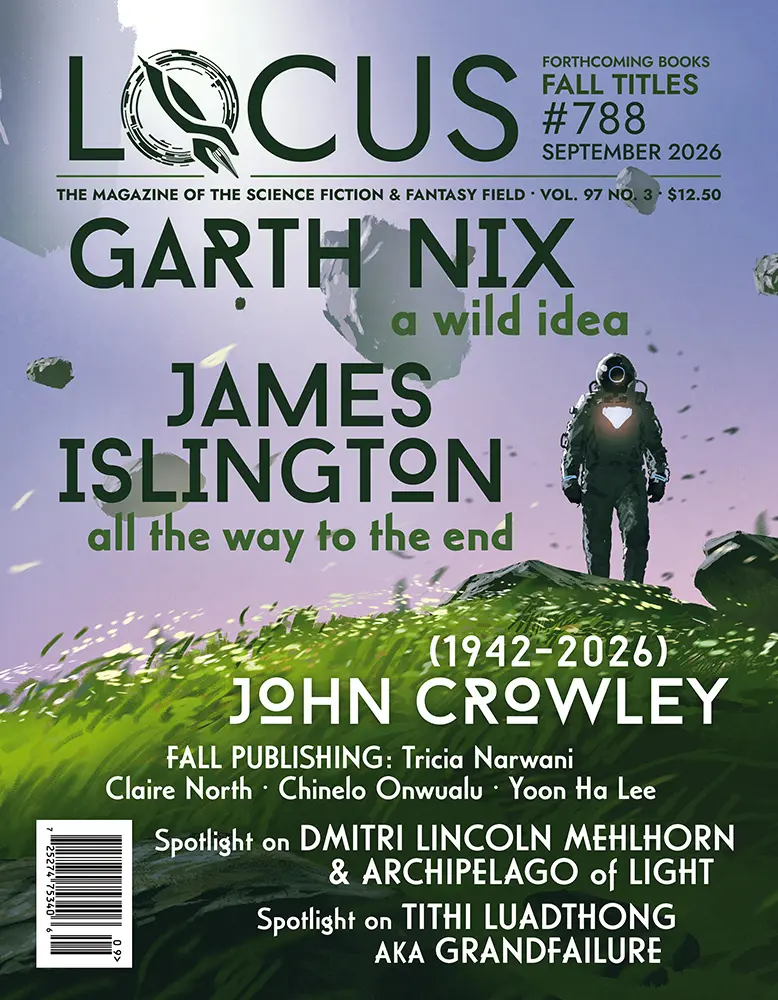
The publication of Locus magazine’s September 2026 issue (Issue #788, Vol. 97, No. 3) marks a significant milestone for the premier chronicle of science fiction, fantasy, and horror. Now in its 59th year of publication and boasting 30 Hugo Awards, the magazine continues to serve as the definitive journal of record for the speculative fiction community. This latest installment arrives at a critical juncture for the publishing industry—a period characterized by profound technological disruption, major legal precedents regarding artificial intelligence, and a generational transition among its most revered creators.
Issue #788 elegantly balances these competing dynamics. It serves as both an archive of industry history and a forward-looking compass, featuring in-depth interviews with fantasy stalwarts Garth Nix and James Islington, alongside a sobering exploration of the late John Crowley’s literary legacy. Simultaneously, the issue addresses the pressing contemporary challenges facing the field, detailing the final approval of the landmark Anthropic copyright settlement and the controversial decision by Apex Magazine to pull a story over suspected AI usage. Through comprehensive reviews, industry metrics, and sharp commentary, Locus provides an authoritative diagnostic of a genre navigating rapid evolution while striving to preserve its human-centric core.
Detailed Chronology of Issue #788
The architecture of the September 2026 issue is structured to guide readers from personal creator profiles to systemic industry analysis, concluding with an extensive critical apparatus.
Read Also

+-------------------------------------------------------------------+
|                     LOCUS ISSUE #788 - STRUCTURE                  |
+-------------------------------------------------------------------+
|  [Front-End Interviews]  -->  Garth Nix & James Islington         |
+-------------------------------------------------------------------+
|  [Main Stories & News]   -->  Crowley Memorial, Awards Ballots,   |
|                               Anthropic Settlement, Apex AI Case  |
+-------------------------------------------------------------------+
|  [Special Features]      -->  Doctorow's "Technopolitics",        |
|                               Fall Titles, Workshop Reports       |
+-------------------------------------------------------------------+
|  [Critical Reviews]      -->  Gary K. Wolfe, Niall Harrison,      |
|                               Paula Guran, Maria Haskins, etc.    |
+-------------------------------------------------------------------+
Front-and-Center Interviews: Garth Nix and James Islington
The issue opens its long-form profile section with two generations of fantasy writers who have reshaped the parameters of secondary-world worldbuilding:
- Garth Nix ("A Wild Idea"): The Australian master of dark, structured magic systems discusses the longevity of his career and the intuitive, often unpredictable genesis of his narratives. Nix reflects on how the speculative market has shifted since his breakthrough with Sabriel (1995), emphasizing the enduring necessity of character-driven stakes in an increasingly crowded commercial market.
- James Islington ("All the Way to the End"): Representing the contemporary vanguard of epic fantasy, Islington discusses the meticulous plotting required to execute sprawling, multi-volume epics. He details his approach to narrative closure, structural complexity, and the process of maintaining creative stamina over long-term projects.
Spotlights and Visual Design
Visual art remains central to the identity of Locus. Issue #788 features a cover and interview design by Francesca Myman, utilizing the evocative, textured work of digital artist Tithi Luadthong (also known as Grandfailure). Luadthong is profiled in an artist spotlight that explores his atmospheric, color-saturated digital paintings, which have become highly sought-after for modern speculative book covers. Additionally, the issue features a spotlight on Dmitri Lincoln Mehlhorn and his project Archipelago of Light, illustrating the expanding boundaries of multimedia speculative art.
The Fall Titles Preview
A centerpiece of the September issue is the Fall Titles section, which serves as a crucial industry catalog for the upcoming publishing season. This section aggregates:

- Reviewers’ Seasonal Picks: Curated recommendations pointing librarians, booksellers, and readers toward the most anticipated releases of autumn 2026.
- Forthcoming Books Directories: Detailed listings of upcoming titles across both US and UK markets.
- Spotlight on Chinelo Onwualu: An exploration of the editor and author’s latest work and her influence on international speculative fiction.
- Industry Perspectives: Commentary from author Claire North, editor Tricia Narwani, and author-critic Yoon Ha Lee, offering a multi-faceted view of the creative and curatorial choices shaping the current market.
Supporting Context & Industry Metrics
The Passing of Giants: Honoring John Crowley and Dave Nee
A profound sense of historical reflection pervades this issue, marked by the passing of legendary author John Crowley (1942–2026). Crowley, best known for his masterwork Little, Big (1981) and the Ægypt quartet, was a towering figure of literary fantasy whose prose bridged the gap between speculative fiction and high-art magical realism.
Locus honors Crowley with an extensive obituary section featuring appreciations from prominent peers and critics:
- Paul Park reflects on Crowley’s stylistic precision and his quiet, academic influence.
- Elizabeth Hand details the emotional resonance of Crowley’s worlds and his kindness as a mentor.
- Kelly Link examines how Crowley redefined the boundaries of what domestic fantasy could achieve.
- John Clute provides a characteristically rigorous critical assessment of Crowley’s place in the 20th-century literary canon.
The issue also remembers Dave Nee, a beloved figure in the speculative bookstore community, with an appreciation by Tom Whitmore. Nee’s contributions highlight the vital role that independent booksellers play in sustaining the genre’s ecosystem.

The Legal and Ethical Frontier: AI and the SFF Market
The "Data File" section of Issue #788 serves as an investigative dispatch on the structural challenges facing the industry. Two major stories highlight the ongoing friction between speculative publishing and generative artificial intelligence:
- The Anthropic Settlement Final Approval: This milestone legal development marks a critical boundary in copyright law, establishing new frameworks for how intellectual property can be utilized in machine learning models. The final approval of this settlement represents a temporary stabilization for authors and publishers seeking compensation and control over their digitized catalogs.
- The Apex Magazine Contretemps: In a move that sent shockwaves through the short fiction community, Apex Magazine removed a published story due to suspected AI usage. This incident underscores the mounting difficulty editors face in policing submissions and maintaining the integrity of human authorship in digital slush piles.
| Metric/Event | Significance for the Speculative Fiction Market |
|---|---|
| Anthropic Settlement Approval | Establishes legal precedents for copyright protection and licensing structures in the AI era. |
| Apex Story Removal | Highlights the operational strain on short fiction venues combating automated submissions. |
| Le Guin Home Landmark Status | Preserves the physical history of SFF; validates the genre’s cultural and academic parity. |
| Clarke Award 40th Anniversary | E.J. Swift’s win underscores the prestige and evolving aesthetic of British science fiction. |
Official Statements, Commentary & Critical Reception
Cory Doctorow’s "Technopolitics"
In his monthly column, author and activist Cory Doctorow delivers a characteristically trenchant critique of the corporate consolidation of digital spaces and creative tools. Titled "Technopolitics", the essay examines the intersection of late-stage capitalism, digital rights management, and the threat of algorithmic monopolization over creative labor. Doctorow argues that the battle over generative AI is not merely an aesthetic concern, but a fundamental labor struggle that will determine the economic viability of professional writing for decades to come.
Critical Consensus: Key Book Reviews
The review section of Locus remains the industry standard for critical evaluation. Issue #788 features assessments of several major releases, reflecting a diverse array of thematic concerns:

- Gary K. Wolfe reviews The Slantwise Histories by Alix E. Harrow, praising its lyrical exploration of alternate timelines, alongside two anthologies edited by Jonathan Strahan: The Book of the Dead and Revolution in the Heart. Wolfe notes that Strahan continues to be one of the genre’s most astute curators of contemporary anxieties.
- Ian Mond tackles China Miéville’s highly anticipated The Rouse, analyzing how Miéville continues to deconstruct the boundaries of "weird fiction." Mond also reviews Jaclyn Moriarty’s Time Travel for Beginners and Emma Glass’s Mrs. Jekyll, noting a prevailing industry trend toward rewriting classic Victorian gothic and speculative tropes.
- Niall Harrison reviews an international slate, including Huang Chong-Kai’s The Formosa Exchange (translated by Jeremy Tiang), Hernan Diaz’s Ply, and Emily St. John Mandel’s Exit Party. Harrison’s reviews highlight the growing globalization of the genre and the seamless integration of speculative conceits into mainstream literary fiction.
- Gabino Iglesias surveys the horror and thriller landscapes, reviewing Josh Malerman’s Pictures of You, David Demchuk’s Red X, and Mason Coile’s Driven. Iglesias emphasizes the visceral, socially conscious turn in modern horror, which uses supernatural elements to dissect contemporary isolation and systemic trauma.
Future Outlook: Speculative Fiction at the Crossroads
As Locus heads toward its sixth decade, Issue #788 demonstrates that the speculative fiction community is actively adapting to structural shifts rather than merely reacting to them. The inclusion of extensive summer workshop reports (such as Clarion and Odyssey) demonstrates a commitment to nurturing new, diverse voices who must learn to navigate a landscape dominated by digital distribution and algorithmic curation.
The preservation of history—exemplified by the recognition of Ursula K. Le Guin’s Portland home as a National Historic Landmark—coexists with a vibrant, forward-looking commercial sector. This is evidenced by bestselling author Matt Haig’s venture into brick-and-mortar bookselling and the 50th-anniversary celebration of the legendary Berkeley bookstore, Dark Carnival.
Ultimately, Locus Issue #788 paints a portrait of a genre that is more self-reflective, globally minded, and politically engaged than ever before. While technological threats like generative AI and corporate platform monopolies pose existential challenges to creators, the sheer breadth of artistic output reviewed in these pages—ranging from cozy sci-fi like Becky Chambers’ As You Wake, Break the Shell to the hard-edged systems of Adrian Tchaikovsky’s Engines of Reason—suggests that the human appetite for complex, imaginative storytelling remains resilient. The magazine itself remains an indispensable beacon, documenting the evolution of our collective tomorrow from the front lines of today.

Comments
Facebook App ID not configured. Please add it in the Customizer.