
Executive Overview
The portable e-reader landscape is undergoing a dramatic shift toward hyper-compact, smartphone-form-factor devices. Moving away from the traditional, bulky 6-inch to 10-inch tablets that dominated the past decade, manufacturers are recognizing a distinct consumer demand for hardware that fits seamlessly into a pocket. Leading this charge in the specialized pocket e-reader segment is digital reading brand iReader (also known globally through its association with PalmRead).
Following the initial success of the pioneering iReader Tango and its iterative successor, the Tango 2, the company has officially pulled back the curtain on its upcoming flagship device: the iReader Tango 2S.
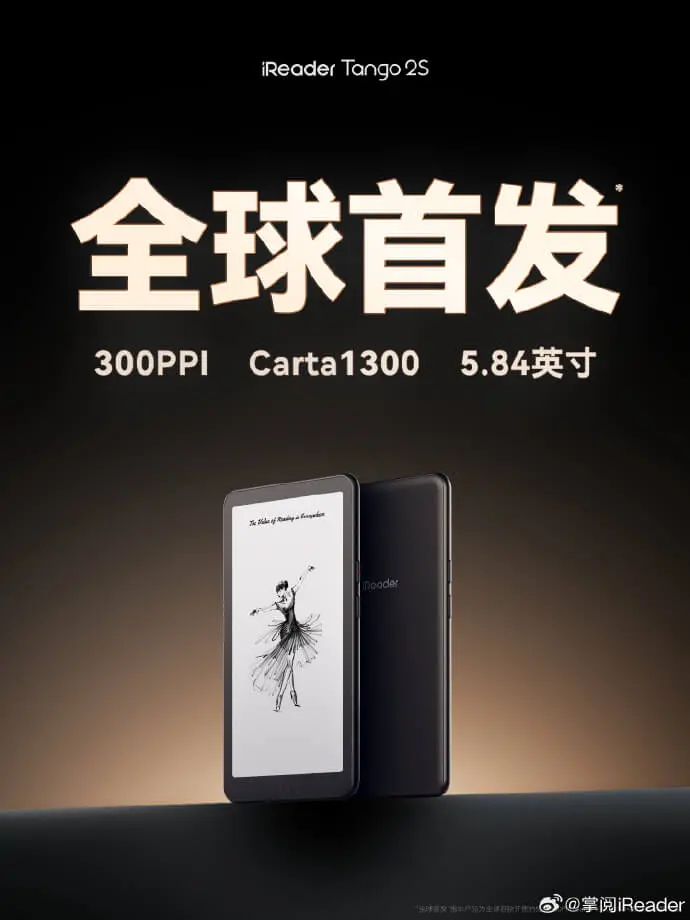
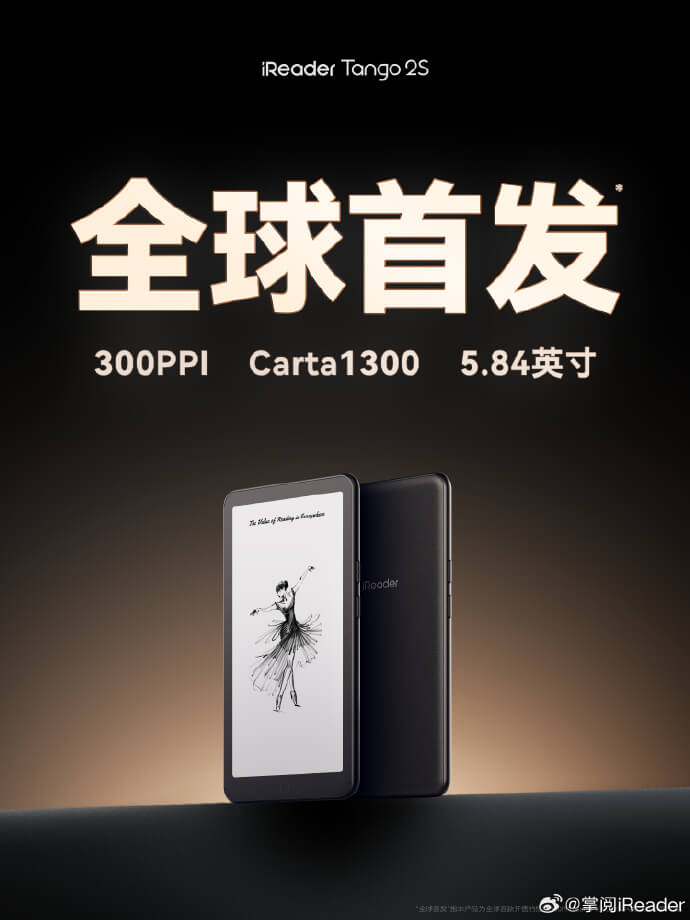
Promising to be the most compact entry in the lineup, the Tango 2S trades a fraction of screen real estate for maximum portability. Featuring an industry-first 5.84-inch E Ink Carta 1300 monochrome display at a crisp 300 pixels per inch (PPI), this new iteration directly targets the burgeoning market popularized by devices like the Onyx Boox Palma. While iReader has not yet announced official pricing or a definitive global release date, early promotional materials and teaser posters have already sparked intense discussion across the e-reader community.
Read Also
This in-depth report explores the architectural evolution of the Tango series, examines the technical specifications powering the Tango 2S, analyzes the competitive dynamics of the smartphone-sized e-reader market, and projects the trajectory of ultra-portable reading technology.
Detailed Chronology: The Evolution of the iReader Tango Lineup
To fully understand the significance of the Tango 2S, one must trace the rapid, calculated evolution of iReader’s pocket-friendly hardware strategy over recent product cycles.
Phase 1: Breaking the Mold with the Original iReader Tango
For years, the standard form factor for a dedicated e-reader hovered between six and seven inches, optimized for holding in two hands or resting on a reading stand. However, a significant subset of readers desired a device that could be operated entirely with one hand—a form factor resembling a modern smartphone, minus the digital distractions of push notifications, social media apps, and glowing LCD/OLED panels that cause eye strain.
iReader answered this call by introducing the original iReader Tango. This device established the structural blueprint for the entire series:
- The Form Factor: Designed from the ground up to mimic the weight distribution and width of a standard smartphone.
- The Display: It integrated a 6.13-inch E Ink Carta 1300 panel delivering a sharp 300 PPI resolution, ensuring deep blacks and crisp typography.
- Under the Hood: Rather than skimping on internal processing power—a common criticism of early budget e-readers—iReader outfitted the original Tango with a capable octa-core processor.
- Endurance: It packed a remarkably large 3,900mAh battery, a capacity that easily rivaled or exceeded standard Android smartphones, yielding up to an astonishing 27 days of standby time.
- Ergonomics & Performance: The inclusion of physical side page-turn buttons catered to tactile readers. Furthermore, the device introduced a specialized 30Hz fast refresh mode, drastically mitigating the notorious ghosting and sluggish scrolling speeds traditionally associated with E Ink technology.
Phase 2: The Iterative Refinement of the Tango 2
Following the positive reception of the original form factor, iReader released the Tango 2. Serving as a direct structural successor, the Tango 2 maintained the 6.13-inch compact blueprint while implementing under-the-hood optimizations. It addressed minor software quirks, improved power management efficiency, and polished the user interface to deliver a more seamless, responsive operating environment. Despite these refinements, the device kept the exact same physical footprint, proving that while optimization was necessary, the core size proposition struck a chord with consumers.
Phase 3: The Ultra-Compact Horizon – The Tango 2S
With the upcoming iReader Tango 2S, the company is taking a bold step further into true pocketability. Recognizing that some users preferred an even narrower or shorter device that could slip effortlessly into tight jeans pockets or small jacket liners, iReader engineered a downscaled variant.
The Tango 2S drops the screen size down to 5.84 inches, marking a pivotal engineering milestone: it is marketed as the market’s first 5.84-inch Carta 1300 monochrome screen capable of maintaining an uncompromised, razor-sharp 300 PPI pixel density. By teasing this device, iReader signals that the smartphone-format e-reader is not a passing gimmick, but a permanent, expanding product category.
Supporting Context, Specifications & Market Metrics
The rise of smartphone-shaped e-readers is driven by distinct shifts in consumer reading habits, ergonomics, and hardware performance. To appreciate where the Tango 2S fits into the global technology ecosystem, we must examine the intersection of its technical metrics and market context.
Technical Deep Dive: Carta 1300 and Pixel Density
The cornerstone of the Tango 2S is its display panel. Utilizing E Ink’s Carta 1300 technology, the screen offers:
- Contrast Ratios: Significantly improved contrast over older Carta 1000 or Carta 1200 panels, resulting in a whiter background and darker, more legible text.
- Pixel Density: At 300 PPI on a 5.84-inch canvas, individual pixels are entirely imperceptible to the naked eye, closely mimicking the look of high-quality print on physical paper.
- Monochrome Purity: By focusing exclusively on a black-and-white (greyscale) layout rather than a color Kaleido filter, the Tango 2S avoids the dark, muted screen-door effect inherent to color E Ink displays, ensuring maximum brightness and clarity for traditional book readers.
The Rise of the "Distraction-Free" Daily Driver
In a modern society plagued by digital fatigue, continuous notifications, and blue light exposure, a growing demographic of consumers seeks "dumbed-down" smart devices.
While full-sized e-readers like the Kindle Paperwhite or Kobo Clara are portable, they rarely fit into standard trouser pockets comfortably. Conversely, reading books on an iPhone or Android smartphone exposes users to incoming text messages, email alerts, and the temptation to open web browsers.
The iReader Tango series bridges this gap. Because it runs on an optimized Android operating system (allowing users to sideload reading applications like Kindle, Kobo, Google Play Books, or WeChat Reading, depending on regional firmware), it functions as a versatile digital library. Yet, its monochrome E Ink screen completely eliminates the sensory overload of conventional screens, fostering deep, uninterrupted focus.
Comparative Market Positioning
The primary rival in this specialized niche has been the Onyx Boox Palma series. The Boox Palma captured the imagination of tech enthusiasts by proving there is a thriving market for high-performance, phone-shaped e-readers.
However, competition breeds innovation. Where Onyx Boox focused heavily on broad app compatibility and customization via open Android access, iReader leverages its deep roots in reading software, industrial design, and massive battery engineering (exemplified by the 3,900mAh cell found in the original Tango). The introduction of the smaller 5.84-inch Tango 2S gives iReader a distinct structural advantage for consumers prioritizing minimal footprint over maximum screen space.
Official Statements and Industry Reception
While iReader has maintained a measured approach regarding the official rollout, initial teaser posters shared across Asian tech forums and global e-reader communities have offered tantalizing glimpses into the company’s manufacturing philosophy.
Industry analysts note that iReader’s strategy with the Tango 2S is twofold:
- Targeting the Ultra-Portable Niche: By offering two distinct sizes within the same product family (the 6.13-inch Tango/Tango 2 and the 5.84-inch Tango 2S), iReader ensures that consumers can choose between maximum reading comfort and absolute pocket-friendliness.
- Pushing Panel Manufacturers: Achieving 300 PPI on a non-standard, smaller 5.84-inch Carta 1300 panel demonstrates iReader’s strong supply chain partnerships with E Ink Holdings. Manufacturing custom-sized e-paper panels requires significant financial investment, signaling that iReader views this form factor as a long-term commercial pillar rather than a limited-run experiment.
Early commentary from tech reviewers and community platforms like Reddit’s r/eink and Good e-Reader has been overwhelmingly positive. Enthusiasts have praised the decision to shrink the device further, noting that a sub-6-inch E Ink device hearkens back to the beloved ergonomics of classic pocket paperbacks and early digital assistants (PDAs), modernized for the digital age.
Future Outlook: What Lies Ahead for Pocket E-Readers?
As we look toward the remainder of 2026 and beyond, the release of the iReader Tango 2S serves as a bellwether for the broader personal electronics industry.
1. The Proliferation of Niche Form Factors
For over a decade, consumer electronics have trended toward homogenization—every smartphone looks identical, and every standard tablet follows the same 4:3 or 16:10 aspect ratio. The success of pocket e-readers proves that consumers are hungry for specialized hardware designed for single-use cases. We can expect other major players to monitor the success of the Tango 2S closely and potentially develop competing sub-6-inch E Ink devices.
2. Battery and Software Optimization
As screens get smaller, internal engineering constraints increase. Packing robust batteries, multi-core processors, and adequate RAM into a chassis narrower than 70 millimeters is a formidable engineering challenge. Future iterations of pocket e-readers will likely see even greater integration of artificial intelligence for smart text reflow, enhanced refresh rate algorithms to eliminate ghosting entirely without needing manual screen flashes, and ultra-low-power standby modes.
3. Global Availability and Pricing Speculation
While iReader has yet to release concrete pricing tiers or an exact launch calendar for international markets, historical patterns suggest that the Tango 2S will likely debut in domestic Asian markets before filtering out to global import channels and specialized retailers. Given that the Tango 2 positioned itself competitively against rivals like the Boox Palma, consumers can anticipate a price point that reflects its high-resolution Carta 1300 panel and premium internal architecture.
Conclusion
The iReader Tango 2S represents more than just a downsizing of an existing product; it is a refined statement on the future of portable reading. By successfully merging the ultra-convenient form factor of a modern smartphone with the eye-safe, distraction-free environment of an advanced 300 PPI Carta 1300 E Ink display, iReader is carving out an essential space in the modern tech ecosystem.
As we await final pricing, release dates, and hands-on performance reviews, one thing is abundantly clear: the era of the pocket-sized, single-handed digital library has arrived, and it is smaller, sharper, and more sophisticated than ever before.

Comments
Facebook App ID not configured. Please add it in the Customizer.