
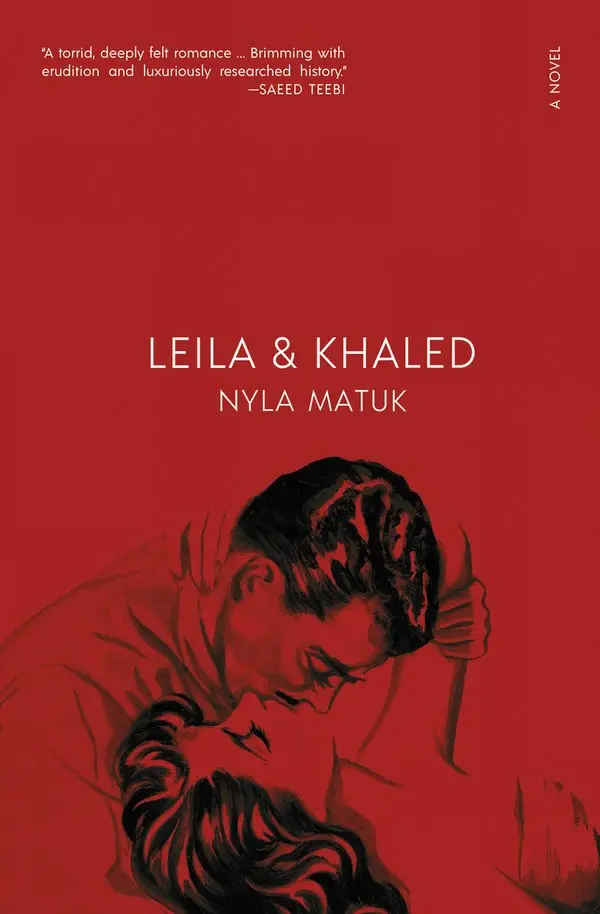
Executive Overview
In her debut novel Leila and Khaled, Canadian poet Nyla Matuk transitions into long-form fiction to construct a nuanced narrative surrounding Palestinian identity, diasporic exile, and the ongoing reality of military occupation. Centered on the unexpected romance between Leila, a Palestinian-Canadian film scholar visiting Occupied Palestine on an academic delegation, and Khaled, a younger local guide and community co-organizer, the novel functions simultaneously as a slow-burn love story and an unsparing critique of settler-colonial statecraft.
Through the sensory landscapes of the West Bank—ranging from invasive military checkpoints and segregation walls to the historic streets where armed settlers move with state-sanctioned impunity—Matuk frames romantic intimacy not as an escape from geopolitical trauma, but as an assertion of human dignity and political resistance. Leila’s journey to the homeland of her ancestors is fueled by a desire to bridge the silence maintained by her exiled father, who withheld his own memories of displacement.
The novel explicitly challenges Western-centric narratives of the Israeli-Palestinian conflict by interrogating the historical foundation of the 1948 Nakba (the forced displacement of over 700,000 Palestinians during the creation of the State of Israel). By positioning love amidst structural violence, Leila and Khaled dismantles liberal tropes surrounding "two-state solutions" and "peacebuilding," instead grounding its story in historical materialism, generational trauma, and the enduring demand for the Palestinian Right of Return.
Read Also
Detailed Chronology
To fully contextualize the narrative and thematic trajectory of Leila and Khaled, it is essential to trace the historical timeline of displacement, diasporic policy shifts, and public consciousness that inform Matuk’s work.
+-----------------------------------------------------------------------------------+
| HISTORICAL & CONCEPTUAL TIMELINE                                                 |
+-----------------------------------------------------------------------------------+
| 1948 | The Nakba (The Catastrophe)                                                |
|      | Mass displacement of 700,000+ Palestinians; establishment of state military|
|      | structures and permanent refugee camps across the Levant.                  |
+-----------------------------------------------------------------------------------+
| 1970s| Canadian Multiculturalism Era                                              |
|      | Adoption of official multiculturalism policy in Canada. Immigrant families|
|      | (including Matuk's) navigate pressure to assimilate and suppress roots.    |
+-----------------------------------------------------------------------------------+
| 1980s| Identity Politics & Institutional Erasure                                  |
|      | Early identity politics emerge; diaspora Palestinians face systemic       |
|      | surveillance, public vilification, and social pressure to hide heritage.   |
+-----------------------------------------------------------------------------------+
| 2015+| Institutional Truth & Decolonial Reckoning                                 |
|      | Public revelations regarding Canada's Indian Residential School system;    |
|      | growing domestic awareness of Indigenous genocide mirrors Palestinian cause.|
+-----------------------------------------------------------------------------------+
| Present | Global Digital Visibility & Institutional Shifts                         |
|      | Social media bypasses traditional media gatekeeping; public exhibits such |
|      | as the Nakba display at the Canadian Museum for Human Rights emerge.       |
+-----------------------------------------------------------------------------------+
The Foundations of Exile (1948–1970s)
The ideological framework of the novel is rooted in the 1948 Nakba, an event whose lingering effects dictate the legal, physical, and psychological status of millions of Palestinians worldwide. For the first generation of exile—represented by Leila’s father—survival in Western nations like Canada often dictated cultural assimilation. During the 1970s, under early Canadian multicultural policies, immigrant families were encouraged to adapt to Western frameworks, often suppressing the traumatic political histories of their homelands.
Institutional Erasure and Diaspora Surveillance (1980s–2000s)
Throughout the late 20th century, Palestinian identity in the West was frequently criminalized or reduced to media caricatures of terrorism. Within public and private spheres, diaspora Palestinians were forced to navigate cover-up strategies—often advised by elders to conceal their surname or lineage to avoid political retaliations, job loss, or state surveillance. Simultaneously, Western educational curricula omitted colonial atrocities both domestically (such as Canada’s Indigenous Residential School system) and internationally.
The Decolonial Pivot and Modern Consciousness (2010s–Present)
In recent years, the intersection of Indigenous rights activism in North America (on Turtle Island) and global Palestinian solidarity has reshaped how younger generations understand settler-colonialism. The institutional acknowledgment of Indigenous genocide in Canada opened critical pathways for re-evaluating foreign policy and historical revisionism. Coupled with real-time documentation of military violence on social media platforms, contemporary public perception has shifted rapidly, weakening long-standing Zionist propaganda and forcing institutions—such as the Canadian Museum for Human Rights—to confront the historic realities of 1948.
Supporting Context & Metrics
The thematic background of Leila and Khaled is built upon documented geopolitical realities, demographic data, and sociological shifts regarding Palestinian exile and public perception in the West.
Demographic Reality of Palestinian Displacement
The novel highlights the sharp contrast between the living conditions of Palestinians within the occupied territories and those in the global diaspora. The structural persistence of refugee status remains central to the narrative.
- Global Palestinian Population: Approximately 14.3 million globally.
- Registered Refugees: Over 5.9 million registered with UNRWA (United Nations Relief and Works Agency for Palestine Refugees in the Near East).
- Diaspora Distribution: Millions residing across Jordan, Lebanon, Syria, Chile, Europe, and North America.
- Internal Displacement: Hundreds of thousands living in refugee camps within Gaza and the West Bank, barred from returning to their ancestral villages of 1948.
PALESTINIAN POPULATION DISTRIBUTION (ESTIMATED)
[████████████████████] Occupied Palestinian Territory & 1948 Borders (~50%)
[████████████████    ] Arab Region Diaspora (~38%)
[██████              ] Western & International Diaspora (~12%)
Decolonial Parallels: North America vs. Palestine
Matuk’s narrative explicitly links the Palestinian struggle to the broader critique of Western settler-colonialism, specifically within the context of Canadian history.
| Dimension | Canadian Settler-Colonial Framework | Palestinian Occupied Context |
|---|---|---|
| Land Mechanics | Displacement of Indigenous nations; land theft via treaties/policy | Forced expulsion (1948/1967); military land seizure and settlement expansion |
| Historical Revisionism | Erasure of Residential Schools in school curricula (traditionally framing history via the "fur trade") | Total denial of the Nakba; replacement of depopulated villages with "national parks" |
| Cultural Expression | Suppression of Indigenous languages/ceremonies | Destruction of olive groves; criminalization of Palestinian flags/symbols; appropriation of culture |
| Resistance Movement | Land Back movements, blockades, legal challenges | Sumud (steadfastness), armed resistance, cultural preservation, global BDS movement |
Shifts in Western Public Opinion and Institutional Resistance
The novel reflects a growing rift between Western state policies and popular civil society attitudes. While governments in North America and Western Europe continue to provide military, financial, and diplomatic support to Israel, public awareness of Nakba denial and state violence has expanded.
A notable real-world manifestation of this friction occurred with the opening of the first-ever 1948 Nakba exhibition at the Canadian Museum for Human Rights in Winnipeg. The exhibition faced intense pushback and high-profile resignations from Zionist board members, illustrating how historical truth continues to threaten established state-sanctioned narratives in the West.
Official Statements & Author Perspectives
In depth discussions surrounding Leila and Khaled, author Nyla Matuk shared critical insights regarding the novel’s structural inspiration, its political philosophy, and the complex realities of representing Palestinian identity in Western literature.
On the Influence of Hiroshima Mon Amour and Intergenerational Trauma
Matuk revealed that the structural architecture of the novel’s central romance was directly inspired by Alain Resnais’s 1959 French New Wave film Hiroshima Mon Amour (written by Marguerite Duras).

"In some ways, the character of Khaled is an allegory of Palestine itself—he’s narrating the history, and that’s for Indigenous peoples everywhere. It’s very important to tell those stories… I was inspired by Hiroshima Mon Amour… [The protagonist] is living with this tremendous catastrophe and grief, and this grief is brought to bear in the context of being in Hiroshima. The two of them are in this trance-like interaction… They struck me as two people living with mass trauma. I wanted to model both of the people in my novel after that, because, really, the novel is about the Nakba."
— Nyla Matuk
                  ┌─────────────────────────────────────────┐
                  │       HIROSHIMA MON AMOUR (1959)        │
                  │ Frame: Personal Romance / Mass Disaster │
                  └────────────────────┬────────────────────┘
                                       │
                                       ▼
                  ┌─────────────────────────────────────────┐
                  │       LEILA AND KHALED (NOVEL)          │
                  │  Leila (Diaspora) ◄──► Khaled (Local)   │
                  │   Trauma of Nakba & Ongoing Occupation  │
                  └─────────────────────────────────────────┘
On Diaspora Identity, Silence, and Western Surveillance
Addressing the psychological toll of growing up in the West as a Palestinian, Matuk reflected on the culture of fear passed down through families, as well as encounters with hostility in everyday Western spaces:
"My own mother told me: ‘Don’t tell anyone you’re Palestinian.’ It was regarded, to put it mildly, as an identity that raises eyebrows… Divulging this information, I’ve come across crazy scenarios… Palestinians are surveilled in the diaspora—not as much, obviously, as they are surveilled in their own homeland, but there’s a whole surveillance mechanism that shadows them. It’s an identity that’s been suppressed. As a national liberation movement, it’s been suppressed. It’s been labelled terrorism."
— Nyla Matuk
On the Burden of "Sumud" (Resilience) vs. Human Vulnerability
While sumud (steadfastness) is often celebrated as a core tenet of Palestinian identity, the novel interrogates when this expectation becomes a heavy burden rather than an empowering recognition of humanity.
"If you think about living in Gaza, growing up in Gaza, there is a stoicism because otherwise how could you get through the day? How about living in the West Bank… where pogroms take place in the hills, where you need a permit to get to Quds and will likely never get one, and your family’s village is buried under a Zionist ‘national park’? It’s that stoicism they’re referring to with sumud. But then there’s a pushback, saying, yeah, we’re not okay because we’re highly traumatized by this. We’re extremely alarmed, as everyone should be, that these Western governments are just allowing this."
— Nyla Matuk
On Historical Materialism, Art, and Banksy’s Walled Off Hotel
The novel features a debate between Leila and Khaled over Banksy’s famous Walled Off Hotel in Bethlehem, bringing up questions about whether aestheticizing military occupation aids liberation or promotes dark tourism.
"At first, I was suspicious of The Walled Off Hotel as an idea. I was like, why are you aestheticizing military occupation and apartheid? And making light of it? But then I ended up changing my mind because it does make people think. Material conditions, social conditions, depicted in art and/or design… have a role in struggle because they force viewers into a pragmatic understanding of day-to-day struggle, material loss, imprisonment… Historic materialism is really where I’m at. The story of two people who fall in love, despite their fated social condition—of being diasporic and on the land. This is a material reality of being Palestinian."
— Nyla Matuk
Future Outlook
The publication of Leila and Khaled marks a vital entry point into modern Palestinian literature, demonstrating how fiction can serve as an archive of memory and a counter-narrative to state-sponsored erasure. By framing the central romance through the lens of historic materialism, Matuk ensures that the novel avoids romanticized escapism, instead tethering intimacy to the geopolitical realities of occupation and exile.
Looking forward, the themes explored in the novel reflect a broader transformation in global cultural discourse:
- Dismantling Liberal Peace Myths: The novel directly critiques figures like its fictional character Dov Weiss—a former Israeli paramilitary member turned liberal journalist advocating for a "two-state solution"—by exposing how liberal discourse frequently glosses over Nakba denial, state violence, and ongoing land confiscation. Contemporary literature will likely continue to move away from symmetrical "conflict resolution" frameworks toward uncompromising decolonial analysis.
- Reclaiming the Right of Return (Awda): Matuk emphasizes that the novel’s trajectory is ultimately defined by the imperative of return. While Leila must physically depart Palestine at the story’s conclusion, her journey represents an indelible symbolic and political return that prefigures physical restoration for millions of refugees worldwide.
- Generational Realignment in the Diaspora: As younger generations in North America and Europe reject traditional assimilation policies in favor of solidarity with anti-colonial struggles, literary works like Leila and Khaled will serve as vital bridge-builders. They offer a framework for understanding how ancestral inheritance, historical trauma, and political action intersect in an increasingly interconnected world.
Ultimately, Leila and Khaled insists that Palestinian identity cannot be contained by military blockades, separation walls, or institutional silence. Through literature, the assertion of presence—both on the land and within the diaspora—remains an unstoppable act of resistance and a reaffirmation of a future rooted in justice and return.




Comments
Facebook App ID not configured. Please add it in the Customizer.