
Executive Overview
In the modern landscape of digital capitalism, few phenomena are as aggressively championed—and quietly misunderstood—as the convergence of fashion and technology. Each summer, the elite of media, technology, and finance descend upon the exclusive Sun Valley Conference in Idaho. There, amid heavily guarded security and private networking mixers, the boundaries between Silicon Valley code and Manhattan haute couture blur. Attendees sport understated luxury items alongside cutting-edge wearable tech, signaling an era where digital optimization and aesthetic expression walk hand in hand.
Yet, this superficial harmony masks a profound philosophical contradiction. According to author and tech professional Kyla Zhao, whose upcoming novels Valley Verified and Heirs of Infamy explore the intersections of these industries, fashion and technology are fundamentally at odds. Fashion is inherently irrational, driven by individual taste, impulse, and the inexplicable magic of an outfit that defies quantitative logic. Technology, by contrast, is anchored in optimization—the pursuit of the fastest, most scalable path to satisfying the greatest possible demographic.
As algorithmic platforms dictate everything from our daily outfits to our creative inspirations, we are witnessing the rise of hyper-optimized taste. Companies like Shein weaponize data analytics to reverse-engineer fashion, turning subjective human artistry into predictable mathematical outputs. This investigative analysis explores the growing friction between algorithmic predictability and genuine human creativity, examining how hyper-personalization threatens our cognitive autonomy, blunts our creative instincts, and forces a reckoning over what it truly means to have "taste" in the twenty-first century.
Read Also
Detailed Chronology: The Evolution of the Tech-Fashion Convergence
To understand how Silicon Valley and the global fashion apparatus became inextricably linked, we must trace the historical trajectory of their intersection over the past two decades. What began as awkward corporate partnerships has transformed into an all-encompassing digital ecosystem.
[Early 2000s] E-Commerce Emergence
      │       (Websites digitize catalog shopping)
      ▼
[Early 2010s] Social Media Integration
      │       (Instagram and Pinterest commodify visual aesthetics)
      ▼
[Late 2010s] Algorithmic Feed Dominance
      │       (Recommendation engines curate personal style feeds)
      ▼
[Present Day] Data-Driven Fast Fashion & AI
              (Predictive modeling reverse-engineers global trends)
1. The E-Commerce Inflection Point (Early 2000s)
Initially, technology served merely as a digital storefront for traditional fashion houses. Websites like Net-a-Porter and early iterations of ASOS digitized the catalog experience. During this era, technology respected the traditional hierarchy of fashion: designers created, critics evaluated, and consumers purchased. The digital realm was a passive distribution channel, not an active participant in creative direction.
2. The Rise of the Visual Social Web (Early-to-Mid 2010s)
The launch and explosive growth of Instagram, followed closely by Pinterest and later TikTok, fundamentally altered the power dynamics of style. Fashion ceased to be dictated solely by editorial boards in New York, Paris, and Milan. Instead, street-style bloggers and micro-influencers democratized visual culture. However, this democratization came with a hidden cost: visual culture was converted into quantifiable data points. Every "like," save, and share fed a nascent machine-learning apparatus designed to measure aesthetic appeal.
3. The Algorithmic Feed and the Death of Serendipity (Late 2010s)
As platform recommendation algorithms matured, they shifted from chronological feeds to hyper-personalized engagement engines. The internet stopped showing users what was popular globally and started meticulously curating what each individual user was statistically most likely to consume. In the realm of fashion, this meant that a fleeting pause on an "Outfit of the Day" (OOTD) video featuring a specific garment—such as a long white linen skirt—triggered an avalanche of near-identical content within forty-eight hours.
4. Predictive Fast Fashion and AI-Driven Design (Present Day)
Today, the convergence has reached its logical apex. Ultrafast fashion giants like Shein no longer guess what consumers want; they calculate it in real time. By analyzing global search queries, click-through rates, and social media micro-trends, these companies deploy algorithmic supply chains to generate thousands of variations of a single trending item daily. Creativity is no longer an upstream spark; it is a downstream calculation.
Supporting Context & Metrics: The Mechanics of Algorithmic Homogenization
The transformation of human taste from an organic, erratic expression of identity into a quantifiable, manageable asset is reflected across modern consumer metrics and digital behavior studies.
The Mathematics of the Echo Chamber
Modern recommendation engines operate on collaborative filtering and deep learning models designed to minimize "bounce rates" and maximize "dwell time." By continuously feeding users variations of content they have previously engaged with, algorithms narrow the user’s perceptual window.
- The Feedback Loop: Studies on digital media consumption indicate that over 70% of content consumed on major social platforms is now driven by recommendation algorithms rather than direct subscriptions or human curation.
- The Decay of Novelty: As recommendation models optimize for familiarity over surprise, the time spent by average users exploring unfamiliar cultural verticals (such as independent art house cinema, obscure literature, or avant-garde design) has declined steadily over the past decade.
- The Shein Phenomenon: While traditional fashion houses historically maintained inventory turnover cycles of several months, data-driven fast-fashion models utilize AI-powered design software that can produce, test, and scale a new garment based on digital metrics in as little as seven days.
The Cognitive Cost of Convenience
When every media recommendation, shopping suggestion, and aesthetic trend is pre-vetted by machine learning, the human brain undergoes a subtle offloading of cognitive labor. Just as GPS navigation has impaired human spatial awareness and internal mapping capabilities, hyper-personalized recommendation engines impair the muscle of independent taste-making.
Taste is not a static attribute; it is an active cognitive faculty. When individuals are continuously spoon-fed options that match their historical profile, the psychological friction required to evaluate an unfamiliar aesthetic—to decide whether one genuinely likes something that challenges prevailing cultural consensus—atrophies.
Official Statements & Industry Perspectives
The collision between quantitative optimization and qualitative artistry has prompted candid discussions among creators, tech workers, and cultural commentators.
Kyla Zhao, reflecting on her dual existence as a technology professional and a published novelist (Valley Verified, Heirs of Infamy), notes the quiet erosion of unstructured exploration in modern creative workflows:
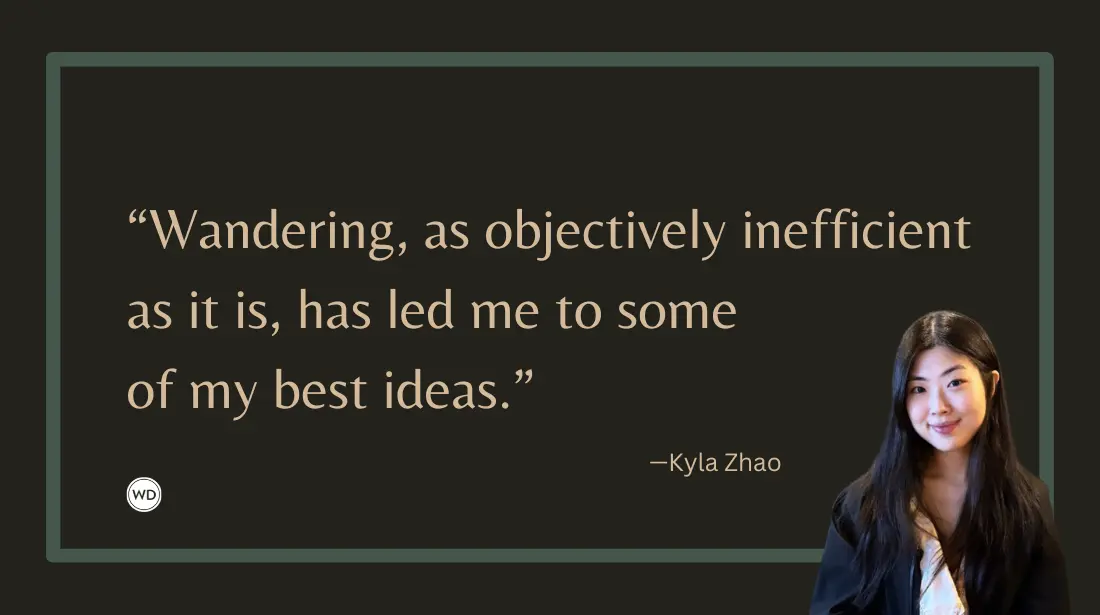
"When so much of my working life is optimized for efficiency—and so much of my non-working life is spoon-fed to me scroll after scroll—I start to lose the habit of wandering. Which is a shame, because wandering, as objectively inefficient as it is, has led me to some of my best ideas."
Zhao recounts how an unstructured, aimless afternoon at the Mob Museum in Las Vegas—spurred by no algorithmic prompt or curated travel list—sparked the foundational concept for her young adult novel Heirs of Infamy:
"I hadn’t gone to Vegas intending to research a book, and no algorithm could have known that what I needed to see that day was a wall full of dead mobsters. The internet has become extraordinarily good at giving us what we ask for. But creativity often comes from stumbling upon something we never would have thought of asking for in the first place."
Industry critics and cultural theorists echo these concerns, pointing out that corporate entities increasingly weaponize "personalization" as a tool for behavioral modification. By convincing consumers that algorithmic curation is synonymous with personal empowerment, tech platforms successfully obscure the reality that their primary objective is not to liberate personal taste, but to make human desire predictable, monetizable, and infinitely scalable.
Future Outlook: Reclaiming Taste in the Age of AI
As artificial intelligence systems become more deeply integrated into creative industries—generating everything from copywriting and graphic design to full-scale fashion collections—society faces a critical crossroads. Will human aesthetic agency be entirely subsumed by predictive engines, or can we cultivate a conscious resistance against the influence economy?
1. Deliberate Friction and Anti-Optimization
Reclaiming individual taste requires a deliberate reintroduction of friction into daily life. Just as physical fitness requires resistance training, cognitive and aesthetic autonomy requires exposing oneself to cultural artifacts that have not been filtered, ranked, or endorsed by an algorithm.
Practical steps toward this intellectual rewilding include:
- Diversifying Information Diets: Consuming media, literature, and cinema without consulting aggregate review sites or algorithmic recommendation prompts.
- Intentional People-Watching: Observing real-world human behavior and physical style choices unmoored from sponsored social media campaigns and influencer contracts.
- Embracing Creative Boredom: Allowing unstructured time for mental wandering, which historical psychological research links directly to divergent thinking and breakthrough innovation.
2. The Re-Evaluation of Authenticity
As AI-generated content and algorithmically optimized fashion flood the market, true authenticity will carry an unprecedented premium. Consumers are already showing signs of fatigue regarding hyper-curated, plastic digital perfection. The future of cultural capital will likely belong to those who can demonstrate genuine idiosyncrasy—flaws, eccentricities, and irrational preferences that cannot be reverse-engineered by a neural network.
Conclusion
The convergence of fashion and technology at exclusive conclaves like Sun Valley highlights an undeniable economic reality: big tech and global luxury are united by their desire for market dominance. However, for the individual creator, consumer, and thinker, the mandate is clear. To protect our creative souls and preserve our sense of self, we must become intentionally unpredictable. We must seek out things that bore, annoy, confuse, or challenge us—ensuring that our taste remains our own, rather than a mere byproduct of someone else’s code.





Comments
Facebook App ID not configured. Please add it in the Customizer.