
Executive Overview
The enterprise and consumer display markets are bracing for a high-profile entry as global PC giant Acer officially announces the Acer EP130K ePaper monitor. Scheduled for a global rollout in early 2027, this device marks Acer’s strategic push into the specialized realm of electronic paper technology. While pioneering brands such as Dasung and Bigme have long catered to niche productivity enthusiasts—and past efforts by legacy heavyweights like Philips struggled to secure sustainable market adoption—Acer is banking on its brand equity, global supply chain, and mainstream distribution channels to drive mass-market awareness.
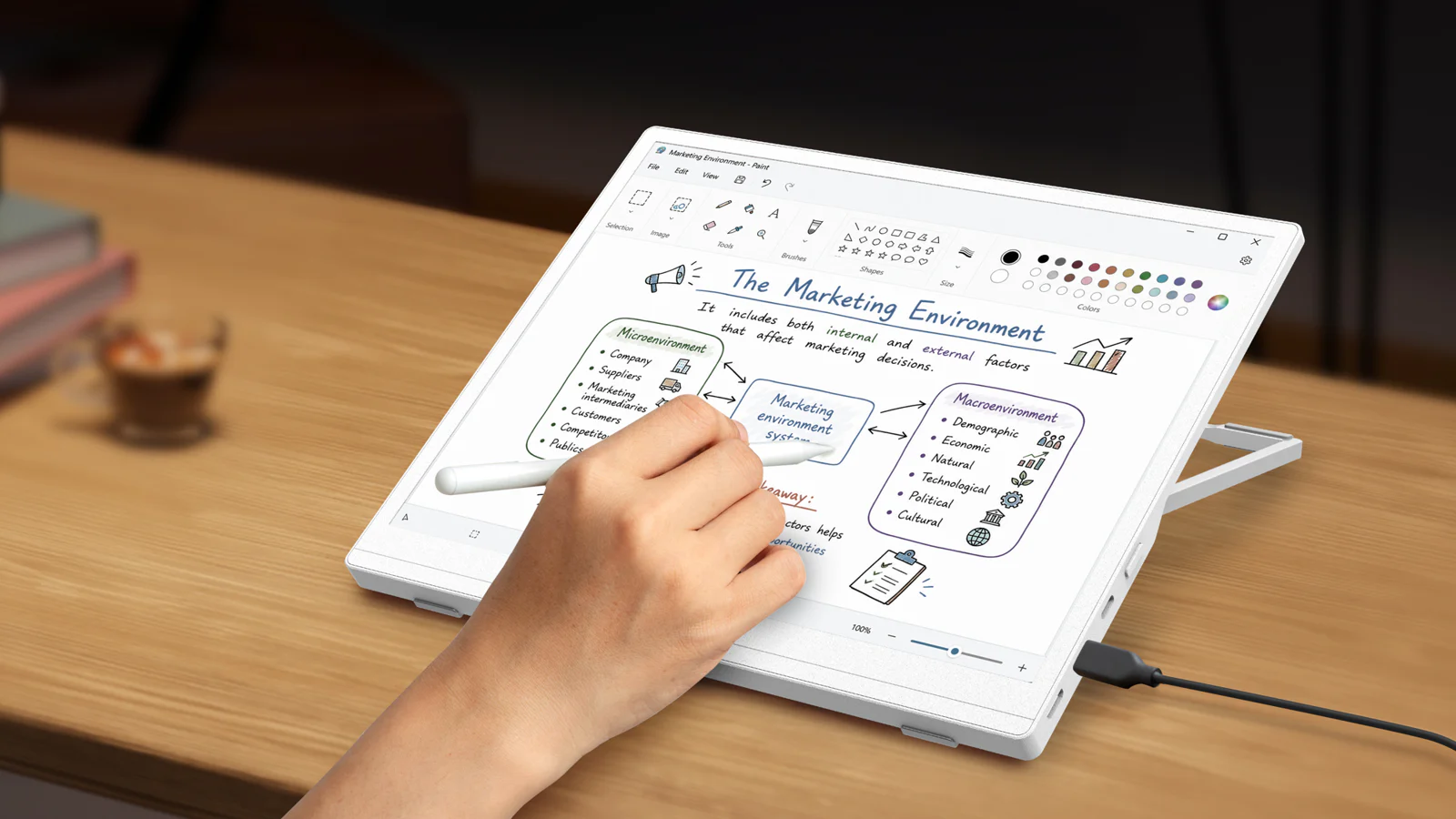
Priced at $749.99 USD in North America, €749 in the EMEA region, and $1,499 AUD in Australia, the Acer EP130K is engineered to bridge the gap between traditional LCD/OLED workspace setups and the eye-strain-free environment of physical paper. Built around an advanced E Ink Kaleido 3 color e-paper panel, the monitor delivers a maximum resolution of up to 3200 x 2400 pixels, integrated touch support for stylus and finger input, a 60 Hz refresh rate, and dual operating modes that effortlessly toggle between vibrant color and crisp black-and-white.
Designed specifically for knowledge workers, copy editors, programmers, financial analysts, and outdoor mobile professionals, the EP130K promises to mitigate digital fatigue. By capitalizing on ambient lighting conditions, eliminating traditional blue-light backlight glare, and introducing single-cable USB Type-C connectivity, Acer aims to transform how professionals approach "deep work." This exhaustive report explores the technical architecture, historical market context, pricing structures, and long-term industry implications of Acer’s monumental e-paper debut.
Read Also
Detailed Chronology: The Evolution of E-Paper Monitors and Acer’s Strategic Entry
To understand the weight of Acer’s announcement, one must examine the arduous history of electronic paper as a desktop monitor medium. For decades, E Ink technology was strictly siloed within the dedicated e-reader market—most notably popularized by Amazon’s Kindle, Kobo devices, and various note-taking tablets. Because early electrophoretic displays suffered from sluggish refresh rates, ghosting artifacts, and severe color limitations, the concept of using an e-paper panel as a primary desktop computer monitor seemed technologically unfeasible.
The Pioneers: Blazing a Niche Trail
In the mid-2010s, specialized hardware manufacturers began to challenge these limitations. Companies like Dasung and Bigme engineered proprietary controller boards and hardware-level refresh algorithms that drastically accelerated pixel response times. Devices such as the Dasung Paperlike series slowly won over a fiercely loyal cult following of programmers, writers, and individuals suffering from severe photophobia, dry-eye syndrome, or chronic migraines triggered by traditional pulse-width modulation (PWM) LED backlights.
However, these pioneer brands remained boutique operations. High manufacturing costs, low production economies of scale, and minimal mainstream marketing kept e-paper monitors firmly entrenched in the ultra-enthusiast, high-price category. When traditional display titans like Philips attempted to launch e-paper monitor iterations, they largely failed to capture mainstream imagination or secure adequate retail shelf space, primarily due to lukewarm consumer demand, nascent color technology, and high retail price points relative to standard 4K IPS panels.
Acer’s Breakthrough Strategy
Recognizing a widening cultural demand for wellness-oriented technology and ergonomic desktop setups, Acer initiated development on the EP130K project. Rather than rushing an unpolished product to market, Acer waited for the underlying E Ink technology to mature sufficiently.
The integration of the Kaleido 3 color e-paper filter layer proved to be the tipping point. Kaleido 3 solved many of the washed-out color saturation issues of its predecessors while dramatically increasing baseline monochrome resolution. By combining this cutting-edge panel technology with its world-class supply chain and manufacturing scale, Acer positioned itself to scale production efficiently. The official reveal outlines an early 2027 commercial launch across North America, EMEA, and Asia-Pacific markets, signaling that Acer views e-paper not as a temporary novelty, but as a permanent, high-margin pillar of its future workspace hardware ecosystem.
Technical Specifications and Architecture: Under the Hood of the Acer EP130K
The engineering philosophy behind the Acer EP130K centers on marrying the visual comfort of physical pulp paper with modern desktop productivity standards. Every hardware component has been carefully selected to maximize utility without compromising the core benefits of electronic paper.
Display Panel and Resolution
At the core of the EP130K is a state-of-the-art E Ink Kaleido 3 electrophoretic display panel. The monitor boasts an impressive native resolution of up to 3200 x 2400 pixels, ensuring that text rendering is exceptionally sharp, clean, and free of pixelation. This high pixel density is particularly crucial for reading complex academic PDFs, inspecting microscopic lines of source code, reviewing legal contracts, or analyzing dense financial spreadsheets.
Unlike traditional monitors that project light directly into the user’s eyes via intense LED backlights, the EP130K relies entirely on ambient room lighting or external desk lamps. This reflective nature mimics physical paper: the brighter the ambient environment, the clearer and more legible the screen becomes, making it completely immune to the harsh reflections that plague glossy glass displays under office fluorescent lighting.
Color and Monochrome Flexibility
While early e-paper screens were strictly monochrome, the EP130K offers dual functionality, supporting both dedicated color and black-and-white modes.
- Black-and-White Mode: Optimized for pure text processing, word editing, and long-form reading, this mode delivers maximum contrast, instantaneous response optimization, and absolute visual clarity.
- Color Mode (Kaleido 3): Ideal for web browsing, examining highlighted text, viewing charts, and interacting with software that relies on color-coded UI elements. While e-paper color saturation remains softer and more muted than self-emissive OLED or IPS panels, the inclusion of color transforms the monitor from a single-purpose reading slate into a versatile, multi-tasking workspace display.
Refresh Rates and Interactive Touch Support
One of the historical bottlenecks of e-paper technology has been the ghosting effect—where remnants of previous frames linger on screen. The Acer EP130K addresses this with advanced controller algorithms supporting a 60 Hz refresh rate, drastically reducing ghosting artifacts during scrolling and window dragging.
Furthermore, the EP130K incorporates direct on-screen touch support. Users can interact with the interface using either their fingertips or an active stylus. This unlocks natural, fluid input capabilities for digital note-taking, document annotation, sketching diagrams, and navigating operating system menus without constantly reaching for a mouse.
Connectivity, Power Efficiency, and Bistable Physics
Modern desk minimalism dictates clean cable management. Acer has equipped the EP130K with a streamlined single USB Type-C cable architecture. This single connection transmits both display data signals and sufficient electrical power from the host laptop or desktop to the monitor.
Because electronic paper is inherently bistable, it draws electrical current only when the image on the screen is actively changing. Once a static image or document is rendered, the display consumes absolute zero power to maintain that image. In the event of a total power outage, or if the USB cable is completely unplugged, the last-viewed document or image remains permanently frozen on the screen. This ultra-low-power consumption profile makes the EP130K an exceptionally green, eco-friendly workspace addition.

Supporting Context, Target Demographics, and Market Metrics
The launch of the Acer EP130K arrives at a critical juncture in workspace ergonomics and corporate wellness. As remote work, hybrid office models, and digital-first lifestyles dominate professional life, screen time has skyrocketed, leading to widespread clinical complaints of digital eye strain, chronic fatigue, and sleep cycle disruption caused by late-night blue-light exposure.
Identifying the Target Audience
Acer has meticulously tailored the EP130K for specific professional verticals where traditional monitors fall short:
- Long-Form Writers, Journalists, and Editors: Individuals who spend eight to ten hours a day staring at black text on blindingly bright white web pages will experience an immediate, tangible reduction in ocular fatigue.
- Software Developers and Programmers: Coding for extended periods requires intense focus. The high-resolution 3200 x 2400 grid allows developers to display massive blocks of code with razor-sharp definition, reducing eye strain during night-coding sessions.
- Financial Analysts and Data Scientists: Spreadsheets filled with thousands of rows and columns benefit immensely from the high pixel density, making fine data legible without constant zooming.
- Outdoor Mobile Professionals: Field researchers, architects, and mobile executives working outdoors in glaring sunlight often find traditional laptops and monitors completely unusable due to screen wash-out. The EP130K’s reflective e-paper technology thrives in direct sunlight.
Comparative Market Analysis
To better understand Acer’s positioning, industry analysts have contrasted the EP130K against existing alternatives:
| Feature / Metric | Traditional 4K IPS Monitor | Boutique E-Paper Monitor (e.g., Dasung/Bigme) | Acer EP130K ePaper Monitor |
|---|---|---|---|
| Backlight Type | LED / W-LED (PWM flicker risk) | Front-light or ambient reflective | Ambient reflective (Zero backlight glare) |
| Eye Strain Risk | Moderate to High (Long sessions) | Extremely Low | Extremely Low |
| Resolution | Up to 3840 x 2160 (4K) | Varies (Typically lower) | Up to 3200 x 2400 |
| Color Support | Full RGB (High saturation) | Limited / Muted Color | Kaleido 3 Color & Monochrome Modes |
| Touch / Stylus | Rare / Expensive add-on | Model-dependent | Built-in Touch & Stylus Support |
| Price Point | $300 – $1,000+ | $1,000 – $2,000+ | $749.99 USD / €749 / $1,499 AUD |
Acer’s aggressive pricing strategy—undercutting boutique competitors while offering mainstream global warranties and customer support—is expected to disrupt the e-paper monitor sector profoundly.
Official Statements and Industry Insights
While full corporate press briefings continue to roll out, early statements from product development leads and retail analysts shed light on the strategic vision driving the EP130K.
Industry observers note that Acer’s entry validates a market segment that was previously dismissed as too niche for major hardware manufacturers. By stepping into this space, Acer is signaling that consumer health, ergonomics, and sustainable computing are moving from the periphery into the corporate mainstream.
An anonymous supply chain insider close to Acer’s display division remarked:
"The modern office worker is drowning in glowing glass screens. For years, e-paper was trapped in the domain of small e-readers because the manufacturing costs and refresh limitations were too steep. With the EP130K, we aren’t trying to replace your gaming monitor or your Hollywood-grade video editing suite. We are carving out a sanctuary for deep work—a dedicated productivity display engineered specifically to protect your eyes and restore human focus in an age of constant digital distraction."
Ergonomics experts have also voiced cautious optimism. Dr. Helena Vance, a workplace wellness researcher based in Toronto, noted:
"Products like the Acer EP130K address a silent epidemic in modern corporations: chronic visual fatigue. When employees can work for hours without experiencing the dry, burning sensation associated with pulse-width modulation backlights, overall cognitive endurance and accuracy improve significantly. Acer bringing manufacturing muscle to this category is a monumental win for occupational health."
Future Outlook: What the EP130K Means for the Future of Workspaces
As the tech industry looks ahead to the early 2027 launch window of the Acer EP130K, questions naturally arise regarding the future trajectory of electronic paper in mainstream computing.
Will E-Paper Replace Traditional Monitors?
Industry analysts agree that e-paper monitors will not entirely replace high-refresh-rate IPS, OLED, or Mini-LED displays. Gamers, video editors, and graphic designers who rely on high frame rates and vibrant, high-dynamic-range (HDR) color spaces will continue to rely on traditional emissive display technologies.
Instead, the EP130K pioneers a dual-monitor productivity paradigm. The vision of the future professional desk setup is hybrid: a primary ultra-wide or 4K monitor for multimedia, video conferencing, and general tasks, paired directly with an e-paper monitor like the Acer EP130K dedicated strictly to writing, reading, coding, and document review.
The Road Ahead for Acer
If the EP130K achieves commercial success at its $749.99 USD price point, it will undoubtedly trigger a domino effect across the consumer electronics industry. Competitors like Dell, HP, Lenovo, and ASUS will be forced to evaluate whether they, too, must introduce e-paper workspace solutions to remain competitive in the corporate wellness space.
Furthermore, future iterations of Acer’s e-paper lineup may introduce larger screen diagonals, even faster refresh rates via proprietary AI-driven frame generation, and enhanced color saturation as E Ink technology continues its relentless march forward.
For now, the Acer EP130K stands as a bold, beautifully engineered milestone. By combining cutting-edge E Ink Kaleido 3 technology, high-resolution clarity, touch support, and aggressive global pricing, Acer has thrown open the doors to a healthier, more sustainable, and eye-friendly era of digital productivity.





Comments
Facebook App ID not configured. Please add it in the Customizer.