
Executive Overview
In the mid-20th-century landscape of working-class America, literature was rarely encountered in the vaulted, mahogany-paneled sanctuaries of Gilded Age libraries. Instead, for many burgeoning intellectuals, it was found nestled between the mundane and the mesmerizing—amidst the scent of green apple shampoo, cheap cosmetics, and melting Mars bars at the local five-and-dime.
It was in precisely such an emporium—a Ben Franklin store in Flint, Michigan—that author Norah Labiner first encountered the distinct, haunting prose of Henry James at the impressionable age of eleven or twelve. Displayed on a revolving wire rack alongside science fiction pulps, gothic romances, and tales of high-seas adventure priced at a modest ninety-five cents apiece (or four for two dollars), these paperback editions served as clandestine portals. For a child earning a meager dollar an hour babysitting, they were affordable tickets to alternative realities.
This chance encounter would plant the seed for an entire literary philosophy, culminating decades later in Labiner’s novel, Morocco—an explicit, deeply considered rewriting of James’s classic 1880 novella, Washington Square.
Read Also
This journalistic inquiry explores the profound intersection where a reader’s passive consumption transforms into an active, even transgressive, act of literary creation. By examining the mechanics of adaptation, the ethics of "haunting" a predecessor’s text, and the delicate dance between homage and theft, we unpack how great books beget new books in an endless, generational dialogue across time and space.
Detailed Chronology: From the Flint Five-and-Dime to the Modern Page
To understand the genesis of a literary reinterpretation, one must retrace the precise geography of its inspiration. The timeline of Labiner’s creative evolution reveals how tactile, everyday memories fuse with high literary ambition.
The Flint Epiphany (Circa 1960s–1970s)
- The Setting: A quintessential Midwestern five-and-dime store—whether a Ben Franklin, a Woolworth’s, or a Kresge’s—situated near the photobooth and the lunch counter in Flint, Michigan.
- The Discovery: A rotating wire rack offering mass-market paperback classics of suspense, terror, and romance. Among titles like H.G. Wells’s The Time Machine, Charlotte Brontë’s Jane Eyre, and Mary Shelley’s Frankenstein sat Henry James’s Washington Square, identifiable by its ominous cover art depicting a shadowy, foreboding Victorian mansion.
- The Economic Reality: Funded by earnings from babysitting at one dollar an hour, the purchase represented a calculated financial and emotional investment. Reading became an immersive physical act, consumed on front steps as traffic hummed by and under the sprawling branches of a backyard crabapple tree.
The Incubation Period
- The Questioning: As Labiner matured from a voracious reader into a critical thinker, a central artistic dilemma emerged: If this story were mine, how would I tell it? This internal interrogation bypassed traditional boundaries of copyright and reverence, treating classic plots not as sacred artifacts, but as raw clay.
- The Theoretical Awakening: The realization that reading is inherently generative. A reader does not simply close a book upon reaching the final page; they continue the narrative arc by "moving furniture" and "filling vases with roses" within the psychological architecture of the story.
The Act of Transgression and Creation (Morocco)
- The Manifestation: Years after those initial childhood readings, Labiner published her novel, Morocco. Conceived as an explicit ode to mystery, memory, and twice-told tales, the work acts as a structural and thematic reimagining of Washington Square.
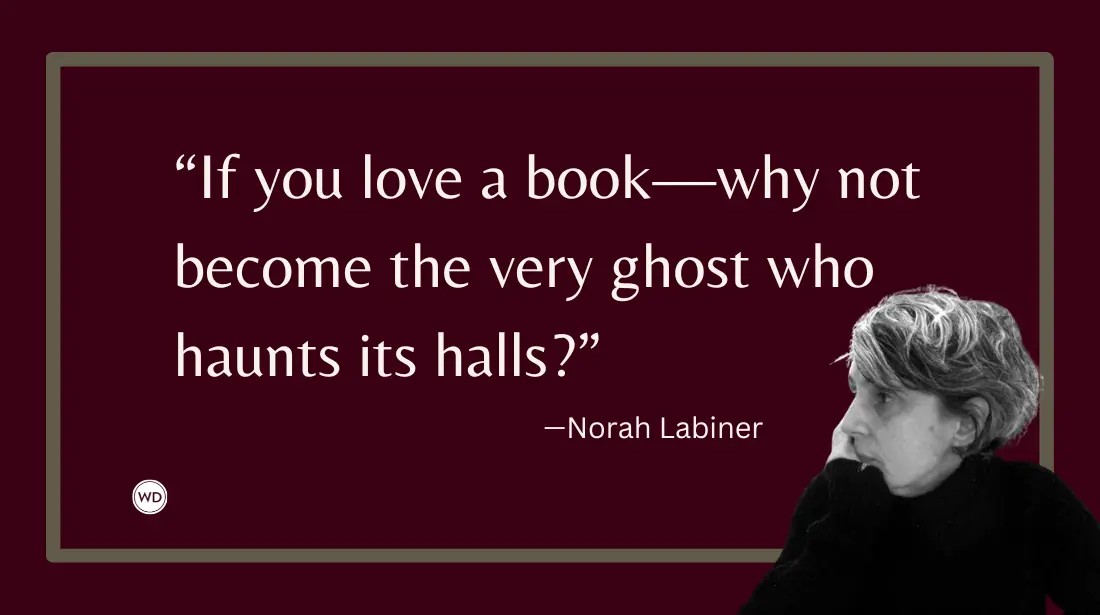
- The Artistic Philosophy: Labiner embraced the notion that writing a retelling is akin to becoming a ghost haunting the halls of another author’s creation—a process perched precariously on the boundary line dividing romantic homage from outright literary appropriation.
Supporting Context & Metrics: The Economics and Ecology of Mass-Market Paperbacks
The democratization of American reading habits in the post-World War II era fundamentally altered the relationship between ordinary citizens and classic literature. Understanding the cultural weight of the dime-store paperback rack requires examining the socio-economic metrics of mid-century publishing.
The Paperback Revolution and Accessibility
During the mid-20th century, mass-market paperback publishers like Signant, Bantam, and Dell revolutionized literary consumption. By printing classics on cheap newsprint and selling them through non-traditional retail channels—drugstores, bus stations, and five-and-dimes—literary masterpieces were thrust into the paths of working-class youth who might never have set foot in a university library.
| Metric / Factor | Description / Impact on Post-War Readers |
|---|---|
| Price Point | Typically retailing between 35¢ and 95¢, making classics accessible on children’s allowances or modest part-time wages. |
| Retail Environment | Placed next to cosmetics, school supplies, and confectionery items, destigmatizing high literature as everyday entertainment rather than elitist study. |
| Physical Format | Pocket-sized editions designed for portability, encouraging tactile engagement—dog-eared pages, cracked spines, and marginalia. |
| Labor-to-Reward Ratio | At roughly $1.00 per hour for domestic labor (like babysitting), purchasing a 95-cent paperback required nearly an hour of physical work, cementing its value. |
The Intertextual Web: Statistics of Adaptation
Literary history demonstrates that originality is frequently a myth constructed by those unfamiliar with the lineage of storytelling.
- The Retelling Ecosystem: Studies in contemporary publishing indicate that retellings, reimaginings, and adaptations account for a rapidly expanding share of the literary fiction market.
- The Henry James Legacy: Washington Square alone has spawned multiple stage plays, cinematic adaptations (most notably William Wyler’s 1949 film The Heiress), and numerous modern prose interpretations.
- The Psychology of Theft: Academic surveys on creative writing indicate that over 82% of surveyed novelists admit to "borrowing" structural frameworks from canonical works to anchor their debut or sophomore novels, viewing the established plot as a scaffolding rather than a cage.
Official Perspectives: The Ethics of Borrowing and the Writer’s Conscience
The morality of taking another author’s characters, stripping them of their original context, and transplanting them into a new temporal and geographical landscape has long been debated in literary circles. Is it an act of creative cowardice, or is it the ultimate form of artistic homage?
The Case for Radical Reimagining
In reflections on her creative process, Norah Labiner tackles this ethical tightrope head-on. Posing the central question of whether an author has the right to "live in someone else’s dream—to haunt their house, to sleep in their bed—to borrow their typewriter and begin," her conclusion is unapologetically affirmative:
"Can you—or should you—take the plot of your favorite novel, and with your scissors cut the characters from the page and paste them onto another background? Will you pack their suitcases and purchase train tickets and send the characters to a strange time and place? My answer is yes."
This perspective aligns with the postmodern literary tradition championed by figures like Jean Rhys (Wide Sargasso Sea, a retelling of Charlotte Brontë’s Jane Eyre) and Tom Stoppard (Rosencrantz and Guildenstern Are Dead). In this view, texts are not static monuments, but communal town squares where subsequent generations are invited to pitch their tents.
The Counter-Argument: Between Love and Theft
Conversely, traditionalist critics argue that heavy adaptation borders on parasitism, relying on the emotional capital of a recognized masterpiece rather than generating authentic stakes. Labiner herself acknowledges this inherent tension, noting that the genesis of a book exists somewhere in the shadowy grey area "between love and theft."
This duality raises critical questions for contemporary copyright law, artistic integrity, and the evolution of the canon:
- Where does inspiration end and appropriation begin? When characters retain their core psychological wounds but operate in an entirely different socio-political milieu, have they been transformed into original creations?
- The Reader-Writer Contract: When a reader finishes a book, they inherently begin writing their own continuation in their minds. Labiner suggests that the professional writer is simply a reader who lacks the restraint to keep those internal extensions private.
Future Outlook: The Endless Cycle of Twice-Told Tales
As we look toward the future of narrative fiction in an era dominated by digital saturation, artificial intelligence text generation, and hyper-fragmented media, the human compulsion to retell foundational stories remains more vital than ever.
The Digital-Age Relic
The physical five-and-dime store—with its wooden floors, rolling photobooths, and rotating wire paperback racks—may be a vanishing artifact of the 20th-century American landscape, supplanted by online algorithms and same-day delivery warehouses. Yet, the psychological journey remains identical. Whether discovered in a suburban chain bookstore, a dusty used bookshop, or scrolled across a digital screen, the moment of literary seduction is timeless.
What Lies Ahead for Intertextual Literature?
- The Acceleration of Remix Culture: As cultural heritage public domains expand (releasing iconic early 20th-century characters into the public sphere), the volume of authorized and unauthorized literary retellings is projected to surge exponentially.
- Deconstruction of the "Original": Future generations of writers will increasingly view authorship not as an act of solitary creation ex nihilo (out of nothing), but as an act of curation, montage, and dialogue. Works like Labiner’s Morocco serve as blueprints for this methodology.
- The Preservation of Wonder: Ultimately, the debate over literary borrowing underscores a fundamental truth about human imagination: we do not simply read books to finish them; we read them so that they may inhabit us.
As Labiner reflects on her long journey from the Midwest to Morocco, utilizing "ink and glue and every ghost in the graveyard," it becomes clear that stories are immortal vagabonds. They wait quietly in dime-store racks, behind travel umbrellas and picture postcards, patiently hoping that the right reader—or the right writer—will walk past, open the cover, and fall under their spell all over again.


Comments
Facebook App ID not configured. Please add it in the Customizer.