
In its landmark July edition, Guernica magazine has released a sweeping, cross-disciplinary collection of literature, journalism, photography, and art that confronts one of the most haunting questions of the modern human condition: Must a people disappear for us to know that it existed?
Curated under the leadership of Editor-in-Chief Raaza Jamshed, the July issue directly challenges the reactive nature of contemporary global empathy. It argues that modern attention spans routinely fail to engage with vulnerable communities, cultural traditions, and historical grievances until they arrive at the threshold of total erasure. Across a rich tapestry of photo essays, deeply personal nonfiction, fiction, translations, and verse, the publication asks its readers to engage in preemptive witnessing—to look before disappearance, to listen before silence, and to love before loss.
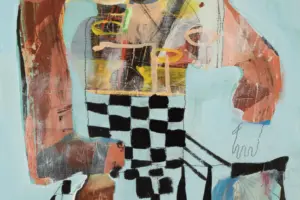
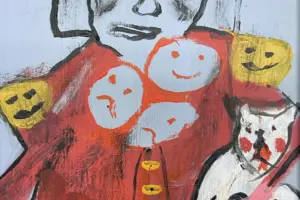
This month’s issue arrives at a critical juncture in contemporary letters, bridging hyper-local human intimacies with macro-level geopolitical shocks. From the ancestral heartlands of the Saharan Imuhar to the post-socialist disillusionment of Eastern European migration, and from the deep-seated legacy of Stalinist terror to the enduring poetic resistance of Palestinian solidarity, the July issue is both a literary sanctuary and a political interrogation. Featuring striking original artwork by Ben Buckland, Melissa Monroe, and Andra Otilia Nicolescu, the issue serves as a collective manifesto for slowness, deep reflection, and radical presence in an increasingly frantic world.
Read Also
Detailed Chronology & Thematic Breakdown
The July issue is meticulously structured to guide the reader through concentric circles of memory, geography, and human relationships. Each piece operates as a distinct movement within a larger symphony of survival and witness.
1. Visual Anthropology and the Ethics of Visibility
The intellectual anchor of the issue is Ben Buckland and Carissa Western’s evocative photo essay, which transports readers to Sebeëba, a centuries-old Saharan festival that preserves the vibrant ritual and cultural life of the Imuhar people. However, the essay refuses to function as a simple travelog or romanticized window into an exoticized world. Instead, it interrogates the uneasy, often exploitative ethics of modern visibility.
Buckland and Western probe a central, uncomfortable dilemma: Can preservation, tourism, state interest, and passive spectatorship ever truly be innocent when they converge upon threatened worlds? By raising these questions, the essay establishes the overarching tension of the entire issue—examining how the gaze of the outsider can inadvertently accelerate the commodification and eventual collapse of the very cultures it seeks to document.
2. Nonfiction: Measuring Motherhood Against Mortality
Moving from the macro-geography of the Sahara to the micro-cosmos of domestic grief, Mahreen Sohail’s essay, The Death Years, offers a profound meditation on motherhood and mortality. Sohail weaves together family history, inherited generational grief, and the distinct, silent terror of loving a child in a volatile world. The narrative asks a devastating question: What does it mean to properly remember the dead while simultaneously learning the fragile mechanics of how to stay alive? Sohail’s prose is characterized by an unflinching honesty that maps the contours of loss onto the physical body, rendering personal grief as a shared human landscape.
3. Fiction: Friendship, Exile, and the Aftermath of History
The issue’s fiction roster showcases two distinct yet equally powerful explorations of human connection under duress.
- In Herbert Girtley’s Bojack Blues, readers are introduced to a masterclass in character-driven storytelling. What begins with a simple premise—a man disappearing moments before a scheduled musical gig—blossoms into a rich, deeply textured portrait of male friendship. Set against the quiet backdrop of a creek where two men pause to share a moment of mutual pain, the story demonstrates how vulnerability can forge communal spaces and moments of transcendent grace.
- In stark contrast, Andra Otilia Nicolescu’s Places of Memory—an excerpt from her unpublished novel Midnight in Exile—drags the reader into the geopolitical tremors of late-20th-century history. Following characters Paul and Ana as they navigate the disorienting landscape of America late in life, the narrative captures the profound displacement of the post-1989 era. As the collapse of state socialism in Eastern Europe shatters old borders, it simultaneously shatters the certainties of country, ideology, and home. Nicolescu crafts a layered meditation on migration, aging marriage, and the hidden revelations that only surface after a life has already been lived.
4. Interviews and Poetic Resistance
In The Poems Will Not Stop: An Interview with Kathy Engel, writer Tyler Barton sits down with the veteran poet, activist, and organizer. Engel’s life and work have long been intertwined with the struggles for Palestinian liberation, Indigenous sovereignty, and broader social justice. The conversation draws a poignant historical line from the 1982 barring of renowned Palestinian poet Mahmoud Darwish from a New York poetry event—in the wake of Israel’s invasion of Lebanon and the Sabra and Shatila massacres—to the urgent political realities of the present day. Engel and Barton reflect on the inseparable nature of art, political solidarity, and grief, arguing passionately against the artificial separation of the poem from the socio-political world it inhabits.
5. Global Spotlights and Poetic Architecture
Rounding out the international scope of the issue, Masami Kakinuma’s Go for it (translated from the Japanese by Sharni Wilson) drops the reader into a grandmother’s ancient home in rural Iwate. Here, deep-rooted folklore is seamlessly braided with the quiet, unexpressed disappointments of adult life, ultimately reimagining good fortune not as a matter of passive luck, but as an act of profound courage: the willingness to move toward the life one once profoundly wished for.
In the poetry section, the themes of historical violence and inherited trauma are laid bare:
- Michelle Matthees’s Svetlana at the Dacha, 1938 and Joseph examine childhood innocence trapped inside the crushing architecture of Stalinist terror, asking how private, domestic wounds inevitably transform into grand historical violence.
- Denoo Edinam Yawo’s The Anatomy of a Bullet Alchemising into Death conceptualizes physical violence not merely as a temporary injury, but as a permanent, enduring inheritance stored within the human body. The bullet transforms into a dark language of displacement, secrecy, and grief passed down through ancestral rites from mother to child.
- Anna T. Szabó’s Her Five Children and Noose (translated from the Hungarian by Ági Bori) trace the exact psychological tipping point where safe domestic spaces give way to domestic horror, questioning what remains of human care when societal and familial structures have completely collapsed.
Supporting Context & Metrics
The release of Guernica’s July issue comes at a time when literary magazines face unprecedented financial, institutional, and cultural pressures. Operating as a vital nonprofit digital magazine of arts and politics, Guernica has long distinguished itself by prioritizing international translation, underrepresented geopolitical narratives, and rigorous, slow-form journalism over the frantic, click-driven metrics of modern media consumption.
To understand the weight of the July issue, one must examine the metrics of contemporary cultural engagement:
- Global Translation Reach: By featuring works translated from Japanese and Hungarian alongside essays addressing Saharan, Palestinian, and Eastern European realities, the issue reinforces Guernica’s commitment to cross-cultural bridge-building. Translation accounts for a vital percentage of the magazine’s annual content, directly counteracting the insularity of Anglophone publishing markets.
- Multidisciplinary Integration: The July edition integrates six distinct literary and artistic forms—photography, nonfiction, fiction, interviews, translations, and poetry—ensuring that complex sociological questions are approached through multiple emotional and intellectual entry points.
- Archival Impact: Pieces such as Nicolescu’s Midnight in Exile and Engel’s retrospective on the 1982 suppression of Mahmoud Darwish contribute directly to the historical preservation of marginalized narratives, serving as primary-source touchstones for academics, human rights advocates, and literary scholars.
Official Statements & Editorial Philosophy
At the core of the July edition lies a singular philosophical anchor. Reflecting on the thematic urgency of the collection, Editor-in-Chief Raaza Jamshed highlights the overarching question posed by Buckland and Western’s cover essay: Must a people disappear for us to know that it existed?
This sentiment is further amplified by Kathy Engel’s invocation during her interview with Tyler Barton. Citing cultural theorist Bayo Akomolafe, Engel noted:
"The times are urgent—we must slow down."
This line functions as the unofficial manifesto and missive of the July issue. In an editorial climate that demands instantaneous reactions, viral outrage, and disposable content, Guernica offers a radical alternative. The issue calls upon its readership to consciously decelerate: to attend more deeply to the human communities rendered visible only at the precarious edge of disappearance; to honor the dead who continue to haunt the living; to validate male friendships that survive through shame and vulnerability; to re-examine marriages that continue to unfold decades down the line; and to support poetry that flatly refuses to stop speaking truth to power.
Future Outlook
As the literary world looks toward the remainder of 2026, the ripple effects of Guernica’s July issue are expected to resonate deeply across academic syllabi, human rights forums, and contemporary creative writing circles.
By refusing to look away from historical erasure—whether found in the shifting nomadic traditions of the Sahara, the post-communist diaspora of Eastern Europe, or the ongoing struggles for indigenous and Palestinian sovereignty—the magazine sets a high watermark for ethical journalism and artistic curation.
Future issues of Guernica will undoubtedly inherit the intellectual momentum established this July. The challenge laid down by Jamshed, Barton, Engel, and their fellow contributors is clear: the survival of culture, memory, and empathy depends entirely on our collective willingness to look, listen, and love before the silence sets in.

Comments
Facebook App ID not configured. Please add it in the Customizer.