
Executive Overview
For fiction writers, staring down a blank document while preparing to draft a high-stakes fight scene is a uniquely paralyzing experience. The blinking cursor mocks the author, while the movement on the page remains stubbornly zero. Writers often agonize over the mechanics of the first blow, asking themselves where to begin, how to choreograph the physical engagement, and how to make the kinetic energy leap off the page.
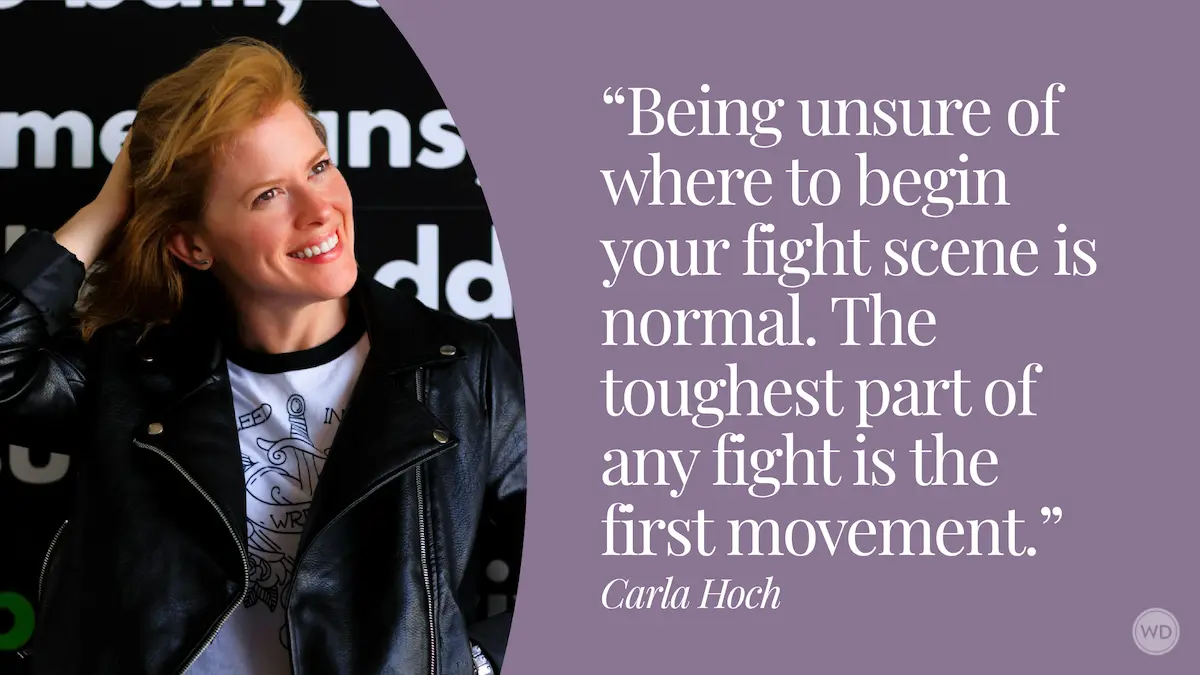
According to martial arts and writing expert Carla Hoch, creator of the renowned FightWrite™ column on the Writer’s Digest blog, the traditional advice focuses too heavily on the physical choreography when it should begin deep within the psychological framework of the narrative. The hurdle writers face is not a lack of technical writing capability; rather, it is a failure to properly diagnose the "firster" step—the mental surveillance phase that precedes any kinetic action.
This comprehensive analysis examines the structural approach to drafting combat scenes. By decoupling the superficial mechanics of a fight from its underlying narrative engine—the "why" behind the violence—authors can dictate the speed, intensity, styling, and ultimate physical toll of any battle, brawl, or skirmish. Ultimately, a character’s lethality and effectiveness in combat are determined not by their brute strength or training regimen, but by the magnitude of what they stand to lose.
Read Also
Detailed Chronology: From the Blank Page to the First Strike
The progression of writing a compelling fight scene follows a strict developmental timeline that bridges psychological preparation with physical execution. Understanding this sequence transforms a writer from a hesitant observer into an authoritative director of fictional combat.
Phase 1: The Psychological Surveillance (The "Firster" Step)
Before a single punch is thrown, both the real-world writer and the fictional combatant experience a period of static observation. In the physical realm of sports combat—such as professional boxing or mixed martial arts (MMA)—spectators frequently witness the opening thirty seconds to several minutes consumed by fighters circling one another, testing distances, and throwing feints rather than heavy strikes.
Novice observers often misinterpret this cautious period as uncertainty or hesitation. In reality, it is a deliberate phase of surveillance. Fighters are gathering biometric, spatial, and psychological data about their adversary to determine the optimal timing and vector for an attack.
Writers experiencing "writer’s block" at the onset of a combat scene are undergoing this exact psychological process. The blank screen is not a sign of creative incapacity; it is the author’s mind performing surveillance on the narrative landscape. Acknowledging this phase allows writers to channel that resting energy purposefully, moving from static inertia to kinetic action with deliberate intent.
Phase 2: Unearthing the Narrative "Why"
Once the mental surveillance phase yields an understanding of the scene’s parameters, the author must establish the foundational catalyst of the confrontation. This requires distinguishing between two distinct layers of motivation:
- The Scene-Level "Why": The immediate tactical catalyst for the fight (e.g., Character A is attempting to mug Character B to steal their wallet).
- The Story-Level "Why": The deeper existential or emotional imperative driving the character to take such extreme action (e.g., Character A needs funds within fifteen minutes to pay off a loan shark who threatens the life of a loved one).
By altering the story-level "why," the author fundamentally transforms the physical reality of the scene without changing the baseline traits of the characters involved.
Phase 3: Calibrating Stakes, Intensity, and Style
With the underlying stakes established, the author enters the calibration phase. Under normal physiological circumstances—assuming characters are not mentally compromised by substances, severe illness, or psychological aberrations—the violence of a conflict is directly proportional to its stakes.
- Low-Stakes Confrontations: If a character fights over something trivial (such as a minor inconvenience or a replaceable luxury), the physical engagement should remain minimal, non-lethal, and brief. The likelihood of weapon deployment is low, and the risk assumed by the participants is negligible.
- High-Stakes Confrontations: Conversely, when survival, loved ones, or core values are threatened, the physical reality shifts dramatically. Characters become hyper-violent, willing to utilize improvised or specialized weaponry, and prepared to absorb catastrophic physical harm to achieve their objective.
Phase 4: Establishing the Injury Goal and Scene Blocking
The final preparatory stage before drafting the blow-by-blow choreography involves determining the "injury goal." Every attacking character enters a fight with an implicit or explicit objective regarding the type of damage they intend to inflict.
Whether the goal is a humiliating slap, a immobilizing joint lock, or a lethal wound, this objective dictates the biomechanical movement of the characters. A combatant intending to draw a bowstring moves with entirely different kinetic geometry than one lunging to tackle an opponent. Establishing this goal provides the structural framework—or "blocking"—necessary to write fluid, believable fight choreography.
Supporting Context & Metrics: The Anatomy of Combat Readiness
To evaluate how narrative stakes dictate physical choreography, experts often utilize comparative behavioral scenarios. Consider the following parametric breakdown of Character A attempting to rob Character B:
| Parameter | Scenario One: Low Stakes | Scenario Two: High Stakes |
|---|---|---|
| Immediate Objective | Obtain money for bottled water on a hot day. | Obtain $20 to pay off a violent loan shark. |
| Time Constraint | Minor inconvenience; alternative water sources exist. | Critical; 15-minute window before loved ones are harmed. |
| Character Commitment | Low; unwilling to risk serious injury or arrest. | Absolute; willing to risk life, limb, and incarceration. |
| Probability of Violence | Minimal; mostly posturing and minor scuffling. | Maximum; high-velocity, brutal, and escalatory. |
| Weapon Deployment | Improbable; relies on empty-handed posturing. | Highly probable; utilizes any available lethal tool. |
| Injury Severity | Superficial (bruises, ruffled clothing). | Severe (fractures, lacerations, potential fatality). |
The Hierarchy of Lethality in Fiction
A common misconception among emerging writers is that the most formidable combatant in a fictional universe must possess superhuman physical attributes—such as immense size, blinding speed, elite military training, or exotic martial arts backgrounds.
However, martial science and narrative theory demonstrate that the most dangerous individual in any room is the one who possesses the highest degree of willingness. Training, strength, and reflexes are merely force multipliers. Without the psychological driver supplied by an overwhelming "why," even a master assassin will hesitate when confronted by an adversary who has nothing left to lose.
Official Perspectives & Industry Insights
Industry professionals and instructional voices emphasize that mastering the technicalities of martial arts is secondary to understanding human behavior under duress.
Carla Hoch, writing through her instructional platform FightWrite™ in partnership with Writer’s Digest, continually stresses the psychological democratization of writing action. Her foundational philosophy posits that writing struggles should not be viewed as failures of imagination, but rather as indicators of active creative labor.
"Be willing! Be willing to write crummy, make mistakes, and vomit out a rough draft that is more rough than it is draft. Be willing to struggle because struggle isn’t proof that you are doing something wrong. Struggle is proof that you are doing something!"
— Carla Hoch, FightWrite™
Industry analysts note that modern readers demand emotional authenticity in action sequences. Choreography devoid of stakes feels hollow and cinematic in a detached way, whereas battles rooted in profound personal desperation resonate on a visceral level. When authors anchor their fight scenes in the foundational stakes of the narrative, the physical combat becomes an outward manifestation of an internal emotional battle.
Future Outlook: The Evolution of Action Writing in Modern Literature
As the literary landscape continues to evolve, the expectations placed upon action writers are shifting. Modern audiences—saturated with hyper-realistic cinematic combat, mixed martial arts broadcasts, and tactical media—possess a sophisticated eye for physical verisimilitude.
Writers can no longer rely on vague, melodramatic tropes ("their swords clashed like thunder") to carry a scene. The future of action writing lies in the seamless integration of psychological motivation and anatomical realism. Authors who adopt the FightWrite™ methodology—treating the prelude to a fight as a period of tactical surveillance and rooting every strike in an undeniable emotional "why"—will produce more resilient, gripping, and memorable narratives.
Ultimately, the blank page remains an inevitable hurdle for every creator. Yet, by understanding that hesitation is merely the mind surveying the narrative terrain, and that the force of a blow is measured by the depth of a character’s desperation, writers are equipped to transform static cursor-blinking into kinetic storytelling.





Comments
Facebook App ID not configured. Please add it in the Customizer.