
Executive Overview
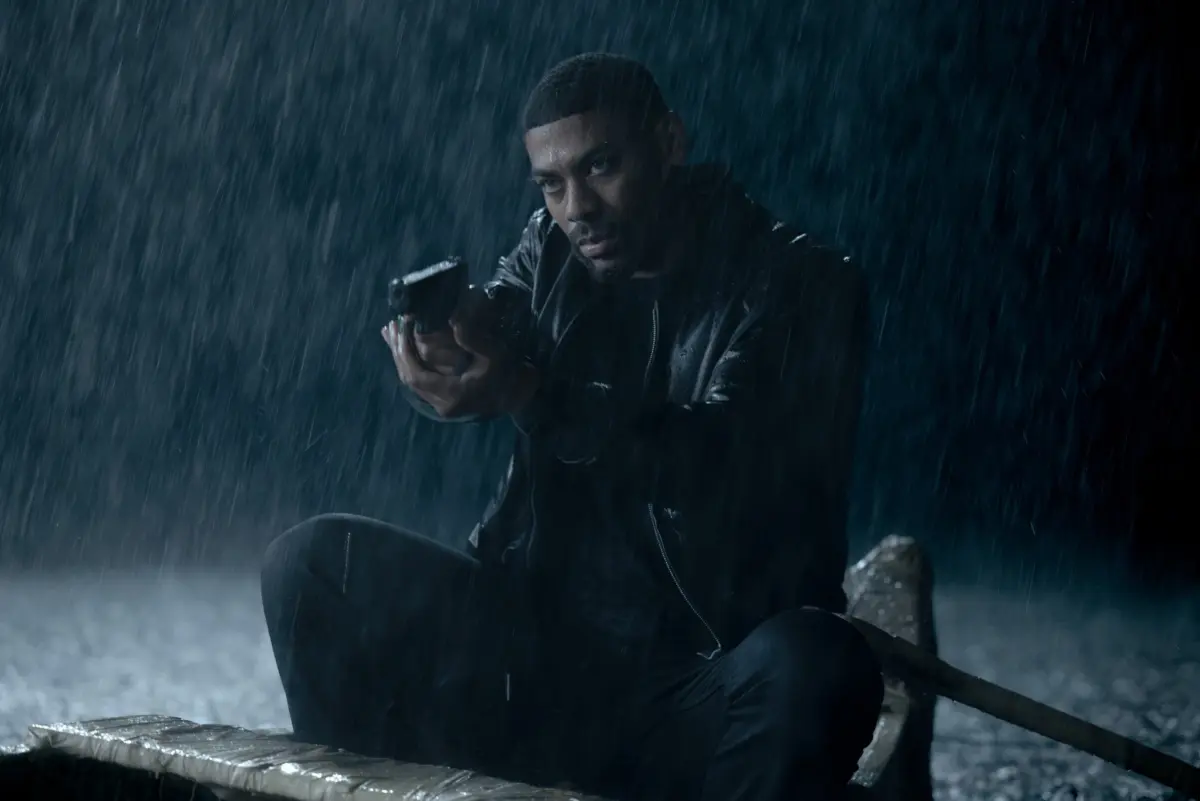
As the inaugural season of HBO Max’s critically acclaimed prestige drama Lanterns barrels toward its highly anticipated season finale, the narrative gravity crystallizes in Episode 7, titled “The Jordan Boys’ Legacy.” Co-written by powerhouse creative minds Tom King and Damon Lindelof, this pivotal installment shifts away from standard space-faring heroics to ground its mythos in generational trauma, systemic isolation, and the crushing weight of masculine expectations.
At its core, the episode contrasts the final days of a murdered Hal Jordan—manifested through an unstable, twenty-years-younger holographic construct—with the burdened reality of John Stewart. Far from being a straightforward interstellar procedural, Lanterns continues to subvert comic book adaptations, treating its source material with the emotional depth and psychological ruin usually reserved for heavy drama. Through portal-hopping investigations on the desolate world of Antaan, encounters with old ghosts (both literal and metaphorical), and a shocking late-game appearance by Sinestro, Episode 7 sets the stage for a dramatic, high-stakes finale.
Detailed Chronology: Unpacking "The Jordan Boys’ Legacy"
1. The 1975 Flashback: The Origin of the "Fail-Safe"
The episode opens in 1975, establishing the foundational psychological architecture of the Jordan family. A young Hal Jordan (Henry Samiri) stands battered on a baseball diamond after pitching a flawless no-game. Rather than celebrating his athletic feat, his coach pulls him late in the match for another player, inciting a violent altercation when Hal refuses to surrender the game ball.
Read Also
Hal’s father, Martin Jordan (Jake B. Miller), steps in to defend his son, engaging in a physical fight with the coach before retreating to an aircraft hangar to ice their wounds. It is here that Martin imparts the "Jordan boys’ legacy"—a cynical, protective worldview disguised as wisdom. Handing Hal a key to a private storage safe, Martin invokes his own wartime experiences, normalizing emotional suppression and preparing the boy for the worst. He encourages Hal to finally let go of the baseball, declaring, "Cause it’s fucking exhausting." Shortly thereafter, Martin’s suicide shatters young Hal’s world, permanently embedding this generational trauma.

2. The 2025 Present: The Hologram and the Manhunt
Jumping forward fifty years to 2025, a holographic projection of Hal Jordan materializes over his own grave, cursing the universe and demanding answers from John Stewart. John, struggling to maintain composure and hiding the truth of Hal’s murder, fumbles through a half-truth about his status as a Green Lantern.
As John races against time—and the ring’s rapidly depleting battery—he navigates mounting blackmail pressures regarding Maggie and coordinates meetings with Sheriff Kerry Kane. Hologram Hal’s stubborn insistence on interacting with the living world forces an uneasy partnership. Despite claiming to despise Hal, John finds himself haunted by the construct, which materializes whenever John’s thoughts drift toward his fallen mentor.
3. Into the Antaan Portal: Gas, Ghosts, and Guilt
Following a breakthrough at a mysterious storage unit containing a functional Einstein-Rosen bridge leading to an abandoned alien world, John and Hal step through the portal to Antaan’s desolate home planet. The environment is immediately hostile, thick with a lingering psychological neurotoxin designed to weaponize fear—the same gas deployed by the Manhunters that drove Antaan’s civilization to mutual destruction.
Trapped on a decaying lake, John experiences harrowing hallucinations. He confronts the specter of his own abusive father, who forces him to play William Tell with apples balanced on his head, followed by a vision of his younger self confessing a devastating truth: he never wanted to be a Green Lantern; he simply wanted to draw pictures and live an artistic life. Knocked violently into the toxic waters, John is saved from a self-inflicted gunshot by Hologram Hal, who pulls him back from the brink of chemically induced despair.

4. Confessions and the Arrival of Sinestro
Safely ashore on the island, the truth finally comes to light. Hal admits that his father’s death was no accident, revealing that he discovered his father’s suicide note inside the "fail-safe" safe at age eleven—the exact burden he was forced to carry in secret.
As the power ring flickers out of juice and their earthly firearm is lost to the depths, a desperate stranger emerges from the shadows to take Hal hostage. John utilizes his signature "song focus trick" (humming Outkast’s "SpottieOttieDopaliscious") to manipulate the construct’s visibility, exposing the assailant as none other than Sinestro. Sinestro immediately recognizes John, setting up an explosive narrative collision course for the season finale.
Supporting Context & Metrics: Deconstructing the Psychology of the Lanterns
Lanterns continues to distance itself from traditional, militarized adaptations of DC Comics lore by leaning heavily into character-driven motifs.
| Character | Core Motivation | Primary Psychological Burden | Artistic / Creative Expression |
|---|---|---|---|
| John Stewart | Artistic preservation & autonomy | Fulfilling generational and societal expectations; imposter syndrome | Architecture, detailed mental constructs, vivid internal imagination |
| Hal Jordan | Connection and emotional validation | Carrying the "Jordan family legacy" of hidden suicide and trauma | Rigid tactical enforcement (pre-prison mindset) |
| Guy Gardner | Corporate and public branding | External validation, blunt-force efficacy | Literal, literalist constructs (giant hands, blunt objects) |
The Millennial Burden of Expectation
Critics and fans alike have noted how John Stewart’s internal conflict mirrors modern generational burnout. The revelation that John never wanted to be a Green Lantern—that his enlistment and subsequent selection were driven by familial and societal pressure—recontextualizes his stoic military background. He is portrayed not as a natural-born soldier, but as an architect and artist trapped in a uniform that stifles his true calling.

Construct Mechanics: Imagination vs. Brutalism
The series uses the physics of power rings to comment on artistic philosophy. Hologram Hal’s praise of John’s ability to sustain complex holographic constructs without wearing the ring highlights John’s vivid, master-class imagination. Because John renders physical matter from the inside out, ordinary people like Sheriff Kerry can physically touch and interact with the Halogram. This stands in sharp contrast to Guy Gardner’s blunt, literalist constructs (seen in Superman), which rely on brute force and corporate flash rather than genuine creative depth.
Official Statements & Creative Insights
Speaking on the emotional resonance of Episode 7, co-showrunner and writer Tom King emphasized the deliberate deconstruction of comic book archetypes:
"We didn’t want to just tell another story about guys in rings punching aliens in the sky. We wanted to look at the human cost of wearing that badge. What happens when the person who taught you how to be strong was broken by the very same system? That’s what the Jordan boys’ legacy is—it’s a contagion of silence."
Damon Lindelof added context to the structural choice of utilizing a holographic younger version of Hal:

"Having John mentor a version of Hal that is twenty years younger than the man who died gives us this incredible dramatic irony. This Hal hasn’t been completely jaded by Sinestro’s betrayal yet. He still has capacity for warmth, which makes his eventual fate—and John’s grief—all the more tragic."
Future Outlook: Heading Into the Season Finale
As Lanterns approaches its Season 1 finale, several critical questions demand resolution:
- The Sinestro Factor: What role did Sinestro play in Hal’s imprisonment and subsequent murder? Was the portal to Antaan a trap set centuries ago, or is Sinestro operating a deep-cover underground faction?
- Kerry Kane’s Allegiances: Is Sheriff Kerry truly covering up a potential suicide, or is she unwitting collateral in a much larger cosmic conspiracy?
- John’s Future as a Lantern: Now that John has openly confronted his resentment toward the Corps and his deep-seated desire to abandon the ring, how will he wield his powers against an existential threat like Sinestro?
With its potent blend of high-concept sci-fi world-building and raw, intimate character studies, Lanterns has cemented itself as a defining television event. All eyes now turn to the season finale to see whether the Corps—and John Stewart—can survive the ghosts of their past.

Comments
Facebook App ID not configured. Please add it in the Customizer.