
Executive Overview
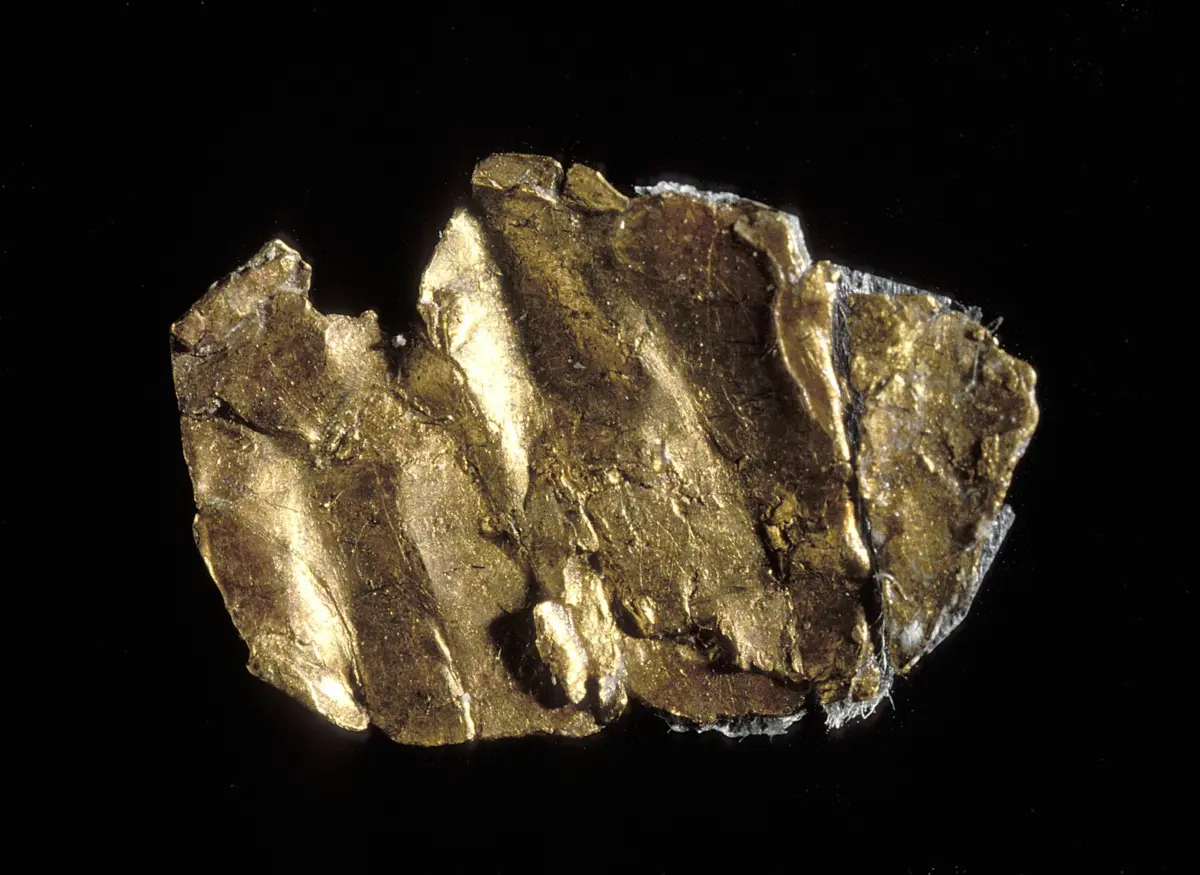
On January 24, 1848, a routine construction project along the wooded foothills of California’s Sierra Nevada mountains yielded an accidental discovery that would forever alter the trajectory of human history. James Marshall, a carpenter overseeing the construction of a lumber mill for pioneer John Sutter, spotted a series of glittering flecks in the tailrace of the American River. That small nugget of gold—now preserved in the collections of the National Museum of American History at the Smithsonian Institution—ignited the California Gold Rush. It transformed a sleepy, sparsely populated territory into a global epicenter of human migration, unbridled ambition, and profound socio-political upheaval.
In his sweeping new book, The Rush: California Gold, the Civil War and the Making of the Modern World, acclaimed historian Nathaniel Philbrick argues that Marshall’s discovery was not merely a localized boom, but a foundational tectonic shift. Philbrick posits that the frantic rush for wealth sent a fledgling United States hurtling toward an inevitable national reckoning, accelerating geopolitical tensions that culminated in the American Civil War while inadvertently laying the structural, technological, and cultural blueprints for the modern era—stretching all the way to the rise of Silicon Valley.
Synthesizing an immense body of historical scholarship into a vivid, accessible narrative, Philbrick demonstrates how the compressed accelerations of the 19th-century West catalyzed forces that still dictate the rhythms of American life today. By weaving together the grand political maneuverings of Washington elites with the forgotten or marginalized narratives of Chinese laborers, Black entrepreneurs, and Indigenous populations, The Rush offers an urgent, comprehensive examination of how the pursuit of wealth shaped the soul and borders of a superpower.
Read Also
Detailed Chronology: From Sutter’s Mill to the Crucible of Empire
The Spark in the Foothills (January 1848)
Long before the rest of the world caught wind of the discovery, the fragile geopolitical ecosystem of Alta California was already shifting. In early 1848, the Mexican-American War was drawing to a close, and the region was on the verge of official transfer to the United States via the Treaty of Guadalupe Hidalgo. When James Marshall pulled that initial gold flake from the American River earth, he and John Sutter attempted to keep the find quiet to protect their milling operations.
Yet secrets of this magnitude could not be contained. By the spring of 1848, San Francisco booster and merchant Samuel Brannan famously marched through the streets of the burgeoning port city waving a bottle filled with gold dust, shouting, "Gold! Gold! Gold from the American River!" The local economy instantly ground to a halt as merchants, clerks, sailors, and soldiers abandoned their posts to try their luck in the mountains.
/https://tf-cmsv2-smithsonianmag-media.s3.amazonaws.com/filer_public/9d/c7/9dc74015-d150-42ac-81a6-6af173b2c2fe/sia-98-4800.jpg)
The Deluge of 1849 and the Geopolitical Balance
By the following year, the trickle had become a tidal wave. The "Forty-Niners"—tens of thousands of fortune-seekers hailing from the Eastern seaboard, Europe, South America, and Asia—converged upon Northern California. This sudden demographic explosion shattered the delicate legislative balance in Washington, D.C. At the time, the United States was precariously divided between 15 free states and 15 slave states.
California’s rapid, organic population boom bypassed the traditional, measured stages of territorial organization. Insisting on immediate statehood as a free state, California threw the U.S. Congress into turmoil. The ensuing Compromise of 1850 temporarily appeased sectional divides, but it introduced volatile mechanisms—such as the strengthened Fugitive Slave Act—that poured fuel on the fires of the impending Civil War. Philbrick illustrates how the rush forced the young American republic to grapple aggressively with its own geographic immensity and the inescapable moral rot of chattel slavery.
Engineering the Continent: Rails and Labor (1860s)
As the extraction of surface gold gave way to large-scale hydraulic mining and corporate extraction, the ambitions of California’s elite expanded eastward. The realization of a transcontinental railroad became an economic and strategic imperative. Philbrick introduces readers to the "Big Four" railroad barons—Collis P. Huntington, Leland Stanford, Mark Hopkins, and Charles Crocker—who masterminded the Central Pacific line.
While these industrialists orchestrated the project from positions of immense wealth and political power, the physical reality of the railroad was hewn from the blood, sweat, and sacrifice of thousands of marginalized laborers. Primarily Irish immigrants in the East and Chinese laborers in the West, these workers laid tracks across the treacherous Sierra Nevada mountains under brutal, often lethal conditions, effectively binding the Atlantic and Pacific worlds together while facing severe racial discrimination and systemic exploitation.
Supporting Context & Metrics: The Human Cost and the Contradictions of Freedom
To understand the era described in The Rush, one must confront the profound paradoxes that defined mid-19th-century California. Philbrick does not sanitize the historical record; instead, he dives headfirst into the violence, displacement, and systemic cruelty that accompanied the search for fortune.
/https://tf-cmsv2-smithsonianmag-media.s3.amazonaws.com/filer_public/9d/c7/9dc74015-d150-42ac-81a6-6af173b2c2fe/sia-98-4800.jpg)
The Demographic and Environmental Catastrophe
- Indigenous Population Collapse: Prior to the Gold Rush, California’s native population numbered roughly 150,000 to 300,000 indigenous peoples. Driven by state-sanctioned violence, vigilante militias, disease, and forced displacement, that number plummeted catastrophically to fewer than 30,000 by 1870—amounting to a devastating genocide fueled by the greed of incoming miners and settlers.
- Economic Influx: In the span of just a few years, San Francisco transformed from a quiet coastal village of a few hundred souls into a bustling metropolis of tens of thousands, serving as the financial and commercial powerhouse of the American Pacific. Billions of dollars in gold were extracted, capitalizing the industrial expansion of the United States just as it entered its bloodiest domestic conflict.
Agents of Change from the Margins
Amidst the dominant narratives of white male industrialists and miners, The Rush highlights exceptional figures who weaponized the chaos of the era to advance justice and equality. Chief among them is Mary Ellen Pleasant, a brilliant Black entrepreneur who amassed a substantial fortune through San Francisco laundry and real estate empires.
Pleasant used her immense financial resources to bankroll abolitionist causes, support the Underground Railroad, and challenge racial segregation in California’s public transit systems. Historical accounts suggest her dedication to the cause was so absolute that she covertly traveled to Southern plantations—at times disguised as a male jockey—to spread word of radical abolitionist John Brown’s plans for the historic raid on Harpers Ferry. Figures like Pleasant underscore Philbrick’s thesis that the West was a laboratory not only for predatory capitalism, but for fierce, underground resistance.
Official Statements & Historiographical Perspectives
Scholars and historians reviewing Philbrick’s work have praised its ability to synthesize dense economic, political, and social histories into a cohesive, compelling narrative.
In discussions surrounding the release of The Rush, literary and historical analysts have emphasized the book’s timely resonance. Commenting on the thematic architecture of the text, cultural historians note that Philbrick successfully bridges the gap between traditional military-political histories of the Civil War era and the broader socio-economic forces operating on the American frontier.
"California in the mid-19th century was a crucible where the defining questions of American identity were forged," notes a leading review of Philbrick’s methodology. "By treating the Gold Rush not as a localized western adventure, but as the central nervous system of a rapidly modernizing nation, The Rush reframes our understanding of how the East and West coasts co-created the modern American state."
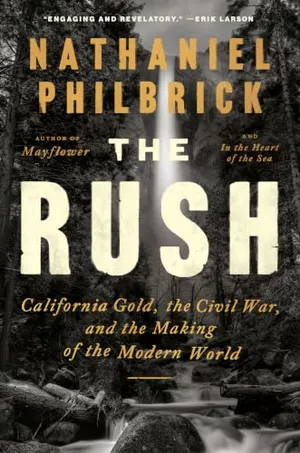
Furthermore, cultural institutions like the Smithsonian Institution—custodian of the original Marshall gold nugget—frequently underscore the artifact’s symbolic weight. As museum curators and historians frequently point out, the pebble represents the exact inflection point where natural wonder and ecological wealth collided with human avarice and national expansion, leaving a legacy that reverberates through modern American industry.
Future Outlook: The Echoes of the Rush in Silicon Valley
In the concluding chapter of The Rush, titled pointedly "Palo Alto," Nathaniel Philbrick makes his most provocative and compelling argument: the DNA of the 1848 Gold Rush did not die out with the exhaustion of placer mining. Instead, it mutated, migrated, and modernly manifested in the digital gold rushes of Northern California.
The parallels between the Forty-Niners and the modern tech titans of Silicon Valley are striking and undeniable. Both eras are characterized by:
- The Disruption of Established Norms: A willingness to entirely discard traditional social structures in favor of rapid, unchecked innovation and wealth accumulation.
- The Winner-Take-All Mentality: An environment that offers immense, unprecedented freedom and fortune for the few, while frequently marginalizing labor, destabilizing local housing markets, and inflicting collateral damage on surrounding communities.
- The Acceleration of History: A culture obsessed with speed, whether measured in the laying of transcontinental iron rails or the deployment of fiber-optic cables and artificial intelligence algorithms.
As Philbrick observes, Californians of the 19th century "wrestled with a question that Americans are still asking today: Just who are we?" The pursuit of endless growth, the ethical dilemmas of technological and industrial domination, and the struggle to maintain a moral compass amid disruptive transformation remain as vital today as they were when James Marshall first looked down at the glittering earth of the American River.
Ultimately, The Rush serves as both a dazzling historical narrative and a cautionary mirror. As Philbrick poignantly reminds his readers, "Like it or not, we are all passengers on a hurtling train"—a locomotive whose engine was stoked, nearly two centuries ago, by the sudden, blinding flash of California gold.




Comments
Facebook App ID not configured. Please add it in the Customizer.