
Executive Overview
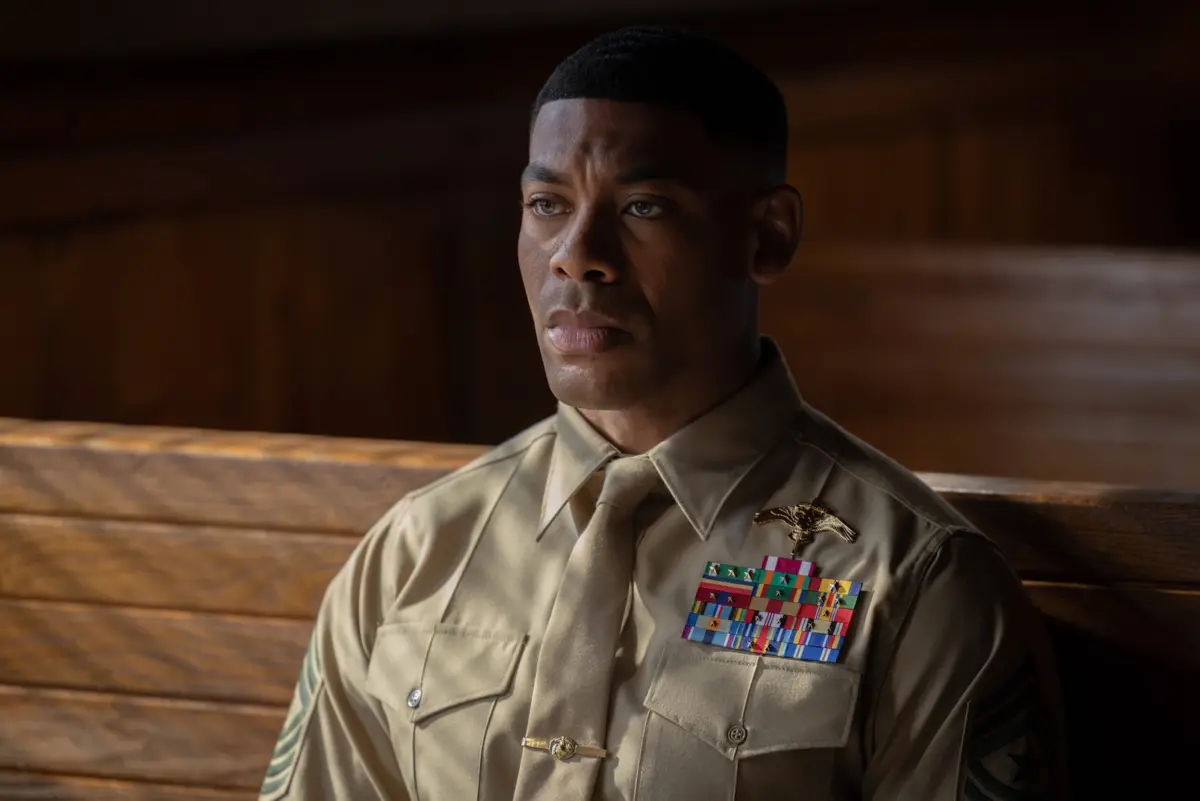
In the sprawling, tightly woven narrative landscape of HBO Max’s critically acclaimed series Lanterns, world-building extends far beyond visual effects and interstellar geography. At the heart of the show’s gritty, character-driven exploration of the Green Lantern Corps is a carefully calibrated sonic ecosystem. Following the release of the gripping third episode, "OutKast," viewers have gained deeper insight into the formative history of John Stewart, brought to life by actor Aaron Pierre. Behind this emotional and psychological excavation is composer Stephanie Economou, whose intricate musical score serves as an invisible anchor for the series.
In a wide-ranging interview, Economou detailed her collaborative creative process with showrunner Chris Mundy, breaking down the thematic architecture defining the show’s primary protagonists: John Stewart and Hal Jordan (played by Kyle Chandler). Far from relying on traditional, bombastic superhero tropes, Economou’s compositions utilize raw, grounded instrumentation—ranging from baritone rubber bridge guitars to tactile, rhythmic percussion—to reflect the isolation, moral ambiguity, and underlying psychological weight of wielding a power ring. This profile explores the technical design, thematic evolution, and structural methodologies underpinning one of the most distinctive scores in modern television sci-fi.
Detailed Chronology: Crafting the Sonic Identity of Lanterns
The Genesis of the Soundscape
When Stephanie Economou first boarded the Lanterns project, her initial directive was to establish a universal musical grammar for the series before locking it to specific visual sequences. Operating away from the picture entirely, she drafted comprehensive theme suites designed to test the waters with showrunner Chris Mundy.
Read Also
"My first port of call was to start writing some theme suites away from picture, just to gauge Chris Mundy’s reaction to questions like: Do you feel like this is the right sound world? Do you feel like this tune speaks more profoundly to the Green Lanterns?" Economou explained.
The foundational piece was the titular Lanterns theme—a sprawling, two-to-three-minute movement constructed on piano, GuitarViols, strings, and synthesizers. Upon receiving Mundy’s immediate endorsement, Economou expanded her palate to include an alien theme suite, exploring the strange, multifaceted textures hinted at within the scripts.
Grounding the Heroes Through Rock and Tactile Instrumentation
Eschewing traditional orchestral bombast in favor of a visceral, earthier sonic footprint, Economou drew heavily from rock music traditions. Recognizing the gritty, grounded nature of the series and the distinct attitudes of its central figures, she gravitated toward guitar-driven arrangements.

"I love rock music—that’s what I listen to in my spare time," she noted. Though she playfully admitted to not playing the guitar traditionally, she collaborated with elite session guitarists to hammer out raw, authentic riffs that could speak to the characters’ inner struggles.
This philosophy directly informed the birth of John Stewart’s theme. During the opening sequence of the series premiere—which features a young John facing a harrowing trial by his father involving a target on his head—Economou found her breakthrough. Sitting outside her studio on a clear afternoon with a baritone rubber bridge guitar, she began experimenting with minimalist chord progressions.
"They were quite lonely. They were steady and confident, but sad in a way. There was a sadness to it," she described. To balance this melancholy with John’s inherent toughness, she layered a driving bass riff and electric distorted keys on top of the acoustic strumming. Hal Jordan’s theme was developed through a parallel tactile exploration, leveraging bass experimentation to capture his distinct swagger, rugged exterior, and restless attitude.
Supporting Context & Metrics: Scoring "OutKast" and the Mechanics of Discordance
The Needle Drop Dilemma
The third episode of the season, aptly titled "OutKast," brings a multiplicity of thematic meanings to the forefront, underscored by the prominent inclusion of the titular hip-hop duo’s track "Gasoline Dreams." The utilization of pre-recorded songs—commonly known as needle drops—presents a distinct challenge for television composers. Economou detailed her dual methodology regarding pre-existing tracks:
- Integrated Tonal Threading: Extracting a specific harmonic or rhythmic thread from a featured song so that the score and the needle drop "inhale and exhale together."
- Counterpoint and Independence: Deliberately crafting an entirely divergent sonic personality for the score, allowing the needle drop to stand alone as a defining character beat.
For "OutKast," Economou opted for the latter approach. Knowing the OutKast track was embedded deep within the production’s DNA—having been featured on set during filming—she deliberately insulated her score from it. "I let the song be the standout and do what it’s going to do and have its importance, and then the score takes on a different personality," she said.
However, the reverse strategy was applied to Hal Jordan’s arc. Elements of a future needle drop quietly informed the underlying DNA of Hal’s theme during the writing process, demonstrating a fluid interplay between source music and original orchestration.

Deconstructing the Ring: Musical Disquiet
A critical moment in "OutKast" occurs when John puts on a Green Lantern ring for the first time, materializing a watch. Rather than treating the milestone with uncritical, triumphant brass, Economou’s score embraces discordance.
The resulting music utilizes sliding synth chords that shift at asymmetrical rates, ensuring the harmony never resolves into a comfortable, neat resolution. This compositional choice mirrors the deep-seated institutional corruption and instability of the Guardians as depicted across various comic iterations.
"Even though it’s this slice of wow, I’ve been waiting my whole life for this moment, I think that there is maybe something a little anticipatory, nerve-wracking, shocking, about the whole situation," Economou noted.
The cue relies on three distinct ingredients:
- Sliding Synth Chords: Providing an unsettling, unstable undercurrent.
- The "Motor": A repeating, intertwining rhythmic figure played on guitar and keys, engineered to simulate momentum and forward propulsion.
- The Core Theme: Delivered via piano and strings at the exact instant the ring makes contact with John’s finger, juxtaposing grandeur with underlying nervous tension.
Official Statements and Creative Insights
Refining the tactical design of the soundtrack required intimate collaboration between the music department and production leadership. When reviewing Economou’s unorthodox, slightly unsettling initial drafts for the Guardians and the ring sequences, showrunner Chris Mundy praised the deliberate avoidance of traditional, shiny superhero tropes.
Furthermore, Economou highlighted her unique approach to scoring the grueling military stakeout scenes involving John Stewart across a nine-month timeline:

"I wanted to explore a different palette for those scenes, so I recorded just layers and layers of really close mics, percussion, wood stuff, this log drum… that stuff doesn’t really sound like anything else in the score. I wanted it to feel like you’re in the dirt there with him. It feels a little like a clock ticking in some ways, and you feel time passing with him."
By grounding these sequences in hyper-tactile, acoustic percussion rather than sweeping orchestral suites, the score successfully communicates spatial claustrophobia and psychological endurance.
Future Outlook: The Evolution of Themes Across Non-Linear Timelines
As Lanterns progresses through its inaugural season, the narrative structure frequently jumps across disparate time periods. Consequently, Economou has engineered the character themes to be living, breathing entities rather than static musical signatures.
- John Stewart’s Trajectory: Set to feature in upcoming episodes through a trip-hop-influenced lens, John’s baseline theme retains its structural identity while adapting to radically different stylistic environments.
- Hal Jordan’s Future Evolution: Future-timeline configurations of Hal’s theme strip away warmth, utilizing isolated, colder string arrangements to emphasize emotional distance and temporal displacement.
By refusing to chain her protagonists to a single, unyielding melody, Economou ensures that the musical landscape of Lanterns mirrors the complex, evolving psychological journeys of its heroes. New episodes of Lanterns premiere on Sundays on HBO Max, continuing a masterclass in modern television scoring.

Comments
Facebook App ID not configured. Please add it in the Customizer.