
Executive Overview
Every late summer, tens of thousands of revelers journey to Nevada’s Black Rock Desert to participate in Burning Man, an annual experiment in temporary community, radical self-reliance, and ephemeral art. While popular imagination paints the event as an uninhibited, sun-drenched sanctuary where attendees wander bare-skinned and bathed in essential oils, the physical realities of the environment present a brutal counter-narrative. The Black Rock Playa—a prehistoric alkaline lake bed—is one of the most hostile microclimates in North America. Daytime temperatures can surge beyond 110 degrees Fahrenheit, only to plunge to a near-freezing 40 degrees at night, accompanied by blinding dust storms driven by winds exceeding 75 miles per hour.
This severe environmental dichotomy has catalyzed the growth of a specialized, highly lucrative micro-economy dedicated to "Burner fashion." Far from mere aesthetic frivolity, clothing designed for the playa must reconcile two opposing forces: the event’s governing principle of Radical Self-Expression and the extreme utilitarian requirements needed to survive harsh environmental conditions without violating the strict Leave No Trace environmental mandate.
At the epicenter of this pre-event preparation is a network of curated pop-up bazaars. spearheading this movement in New York City is designer and curator Nancy Marcus. Since 2013, Marcus has organized elite retail experiences that bring together boutique designers to outfit a demographic that ranges from grassroots artists to Silicon Valley executives and celebrity elite. Examining these bespoke retail spaces reveals the tension between Burning Man’s anti-commercial ethos and the complex, high-cost infrastructure required to dress for the end of the world.
Read Also
Detailed Chronology of the Pre-Burn Fashion Ecosystem
+-----------------------------------------------------------------------------------+
|                        EVOLUTION OF BURNER FASHION RETAIL                         |
+-----------------------------------------------------------------------------------+
|  1986          Late 1990s       2013                    Present Day               |
|  Baker Beach   Black Rock Shift Marcus Launches Pop-Ups SoHo High-End Bazaars     |
|  Improvised    DIY Thrift &     Curated Underground     Haute-Apocalyptic         |
|  Costumes      Military Surplus Retailing               Tactical Fashion          |
+-----------------------------------------------------------------------------------+
From Desert Dust to SoHo Showrooms: The Evolution (2013–Present)
The origins of fashion on the playa were rooted in DIY resourcefulness and military surplus utility. However, as Burning Man expanded from an obscure San Francisco gathering into a global cultural phenomenon attracting high-profile figures such as Mark Zuckerberg, Paris Hilton, and Grover Norquist, the demand for sophisticated apparel surged.
In 2013, recognizing a gap between urban retail offerings and the functional needs of desert pilgrims, Nancy Marcus began organizing dedicated fashion pop-up bazaars. Over the past decade, these events have evolved from informal gatherings into highly anticipated commercial fixtures. Held in retail hubs like SoHo, these bazaars function as temporary fashion houses, showcasing garments engineered specifically to withstand the rigors of the Black Rock Desert while providing high-impact visual aesthetics.
The Anatomy of a SoHo Pop-Up Bazaar
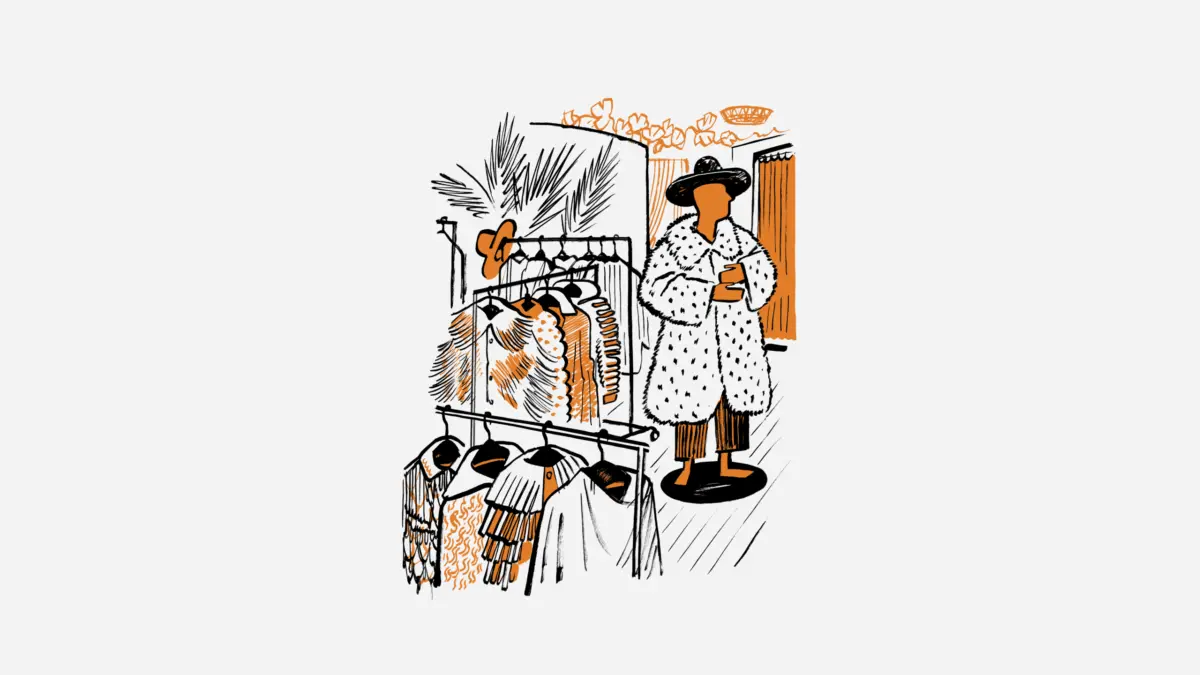
A recent summer bazaar held in a compact, high-density commercial venue in SoHo offered a clear view into this unique marketplace. Described by attendees as a cross between high-end luxury retail and a post-apocalyptic cinematic set—a "Mad Max Department Store"—the event brought together 14 specialized designers. The racks were heavily stocked with high-contrast textiles: iridescent synthetics, heavy distressed leathers, fluorescent Day-Glo fabrics, and dense faux furs engineered for sub-zero desert nights.
The bazaar was defined by a diverse group of artisanal vendors, each tailoring their work to specific subcultures within the broader Burner community:
+------------------+----------------------------------+-------------------------------------+
| Designer         | Featured Aesthetic / Product     | Functional / Cultural Focus         |
+------------------+----------------------------------+-------------------------------------+
| Nancy Marcus     | Hand-painted skirts, gold lamé   | Durability, anti-MOOP construction  |
| Ali Sardar       | Recycled curtain coats ($750)    | Built-in face covering/dust armor   |
| Jessica Ding     | Custom leather holsters          | "High-femme warrior-queen" utility  |
| Lunara Love      | Gauzy muslin/cotton wraps        | Breathable, neutral spiritual wear  |
| Audra Rodriguez  | Micro leather pouches            | Concealed storage for essentials    |
| Eva Bogdanova    | Minimalist "Adam" metal belts    | Structural, industrial waistwear    |
+------------------+----------------------------------+-------------------------------------+- Nancy Marcus: Dressed in a hand-painted, lizard-textured bib and skirt, Marcus emphasized structural integrity. Showcasing low-slung gold lamé trousers with dropped crotches, she noted that outfits must undergo rigorous stress-testing to ensure they do not shed components into the pristine desert environment.
- Ali Sardar: Presenting coats tailored from heavy upcycled vintage window drapes priced at $750, Sardar integrated multi-functional elements into his garments. One calf-length gray coat featured a built-in textile mask extending from the collar to protect against sudden dust storms.
- Jessica Ding: Specializing in hand-tooled leather utility harnesses and holsters, Ding described her design philosophy as a "high-femme warrior-queen aesthetic," prioritizing physical security and storage capacity without sacrificing visual style.
- Lunara Love: A veteran Russian-American designer offering a contrasting approach, Love moved away from neon synthetics toward unbleached, textured cotton and muslin wraps priced between $200 and $300. Her pieces favored temperature regulation and muted earth tones designed to age gracefully under layers of white dust.
- Audra Rodriguez: Offering specialized leather craft, Rodriguez focused on small-format leather pouches designed to secure small personal items, essential botanical extracts, and hydration supplements directly to the body.
- Eva Bogdanova: Showcasing industrial-minimalist accessories, Bogdanova highlighted structural hardware, including her "Adam" series—narrow leather belts anchored by solid metal rings designed for utility attachments.
Supporting Context & Quantitative Metrics
Environmental Microclimates vs. Aesthetic Demands
Designing for Black Rock City requires navigating severe physical parameters. The playa surface consists of fine, dried silt composed of sodium carbonate, magnesium, and calcium particles. When exposed to moisture or sweat, this dust creates a highly alkaline compound (pH levels between 9 and 10) capable of causing severe chemical irritation and skin burns, a condition known colloquially as "playa foot."
+-----------------------------------------------------------------------------------+
|                          BLACK ROCK PLAYA: ENVIRONMENTAL METRICS                  |
+-----------------------------------------------------------------------------------+
|  Temperature Range         40°F (Night Low) to 110°F (Day High)                  |
|  Peak Wind Velocity        75+ mph (Capable of total dust brown-outs)            |
|  Playa Dust Chemistry      Alkaline Silt (pH 9.0–10.0; corrosive to bare skin)   |
|  Wardrobe Requirements     14 Distinct Ensembles (7 Day / 7 Night shifts)        |
+-----------------------------------------------------------------------------------+
Furthermore, the environment forces rapid transition cycles. Attendees require light, highly reflective, UV-blocking attire during daylight hours to survive ambient heat index spikes, followed immediately by heavy wind-resistant thermal insulation once sun radiation drops. Because of this dynamic climate, serious attendees often purchase up to 14 discrete outfit combinations to cover the distinct demands of day and night survival over the festival’s seven-day duration.
                    [ 24-HOUR CLIMATE CYCLE & APPAREL DESIGNS ]

     Daytime: 110°F Heat / UV Surge         Nighttime: 40°F Drop / Wind Gusts
  +-----------------------------------+   +-----------------------------------+
  | Light Reflective Fabrics          |   | Dense Faux Fur & Thermal Linings  |
  | Built-in Respiratory Protection   |   | Integrated LED/Luminescent Accents|
  | Alkali-Resistant Skin Coverage    |   | Wind-Resistant Heavy Leathers     |
  +-----------------------------------+   +-----------------------------------+
The Socio-Economic Continuum and the "Sparkle Pony" Phenomenon
The commercial infrastructure surrounding Burner fashion exposes a key tension in the event’s modern identity: the conflict between veteran self-reliance and the rise of high-net-worth consumerism.
Within the culture, a distinct derogatory term has emerged for ill-prepared attendees: Sparkle Ponies.
                           +------------------------+
                           |  THE PLAYA POPULATION  |
                           +------------------------+
                                       |
                   +-------------------+-------------------+
                   |                                       |
        +---------------------+                 +---------------------+
        | RADICAL PREPPERS    |                 | "SPARKLE PONIES"    |
        +---------------------+                 +---------------------+
        | • Self-reliant      |                 | • High-fashion focus|
        | • Durable garments  |                 | • Low survival prep |
        | • Zero MOOP impact  |                 | • Dependent on camps|
        | • Utility-driven    |                 | • Fragile costumes  |
        +---------------------+                 +---------------------+
As defined by official Burning Man documentation and reinforced by veteran community members, a Sparkle Pony is an attendee who arrives fashionably attired in ornate costumes but lacks basic survival gear, water supplies, or functional attire suitable for dust storms. Designers in SoHo expressed open frustration with this demographic, noting that influencer culture often prioritizes aesthetic impact over structural durability.
Items with loose embellishments, delicate mesh, or unstable platform footwear are widely criticized by experienced makers. Fragile garments run counter to the core rule of Leave No Trace, which mandates that no foreign material—referred to as MOOP (Matter Out Of Place)—can be left on the desert floor. Loose sequins, shedding feathers, or plastic beads represent environmental violations that require labor-intensive cleanup operations by community volunteers.
Official Statements and Ethos Analysis
Radical Self-Expression Meets ‘Leave No Trace’
The commentary gathered from designers at the SoHo bazaar highlights a strong professional consensus: high-concept fashion must remain functionally resilient to align with the festival’s principles.
"We build a city and we take it down, and we leave no trace. You can’t have sequins falling off your outfit onto the desert floor."
— Nancy Marcus, Event Organizer and Designer
Marcus constantly advises clients to step out of their aesthetic comfort zones while emphasizing physical testing, encouraging buyers to wear complex garments in daily environments before deploying them in the desert.
From an engineering perspective, fashion elements must integrate protective features. Designer Ali Sardar pointed to the functional necessity of built-in face covers:
"It has a built-in assassin mask. The dust storm will hit you out of nowhere at 40 miles an hour. If your protection isn’t physically tethered to your outerwear, you’re going to lose it, and you’re going to inhale alkali dust."
— Ali Sardar, Designer
The ‘Safety Third’ Paradigm
For veteran participants, the approach to desert attire is shaped by years of experience with sensory overload and physical exertion. Russian-American designer Lunara Love reflected on her transition from manic participation to practical design restraint:
"I used to go like religion, like a church you can’t stop. Then I came to my senses… One time, I jumped ten feet down from an art car in platform shoes because I thought I was a cat. Burning Man: safety third."
— Lunara Love, Designer and Burning Man Veteran
Love’s lighthearted reference to "safety third"—a popular insider slogan on the playa—underlines the unpredictable nature of the event. Her focus has shifted toward durable, un-dyed, breathable fabrics like cotton and heavy muslin. These materials allow the body to breathe while protecting the skin from caustic dust, demonstrating how veteran Burners often favor practical protection over high-maintenance synthetic costumes.
+-----------------------------------------------------------------------------------+
|                         DESIGNER ETHOS & MATERIAL PHILOSOPHY                      |
+-----------------------------------------------------------------------------------+
|  Pillar                 Design Solution                                           |
|  ------------------     --------------------------------------------------------  |
|  Leave No Trace         Reinforced stitching, elimination of loose sequins/beads  |
|  Extreme Climate Prep   Dual-layer outer garments (UV defense + thermal lining)   |
|  Physical Utility       Integrated leather holsters, heavy hardware, pouch waistwear |
|  Respiratory Defense    Concealed collars, built-in cowls, integrated face masks  |
+-----------------------------------------------------------------------------------+
Future Outlook: The Commercialization and Resilience of Burner Subculture
The continued expansion of high-end Burner bazaars in major fashion capitals like New York, Los Angeles, and London highlights a broader cultural trend: the integration of underground countercultural aesthetics into boutique luxury markets.
  +-------------------+      +-------------------+      +-------------------+
  | Underground DIY   | ---> | Dedicated Pop-Up  | ---> | Mainstream Haute  |
  | Desert Utility    |      | Urban Bazaars     |      | Tactical Fashion  |
  (1990s Counterculture)     (Curated Specialty)        (Global Luxury Hubs)
Several key developments are shaping the future of this specialized design sector:
-
Integration of Tactical and Climate-Adaptive Materials: As global climate variability leads to more extreme weather patterns worldwide, high-performance textile engineering is becoming central to festival fashion. Designers are increasingly adopting mil-spec (military specification) textiles, abrasion-resistant Kevlar weaves, and UV-blocking synthetics.
-
Upcycling and Circular Fashion Systems: Driven by the Leave No Trace principle, vendors are leaning heavily into circular economy practices. The use of reclaimed materials—such as vintage upholstery fabrics, repurposed heavy curtains, and post-industrial leather waste—is moving from a niche design choice to an industry standard.
-
Tension Between Decommodification and High-End Retail: Burning Man’s official Decommodification principle strictly prohibits commercial transactions and sponsorships within the boundaries of Black Rock City. However, the growth of expensive urban pop-up bazaars demonstrates that pre-event preparation remains an active commercial ecosystem. As entry tickets, logistics, and multi-outfit wardrobes continue to rise in cost, the barrier to entry shifts the demographic profile of participants upward.
-
Influence on Mainstream Streetwear: The aesthetic developed for the playa—characterized by utility harnesses, modular pocket attachments, industrial hardware, and high-visibility reflective textiles—continues to influence broader mainstream streetwear and haute couture. Elements engineered for survival in the desert are increasingly appearing on urban runways worldwide.
Ultimately, events like Nancy Marcus’s SoHo bazaar serve as a bridge between two worlds. They translate the chaotic, survivalist demands of the desert into refined urban design, equipping attendees to navigate the extreme boundary where high fashion meets environmental survival.




Comments
Facebook App ID not configured. Please add it in the Customizer.