
Executive Overview
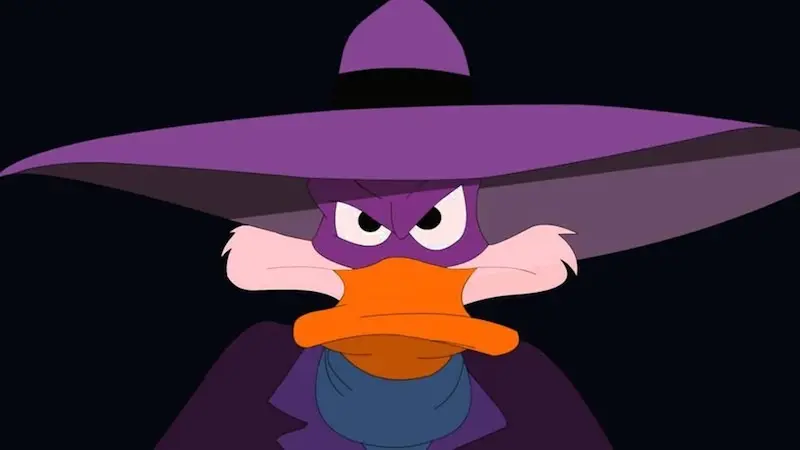
For a generation of television viewers who grew up glued to weekday afternoon blocks of animation, the mere whisper of "Let’s get dangerous" is enough to conjure an immediate, nostalgia-fueled rush. Decades after the caped crusader first swooped onto television screens in the early 1990s, the terror that flaps in the night is officially staging a grand comeback. According to reports from Variety, The Walt Disney Company has officially given a direct-to-series greenlight to a brand-new, standalone Darkwing Duck reboot.
This long-rumored project—initially whispered about in industry trades as early as 2020 following the character’s triumphant cameo in the 2017 DuckTales revival—has finally moved from development limbo into full production. Even more thrilling for animation aficionados is the revelation of the series’ marquee voice cast. Iconic voice acting legend and live-action cinematic royalty Mark Hamill (Batman: The Animated Series, Star Wars) is slated to breathe life into the ego-driven, purple-caped vigilante Drake Mallard (Darkwing Duck). He will be joined by comedic powerhouse and producer Seth Rogen (The Muppet Show, Invincible), who is set to voice everyone’s favorite crash-prone, optimistic sidekick, Launchpad McQuack.
Yet, despite the palpable excitement surrounding the casting announcements and the return of one of Disney’s most beloved cult-classic properties, a deeper dive into the production’s newly released official logline reveals a startling narrative pivot. Rather than continuing the specific plotlines and meta-narrative teased during the DuckTales reboot—where Darkwing originated as a washed-up television actor navigating the Hollywood-esque underbelly of St. Duckburg—the upcoming series is charting an entirely fresh, universe-spanning trajectory. Complete with an eclectic supporting cast featuring Dan Stevens, Lizzy Caplan, and a host of rising stars, this new iteration promises to take the terror that flaps in the night into uncharted, multiversal territory.
Read Also
Detailed Chronology: From Afternoon Toon to Streaming Renaissance
To truly understand the weight of this series greenlight, one must examine the winding, decades-long timeline of Darkwing Duck. Created by Tad Stones and originally premiering in 1991 as a spin-off of the wildly successful DuckTales, Darkwing Duck stood apart from its Disney Afternoon predecessors. While shows like DuckTales and TaleSpin embraced grand, globe-trotting adventure and pulp serial tropes, Darkwing Duck leaned heavily into superhero satire, blending the gothic, shadowy aesthetic of Tim Burton’s Batman and Dick Tracy with classic screwball comedy.
For three seasons and 91 episodes, Drake Mallard balanced his suburban domestic life as an ordinary father in St. Canard with his grandiose, attention-seeking exploits as a masked crime-fighter. Alongside his adopted daughter Gosalyn and his fiercely loyal, if disastrously uncoordinated, pilot Launchpad McQuack, Darkwing fought a rogues’ gallery of iconic villains, including Megavolt, Liquidator, Quackerjack, and his nefarious alternate-dimension counterpart, Negaduck.
Following the series’ conclusion in 1992, the character lived on primarily through comic book adaptations published by Boom! Studios and later Joe Books and Dynamite Entertainment, alongside persistent, unfulfilled fan demands for a modern revival. The first major crack in the dam occurred during Disney’s critically acclaimed 2017 DuckTales reboot. Helmed by Frank Angones and Matt Youngberg, the series treated Disney Afternoon lore with profound reverence, culminating in an arc where Darkwing Duck was introduced not just as a fictional TV character from an old show, but eventually as a mantle taken up by fan-turned-actor Drake Mallard, complete with a bitter, vengeance-driven former star, Jim Starling, turning into the villainous Negaduck.
Fans naturally assumed that this well-received television backdoor pilot would serve as the foundational springboard for the standalone series announced in late 2020. However, as industry developments over the past six years have demonstrated, the path from corporate announcement to series order is rarely a straight line. With Variety confirming the official greenlight, it is now clear that Disney’s creative teams have opted to wipe the slate clean, establishing a new status quo that distances itself from the continuity of the DuckTales universe while retaining the core character dynamics that fans hold dear.
Supporting Context & Metrics: The Anatomy of a Modern Animation Reboot
The revival of Darkwing Duck arrives at a fascinating crossroads for the animation industry and the Walt Disney Company’s streaming strategy. In an era dominated by intellectual property mining, nostalgia has become one of the most reliable commodities in Hollywood. Millennial audiences, who grew up during the golden age of 1990s syndicated cartoons, now represent a crucial demographic with disposable income and streaming subscriptions, making them prime targets for legacy revivals.
However, modern animation revivals operate under vastly different economic and creative pressures than their 20th-century counterparts. Budgetary allocations for streaming-first content have tightened significantly across the entertainment sector as companies pivot away from pure subscriber-growth models toward profitability. For a high-profile property like Darkwing Duck to secure a formal series order in the current economic climate, it required more than just nostalgic goodwill; it demanded a powerhouse creative package.
The inclusion of Mark Hamill and Seth Rogen instantly elevates the project from a standard children’s cartoon revival to a major pop-culture event. Hamill, whose contributions to the medium of animation are legendary—most notably his definitive, decades-spanning portrayal of the Joker in the DC Animated Universe—brings unmatched gravitas and theatrical flair to comedic villainy and eccentric heroism alike. Meanwhile, Seth Rogen’s production footprint through Point Grey Pictures, combined with his distinct comedic cadence, signals that Disney is aiming for a multi-generational appeal. Much like DuckTales before it, the creative mandate appears to be crafting a show that satisfies nostalgic adults while remaining entirely accessible and engaging to younger demographics.
Furthermore, the expansive supporting cast reveals a deliberate casting strategy that bridges prestige television, modern cinematic universes, and viral internet culture:
- Dan Stevens (The Terror: Devil in Silver, Legion) as Glade McTowers
- Lizzy Caplan (Party Down, Fleishman Is in Trouble) as Gosalyn Mallard
- Lilimar (Inside Out 2) as Duckie
- Tiffany Shepis (Star Trek: Picard) as Rosa
- Kathryn Newton (Avengers: Doomsday, Ant-Man and the Wasp: Quantumania) as Firecracker
- Teo Briones (Final Destination Bloodlines) as Timb
- Tyler Dean Flores (Neon) as Pondsy
- Katie Rich (Saturday Night Live) as Officer Shanks
- Nat Faxon (The Descendants, Our Flag Means Death) as Officer Webb
This impressive roster hints at a sprawling, ensemble-driven narrative that extends far beyond the traditional dynamic duo of Drake and Launchpad.
Official Statements & Narrative Breakdown
The most significant revelation accompanying the series greenlight is the official logline released to the trades. Discarding the "washed-up actor" premise established in DuckTales, the new Darkwing Duck series introduces a remarkably high-concept, existential premise:
"For the last 35 years, Darkwing Duck has been trapped in his worst nightmare: an alternate world that’s never heard of his superhero exploits. Now a rebellious teen named Duckie who knows all about his heroic past shows up to pull this ego-fueled vigilante back into battle. Together, this unlikely duo will get dangerous to fight old enemies like Negaduck and Megavolt and reunite with allies Launchpad, Gosalyn, and Morgana to save the entire universe."
This shift in storytelling represents a bold creative gamble. By marooning the protagonist in a dimension utterly devoid of his legendary status, the series immediately destabilizes Darkwing’s primary character trait: his monumental, often fragile ego. Stripped of his adoring public, the vigilante must confront his own irrelevance before rediscovering his heroic spark.
The introduction of Duckie—a rebellious teenager serving as a fan historian and catalyst for his return—adds a meta-narrative layer that cleverly mirrors the relationship between the legacy character and his modern audience. Moreover, the confirmation that classic rogues like Negaduck and Megavolt will appear alongside fan-favorite allies such as Gosalyn Mallard and the mystic sorceress Morgana MacMacabre indicates that the series will deeply honor the foundational lore of the original 1991 run while pushing the narrative scale to cosmic, universe-saving heights.
Future Outlook: What Lies Ahead for the Terror That Flaps in the Night?
As production ramps up following this long-awaited series order, industry watchers and fans alike are turning their attention to the horizon. While The Walt Disney Company has yet to announce an official premiere date or release window for the series on Disney+, the magnitude of the talent involved suggests that a rollout strategy will be meticulously planned.
Questions naturally remain regarding the visual style of the series. Will Disney opt for a traditional, hand-drawn aesthetic that honors the look of the original 1990s animation, or will they adopt a stylized, modern digital-hybrid look similar to other contemporary platform revivals? Given the creative pedigree and the eclectic tone promised by the logline, a dynamic, high-energy visual approach seems all but guaranteed.
For now, the greenlight serves as a monumental victory for animation fans who have advocated for the character’s return for decades. Drake Mallard may be stepping into an alternate world that has forgotten his name, but if the enthusiastic response across social media and entertainment trades is any indication, the real world is more than ready to welcome him back. As production continues behind closed doors, one thing remains certain: television is about to get dangerous once again.

Comments
Facebook App ID not configured. Please add it in the Customizer.