
Executive Overview
The consumer technology landscape has long treated e-readers as standardized slabs of electronic paper, traditionally hovering between six and ten inches to mirror the physical dimensions of paperback and hardcover books. However, a seismic shift in form-factor philosophy is currently underway. At the prestigious IFA consumer electronics trade show in Berlin, Onyx Boox—a brand predominantly recognized for its premium, large-format Android-powered e-note devices and heavy-duty productivity tools—stunningly reversed its trajectory. The company officially debuted the Onyx Boox Picco, a radically compact, pocket-sized micro e-reader designed to challenge conventional portability limits.
Targeting a disruptive price point of approximately $100, and slated for a commercial launch window stretching from late 2025 into early 2027, the Picco represents an intriguing gamble for the manufacturer. Rather than loading the device with resource-heavy operating systems, sprawling app stores, and complex multitasking tools, Onyx has stripped the Picco down to its bare essentials. The device runs on a lightweight Linux-based operating system instead of Android, sports a smartphone-like 3.97-inch grayscale E-Ink display, relies strictly on physical page-turn buttons, and opts out of native internal storage in favor of an expandable SD card slot.
This comprehensive report examines the technological architecture, strategic positioning, user experience implications, and broader market context of the Onyx Boox Picco. Based on hands-on observations and exclusive briefings with company representatives at IFA Berlin, we dissect what this ultra-portable reader means for the future of digital reading, minimalism, and budget-conscious hardware engineering.
Read Also
Detailed Chronology: The IFA Berlin Debut and Hardware Evolution
The Launch Context at IFA Berlin
IFA Berlin has historically served as a crucible for European consumer tech, a sprawling arena where global giants and niche innovators alike test the waters for their upcoming fourth-quarter holiday releases and early-year lineups. Amidst a sea of high-refresh-rate OLED monitors, AI-integrated home appliances, and foldable smartphones, Onyx Boox carved out substantial attention by displaying a product that seemingly flies in the face of modern feature creep.
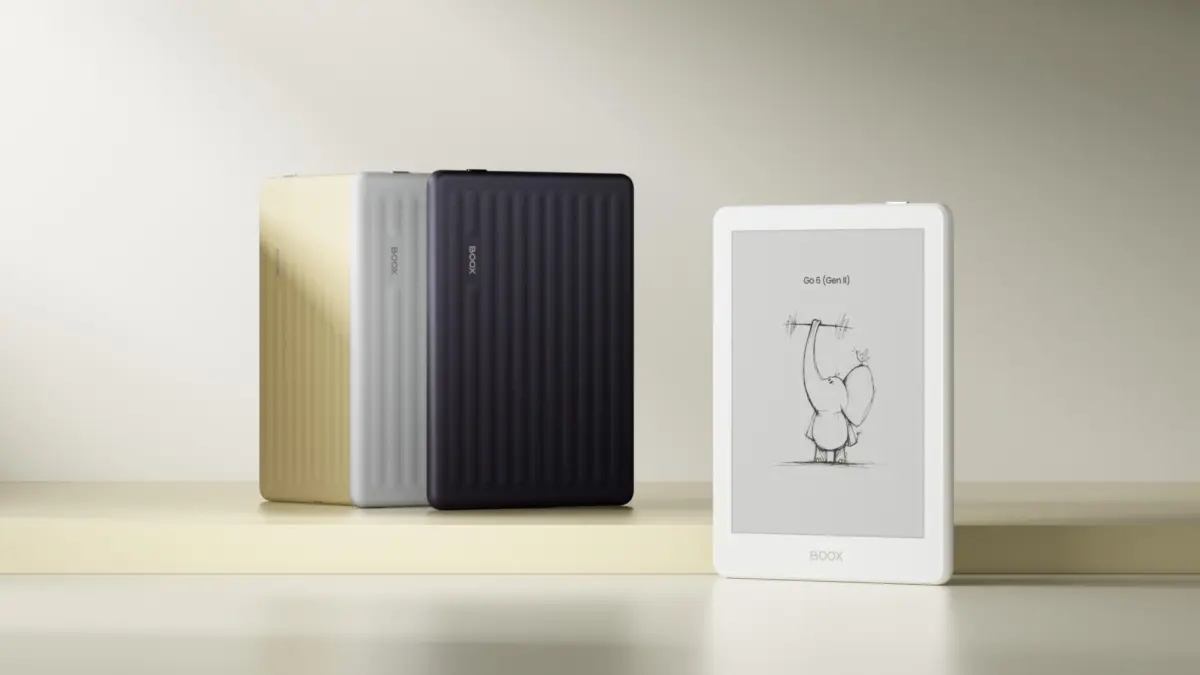
When journalists and industry analysts approached the Onyx Boox booth, they were met not with another mammoth 13.3-inch PDF annotator, but with a sleek, minimalist white e-reader standing compactly on a display shelf, flanked by an array of ribbed, color-matched protective cases in cream, gray, and navy.
According to representatives present at the conference, the Picco has been engineered to fill a very specific, long-neglected niche: the ultra-portable reader for individuals who find even standard 6-inch e-readers too bulky for daily pocket carry. By distilling the reading experience down to its most primitive components, Onyx aims to capture an audience that values physical discretion, prolonged battery longevity, and low-cost accessibility.
Physical Form Factor and Aesthetics
The defining characteristic of the Onyx Boox Picco is its uncompromisingly small footprint.
- The Display: The device features a tiny 3.97-inch grayscale E-Ink screen. To put this into perspective, the display dimensions closely mimic those of early-generation smartphones or compact digital music players, making it effortlessly slide into jeans pockets, small purses, or shirt pockets where traditional e-readers cannot possibly fit.
- Build and Design: Early hands-on previews from the convention floor have been largely favorable toward the device’s aesthetic presentation. The Picco boasts a clean, flat-bezel design that gives it a modern, refined edge despite its budget classification.
- Tactile Controls: Abandoning the industry-wide reliance purely on touchscreens, the Picco incorporates physical up and down navigation buttons on one side of the screen specifically designated for turning pages. Furthermore, a dedicated front-light button allows users to toggle the built-in illumination on and off without digging through sub-menus.
Supporting Context & Metrics: Architecture, Limitations, and Software
While the physical dimensions of the Onyx Boox Picco have garnered widespread fascination, a technical evaluation of its internal architecture reveals strategic engineering compromises made to hit that aggressive $100 price ceiling.
The Linux Advantage vs. Android Constraints
For years, Onyx Boox has built its brand equity on the flexibility of Android. Users could install third-party applications like Kindle, Kobo, Libby, and even full web browsers onto their e-readers. However, Android is an inherently resource-heavy operating system that demands robust processors, substantial RAM, and relatively large battery capacities to maintain a fluid user experience—components that inevitably drive up retail costs.
For the Picco, Onyx opted for a Linux-based operating system. This architectural pivot offers distinct advantages:

- Resource Efficiency: Linux can operate smoothly on modest, low-power microprocessors with minimal RAM. This drastically reduces hardware overhead, allowing Onyx to price the device at around $100.
- System Stability: Stripped of background services, Google Play Mobile Services, and complex notification pipelines, the Linux environment on a micro e-reader promises razor-sharp stability and instantaneous responsiveness for basic text rendering.
However, this transition introduces notable trade-offs:
- No App Ecosystem: Users will be completely unable to download or install third-party applications. What you see out of the box is precisely what you get.
- Modding Restrictions: Because Onyx maintains a notoriously closed ecosystem and does not publicly publish its source code or proprietary OS layers, the enthusiast "hacking" community—traditionally known for installing custom interfaces or community-driven tools like Crossink or Crosspoint on other devices—will face significant, if not insurmountable, hurdles when attempting to modify the Picco’s software architecture.
Storage Architecture and DRM Realities
Perhaps the most unconventional design choice revealed at IFA Berlin centers around the device’s storage and content ingestion methods:
- Zero Internal Storage: Early hardware specifications indicate that the Picco features no onboard internal storage. Instead, all data management is offloaded entirely to an SD card slot. Users must physically manage their digital libraries via external memory cards.
- The DRM Dilemma: Early reviewers and attendees noted that the device’s current software build does not support Digital Rights Management (DRM) functionality. Consequently, books purchased from heavily encrypted mainstream ecosystems (such as Amazon’s Kindle store or Apple Books) cannot be natively read on the device without prior decryption and conversion. As a result, users will have to rely primarily on royalty-free public domain literature (e.g., Project Gutenberg archives), self-sourced DRM-free EPUBs, or alternative content acquisition methods.
Multimedia and Audio Capabilities
In its current state at IFA Berlin, the Picco’s software suite remains bare-bones.
- No Audio Support: The prototype units lacked an integrated audiobook player. There is currently no functional method to listen to audiobooks, podcasts, or music files on the device.
- The Bluetooth Question: Industry insiders have noted that Onyx has not yet clarified whether the final retail release will feature Bluetooth connectivity. Without Bluetooth or a physical 3.5mm headphone jack (which is absent from the chassis), even if software updates eventually introduce audio playback, users would lack output pathways unless internal speakers are quietly added—an unlikely inclusion given the device’s micro-dimensions and tight manufacturing budget.
Official Statements & Industry Reception
Reactions from the technology press and e-reader enthusiast communities at IFA Berlin have been sharply divided, highlighting a fascinating tension between modern feature expectations and retro digital minimalism.
Industry analysts speaking with Onyx representatives noted that the company views the Picco as an exploratory "concept-made-real" project. Rather than trying to compete directly with high-end reading tablets like the Kobo Clara or Amazon Kindle Paperwhite, Onyx is carving out a distinct lifestyle category.
"The philosophy behind the Picco is pure, unadulterated distraction-free reading," noted one attending hardware reviewer. "By removing web browsing, app notifications, cloud syncing bloat, and standard audio features, Onyx has built a digital paperweight that does only one thing: display text. For a targeted sub-segment of consumers, that limitation is actually its greatest selling point."
However, consumer advocacy circles have raised eyebrows regarding the total lack of internal storage and DRM compatibility. Critics point out that requiring an external SD card for a device of this physical scale might introduce physical durability concerns if the card protrudes or requires frequent swapping. Furthermore, the exclusion of standard DRM support effectively alienates mainstream readers who rely on ecosystem-locked libraries, restricting the Picco’s market appeal primarily to tech-savvy hobbyists, digital minimalists, and public-domain literature enthusiasts.
Future Outlook: What Lies Ahead for the Onyx Boox Picco
As the Onyx Boox Picco transitions from its initial prototype reveals at IFA Berlin toward its official commercial rollout window in late 2025 and early 2027, several critical milestones remain to be observed:
- Final Software Polish: Will Onyx implement a basic audiobook or text-to-speech engine before the final manufacturing run, or will the device remain strictly text-bound?
- Hardware Refinement: Will the final production units feature internal flash storage alongside the SD card slot, or will the external-only storage architecture remain a defining pillar of its low-cost design?
- Global Pricing and Availability: While the projected $100 price tag is exceptionally competitive, international shipping, regional taxes, and supply chain fluctuations will dictate whether it remains a true impulse-buy item worldwide.
Conclusion
The Onyx Boox Picco is not trying to be everything to everyone. In an era where tech gadgets continually bloat with generative AI integrations, multi-lens camera arrays, and sprawling app marketplaces, the Picco stands out precisely because of what it refuses to do. By pairing an ultra-compact 3.97-inch E-Ink display with a lightweight Linux backbone and an aggressively affordable $100 target price, Onyx Boox has sparked an essential industry conversation about the boundaries of portable reading. Whether it becomes a cult-classic favorite among digital minimalists or a niche footnote in e-reader history will depend entirely on how Onyx refines its software and storage strategy before launch day arrives.





Comments
Facebook App ID not configured. Please add it in the Customizer.