
Executive Overview
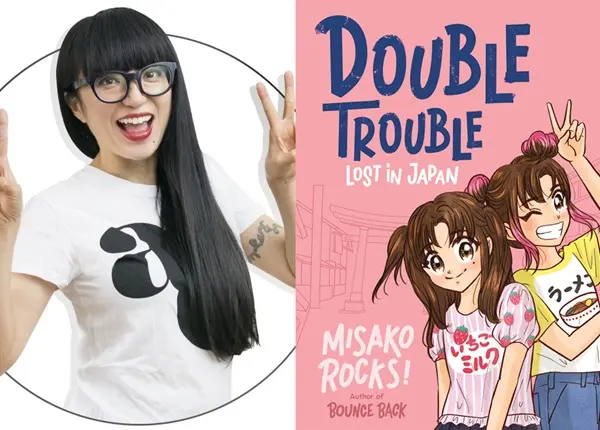
In an era where global pop culture routinely transcends geographic borders, few mediums have achieved the meteoric, cross-generational rise of Japanese manga in the United States. At the forefront of this literary and artistic bridge stands Misako Rocks!, a U.S.-based Japanese manga artist, educator, and author whose career embodies the very essence of cultural exchange. Her latest release, Double Trouble: Lost in Japan: A Kid-Friendly Manga Adventure (Feiwel and Friends), marks the fourth installment in her widely acclaimed Bounce Back series for young readers. Complementing her narrative works are educational staples like the How to Draw Kawaii Manga with Misako Rocks activity book series (Quarto) and her digital instruction platform, Learn Manga with Misako.
However, the journey from an adolescent cinephile daydreaming in a Japanese classroom to a prolific, bi-cultural creator shaping the American literary landscape was neither linear nor effortless. Misako’s trajectory is a testament to the resilience required to navigate profound linguistic and cultural barriers, the trial-and-error of creative reinvention, and the ultimate realization that one’s heritage is not a hurdle to overcome, but an artistic superpower.
This in-depth feature explores Misako Rocks!’s creative evolution, examining the structural shifts in the American graphic novel market, the pedagogical impact of manga in modern classrooms, and how a shared passion for sequential art continues to foster deep, reciprocal empathy between Japanese and American youth.
Read Also
Detailed Chronology: From Cinematic Dreams to the Streets of Missouri
The genesis of Misako’s transpacific journey began long before she ever picked up a professional G-pen or plotted a graphic novel storyboard. Growing up in Japan, her imagination was captured not by domestic television, but by the golden age of classic Hollywood cinema.
The Seventh-Grade Epiphany
"Dad, Mom: I’m moving to America when I grow up!"
These were the words Misako repeated almost daily, starting around seventh grade. Immersed in the high-octane adventures of American films such as Back to the Future and The Goonies, she developed an idealized, romanticized vision of the United States. To an imaginative teenager in Japan, America represented a boundless frontier characterized by personal freedom, grand adventures, and limitless possibilities—a place where dreams were not merely conceived, but actively realized.
That adolescent fantasy transformed into reality when Misako earned a competitive scholarship to study abroad as an exchange student in Missouri. Yet, the transition from celluloid fantasy to Midwestern reality delivered an immediate, humbling shock.
The Crucible of the Language Barrier
Despite years of rigorous academic English study prior to her departure, Misako found herself entirely unequipped for the velocity and nuance of conversational American English.
- The Daily Struggle: During her initial weeks in Missouri, basic interactions felt insurmountable. She recalls that her vocabulary during her first month was largely compressed into a single, recurring phrase: "I’m sorry, could you say that one more time?"
- Cultural Disorientation: Beyond linguistics, the subtle codes of American socialization presented a labyrinth of challenges. Every day demanded an unprecedented level of emotional and mental exertion just to remain afloat.
- Resilience Forged: While exhaustion frequently threatened to overwhelm her, Misako anchored herself to a singular, sustaining mantra on her toughest days: "This is the adventure you’ve always dreamed of."
New York City and the Puppetry Interlude
Following the completion of her college education, Misako made the pivotal decision to relocate to New York City, driven by a new artistic ambition: to become a professional puppeteer.
True to the classic bohemian narrative of the city, she juggled a mosaic of odd jobs while relentlessly auditioning and working toward her theatrical goals. Yet, after years of grueling effort, reality set in. She had to confront the difficult truth that her puppetry career was not going to materialize on the scale she desired. Having crossed an ocean to reinvent her life, Misako found herself adrift in the labyrinthine expanse of New York, grappling with a persistent, gnawing question: Where do I actually belong?
The Turning Point: Discovering Manga’s American Renaissance
The turning point in Misako’s artistic identity arrived unexpectedly while she was employed at a children’s museum in New York City. Far removed from the academic pressures of Missouri and the grueling theater circuit, she began interacting with American children who possessed an unbridled, infectious adoration for Japanese popular culture.
A Reverse Cultural Discovery
These young museum visitors peppered her with questions about anime, requested translations of Japanese phrases, and sat beside her to painstakingly copy Japanese writing characters into notebooks. Furthermore, they watched with wide-eyed fascination as she sketched manga characters, often attempting to replicate her illustrations on their own scrap paper.
For Misako, this revelation was profound: "Wow, they really love Japanese culture!"
Ironically, despite growing up immersed in Japan—where manga is seamlessly integrated into the fabric of daily life as a ubiquitous medium for all demographics—she had been entirely oblivious to the seismic cultural shifts occurring abroad. She did not realize the scale of the manga boom in the United States until she was thousands of miles away from her birthplace.
Finding Home in Another’s Curiosity
For years, Misako had scoured the American landscape searching for a sense of belonging. Witnessing these American children project the exact same fascination and curiosity toward Japan that she had once directed toward America provided a sudden, clarifying perspective.
It was a moment of profound synthesis. She realized that she did not need to sever ties with her Japanese heritage or suppress her cultural background to forge a successful creative career in the United States. On the contrary, she could build a thriving artistic enterprise because of it.
This epiphany transformed her professional trajectory. She immersed herself in the advanced study of manga craft, setting the foundational blocks for a career that would eventually bridge two distinct literary markets.
Supporting Context & Metrics: The Manga Boom in American Publishing
Misako Rocks!’s personal awakening coincided with a massive structural shift in the American publishing industry. Over the past two decades, graphic novels and manga have transitioned from niche, specialty-store commodities to dominant drivers of youth literacy and mainstream bookstore revenue.
Market Dynamics and Reader Demographics
According to industry tracking data from sources like Circana BookScan, graphic novel sales in the U.S. have experienced exponential growth, largely catalyzed by younger demographics—middle-grade and young adult readers.
- The Classroom Catalyst: Educators and school librarians increasingly view manga not as a distraction from traditional reading, but as an indispensable gateway medium. Manga’s unique visual grammar—combining dynamic pacing, emotional expressiveness, and sequential art—helps cultivate literacy skills in reluctant readers.
- The Transpacific Exchange: As demonstrated by Misako’s school visits across the United States, students frequently report that reading manga inspires a broader interest in international geography, language study, and cultural history.
- The Digital and Workshop Ecosystem: Platforms like Learn Manga with Misako highlight the democratization of art education. By combining physical activity books (such as her Quarto series) with digital instruction, modern creators can reach international audiences that traditional brick-and-mortar distribution could never fully capture.
Pedagogical Impact and Student Voices
By transitioning into a dedicated manga educator, Misako established a direct feedback loop with her readership. Teaching thousands of American children provided her with an intimate window into the psychological landscape of contemporary youth.
From Classroom to Comic Panel
Listening to her students articulate their adolescent anxieties, interpersonal triumphs, academic pressures, and everyday joys gave Misako the raw material needed to craft authentic narratives. These classroom interactions served as the narrative bedrock for her critically praised Bounce Back graphic novel series.
During her school visits nationwide, Misako frequently encounters students whose faces light up when discussing their favorite titles. Reflecting on this phenomenon, she notes the profound irony and beauty of her current role: watching passionate and reluctant readers alike discover a lifelong passion for literature through a medium she herself had to move abroad to fully appreciate.
"Sometimes a student tells me they dream of visiting—or even moving to—Japan because of manga and anime. Every time I hear that, I smile. It reminds me of the seventh-grade girl who dreamed about America after watching Back to the Future."
This cyclical mirroring underscores the core thesis of Misako’s career: cultural inspiration is rarely a one-way street. The cinematic touchstones of the West inspired a young Japanese girl to cross an ocean; decades later, the sequential art of Japan provided that same traveler with the tools to anchor herself in a foreign land and inspire a new generation of American dreamers.
Future Outlook: The Ongoing Evolution of Transpacific Storytelling
As Misako Rocks! looks toward the future with the release of Double Trouble: Lost in Japan, her career serves as a blueprint for a new generation of global artists. The rigid geographic and cultural boundaries that once defined publishing markets have given way to a porous, highly interconnected global readership.
Key Takeaways for the Industry
- Authenticity Drives Connection: Readers, particularly children and young adults, possess an acute radar for authentic storytelling. Misako’s ability to weave her lived bi-cultural experiences into her work gives her books an emotional resonance that purely manufactured trends lack.
- Manga as a Universal Language: The visual vocabulary of manga transcends linguistic divides, proving that complex human emotions—friendship, resilience, anxiety, and hope—are universally understood.
- The Educator-Creator Synergy: By maintaining an active presence in classrooms and digital workshops, creators can stay attuned to the evolving needs of their audience, ensuring that graphic novels remain relevant and impactful tools for youth development.
In summing up her remarkable odyssey, Misako captures the duality of her immigrant experience with striking simplicity:
“American culture opened a door for me and inspired me to come to the US. Years later, Japanese manga helped me find my place on the other side of the door. I came to America searching for an exciting future far from home. I found it by bringing home with me.”
As long as young readers continue to open books like Bounce Back and dream of distant horizons, artists like Misako Rocks! will remain vital architects of cultural understanding—proving that the most powerful bridges are built not with steel and stone, but with ink, empathy, and imagination.


Comments
Facebook App ID not configured. Please add it in the Customizer.