
Executive Overview
The contemporary landscape of Eastern Europe and parts of Central Asia is increasingly defined not by the remnants of industrial monuments or political monoliths, but by a sprawling, towering botanical invader: Heracleum sosnowskyi, commonly known as Sosnovsky’s hogweed. Capable of growing up to five meters tall with massive, parasol-like white flowerheads and hollow stems thick enough to rival industrial piping, this invasive perennial has broken free from its mid-century agricultural confines to wage a slow, silent war of ecological conquest.
To understand Sosnovsky’s hogweed is to understand a convergence of totalitarian ambition, scientific hubris, and ecological fallout. Originally uprooted from its native habitats in the rugged Caucasus Mountains during the 1940s, the plant was conscripted into the service of post-World War II agricultural recovery. Soviet agronomists envisioned the massive stalks as a miracle crop—a high-yield silage capable of feeding cattle, which in turn would nourish a war-torn human population. Instead, the plant underwent a malignant ecological translation. When exposed to sunlight, its sap triggers severe, blistering phytophotodermatitis, effectively weaponizing the sun against human skin and mucus membranes.
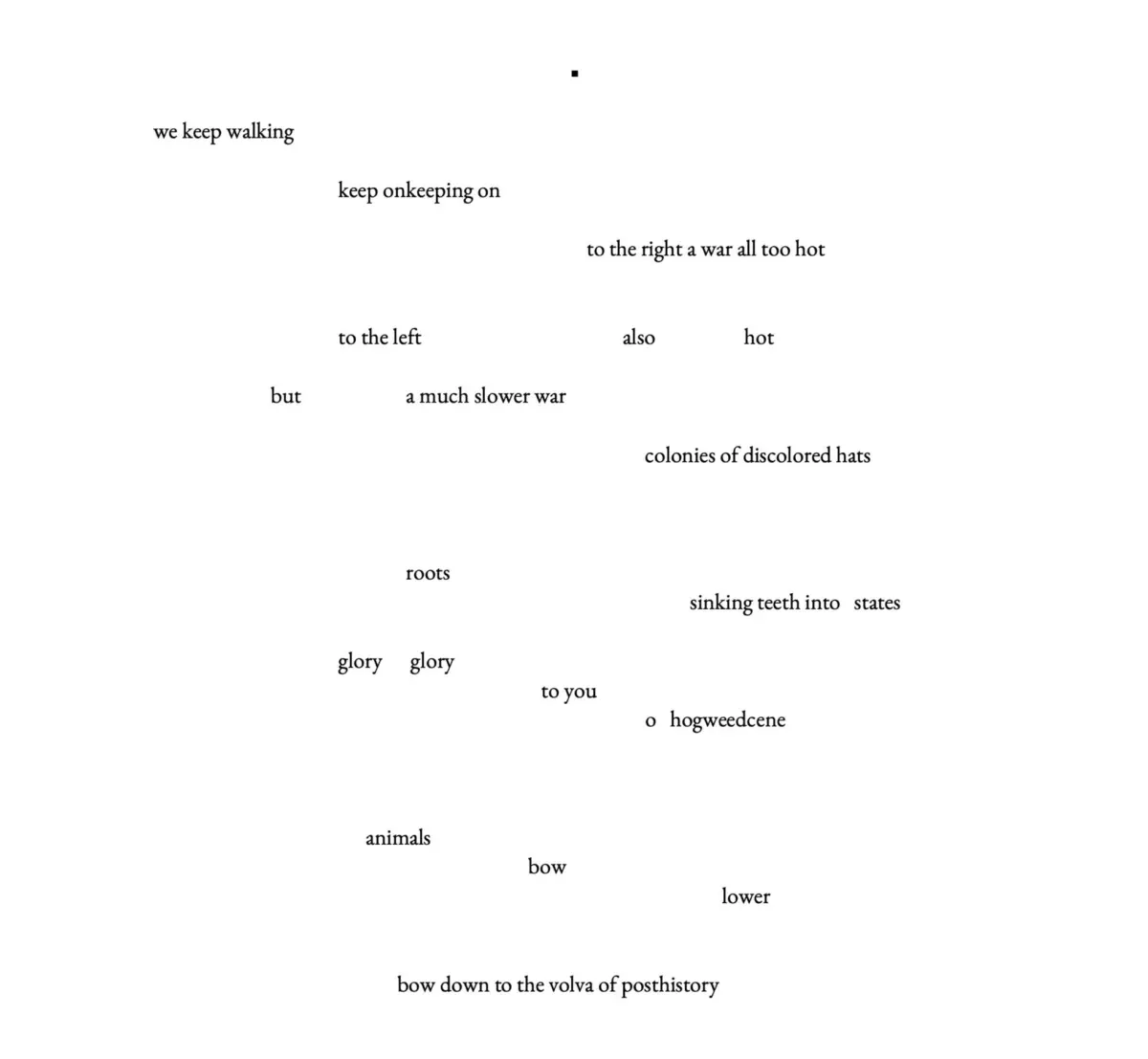
In recent years, contemporary writers, artists, and environmental thinkers have begun to conceptualize this phenomenon beyond the scope of local agronomy. Conceptual frameworks like the "Heracleocene"—an epoch defined by the total supremacy of hogweed—offer a chilling metaphor for the lingering scars of coloniality, militarism, and systemic neglect. Far from being a mere weed, Sosnovsky’s hogweed operates as a living archive of a failed bureaucratic experiment. Yet, within this landscape of toxicity and monoculture, questions of resistance, survival, and the resilience of life "from under the floorboards" continue to emerge, challenging humanity to reckon with the unintended consequences of mastering the earth.
Read Also
Detailed Chronology
The trajectory of Sosnovsky’s hogweed traces a path from remote mountain obscurity to widespread ecological crisis, mapping directly onto the geopolitical shifts of the twentieth century.
1. The Pre-Industrial Baseline (Pre-1940s)
- Native Ecosystems: Heracleum sosnowskyi exists in a state of ecological equilibrium within the Caucasus Mountains. Co-evolving with local flora and fauna, the plant remains a localized, non-destructive species integrated into complex biological networks without causing mass devastation or toxicity-driven dominance.
2. The Stalinist Post-War Experiment (1940s–1950s)
- Discovery and Naming: In the late 1940s, Soviet botanist Ida Mandenova formally describes the species, naming it after her mentor, the prominent Russian botanist D.I. Sosnovsky.
- Agrobiological Conscription: Driven by the urgent necessity to rebuild an agricultural sector decimated by World War II, Soviet scientists select Heracleum sosnowskyi for experimental cultivation. Its rapid growth and massive biomass output make it an attractive candidate for livestock silage.
- Transplantation: The plant is wrenched out of its native Caucasian ecosystem and deliberately introduced into experimental fields across the Soviet Union, intended to serve as the foundation of a state-managed nutritional pipeline.
3. The Great Escape and Bureaucratic Blindness (1960s–1980s)
- Agricultural Disillusionment: Farmers and agronomists soon realize the severe drawbacks of the crop. Milk produced from hogweed-fed cattle acquires a bitter, unpalatable taste. Furthermore, handling the plant proves hazardous; field workers suffer agonizing skin burns and blistering.
- Feral Expansion: Despite the cessation of official cultivation programs, the plant has already broken containment. Possessing immense reproductive capacity—with a single plant capable of producing tens of thousands of wind- and water-dispersed seeds—hogweed escapes experimental plots, colonizing abandoned agricultural lands, roadside ditches, and riverbanks.
4. Post-Soviet Acceleration (1991–2010s)
- Institutional Collapse: The dissolution of the Soviet Union in 1991 leads to the abandonment of vast tracts of arable land. Without state-sponsored eradication programs or active agricultural management, Sosnovsky’s hogweed spreads exponentially across the Russian Federation, the Baltics, Belarus, and parts of Eastern Europe.
- Public Health Crisis: Reports of severe phytophotodermatitis surge. Children, mistaking the hollow stalks for toys, telescopes, or makeshift pipes, suffer permanent scarring, temporary blindness, and severe chemical burns upon exposure to the plant’s furanocoumarin-laden sap.
5. The Anthropocene to the "Heracleocene" (2020s–Present)
- Climatic Synergy: As global temperatures rise due to climate change, traditional ecosystems weaken, clearing the path for resilient invasive species. While coral reefs bleach and forest biomes face unprecedented stress, Heracleum sosnowskyi thrives, pushing deeper into northern latitudes.
- Cultural and Philosophical Reckoning: Writers and artists begin framing the hogweed invasion not just as an ecological nuisance, but as a cultural epoch—the "Heracleocene"—symbolizing the enduring toxicity of totalitarian infrastructure, scientific ignorance, and industrial uniformity.
Supporting Context & Metrics
Evaluating the threat posed by Sosnovsky’s hogweed requires examining the biological mechanisms that make it such a formidable invader, alongside the socio-economic metrics of its spread.
Botanical and Chemical Warfare
The lethality of Heracleum sosnowskyi to local ecosystems and human health lies in its chemical profile. The plant’s tissues are rich in furanocoumarins—organic chemical compounds that are photosensitizing. When the sap contacts human skin and is subsequently exposed to ultraviolet (UV) radiation, a phototoxic reaction occurs. This reaction damages cellular DNA, resulting in second- and third-degree burns, deep-seated scarring, and long-term hyperpigmentation.

[Plant Sap / Furanocoumarins] + [Human Skin] + [Solar UV Radiation]
       ↓
[Cellular DNA Damage] → [Severe Blistering / Chemical Burns] → [Permanent Scarting]
Quantitative Dimensions of the Invasion
- Growth Rate: Mature specimens of Sosnovsky’s hogweed can reach staggering heights of 3 to 5 meters (approx. 10 to 16 feet) within a single growing season.
- Seed Production: A single mature plant can yield upwards of 20,000 to 100,000 seeds, which remain viable in the soil seed bank for several years.
- Monocultural Domestication: Due to its immense canopy, hogweed blocks sunlight from reaching native understory vegetation, effectively wiping out local biodiversity and creating vast, impenetrable monocultures.
- Geographic Range: From initial experimental plots in the Caucasus and select central regions of the former USSR, the plant now blankets millions of hectares across Eastern Europe, posing cross-border eradication challenges.
Official Statements & Critical Perspectives
The ongoing struggle against Sosnovsky’s hogweed has elicited varied responses from government bodies, agricultural ministries, and cultural critics.
On the Legacy of Agricultural Engineering:
"The introduction of Heracleum sosnowskyi was a textbook example of anthropocentric hubris. Soviet agronomists viewed nature not as a complex, interconnected web of life, but as an assembly line. When you attempt to force an ecosystem to feed a totalitarian machine, the recoil is structural, generational, and toxic."
— Contemporary Environmental Historian, Riga
On Public Health and Safety Measures:
"We continually issue warnings to local communities, particularly during the summer months. Children and recreational visitors are often unaware that touching the stem or leaves is not merely a botanical irritant, but an encounter with a biological hazard that interacts directly with sunlight. The comparison of this plant to edible crops in historical educational texts highlights a dangerous institutional blindness."
— Municipal Environmental Protection Agency, Moscow Region
On Artistic and Philosophical Interpretations:

"To name an era the ‘Heracleocene’ is to acknowledge our defeat at the hands of our own industrial debris. The hogweed is a monument to patriarchal science, militarism, and ideological monotony. Yet, beneath the concrete, the oil arteries, and the rotting organic languages of oppression, stories of resistance and the slow return of earth persist."
— Exile Poet and Cultural Theorist
Future Outlook
As the boundaries of the Heracleocene expand, the international scientific and ecological communities face stark choices regarding land management and environmental restoration. Traditional eradication methods—including mechanical mowing, chemical herbicides, and deep root excavation—have proven largely insufficient against a plant with such staggering reproductive resilience and seed longevity.
Moreover, climate change continues to act as a force multiplier for invasive species. As shifting weather patterns destabilize native habitats, Heracleum sosnowskyi is projected to migrate further into Fennoscandia and Western Europe, testing the regulatory frameworks of the European Union and independent states alike.
Yet, within this bleak botanical horizon, researchers are exploring novel biological controls, such as specialized pathogens and seed-eating insects native to the plant’s original Caucasian habitat, in hopes of re-establishing a natural check on its dominance. Simultaneously, philosophers and frontline communities look to the quiet persistence of soil, mycelium, and grassroots resilience. The lesson of the hogweed is ultimately twofold: it stands as a permanent reminder of the destructive power unleashed when humanity attempts to engineer the earth, while also signaling the urgent necessity to cultivate a new language of coexistence—one forged not from the lash of totalitarian control, but from the patient, enduring recovery of the land itself.




Comments
Facebook App ID not configured. Please add it in the Customizer.