
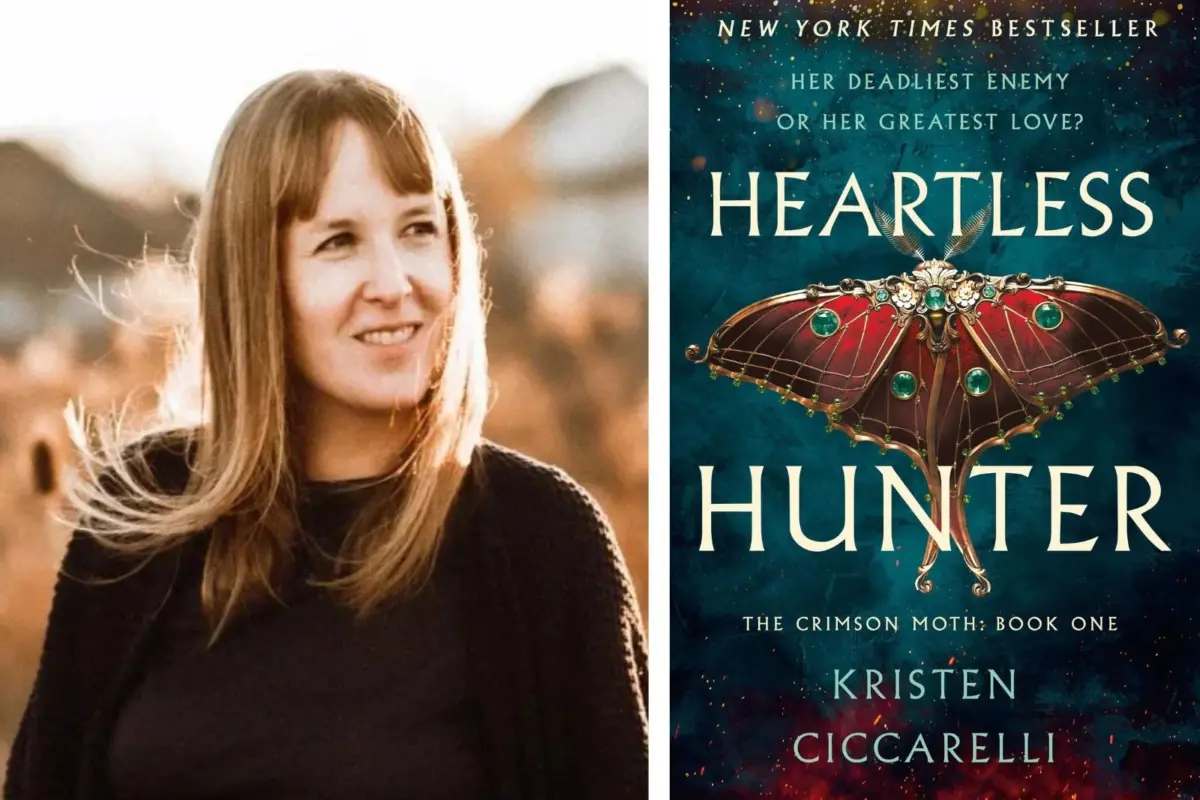
The global phenomenon of the "romantasy" literary subgenre—a high-stakes fusion of romantic tension and complex fantasy world-building—is officially expanding its footprint from bookstore shelves to television screens. In a move that signals Hollywood’s unyielding appetite for established intellectual property with built-in, hyper-engaged fandoms, author Kristen Ciccarelli’s bestselling Crimson Moth book series has officially been optioned for a television adaptation.
While the project remains in the embryonic stages of development, the creative team spearheading the endeavor is stacked with seasoned veterans of speculative fiction and television production. Writer-director Georgia Lee, whose credits include critical heavy-hitters such as The Expanse, The 100, and Carnival Row, has teamed up with Joe Henderson—best known as the co-showrunner of Netflix’s massively successful Lucifer—alongside Chad Kennedy to acquire the rights to Ciccarelli’s dark, magical universe.
The adaptation’s teleplay is moving at a brisk pace. Kim Shumway, celebrated for her work on the post-apocalyptic sci-fi drama The 100, has already penned the pilot script. This completed script is currently circulating among major studios, streamers, and production banners in an effort to secure a high-budget series commitment.
Read Also
The source material focuses on the first two published volumes of the series: Heartless Hunter and Rebel Witch. Set against the backdrop of a brutal post-revolutionary society where magic has been systematically suppressed and its former practitioners hunted to near extinction, the narrative is driven by an intoxicating cat-and-mouse dynamic. It follows a young, disguised witch operating as a vigilante and the ruthless witch hunter assigned to track her down, completely unaware that she is the high-society socialite he is unwittingly falling in love with.
The timing of this television announcement coincides with another major milestone for the franchise. Originally envisioned and marketed as a tight two-book duology by its publisher, Wednesday Books, runaway sales and surging public demand have prompted an expansion. Ciccarelli has officially contracted a third and fourth installment, ensuring that whichever network or streaming service ultimately greenlights the series will have an expansive, multi-season roadmap to work with.
As the project seeks a permanent home, industry analysts are watching closely. The success of adaptations like A Court of Thorns and Roses (in development at Hulu), Fourth Wing (set up at Amazon MGM Studios), and the enduring popularity of Outlander and The Witcher prove that audiences are hungry for sweeping fantasy romance. The Crimson Moth series possesses all the necessary narrative architecture to capture this lucrative zeitgeist.
Detailed Chronology of the Adaptation
The journey of the Crimson Moth series from page to screen has been swift, reflecting the hyper-competitive market for fantasy romance properties in the post-streaming boom era. Understanding how this high-profile adaptation came to be requires tracing the milestones that have defined its trajectory thus far.
The Genesis: Publishing Success and World-Building
The foundation of the television project rests upon the immediate breakout success of Kristen Ciccarelli’s initial contributions to the universe. Heartless Hunter, published to widespread acclaim, introduced readers to the Republic of Cascadia—a society recovering from a violent revolution that upended the social order. Witches, once the absolute monarchs and rulers of the land, were stripped of their authority, marginalized as outcasts, and subjected to brutal purges due to their dwindling magical abilities.
The introduction of Rune—a noble-born socialite by day and the "Crimson Moth," a daring vigilante who smuggles endangered witches to safety by night—struck a chord with readers. When her path collided with Gideon Sharpe, a merciless witch hunter whose ideological loyalty to the revolution blinds him to the corruption within it, the resulting dynamic created a literary sensation.
Optioning the Rights and Assembling the Creative Team
Recognizing the cinematic potential of a high-stakes, enemies-to-lovers narrative wrapped in political intrigue and magical rebellion, producers moved quickly. Writer-director Georgia Lee, Joe Henderson, and Chad Kennedy successfully secured the screen rights to the novels.
This partnership brought together a rare blend of sci-fi/fantasy world-building expertise and character-driven crime/mystery procedural pacing. Lee’s experience with intricate socio-political landscapes in The Expanse and Carnival Row positions her uniquely to helm a world divided by revolution and prejudice. Meanwhile, Henderson’s experience steering Lucifer through multiple network transitions ensures an acute understanding of how to balance high-concept supernatural premises with palpable, sizzling romantic chemistry between leads.
Script Development and the Studio Circuit
Rather than waiting for a network commission to begin creative work, the production team opted for an aggressive "spec script" approach. They brought in screenwriter Kim Shumway, whose sharp dialogue and pacing sensibilities on The 100 made her an ideal candidate to translate Ciccarelli’s dense prose into a dynamic television format.
Shumway successfully completed the pilot script, transforming the intricate lore, clandestine underground networks, and tense ballroom courtships of Heartless Hunter into a cohesive television blueprint. As of today, this pilot script is actively being shopped to top-tier streaming services and premium cable networks. Given the current industry preference for "turnkey" packages—where scripts, showrunners, and underlying IP are bundled together to reduce development risk—the project is well-positioned to spark bidding wars.
Expanding the Universe: Beyond the Duology
In tandem with the television rights acquisition, Wednesday Books announced a major expansion of the literary property. Initially contracted as a two-part story, the Crimson Moth series has officially been extended to four books. This development is crucial for television executives. Modern streaming platforms heavily favor long-running, serialized storytelling over finite miniseries, and a four-book arc guarantees enough material to sustain a multi-season television run without sacrificing the fidelity of the source material.
Supporting Context & Metrics: The Romantasy Boom
To fully grasp the significance of the Crimson Moth adaptation, one must examine the broader economic and cultural landscape of the contemporary publishing and entertainment industries. The romantasy genre is no longer a niche corner of speculative fiction; it is a multi-billion-dollar juggernaut driving record-breaking sales and dominating bestseller lists worldwide.
The Rise of Romantasy in Pop Culture
Fueled in large part by dedicated online book communities—most notably the "BookTok" ecosystem on TikTok and "Bookstagram" on Instagram—romantasy titles have redefined modern publishing. Readers flock to stories that combine the escapism of high-fantasy world-building with the emotional highs and lows of intense romantic relationships.
Books featuring morally gray characters, high-stakes political machinations, forced proximity, and enemies-to-lovers dynamics are routinely catapulted to the top of the New York Times bestseller lists. Publishers have responded by elevating these titles, investing heavily in deluxe sprayed-edge editions, immersive marketing campaigns, and aggressive multi-book contracts.
Hollywood’s Race for Intellectual Property
Recognizing that built-in fanbases translate directly to viewership stability in an increasingly fragmented streaming market, Hollywood studios have engaged in a relentless land grab for successful romantasy properties.
- Amazon MGM Studios made waves by securing the rights to Rebecca Yarros’s astronomical bestseller Fourth Wing, developing it into a high-profile series.
- Hulu has actively been developing an adaptation of Sarah J. Maas’s mega-hit A Court of Thorns and Roses under the guidance of veteran television creator Ronald D. Moore.
- Netflix and other major outlets continue to mine fantasy catalogs for the next great crossover hit that can capture the cultural dominance once held by franchises like Game of Thrones or Outlander.
Within this ecosystem, Heartless Hunter and the broader Crimson Moth series occupy a sweet spot. Unlike epic fantasy series that require staggering budgets to depict sprawling armies and dragons in every frame, Crimson Moth relies on a potent mix of intimate character dynamics, high-society intrigue, clandestine operations, and grounded magical action. This makes it a financially attractive proposition for studios looking to build a prestige fantasy series without incurring the astronomical, runaway costs associated with pure high-fantasy epics.
The Audience Demographics
The core demographic driving the romantasy boom consists primarily of millennial and Gen Z women—a notoriously vocal, highly organized, and fiercely loyal consumer base. These audiences do not merely consume media; they analyze it, create fan art, build wikis, and foster viral marketing campaigns organically. For a television network or streaming platform, securing a property with this kind of grass-roots advocacy provides an invaluable marketing engine that traditional advertising budgets simply cannot replicate.
Official Statements & Creative Insights
While formal announcements regarding casting, network homes, and premiere dates are still pending, members of the creative and literary teams have offered glimpses into the vision driving the adaptation.
Kristen Ciccarelli’s journey to this milestone reflects the surreal nature of modern literary success. Known for her lush prose and ability to craft complex, emotionally resonant heroines, Ciccarelli has expressed profound enthusiasm for the expansion of her universe. The decision by Wednesday Books to commission a third and fourth book in the series underscores the author’s growing confidence in the narrative depth of Cascadia and its inhabitants.
Showrunner and producer Joe Henderson, speaking broadly about the principles of adapting beloved fantasy works, has frequently emphasized the importance of honoring the emotional core of the source material while finding ways to elevate the cinematic tension. In adaptations of this scale, the challenge lies in translating internal monologues—such as Rune’s constant calculation of risk while maintaining her vapid socialite facade—into externalized visual and dramatic beats.
Screenwriter Kim Shumway brings a proven track record of handling high-stakes ensemble dynamics and morally complex protagonists. During her tenure on The 100, Shumway specialized in writing characters pushed to ethical extremes by oppressive governing bodies and revolutionary factions—a thematic preoccupation that maps directly onto the central conflict between the Republic of Cascadia’s witch hunters and its underground resistance.
Georgia Lee’s involvement as writer-director bridges the gap between grand-scale world-building and intimate character direction. Lee’s work on The Expanse demonstrated a mastery of hard sci-fi realism mixed with political subterfuge, while her time on Carnival Row proved her capability in directing atmospheric, Victorian-tinted fantasy realms fraught with class struggle and magical persecution.
Future Outlook: What Lies Ahead for The Crimson Moth
As the completed pilot script continues its journey across the desks of studio executives and streaming gatekeepers, several key milestones lie on the horizon for the Crimson Moth franchise.
1. Network Acquisition and Greenlighting
The immediate next step for the production team is securing a formal home for the series. Given the pedigree of the attached talent—Lee, Henderson, Kennedy, and Shumway—and the red-hot status of the romantasy genre, industry watchers anticipate competitive interest. Whether the project lands at a major broadcast network, a prestige cable channel, or a global streaming giant like Netflix, Amazon, or Max will dictate the scale, budget, and episode count of the first season.
2. Casting the Lead Roles
Once a home is secured and a series order is formally issued, attention will immediately turn to the casting process. The chemistry between Rune—the glamorous, quick-witted socialite hiding a dangerous secret—and Gideon Sharpe—the stern, unyielding, yet deeply conflicted witch hunter—will make or break the television adaptation. Finding actors capable of selling the razor-thin tension of an enemies-to-lovers dynamic where both parties are actively deceiving one another will be the production’s casting directors’ most critical task.
3. Production Timeline and World Realization
Bringing the Republic of Cascadia to life will require meticulous art direction, costume design, and visual effects. The juxtaposition between the glittering, decadent galas of the high-society elite and the gritty, perilous underground tunnels where renegade witches hide offers a rich visual playground for production designers.
4. Literary Expansion
While the television adaptation moves through development, readers will have the release of the newly acquired third and fourth books to look forward to. This simultaneous expansion of the literary canon ensures that the universe will remain top-of-mind for fans, generating ongoing momentum that will feed directly into anticipation for the show’s eventual premiere.
Ultimately, the adaptation of Heartless Hunter and the Crimson Moth series represents the next logical evolution in the symbiotic relationship between modern fantasy literature and prestige television. If executed with the fidelity, passion, and high-production value that its creative team is known for, Cascadia’s magical resistance may soon become the next great fixture of global pop culture.


Comments
Facebook App ID not configured. Please add it in the Customizer.