

Executive Overview
In contemporary American literature, few subjects are as intensely guarded, yet universally experienced, as the intersection of familial mental health crises and parental grief. On August 24, 2026, The Missouri Review thrust this delicate, often unspoken reality into the national literary discourse by selecting acclaimed poet Michael Broek’s piece, "Stem," as its Poem of the Week.
Broek—widely recognized for his Kinereth Gensler Award-winning collection Refuge/es and his poignant chapbooks, including The Window Light, The Amputation Artist, and The Logic of Yoo—does not offer readers an abstract meditation on suffering. Instead, "Stem" presents a raw, uncompromising look at the daily collateral damage of youth mental illness, substance friction, and the paralyzing helplessness felt by parents navigating the modern labyrinth of adolescent psychological distress.
Through stark imagery comparing a son’s self-inflicted scars to "war wounds" and the quiet devastation of canceled therapy sessions, Broek explores themes that extend far beyond the margins of the page. This feature examines the cultural resonance of "Stem," contextualizes Broek’s broader artistic trajectory within contemporary American poetry, and analyzes the profound literary and psychological framework that informs his latest work.
Read Also
Detailed Chronology & Literary Milestones
Michael Broek’s journey toward the publication of "Stem" has been marked by decades of dedicated poetic exploration, institutional recognition, and deep thematic evolution. To understand the weight of his latest work, one must trace the trajectory of an artist who has consistently turned his lens toward displacement, trauma, and human fragility.
Early Foundations and Fellowships
Broek’s career has been fortified by some of the most prestigious artistic residencies and accolades in the United States. His commitment to the craft earned him fellowships at the renowned MacDowell Colony and the Marble House Project, as well as a competitive scholarship to the Bread Loaf Writers Conference. Furthermore, his artistic output has been sustained by three distinct grants from the New Jersey State Council on the Arts, allowing him the institutional space to tackle complex, socially heavy subject matter.
The Path to Refuge/es and Beyond
Broek first gained widespread critical acclaim with Refuge/es, which secured the prestigious Kinereth Gensler Award for poetry and was published by Alice James Books. The collection established his voice as one attuned to human displacement, systemic violence, and the psychological weight of borders—both literal and internal.
This was swiftly followed by a series of chapbooks that showcased his formal range and thematic depth:
- The Logic of Yoo (published via Beloit Poetry Journal)
- The Amputation Artist (published via ELJ Publications)
- The Window Light
Each successive work chipped away at emotional veneers, preparing the ideological ground for his recent pivot toward domestic trauma, mental illness, and the private fractures of family life.
The August 2026 Selection
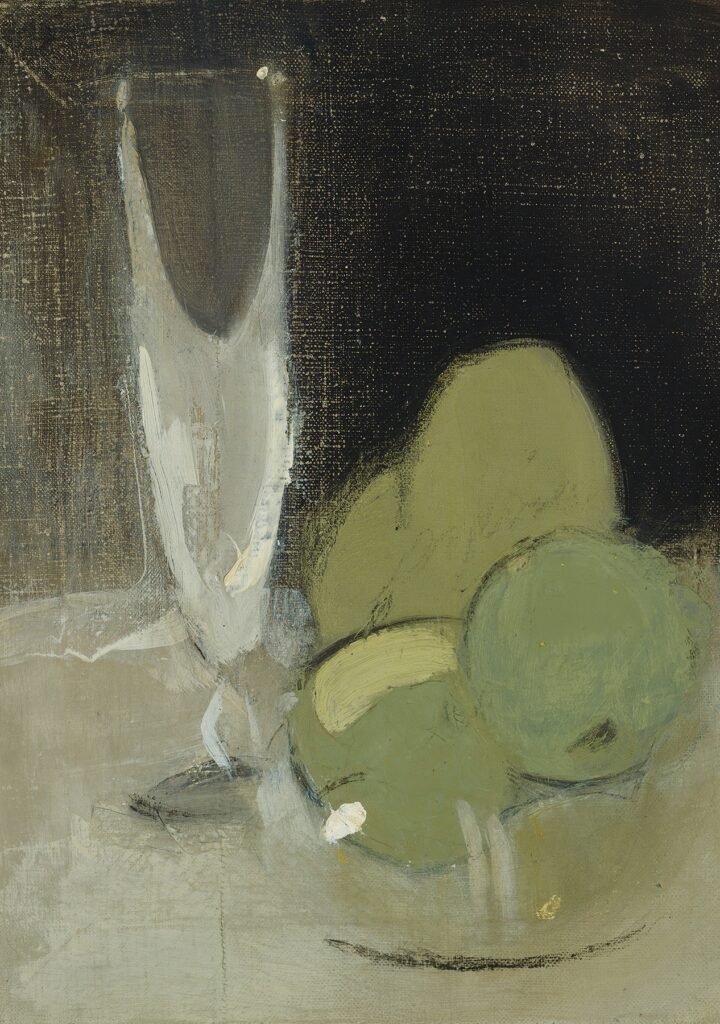
The release of "Stem" as The Missouri Review’s Poem of the Week marks a pivotal moment in Broek’s contemporary output. Selected alongside Helene Schjerfbeck’s 1934 painting Green Apples And Champagne Glass as a visual companion, the poem instantly generated significant literary discussion upon its drop in late August 2026. It serves as a bridge between Broek’s historical explorations of geopolitical and physical displacement and the more intimate, domestic displacement felt by parents watching their children struggle with internal demons.
Supporting Context & Metrics: The Anatomy of "Stem"
To fully appreciate the cultural and literary impact of Broek’s poem, one must examine its structural choices, its metaphorical scaffolding, and the precise emotional mechanics operating beneath its lines.
THE THEMATIC ARCHITECTURE OF "STEM"
│
├── STROPHE 1: The Visual Shock of Trauma
│   └── Son rising shirtless; self-harm scars equated to "war wounds" and "red gashes."
│
├── STROPHE 2: The Exhaustion of Daily Friction
│   └── Stolen cash, canceled therapy ("no—not today"), caked dishes, systemic exhaustion.
│
├── STROPHE 3: The Metaphor of the Glass
│   └── Grasping at a fragile stem; an open mouth swallowing everything, "even dark."
│
├── STROPHE 4: Radical Acceptance and Alienation
│   └── Awe for scars; the desire to kiss skin met with the son's wish to disappear.
│
└── STROPHE 5: The Indifferent Landscape
    └── Gulls flying above a millionaire's yacht and a rusted dredge; "one is a lie—the other a hurt."
The Brutal Clarity of Domestic Reality
In the opening strophes, Broek abandons poetic euphemism in favor of immediate, jarring imagery:
There must be a name
for the trauma of walking
into my son’s bedroom
when shirtless he rises from sleep
and the cuts on his arms
his shoulders
resemble war wounds
or the red gashes
of a lash.
This language strips away romanticized notions of adolescent angst. The comparison of self-harm to "war wounds" places the domestic sphere on a battleground, reframing the bedroom as a site of silent, unseen combat.
The Exhaustion of Caregiving
The poem proceeds to catalogue the mundane, grinding friction of everyday life alongside crisis management: stealing a sister’s cash, endless walks to a therapist’s door only to be met with rejection ("no—not today"), and the lingering detritus of daily life ("dishes caked with waste"). Broek captures a specific type of modern parental exhaustion—where high-stakes psychological crises unfold side-by-side with the trivial annoyances of messy households.
The Beckettian Influence and the Title’s Origin
In his official author’s note, Broek reveals that the title of the poem was inspired not by psychiatric texts, but by Samuel Beckett’s seminal play, Krapp’s Last Tape. In Beckett’s work, an aging man listens to audio diaries of his youth, realizing his life’s ambitions amounted to very little, save for a fleeting, perfect memory of drifting in a boat with a lover:
“We drifted in among the flags and stuck. The way they went down, sighing, before the stem! […] We lay there without moving. But under us all moved, and moved us, gently, up and down, and from side to side.”
Broek channels this Beckettian meditation into "Stem," utilizing the imagery of the fragile champagne glass—mouth opened upward like a gull’s beak swallowing everything, even dark—to explore the paradoxical nature of human intimacy. Love, in Broek’s hands, is both the vessel that sustains us and the sharp edge that cuts us.
Official Statements & Author’s Insights
Michael Broek’s reflections on the genesis of "Stem" offer profound insight into the intersection of canonical literature and lived parental experience. Addressing the thematic undertow of his recent work, Broek notes:
"I’ve written a lot lately about mental illness and its impact on families. This poem title, however, was inspired by a line from Beckett’s play Krapp’s Last Tape, which is not about mental illness per se, but about lost hope."
Broek emphasizes that Beckett’s exploration of memory highlights the bittersweet duality of human connection:
"What he remembers is both the insularity and the necessity of human intimacy, the way that what is experienced together is also experienced alone."
This duality forms the emotional engine of "Stem." The speaker watches a son who wishes his father would simply "disappear," navigating a chasm of alienation where love persists even when it fails to heal. The poem concludes with a striking, neutral observation of nature—gulls soaring impartially over both a millionaire’s yacht and a rusted dredge in the gray Navesink River—not caring "that one is a lie—the other a hurt." Through this concluding image, Broek achieves a transcendent artistic detachment, recognizing that the universe continues its indifferent sweep while families suffer in quiet isolation.
Future Outlook: The Evolution of Broek’s Poetic Voice
The publication of "Stem" signals an important evolution in Michael Broek’s career. As contemporary American poetry increasingly grapples with the mental health epidemic, generational trauma, and the limits of institutional care, voices like Broek’s provide an essential anchor.
Moving forward, literary critics anticipate that "Stem" and its accompanying pieces will form the backbone of a major new collection exploring the architecture of domestic endurance. By wedding the formal precision of modernist theatre (via Beckett) with the unsparing realism of modern parenting, Broek has carved out a distinct space in contemporary verse.
For readers and writers alike, "Stem" stands as a testament to the endurance of empathy in the face of insurmountable domestic grief. It reminds us that poetry’s highest calling is not always to offer tidy resolutions or comforting cures, but to bear witness to the fractures we carry, naming the trauma when language threatens to fail us entirely.



Comments
Facebook App ID not configured. Please add it in the Customizer.